Fury, Soho Theatre

https://i.guim.co.uk/img/media/c255500e31a395db7d5e99d0e22866efcadc2904/0_0_3907_2727/3907.jpg?w=700&q=55&auto=format&usm=12&fit=max&s=24616b52e71621aa153ffabc5805fe48

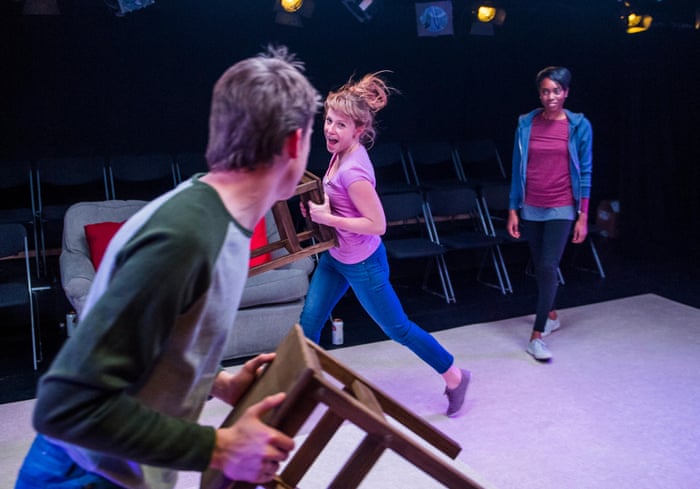
Sam is a young, single mum living in a council flat in Peckham. Having gone through the care system and her boyfriend leaving her after her second son was born, she has no one. When she meets socially inept Tom, an MA student in the flatshare above her, after losing her job as a cleaner, he creates an opportunity for friendship, sex and an escape from her kids. But Sam was born a victim, and a victim she remains. In this discourse on social class, parenting and gaslighting, playwright Phoebe Eclair-Powell incorporates Greek tragedy and a commentating chorus to expose the perils of growing up with no support network.

This is one of the young writer’s first full-length plays, and she’s still finding her feet. Fury has a great concept and characters, and the use of the chorus is a fantastic touch that adds depth and structural variation, but the execution if the ideas isn’t quite there yet. Some sections of the script don’t quite fit the main thread, like her beach outing with an old friend, and others rush the narrative progression. The chorus fills in information left out of the scenes, but this sticking plaster over the gaps is still unsatisfying and overly simplistic. The relationship between Sam (Sarah Ridgeway) and Tom (Alex Austin) escalates a bit too quickly to be plausible, though some slight extending would go far to rectify this.

Ridgeway is excellent as Sam, with a nervous energy and a risk of exploding into violence at any point, making Tom’s manipulation all the more believable to social services. Austin is slimy, awkward and initially seems harmless, but quickly reveals a dark interior. Though he plays the role well, it’s a challenging one because he transforms so quickly. His unlikely behaviour after his initial awkwardness is a powerful reminder that anyone is capable of committing horrendous acts, particularly against vulnerable people. The chorus of three (Naana Agyei-Ampadu, Daniel Kendrick and Anita-Joy Uwajeh) also play additional characters, flipping between them and non-characters with ease and agility.

Director Hannah Hauer-King uses a simple set by Anna Reid to focus on the text. Her in the round staging is a great choice that adds to Sam’s rising paranoia – everyone is indeed watching her every move. The chorus uses seats set into the audience, which although it keeps them ever present, it is unclear why the audience/actor boundary is blurred. She occasionally struggles to clarify space what with the mostly bare stage, but the dialogue usually explains well enough. Hauer-King taps into Eclair-Powell’s poetry with instinctual finesse, making some moments particularly moving.

Though the ended is rather different from the Medea that the show’s marketing compares it to, there is still senseless tragedy brought on by a man’s deliberate actions against a vulnerable woman. Fury shows much potential from the emerging writer and director, and contains some vital messages about growing up poor and female that, with some small adjustments, will be heard loud and clear.

Fury runs through 30 July.

The Play’s the Thing UK is committed to covering fringe and progressive theatre in London and beyond. It is run entirely voluntarily and needs regular support to ensure its survival. For more information and to help The Play’s the Thing UK provide coverage of the theatre that needs reviews the most, visit its patreon.

Interview: Chris Hislop on Barker’s Gertrude

https://i0.wp.com/mytheatremates.com/wp-content/uploads/2016/05/600x425Izabella-Urbanowicz-as-Gertrude-Gertrude-The-Cry-at-Theatre-N16-c-Roy-Tan.jpg

“It is impossible – now, at this point in the long journey of human culture – to avoid the sense that pain is necessity…that it is integral to the human character both in its inflicting and in its suffering…” – Howard Barker

Howard Barker is no stranger to sex and violence. His 2002 reimagining of Shakespeare’s Hamlet places the prince’s mother and her sexuality centre stage in a divisive interpretation of the character who receives little attention in the original story. Rarely staged (most likely due to its relentless, sexually explicit subject matter), theatre PR Chris Hislop returns to directing with this upcoming production of Gertrude: The Cry at Theatre N16 in Balham. The play has fostered a huge range of opinions regarding its depiction of women, feminism and female sexuality and its director has a lot to say on the matter.

Why does this play need to be staged?

It’s a vital, powerful and fascinating piece that tackles feminism and sexuality from a very different angle. It’s also a wonderful dissection of Hamlet – considering the Shakespeare 400 celebrations, now is a great time to be giving the Prince of Denmark an overhaul. It’s also a largely forgotten and underperformed piece by a difficult and complex writer. We need more plays like this and writers like Barker, and if this production inspires anybody to think differently, I’ve done my job well.

Opposing views say Barker presents women in an empowering or negative light. What approach are you taking, and why?

Both – my favourite thing about this play is how it was written to empower an underwritten female character, and yet does such a piss-poor job of doing so. Or maybe it doesn’t – maybe Barker’s aggressive sexualising of Gertrude and blatant female nudity throughout is his attempt at female empowerment. Either way, he’s not a misogynist. Barker’s obsession with women has translated into some wonderful parts in his shows, and he’s always trying to write pieces that celebrate and empower them, just through a rather perverse lens. I don’t want to circumnavigate that entirely, just sand down some of the sharper corners.

What’s so appealing about the character of Gertrude in Shakespeare and Barker’s scripts?

She’s an utter mess. She doesn’t know what she wants, she doesn’t know how she’ll achieve it, and she’s governed by her wants and desires. She’s an incredibly human, rounded character. She’s a mother and a lover, neither of which are mutually exclusive.

Would you say this is a feminist play? Why/why not?

I struggle with the word “feminism”. Our world is defined by our language, and by defining an issue by a specific gender we’re generating responses that hinder as well as help. We talk about “racism” – defining someone by their race – so why don’t we call it “genderism”?

Anyway, I digress: I think this is a play about women, the role of women, and women’s sexuality – not exclusively, I think it has a lot to say about sex in general, but the fact that it does so from a female perspective is important. You could say that it’s not even really from a female perspective; it’s a script by a man, and it’s being directed by a man, but I find such comments painfully genderist. I wouldn’t expect only women to like Carol Churchill, or only men to like books by Ross Kemp.

So – is it a feminist play? Yes. Do I think that’s important? Not really. Do I think it tackles important issues around sex and gender? Yes. Is that important? 100%.

Gertrude: The Cry opens 12 June.

The Play’s the Thing UK is committed to covering fringe and progressive theatre in London and beyond. It is run entirely voluntarily and needs regular support to ensure its survival. For more information and to help The Play’s the Thing UK provide coverage of the theatre that needs reviews the most, visit its patreon.
Schism, Finborough Theatre

https://i0.wp.com/www.finboroughtheatre.co.uk/assets/images/press-images/schism/pre/Schism-3.jpg

Chicago, 1998. Harrison and Katherine are both struggling. Harrison’s wife recently left him and he gave up a challenging career choice for a safer one as a Math teacher. Fourteen-year-old Katherine’s school cannot see past her cerebral palsy, so she’s not allowed to take “normal” classes. Schism begins when both characters reach breaking point: Harrison is mid-suicide attempt when Katherine breaks into his home to appeal for his help to move into his Math class. This initial meeting spawns a twenty-year long relationship between the two, but not a healthy one. Harrison constantly tries to manipulate and control Katherine, who fights for her independence with progressively underhanded methods. Athena Stevens’ script choppily covers the huge time period in sections, addressing several important issues: autonomy within relationships, abuse, life/work balance, failure and aspiration. A play featuring disability that pushes other topics to the forefront, Schism needs more fleshing out but its messages are loud and clear.

Twenty years is a lot of material to fit into a play and at just over an hour, a lot of the plot is left out. There are about four years between each scene, nicely signposted by a current affairs talk radio show, but pivotal transitions are missing. How does their romantic relationship eventually come about? What are the immediate consequences of his awful behaviour? How does her career develop? How did he manage to keep his job after Katherine, in her final year of high school, hang out at his home regularly? These are unanswered, but easily could be by the addition of more scenes. This wouldn’t effect the episodic nature of the script, but would make the story more satisfying. Despite the clunky narrative arc, Stevens’ dialogue still manages to crackle and easily creates tension. There are some great one-liners that spark belly laughs, and moments that are equally horrifying. As set pieces, the scenes are excellent pieces of writing.

Stevens also plays Katherine and displays a clear sense of ownership over the role. Whether or not there are elements of Katherine in her own life, Stevens performance is emotionally genuine and wholly committed. Tim Beckmann gives a nuanced Harrison who transitions from teacher to lover easily, and maintains an undercurrent of desperation. Alex Marker’s domestic design with the ever-present huge, architectural drawings peeking through the windows is a good reflection of the passion that drives both characters, and director Alex Sims displays a good instinct for portraying the journey of a relationship.

Disability issues are ever present and dictate many of Katherine’s choices, but Schism isn’t about her overcoming adversity. It’s part of who she is, but she has other, more pressing problems – university admissions, bidding for work, whether or not to start a family, and civilian objection to her building projects. Harrison does as well, but they are more psychological and harder to resolve. His inability to cope with Katherine’s success in the field where he failed, his inability to have children with his ex-wife and his inability to let Katherine be an independent woman slowly devour him. It’s compelling to witness. In fact, Schism makes more of a statement about feminism within heterosexual relationships than it does about disability awareness, which is hugely refreshing and shows great progress in theatre equality – Katherine’s disability is a part of her, but only a small one compared to her aspirations.

Schism is a provocative relationship drama that certainly resonates despite the holes in the story. This dysfunctional couple can be both delightful and painful to watch, much like anyone in a modern relationship dealing with the other’s baggage. With some further development, Stevens’ play could pack an even heavier punch.

Schism ran through 14 May.

The Play’s the Thing UK is committed to covering fringe and progressive theatre in London and beyond. It is run entirely voluntarily and needs regular support to ensure its survival. For more information and to help The Play’s the Thing UK provide coverage of the theatre that needs reviews the most, visit its patreon.

RED Women’s Theatre Awards, Greenwich Theatre

red women logo

This year sees the launch of a new playwriting competition, RED Women’s Theatre Awards. Co- produced by Edinburgh-based academic and playwright Effie Samara, Greenwich Theatre and Female Arts, the awards are “aimed at anyone who identifies as female who has an inspirational, questioning and challenging social and political voice.” There are three regional heats in the competition; the first was at Greenwich Theatre with staged readings of four plays. Completely differing in tone and style and at various stages of development, this heat showcases the huge variety of female voices in English playwriting.

I spoke to founder Effie Samara about the awards and her reason for founding them.

What do you hope to achieve with these awards?

When I first spoke about RED to James Haddrell, Artistic Director of Greenwich Theatre, I must admit, I was dreading that it was going to achieve absolutely nothing. As a theatre artist, he engages with that female-led theatre aesthetic by producing Broken Leg, Smooth-Faced Gents and now RED. Is he a revolutionary? I think he is. Is he an exception? He is a valiant exception but we are actually witnessing the beginning of an epoch in politics and in theatre. They follow each other. My view is that the State, its governance, its justice, its policing, its education and its performativity are about to undergo a female-authored revolution. RED positions itself at the forefront of this development.

What criteria did you use when selecting plays for the heat?

The award is for political theatre. Our first concern was to ensure the writer’s engagement with the notions of justice, resistance and her ability to problematise those dramatically.

RED Theatre Awards currently cover the south of England, Wales and Scotland. What are your plans for expansion in the rest of England? Is N. Ireland a goal as well?

Northern Ireland is absolutely a goal. In the first instance, we’re including N. Ireland in the Scottish round. We can’t wait to hear some loud Irish voices! Scotland is also underrepresented on a national level.      

What can theatre makers do now to counteract the gender disparity?

The solution is very simple and I’m afraid it begins with us women. Us, being able to handle our own freedom: express it in the ownership of our person, define it in politics, and dramatise it in our consciousness and on stage. Women who robotically follow institutional missions fuel that gender disparity through their own complicity with these structures. Numbers are on our side in this argument: There are a lot of us. Over 3 billion. If we meant business, if we did this together, actioning solidarity within our cause, this injustice could be culled in no time.

What message do you want to communicate with the RED awards?

Words are loaded pistols. And we, women, can cock a gun way better than any establishment pointing one at us. Throughout the history of humankind we have been told we’re not allowed to fathom our own course, to govern our own person, our own body, its production and reproduction. RED is here to provide a platform for women.

The four plays selected for this heat are Under My Thumb by Cassiah Joski-Jethi, Spurn the Dust by Sian Rowland, Dissonance by Isabella Javor and Gone by Kate Webster. Some are more blatantly topical that others, some look at broader female issues and group dynamics. All are short plays with potential for development and by female voices that have a lot to say.

The Play’s the Thing UK is committed to covering fringe and progressive theatre in London and beyond. It is run entirely voluntarily and needs regular support to ensure its survival. For more information and to help The Play’s the Thing UK provide coverage of the theatre that needs reviews the most, visit its patreon.

Eggs, Vault Festival

rsz_eggs_florence_keith-roach_and_amarni_zardoe_courtesy_simon_annand_1

Women get the raw end of the deal no matter how young or old they are, how mainstream or alternative. Two late twenty-somethings, acquaintances through a mutual late friend but with completely opposite personalities, end up bonding over important issues but with dry humour and restrained emotion. Despite the content, Eggs avoids catering purely to women. The frank honesty is stereotypically blokey, covering topics such as masturbation, one-night stands and careers – issues that are obviously relevant to women, just not often spotlighted so directly – as well as fertility, marriage and the fear of aging. Structurally episodic and a bit clunky, Eggs is also bitingly funny and poignant, particularly for those of us in our 20s and 30s feeling like we don’t really fit into the world.

Playwright Florence Keith-Roach uses the versatile symbolism of eggs throughout, albeit obviously. Even the set and costume by Clementine Keith-Roach and Lily Ashley are all white and yellowy-orange. It’s an interesting catalyst for written material, and Keith-Roach riffs in numerous directions from that starting point. Fertility is an obvious path, but egg shaped vibrators less so. This makes the events in the story nicely unpredictable, but Keith-Roach does a great job tying up the issues into a satisfying end.

Keith-Roach and Amani Zardoe are girl 1 and girl 2. Girl 1 is a hippy artist fighting the status quo; Girl 2 loves her corporate job and can’t wait to marry and have children. Both performances are heighted and somewhat ‘Sex in the City’-esque, particularly at the beginning, where they feel like chick lit but on stage. Fortunately, both actors settle into more naturalistic performances after a couple of scenes. Unlike the terrible television series, these unnamed women develop depth and genuine conflict, even though they are not the most likeable of characters. Their insecurities and flaws are believably human, as are their prickly, awkward encounters that evolve into a genuine care for each other.

Eggs is heart-warming without being cheesy, and substantial but does not preach. It provides gentle solidarity to women who feel like their lives aren’t everything they’re supposed to be, and even though the earlier scenes feel disconnected from each other, the last third of the play really rings true. It’s a good piece of theatre for a second play and is a pointed reminder of the fact that no one really has their life together.

The Play’s the Thing UK is committed to covering fringe and progressive theatre in London and beyond. It is run entirely voluntarily and needs regular support to ensure its survival. For more information and to help The Play’s the Thing UK provide coverage of the theatre that needs reviews the most, visit its patreon.

Mirrors, Rosemary Branch Theatre

rsz_tim_smyth-mirrors-siobhan_mcmillan_54

Photography © Tim Smyth

Maybe the witch in Snow White isn’t that bad. Or, maybe her badness is justified, like she had a traumatic childhood or suffers from a mental illness. Siobhan McMillan proposes just that: Shivvers realizes she’s past her prime and, with insecurity taking over rational thought, she decides to hunt down the young woman who dethroned her from her position as the fairest in the land. This quest takes shape as a solo performance told in the third person, like a fairytale. McMillan regularly interjects with contemporary references and using sarcastic humour to great advantage, makes a strong comment on women’s insecurity about aging.

The use of third person narration is one of the more interesting features of Mirrors; it distances McMillan from the audience and herself. Her physicality and energy cannot be denied as she embodies the characters she simultaneously describes. The audience is told her story but has plenty to watch, and a liberal use of sound and vocal effects create a dynamic aural landscape, even if a touch too loud at times.

The use of an occasional live feed adds another visual layer by which the audience scrutinises Shivvers, but a backlight interferes. The intention shows good instinct by director Jesse Raiment. The set isn’t particularly dyanmic with its black flats and mirrors, save for the ornate frame mounted on a table centre stage – a symbol of modern obsession with female appearance and its dominance in Shivver’s life.

This feminist solo show is an excellent display of performance storytelling and a witty comment on modern life as a woman. Not just about aging, it also looks at female competition, the need to be desired and the perils of dating. With the opportunity of a longer run, Mirrors could upgrade its tech and design to create a more polished production matching its content, creating a piece great for touring small to mid-scale venues.

The Play’s the Thing UK is committed to covering fringe and progressive theatre in London and beyond. It is run entirely voluntarily and needs regular support to ensure its survival. For more information and to help The Play’s the Thing UK provide coverage of the theatre that needs reviews the most, visit its patreon.

Amaluna, Cirque du Soleil at Royal Albert Hall

rsz_bol4

Nearly twenty years ago, I went to my first Cirque du Soleil show in New York. A young teenager and already obsessed with theatre and performance, I was blown away by the colour and spectacle, having never seen anything like it before in the fourteen years that I’d been on this earth. I have no concrete memories of the show, just flashes of light and colour, and feeling impressed. I looked forward to see if Amaluna, inspired by Shakespeare’s The Tempest, would live up to my juvenile memories.

It took a while to find out. First, I had to meet my critic friend, who had invited me as her guest, at door 6 at 7:30. I approached Royal Albert Hall from the side closest to Exhibition Road and found myself at door 3. Not being familiar with the venue, I picked a direction and soon found I was going the wrong way. Considering it’s a circular building and I was early, I carried on and found myself at door 6.

WHAT SHEER HELL IS THIS? At door 6 was Cirque’s version of a red carpet (it was blue), a queue of luxury cars out of which vaguely familiar people emerged in black tie and evening gowns, bright lights and hordes of shouting paparazzi. A few cold looking performers in costume posed for photographs, film crews conducted interviews and vicious looking security guards hovered, ready to move on anyone that looked like they didn’t belong.

I’ve been to a lot of press nights, but this was incomparable. More like a film premiere or awards ceremony, Cirque at some point took the circus outside the venue and into the media and celebrity world. When did this happen? Or more importantly, why? Does Cirque really need the publicity so badly that they pander to the vapid world of Big Brother contestants and paparazzi? And how was I supposed to find my friend in this mess?

Giving wide berth to this bright and shiny, “OK Magazine Live!” shitshow, I carried on to the other side of the large foyer that the blue carpet led to. Fortunately door 6 was duplicated opposite and the nice usher on the door let me wait in the warm. I still managed to be early. The performers across the foyer still looked cold; it dawned on me that they had to be onstage doing acrobatics in less than an hour and that they were either understudies/doubles or Cirque is more interested in photo ops with celebs than the wellbeing of their performers. I desperately hope it’s the former.

Anyway, the show itself. Nearly. We had great seats in a box allocated for press but I didn’t realise at first just how good they were. Or rather, how expensive, until critic friend informed me what they were retailing for. My initial reaction was an inner explosion of flabbergast, “people around us paid HOW MUCH for this show?” Then I realised: press get their tickets free, as does the wafting, gormless army of famous people, so how much is Cirque actually making out of this press gala? Especially considering the post-show reception (we declined our invitation to attend) and the swathes of empty seats in the upper galleries. These are the cheapest seats, but on a press night, why are they empty? Were they marked up so much that they weren’t bought? Are people not interested in Cirque anymore? (In which case, they desperately need the media attention.) Or, did Cirque keep them vacant so plebs didn’t gawp over their famous fellow audience members? Regardless of the reason, none of the prospective answers are positive.

NOW for the show. Really.

I love when theatre and performance makers mess about with Shakespeare. It can prove his work is still relevant and opens the possibility of a new perspective or insight. The programme states that this is a female-driven show: Prospero is now Prospera, and Amaluna is Miranda’s empowering coming-of-age story. The band is entirely female, as is most of the cast. A feminist adaptation of a Shakespeare play for circus? It should be brilliant, and exceed my youthful memories of my last Cirque show.

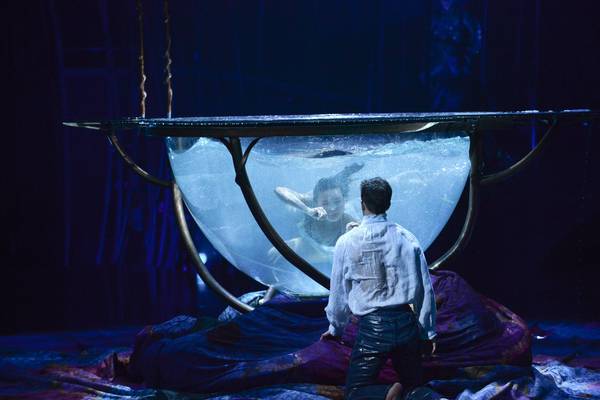
It’s not brilliant. Sure, it’s bright, colourful and a consistent sensory overload. The skill-set of the performers is top notch. There are acrobats, aerialists of all kinds, clowns, Chinese pole performers, and juggling. It’s technically impressive. It’s easy to get swept away by the spectacle of the whole thing.

There’s little substance, though. They story is a vague framework for the circus acts and spectacle. Most importantly, the supposedly empowering female narrative is anything but. Prospera throws a party for her daughter Miranda, who then bathes in the light of the aerial hoop performing Moon Goddess who bestows her with a gift of a glass sphere. It’s an obvious metaphor for Miranda’s  womanhood/menstrual cycle, and a cringy one at that which doesn’t contribute anything to The Tempest aspect story. Miranda also meets a prince who has washed up on their island in a storm. Called Romeo rather than Ferdinand (dear god, why???), Miranda immediately falls in love with his sculpted, often shirtless body. Her best friend Cali, a half-lizard-half-man creature, is jealous of the man who’s taking away Miranda’s attention from him. The two male characters compete for young Miranda’s attention and the pretty, shipwrecked Romeo was always going to win, gifted with a wedding and all. It was like an old school Disney film. Empowering to women? No, no, NO. The narrative presented was about as disempowering as you can get, particularly when you factor in the creepy plot points of an unseen Romeo watching Miranda bathe and hand balance in white shorts that become nearly transparent from the water (You can see EVERYTHING. I’m pretty sure I could see up into her stomach during the splits.), and Cali abducting her into the heavens to keep her to himself. Also consider for a moment that in Shakespeare’s version, Caliban raped Miranda and is enslaved by her father as consequence. Plus, if this is Miranda’s coming-of-age celebration, she’s how old? Sixteen AT THE OLDEST. And she get married at the end of a story that spans no more than a couple of days? This is supposed to be a piece of performance that empowers women.

There’s also plenty of creeping elsewhere in the show. The two clowns, one a nanny to the young Miranda and one a washed up sea captain. Mainha and Papulya are overtly sexual, and as cringy as the Moon Goddess. There’s classical Commedia influence in the pratfalls and lazzi-like sketches full of groping, arse kissing and manipulation. I get that circus performers have to wear tight clothes for their work, but the men are often topless for no apparent reason and there’s more female flesh on display than needs be.

Ignoring the narrative and theme, the individual acts and the show of it is celebratory, fun and a showcase of skill. However, Cirque as a vast, commercial institution raises some concerns, and the perception of female empowerment and celebration by their creative and marketing team when the reality is the opposite is not only highly disturbing, but a sign of endemic patriarchal complacency about what is an acceptable lens to view womanhood through in the performing arts.

The Play’s the Thing UK is committed to covering fringe and progressive theatre in London and beyond. It is run entirely voluntarily and needs regular support to ensure its survival. For more information and to help The Play’s the Thing UK provide coverage of the theatre that needs reviews the most, visit its patreon.

Heresy of Love, Shakespeare’s Globe

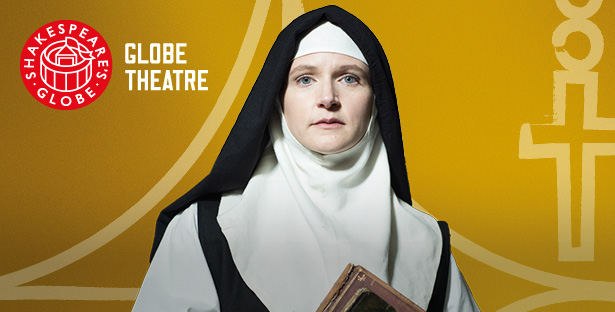
web.phpSor Juana is a great writer of plays and poetry known throughout Mexico, or ‘New Spain’ as it’s called in the 1600s. She is a scholar with progressive views on women’s rights and unafraid of expressing them. Juana has also committed herself to the prayerful life of a convent nun. Newly appointed Bishop Santa Cruz seems supportive of her unconventional activities, but the older, more conservative Archbishop Aguiar y Sejas from Spain adamantly opposes her. Her father confessor, Fray Antonio, balances precariously between the two men’s views as Juana faces the risk of a heresy charge and the Inquisition. Outside the convent walls, there is conflict between the church and the secular court and within the convent and the plague is coming. Heresy of Love is a play that operates on many levels both microcosmic and globally. It is blatantly feminist but also looks at how horribly women can treat each other, male conflicting attitudes towards women, and confronts issues within the Catholic church. The script captures the style of Spanish Golden Age plays: deception, politics, religion, danger, love and downfall are present in this intimate and moving play by Helen Edmundson.

An austere, black, metal structure partitions the length of The Globe’s stage between its dominating columns, hinting at the demure, ever-present convent walls. Against the richly detailed paintwork of The Globe and giant canvas prints of a religious painting I probably ought to know, it creates an ominous clash. It also blocks off the back of the stage and access around one of the pillars, but director John Dove and designer Michael Taylor have extended the thrust well into the audience to compensate. Though the set looked lovely and delicate despite its size, there is no need to cover and block off the back of the stage; it is a set in and of itself. Modifying the stage space, while able to give directors more freedom, alters the unique features of this playing space. In this case, the figure-of-eight path around the columns that supports conflict and tension is lost and the actors are placed deep into the round space. The actors are often stationary and so far forward that energy occasionally dips.

Nevertheless, all performances are excellent and, typical of Globe casts, the ensemble is close and completely in tune to each other. Naomi Frederick is a bold, confident Juana with the grounded calm of unwavering faith. Her reduction to a broken victim is heart rending. Her slave Juanita (Sophia Nomvete) provides wonderful comic relief though deliciously funny one-liners. The priests (Patrick Driver as Antonio, Anthony Howell as Bishop and Phil Whitchurch’s Archbishop) complement each other well, embodying distinct characters that capture the humanity behind the robes and inspire hatred from their treatment of Juana. Howell’s duplicity is unpredicted, creating a deeply conflicted character you love to hate. The only casting issue is a blatant lack of diversity. In a play set in Mexico with characters both native and Spanish, there is a glaring lack of Hispanic actors.

Heresy of Love premiered in 2012 at the RSC, but this is its first production in London. It is an accessible, relevant, gem of a play paying homage to Sor Juana, a genuine historical figure. These characters from the past with contemporary relevance are at home at The Globe and remind us that despite the progress we have made in women’s rights, there is still work to be done and we would do well to treat each other nicely along the way, despite any inner demons we battle.

Note: the performance reviewed was a preview.


The Play’s The Thing UK is an independent theatre criticism website maintained voluntarily. Whilst donations are never expected, they are hugely appreciated and will enable more time to be spent reviewing theatre productions of all sizes. Click here to make a donation with PalPal.