Your Ever Loving, TheatreN16

In 1975, Paul Hill was convicted for bombing two English pubs, along with three other people. Coerced into confessing by the police, the twenty-one year old from Belfast later retracted his confession but was found guilty and imprisoned with the others as IRA supporters. It wasn’t until 1989, long after his attempt to appeal had been denied, that investigators discovered police officers linked to the original case had altered evidence. The “Guildford Four” were released immediately, after 14 years inside. 

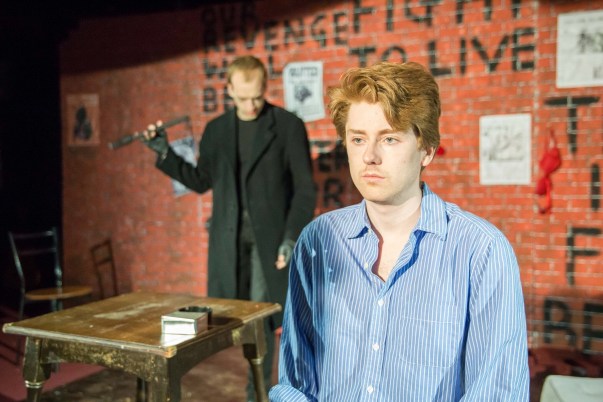
Your Ever Loving chronicles Hill’s conviction, imprisonment and eventual release through the letters he wrote to his family over the years. One actor plays Hill, another plays numerous figures Hill encounters along the way. Martin McNamara’s frantic script cuts across years and locations, often leaving the audience in its dust and struggling to keep up. The cast of two display huge emotional investment in the characters, but the script’s pace, though stylistically distinct, is wanting in depth and focus.

Stevan McCusker is Paul Hill, who cuts a gentle young father and doting son as well as a prison-hardened thug who takes nothing from no one. McCusker’s quiet strength and fierce determination are charming immensely watchable. James Elmes is the often violent rest of the world, from fellow prisoners, to judges, to police and guards. Elmes provokes McCusker in dozens of short-lived fights, a clever manifestation of Hill’s lengthy battle to clear his name.

McNamara tries to fit a decade and then some into one act, but in doing so, he glosses over episodes that deserve more attention. Hill’s release is anti-climactic and rushed; the initial montage of moments (too short to be called scenes) is so fast that it confuses. Highlights of the fifteen years merge into one after awhile, creating a continuously evolving pilot point rather than separate ones. The structure constantly destabilises, along with the often maniacal caricatures painted by Elmes, but prevents any deeper exploration of Hill’s day-to-day life inside and after he’s realised. 

Despite the script’s shortcomings, directors Jamie Alexander Eastlake and Sarah Chapleo do a commendable job at keeping energy high and recreating the sensory barrage of life at the hands of abusive wardens. A simple red brick wall set with political graffiti and notices is an ever-present reminder of the social and political upheaval during the height of IRA activity, and the inflexibility with which suspects were treated by the UK government – a wise design choice on the part of the two directors.

Your Ever Loving isn’t a great script, but it manages to hit some important historical socio-political points. Eastlake and Chapleo do their best, along with the two performers, but McNamara’s play is an ultimately unsatisfying gloss over a vital period of recent history and the government’s treatment of people wrongly accused in times of trouble.

Your Ever Loving runs through 5 May.

The Play’s the Thing UK is committed to covering fringe and progressive theatre in London and beyond. It is run entirely voluntarily and needs regular support to ensure its survival. For more information and to help The Play’s the Thing UK provide coverage of the theatre that needs reviews the most, visit its patreon.

The Tempest, Steiner House Theatre

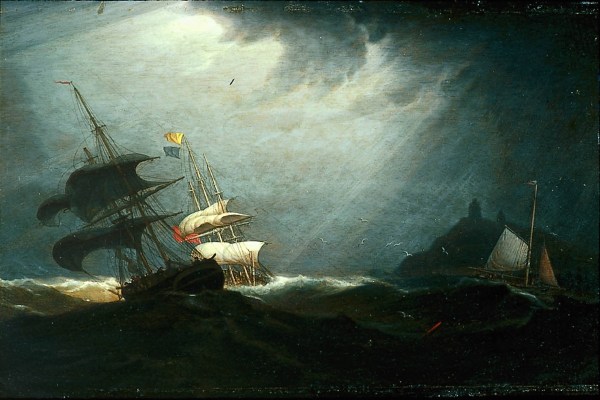
Shakespeare 400 has understandably inspired a glut of Shakespeare productions this month. Whilst it’s brilliant to see people celebrating the Bard at all performance levels and abilities, the quality of productions out there hugely varies. The Steiner House’s Shakespeare Festival production of The Tempest, with it’s Asian-inspired music and costume, cuts a lovely aesthetic but the majority of performances are painfully sub-par. At nearly three hours long with the interval, it’s also entirely too long, made so by some of the cast’s laconic pace, slow transitions and no noticeable cutting. Though commendably diverse in race and nationality and lovely to look at, the performances make this production more like a dull, drizzly day than an otherworldly storm. 

Hedi Pinkerfield’s music is subtle and atmospheric, with more personality than most of the characters portrayed on stage. It never overpowers, and provides a dynamic, nearly-constant soundtrack for the story. Indian and Japanese influences don’t try to be edgy or interesting, but appropriately populate this island that’s full of more noises than people. It’s lovely and soothing, and helps alleviate the tedium of the poor delivery on stage.

Emma Caller’s costumes are similarly rich, drawing on Indian influences of rich coloured tunics and flowing dresses. The set incorporates the same “slightly brighter than pastel but not garish” colour scheme. It’s as soothing as the music, with a giant full moon watching the action on a gauzy backdrop. Initially seeming solid, Prospero hides behind it, illuminated, at one moment. It’s a great choice, but one sadly avoided in the numerous other instances where he invisibly observes other characters.

Of the sixteen-strong cast, a few are quite good. Alexander Yousri and Machael Claff are energetic double-act Trinculo and Stephano, as are Robert Land (Sebastian) and Eshy Moyo (Antonio). Samuel Mattioli is a sweetly wistful Ferdinand, but let down by a Miranda who doesn’t articulate her consonants, making her difficult to understand. Director Geoff Norris casts three Ariels for indecipherable reasons; Bowy Goudkamp is the strongest, resisting the instinct to constantly writhe around or pull constipated faces at the audience.

The rest struggle with maintaining Shakespeare’s rhythm and variation of tone at the same time, some chew the words rather than easily speak them. Still others mumble or don’t articulate consonants, creating a white noise rather than a comprehensive story. There’s a general lack or pace and genuine characters, making this a highly frustrating experience. Director Geoff Norris seems to lack experience directing inexperienced performers and handling Shakespeare’s text, particularly this more linguistically complex final play.

Norris’ misguided casting and lack of structural instinct are the primary shortcomings in Perform International’s The Tempest. Fortunately his choice of composer and designer provides some relief, but not enough to alleviate this particular island’s drudgery.

The Tempest runs through 30th April.

The Play’s the Thing UK is committed to covering fringe and progressive theatre in London and beyond. It is run entirely voluntarily and needs regular support to ensure its survival. For more information and to help The Play’s the Thing UK provide coverage of the theatre that needs reviews the most, visit its patreon.
My Mother Said I Never Should, St. James Theatre

Doris, Margaret, Jackie and Rosie are four generations of the same family. They often fight, but they’re always there for each other. Though they each grew up in a distinct era and often misunderstand the others’ world views, there’s a lot of love in the baggage they carry. These women that playwright Charlotte Keatley created are passionate, feisty and reflect society’s views of women from the 1930s through the 1980s. Though there’s been inevitable progress in women’s rights, Keatley’s script shows how agonisingly slow it’s been. Excellent performances by the ensemble cast of four and a decade-spanning politically commentary make My Mother Said I Never Should a relevant, fun and poignant production that, even though written in the 1980s, still holds important messages about womanhood.

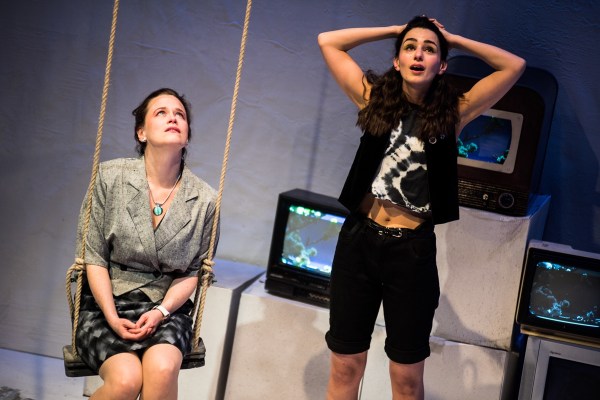
Doris (Maureen Lipman) is the formidable matriarch of the family who always says exactly what she thinks and has little patience for frivolity. Lipman’s dry comedy is impeccably timed with delightful results. Her uptight daughter Margaret (Caroline Faber) is a great foil, ferociously protective of her punky, energetic granddaughter Rosie (Serena Manteghi), who she’s raising as her own so her scatty daughter Jackie (Katie Brayben) doesn’t have to give up her gallery-owning dreams. As time passes and each woman navigates love and heartbreak, we see a wonderful array of strength, vulnerability and commitment from the cast to these women. This tight knit family are wholly believable as they power through the trials and tribulations of growing up as the second sex.

Keatley’s script, though structurally groundbreaking at the time it was written, has less shock value now but the non-linear, disconnected scenes of female children playing have as much of an impact as the realistic family’s story. Girls playing at casting “spells” to kill their mummies and regarding motherhood as an inevitable part of life is still powerful social commentary today. Though these scenes decrease in frequency as the family’s story takes shape, they are more directly powerful and disturbing. That’s not to say the majority of the script isn’t good – it’s great, with well-defined characters and clear linguistic distinction between the four.

Signe Beckmann’s wintry set of white, blues and greys is a cold but striking backdrop to the story. Old fashioned TV sets display dates and locations as well as historical footage to create a greater context around the play’s microcosm. It’s rather clinical, but doesn’t distract from the action. It gives director Paul Robinson plenty of freedom to use the space as he sees fit and effortlessly transition between Keatley’s eras.

This powerfully moving play showcases stellar performances and writing that’s surprising relevant today. It’s a potent reminder that whilst there has been progress in women’s rights over the past 80 years, there is still so much to do about how society views women, and how women view themselves and their relationships.

My Mother Said I Never Should runs through 21 May.

The Play’s the Thing UK is committed to covering fringe and progressive theatre in London and beyond. It is run entirely voluntarily and needs regular support to ensure its survival. For more information and to help The Play’s the Thing UK provide coverage of the theatre that needs reviews the most, visit its patreon.
Closer, Udderbelly at Southbank Centre

https://i0.wp.com/www.udderbelly.co.uk/images/made/images/uploads/closer_for_web_750_500_60_c1.jpg

Five performers gleefully throw themselves around the stage inside Southbank’s upside down purple cow. Displays of tumbling, trapeze and acrobatics abound, but what makes Australian company Circa’s show different from other circus isn’t their physical skill. Closer is full of unadulterated joy and celebration of human intimacy. Personality is on show as much as circus skills are, and Closer is a powerful reminder to share our emotions with those around us because it feels great to connect with others.

The ensemble of five begin with a sequence more akin to contemporary dance than circus. It suits the show’s pared back aesthetic of black costumes on a black stage that draws all focus onto their movement. Without the spectacle now common in modern circus, there are only bodies in space and their relationships with each other. It’s a refreshing change from the often vapid glitz and glam that draws attention away from the performers. Even the sections with equipment and props keep it simple: a white rope, plain wooden chairs, single coloured hoops. Every other sequence is acrobatic and balancing on each other, showcasing feats of strength and agility and how bodies can interact with each other. These numbers are by far more interesting than the solo displays of trapeze, hula hooping, hand balancing and rope work, though they are not without skill.

There is no narrative framework, and the simplicity is reminiscent of children at play. Emotions are clearly expressed facially, be they resentment, longing, or happiness. They’re a joy to watch, even if the plot they act out is a secret looked in their own minds as they hug, cuddle and throw themselves into each other’s arms. Obviously circus performers are often in contact with each other’s bodies, but the usual lack of expression doesn’t facilitate character relationships. Here, though there are no explicit characters, the ever-changing relationships between the performers are always clear.

The promised intimacy was plentiful between the performers, but less so with the audience. Udderbelly isn’t a small venue by any means, so even though the front row might feel a thrill from the performers being so close, the back row’s experience is more diluted. There is some audience participation but in this large, nearly full venue it still doesn’t stretch to the “intimacy” label.

Closer is not typical contemporary circus, and it’s all the better for it. Apart from the corporate sponsor’s logo emblazoned across the backdrop before the start, Circa’s work avoids the pitfalls of the form; instead it looks at the basics of human interaction through movement and circus. The performers’ bodies moving through space and stretching themselves to physical limits demonstrates what we do for the people we love without any sequins or glitter.

Closer runs through 12 June.

The Play’s the Thing UK is committed to covering fringe and progressive theatre in London and beyond. It is run entirely voluntarily and needs regular support to ensure its survival. For more information and to help The Play’s the Thing UK provide coverage of the theatre that needs reviews the most, visit its patreon.

Twelfth Night, Hope Theatre

rsz_web_size-93

Fringe Shakespeare can be terrible, brilliant and everything in between those two ends of the spectrum. The better productions are vivacious and effortlessly handle Shakespeare’s language whether or not they are updated to a more modern setting, edited heavily or otherwise adapted with a concept. Thick as Thieves’ Twelfth Night is one of these good ones. Four versatile actors play all the parts in this bouncy interpretation that incorporates onstage character changes, plenty of music and audience interaction, and some clever character interpretations. At two hours long with an interval, the text doesn’t feel butchered though the interval isn’t particularly needed. With few faults, this is one of the best Twelfth Nights of recent fringe Shakespeare productions.

Company co-founder Nicky Diss, in an act of insightful  casting, plays Viola and Toby Belch. Her Viola is intense and boyish; her Belch is a gruff, posh older man. Diss’ presence and versatility are things of wonder, but she doesn’t outshine the rest of the cast. Her fellow co-founder Thomas Judd gives a Sir Andrew Aguecheek that is hapless and posh, a delightful interpretation that works very well; he doubles as a townie Orsino. Completing the quad are Oliver Lavery, particularly excelling as a hippy Feste and slimy Malvolio, and Madeliene MacMahon as a wonderfully frivolous Olivia. The four are all exceedingly good at creating clear, contrasting characters and have an energy that goes well beyond the walls of the tiny Hope Theatre.

There no set to speak of, which is fine for this play that changes location every scene. Costume pieces and musical instruments pepper the walls instead, giving easy access for changes. Hats, jackets and waistcoats over a uniform of black trousers and white shirts assist with character differentiation. It’s a simple but effective device to give visual variation and the lack of set reflects original practice. Occasional fiddly changes distract from the action on stage, but these moments are rare.

Some interesting alterations occur to facilitate the four actors, particularly the Sir Topas/Malvolio scene. Rather than Feste duping the prisoner, the lines are split between Sir Andrew, Toby and Maria. It’s believable enough despite vocal differences and makes no difference to the story.

Of the fringe Shakespeare that’s playing at the moment, the performances make this shoestring Twelfth Night a great one. Thick As Thieves are a talented, instinctual bunch certainly worth watching.

Twelfth Night runs through 30th April.

The Play’s the Thing UK is committed to covering fringe and progressive theatre in London and beyond. It is run entirely voluntarily and needs regular support to ensure its survival. For more information and to help The Play’s the Thing UK provide coverage of the theatre that needs reviews the most, visit its patreon.
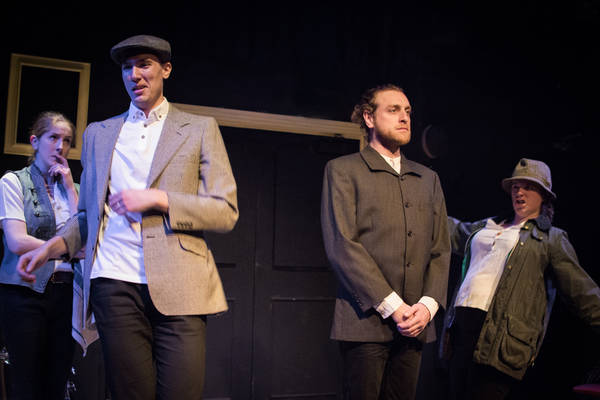
Wendy Hoose, Soho Theatre

Laura is a single mum who just wants a shag. Jake is also a fan of no strings attached sex. When the two match on Tinder and he cabs it over to her east Glasgow neighbourhood, things start out swimmingly, if a bit awkward. When Jake discovers that Laura doesn’t have legs, his open minded intentions go out the window and both end up surprised by the evening’s evolution. A production that champions inclusive theatre, Birds of Paradise’s Wendy Hoose uses surtitles, audio description and signing as well as Johnny McKnight’s humour-laden script to remind us that different body types still very much want the same things and are just as lost as each other in both real and online worlds. McKnight’s sharp, witty dialogue and performances that evoke plenty of belly laughs make this an excellent, if a bit sentimental, example of integrated, inclusive theatre that goes below the surface of a body to discover what makes us modern human beings.

James Young is the nervous, self-conscious Jake desperately wanting to impress self-assured Laura (Amy Conachan). Personified by a bulging erection in colourful pants, he’s a great contrast to Laura’s black neglige and red satin bedding. Jake’s struggle to be PC when put off by the lack of thighs below her torso fantastically convinces, and is a pointed manifestation of a society that refuses to consider disabled people as sexual beings. Laura’s sarcastic, biting responses are excellently timed and show she’s no stranger to such treatment. Young and Conachan showcase their consistently great chemistry and presence through spiky tension and believable affection. 

Jake’s ensuing education due to a late taxi, whilst sweet and following a smooth progression, feels rushed and unrealistic, though. An hour isn’t long enough to change deep seated, unconscious prejudice and sexual attraction. This is a small issue dwarfed by plenty of other positives. What is most effective are the themes that extend beyond disability issues. Female objectification, societal standards of attractiveness and disparity between online and real life are just as prominent as Laura’s lack of legs and generate self-reflection on casual sex behaviour and what an individual finds sexy. The humour softens the initial impact of these topics, but they’re the lingering memories and provocations from the play.

Projection design and the audio describer’s snarky personality add additional levels of comedy, becoming semi-characters in their own right and breaking up this text-based script. McKnight’s banter and Conachan and Young’s work are the immediate appeal, but the weight behind the dialogue lasts well beyond Wendy Hoose’s curtain call. 

Wendy Hoose runs through 7 May.

The Play’s the Thing UK is committed to covering fringe and progressive theatre in London and beyond. It is run entirely voluntarily and needs regular support to ensure its survival. For more information and to help The Play’s the Thing UK provide coverage of the theatre that needs reviews the most, visit its patreon.
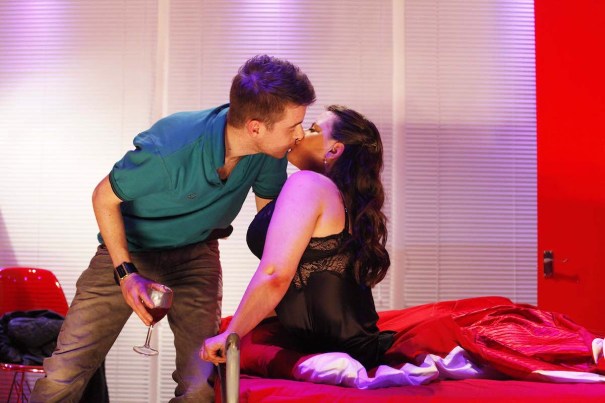
Gatsby, Union Theatre

Gatsby (c) Roy Tan (4)

Jay Gatsby’s distinctive yellow car is an iconic image in The Great Gatsby. Power, wealth and charisma emanate from its shimmering, custom paint job as it rolls between Long Island and Manhattan in the decadent 1920s. It’s eye catching and demands attention, like the enigmatic man who owns it. Adaptations of The Great Gatsby are plentiful, but good ones need the same characteristics as Gatsby’s car, along with a generous, heady mix of self-indulgence and extravaganza. Linnie Reedman and Joe Evans’ musical incarnation of F. Scott Fitzgerald’s iconic novel manages to avoid incorporating any these. Bland music, lazy performances and design and a book with numerous shortcomings makes Gatsby a stuttering, third-hand Ford Fiesta rather than a customized, purring Rolls Royce.

Reality TV celeb Ferne McCann makes her theatre debut in this production, bringing a lot of negative publicity with her as consequence. She’s also incredibly surprising – alone in a theatre-trained cast, she is the only one consistently able to be heard over the live actor-musos with her Amy Winehouse-influenced performance. Of the 13-strong cast, most are weak, some terribly so. They are either grotesquely overacted cartoons, or underplayed so much that their performances are flat. There’s no sense of danger or excitement, or EVERYTHING IS EXCITING ALL THE TIME FOR OVER TWO HOURS. It’s exhausting to take in. In either case, the characters are no more than stereotypes; this is more of an issue with Reedman’s book as it certainly doesn’t give the actors much depth to work with. Accents drift around the 50 states and then some, with the only consistent one coming from an actual American.

Reedman also directs, with little comprehension of the narrative arc she constructed from the novel. Other than the Plaza hotel scene late in the play when Daisy and Jay confess all to Tom, there is a pronounced lack of tension. Myrtle’s tragic end is anticlimactic and rushed, as is her husband George’s retaliation. She neglects characterization and seems to focus solely on staging. If that.

There are 21 musical numbers (including a couple of reprises), but none of Joe Evans’ tunes stands out from the rest. Even with a mix of smaller and larger numbers, there is little  musical variation. Transitions from book to song are often abrupt and forced for the sake of fitting in another tune rather than naturally reaching a point in the story where music is necessary to accentuate a plot point or emotion. Nick Pack’s choreography, without much to work with, is similarly unvaried with a bit of a Charleston every now and then.

There are few positives to pull from this production. Reedman and Evans’ interpretation is a choppy hatchet job of Fitzgerald’s work and few, if any, features deem it a worthy adaptation. If Gatsby’s goal is for the audience to “feel…the heat, sweat and life” of the euphoric, post-war American decade, it barely comes close. Tepid, cool and laconic is what actually comes across, in a wheezy motorcar threatening to cut out at any moment.

Gatsby runs through 30th April.

The Play’s the Thing UK is committed to covering fringe and progressive theatre in London and beyond. It is run entirely voluntarily and needs regular support to ensure its survival. For more information and to help The Play’s the Thing UK provide coverage of the theatre that needs reviews the most, visit its patreon.
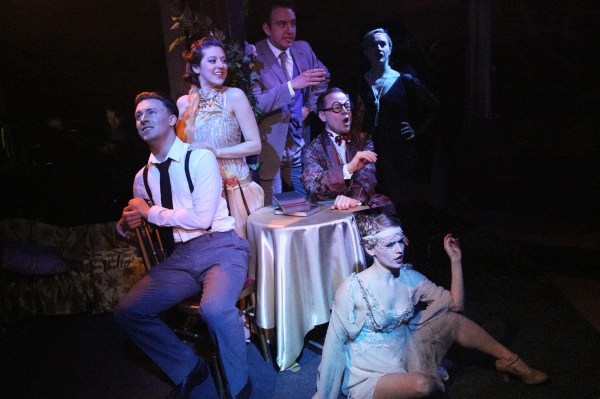
Russian Dolls, King’s Head Theatre

Russian Dolls at King's Head Theatre, Stephanie Fayerman and Mollie Lambert_1 © Andreas Grieger

Camelia’s just got out of young offenders’ but her mum never turned up to collect her, so she’s back to looking after herself. Hilda is a blind elderly woman fending of her goddaughter’s attempts to move her to Basingstoke. When Camelia robs Hilda after tricking into believing she’s covering for her carer, the two end up influencing each other much more than ever expected. Kate Lock’s Russian Dolls tells the fraught story of an unlikely dependency that is doomed to end badly for both women. Lock’s characters are fantastic, and their scenes together are tense and charged with moments of genuine tenderness. In between the scenes are narrative monologues that, whilst providing necessary information, are awkwardly addressed to the ether and disrupt the story’s momentum.

Stephanie Fayerman as Hilda and Mollie Lambert as Camelia are a volatile pair. The energy between them is either stormy or potentially so; the tension makes them wonderfully watchable. Their few scenes of relaxed openness towards the other are fleeting, but hugely rewarding and loaded with tough love. Both performances are excellent, and the dependency on the other is great to watch.

There is no sentimentality towards young people, the care system or aging in Lock’s script. The lack of happy ending is a touch disappointing, but it’s accurate. The stories of young people from broken homes actually managing to turn their lives around are rare considering the 69,540 young people in care as of March last year. Every now and again an “inspiring” case hits the news, but for the majority of these children, their lives are part of an endless cycle of poverty, abuse, drugs and jail time. Well done to Lock for not going the easy route with her narrative.

Structurally, the script is quite simple and there are large, frustrating chronological jumps that skips huge sections of both characters’ emotional journeys. This could easily be a full length, two-act play and would work very well as such. Provided the current ending is kept, a 2 hour or so build up would make it all the more devastating.

Russian Dolls, winner of the Adrian Pagan Award and shortlisted for the Bruntwood Prize, is a bolshy play full of life in all of its glorious imperfections. It’s an honest look at the care system and its flaws, but the actors’ characterization and electric relationship is the highlight of this new play.

Russian Dolls runs through 23 April.

The Play’s the Thing UK is committed to covering fringe and progressive theatre in London and beyond. It is run entirely voluntarily and needs regular support to ensure its survival. For more information and to help The Play’s the Thing UK provide coverage of the theatre that needs reviews the most, visit its patreon.
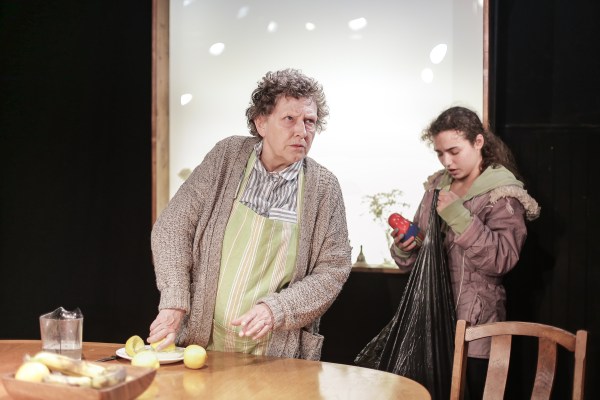
To Kill a Machine, King’s Head Theatre

To Kill a Machine: Scriptography Productions

How well can you condense Alan Turing’s life and work into one hour? Considering his technologically groundbreaking career, WWII code breaking and conviction for crimes of gross indecency, that’s a lot of source material for precious little time. Catrin Fflur Huws chooses to focus on the man behind the achievements at various pivotal points in his life for To Kill a Machine. From boarding school days to chemical castration shortly before his death, Huws shows the relationships rather than the events that shaped his life. Scenes of naturalism are interspersed with a surreal, presentational game show indicating the factors outside of Turing’s control that dictate his unfortunate fate at the hands of discrimination. Though stylistically dynamic, they are less compelling than the latter. Together, they make a good whole but with so much missing from Turing’s life, the highlights contained in To Kill a Machine shortchange the story of such an important man.

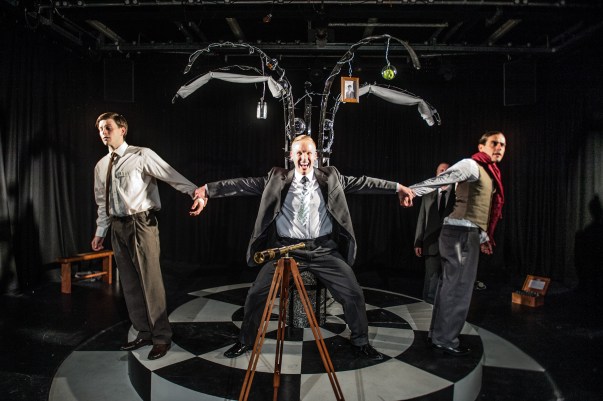
In the centre of a round platform, a wiry, mechanical tree by designer Cordielia Ashwell sprouts important mementos from Turing’s life: a photograph of Christopher, his first love at school, pages of indecipherable code, and the apple that he may or may not have used to kill himself. Its trunk is also a convenient place to store props and costume, but the visual aspect is the most dominant, and strikingly so. The symbol of life manifested in an everlasting, sculptural form against the items that were his downfall is powerful image.

The tree also dictates circular movements from the cast of four, most prominent in the game show scenes and Turing’s sex with his younger lover, Arnold Murray, who eventually betrays him – the moments where his life spirals irrevocably out of control. Alan’s eventual tethering to the tree via medical equipment during his “treatment” is a horrible,  effective reminder of history’s handing of people discovered to be gay and sapping their life force with discriminatory legislation.

Gwydion Rhys as Alan Turing is the anchor in the cast, with a nuanced and sensitive performance that leaves Benedict Cumberbatch’s generic interpretation in the dust. He is complimented well by intimate scenes with François Pandolfo as his school friend Christopher, and older brother John giving him advice in the run up the trial. This latter scene is by far the best in the play.

Though the script is good, it’s short length is unsatisfying and otherwise dwarfed by the performances and design. The structure works as does the lens with which it views Turing’s life, but surely there is more than an hour’s worth of material on the man behind the life-changing mathematician and inventor.

To Kill A Machine runs through 23 April.

The Play’s the Thing UK is committed to covering fringe and progressive theatre in London and beyond. It is run entirely voluntarily and needs regular support to ensure its survival. For more information and to help The Play’s the Thing UK provide coverage of the theatre that needs reviews the most, visit its patreon.
A Nation’s Theatre: Wail and The Beanfield, Battersea Arts Centre

For two months, theatre makers from across the country are coming to London to celebrate the state of British theatre. One of the A Nation’s Theatre venues is Battersea Arts Centre, currently hosting the double bill of Little Bulb’s Wail and Breach Theatre’s The Beanfield. Wail is an exuberant cabaret about whales and human expression; The Beanfield uses multimedia to examine the impact of police violence on peaceful people and the need to fit in. Though different from each other in content and tone, both Little Bulb and Breach play with performance conventions to create innovative new structures that are at the forefront of theatre performance.

WAIL_Little Bulb Theatre

There’s a lot of science in Wail, and a lot of musical instruments. Actor-musicians Clare Beresford and Dominic Conway, performing as themselves, also have boundless enthusiasm and impressive music repertoires. With material ranging from folk to metal, they share their enthusiasm for whales through songs alternating with monologues of scientific facts. Their charisma and cheer keeps these sections engaging, particularly with the addition of audience interaction. Though the overall energy is light and positive, Beresford’s melancholy for never actually seeing a whale in the flesh provides a bit of contrast to the Male Whale Choir, a hilarious whole-audience exploration of whale songs that males use when on the pull in the coastal waters of Madagascar.

There isn’t as much material on the promised exploration of why humans wail, but a song about why they sing songs is a tender, poignant homage to feeling fragile. This fun, frivolous show is light on the gravitas that a bit more time on this topic could bring, but Wail is still a wonderful, joyful piece as is. The symphonic final number is a fantastic climax wrapping up an excellent contribution to A Nation’s Theatre.

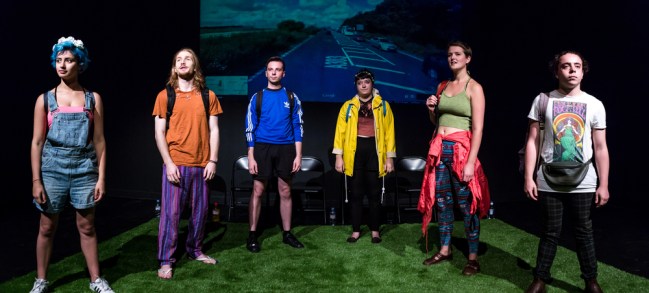
The Beanfield_014_please credit Richard Davenport

The Beanfield by Warwick University’s Breach Theatre wowed audiences at Edinburgh last summer, and understandably so. Drawing on the historic clash between new age travelers heading to Stonehenge and police fresh from the miners’ strikes, they add the framing device of a uni reenactment group researching the event in order to recreate it, and a counter narrative of a group of students going to Solstice. It’s a sophisticated script with plenty of absurdity to lighten the bleak depiction of police violence against unarmed civilians, but still serves as a potent reminder that this happens today in the UK and abroad. Part documentary, interview footage with witnesses on both sides is broadcast liberally; even though the inclusion of police is sympathetic, The Beanfield firmly supports the travelers. Rightly so – pregnant women and children were among the 600 or so attacked with truncheons and projectiles by 1000-odd police.

There is no explicit link between the Beanfield story and that of the contemporary, skeptical students at Solstice, but the inclusion of the latter provides some necessary humour. It’s not a needed subplot though, and detracts from the power behind the political statement of the Beanfield standoff. The script is a great collage of experiences past and present, the sweet naivety of students juxtaposing the atrocities that happened at thirty years previously. The Beanfield, a bit less polished than Wail, is still an excellent piece of theatre with some important thoughts on police brutality.

With multimedia at its forefront, The Beanfield captures the rapid-fire sensory bombardment of present day youth and the desire to instigate change as well as fit in with our peers. Wail, mostly analogue and much less angry, implies the importance of conservation and sympathy for all creatures, human and not. Both shows excellently address concerns of people in this country and experiment with performance, fitting contributions to A Nation’s Theatre.

Wail runs until 23 April, The Beanfield until 21 April then touring.

The Play’s the Thing UK is committed to covering fringe and progressive theatre in London and beyond. It is run entirely voluntarily and needs regular support to ensure its survival. For more information and to help The Play’s the Thing UK provide coverage of the theatre that needs reviews the most, visit its patreon.