Burning Doors, Soho Theatre

I can’t imagine living in a country where theatre is censored for criticising the government, and theatre makers who create politically subversive work risk arrest, torture and death. But this is the reality of Belarus Free Theatre. Its three founders, now refugees living and working in London, risk imprisonment if they return to their home country. They stubbornly continue to make work that’s ferociously critical of the Belarusian and Russian governments, and aggressively eye-opening for audiences like us who do not live under an oppressive dictatorship. 

Unadulterated rage and brutal experiences at the hands of the Belarusian and Russian judicial systems underpins Burning Doors, a nearly two-hour long collage of striking visual theatre. BFT tries to do too much here though, and it’s totally overwhelming. Though the show will undoubtedly linger for some time, a narrower selection of content and narratives explored more in-depth would have more personal impact.

Featuring Pussy Riot member Maria Alyokhina and her experiences in prison, the piece has a focus on the true stories of activists at the hands of the government. Dostoyevsky and Foucault also inform the piece, though there is the sense that there is much more at play than three individuals’ stories. There is a disconnect between the experiences shown, making them feel like isolated incidents rather than a sample of widespread persecution. Some wider context is provided, but there is little sense of the world these activists live in. It feels like it would be helpful to have more knowledge of Russian and Belarusian politics, and not having this knowledge is somewhat alienating.

That’s not to say that the show isn’t powerful. The company’s fearlessness in using extreme physical performance to show the brutality of the regimes is admirable and courageous. The final half hour or so is an extended movement sequence using acrobatics, rope work and combat utterly  horrifies – there is no doubt that the depicted of torture and abuse has happened and continues to do so in prisons all over Russia and Belarus. This section is by far the strongest. 

The ensemble cast of seven work together seamlessly and have a fantastically watchable rapport. Their unwavering commitment and passion makes for compelling viewing. Their precision is enhanced through Joshua Pharo, Nicolai Khalezin and Richard Hammarton’s design. 

Though Burning Doors huge ambition and absence of a through line ultimately do the show a disservice, it’s bold portrayal of government sanctioned torture against its own people is radical, challenging and necessary.

Burning Doors runs through 24 September, then tours nationally and internationally through 3 December.

The Play’s the Thing UK is committed to covering fringe and progressive theatre in London and beyond. It is run entirely voluntarily and needs regular support to ensure its survival. For more information and to help The Play’s the Thing UK provide coverage of the theatre that needs reviews the most, visit its patreon.

E15, Edinburgh Festival Fringe

Focus E15 Hostel in east London isn’t the lap of luxury. Far from it – it’s the last resort of dozens of people who would otherwise end up on the streets. The dedicated mother and baby unit is a particular refuge for young women and their babies with no where else to go. That is, until the council serves them an eviction notice so they can sell the land to property developers. Promises of rehousing have been undermined by stories of families being moved outside of the borough, sometimes hours outside of London and away from everything they know. Angered by the unfeeling power government officials wield over their lives, the mothers from Focus E15 organise and launch an attack on those that favour profit over people. Their campaign is captured in verbatim play E15, a piece that is part political rally and part documentary.

One of the drawbacks to verbatim performance is that material is usually sourced in one-to-one interviews, so dialogue between characters is either limited or artificially constructed. Though this is evident here, placing much of the action within a protest or occupation keeps energy up, and monologuing makes more sense in this context. It would be great to see more in-depth character interaction though, particularly between the mothers, in order to develop a greater sense of the community their work hinges on.

The cast’s confidence and conviction are infectious, and the DIY-style set design lends a further sense of grassroots unity. The party that’s going on when the audience enters sets an upbeat, relaxed tone that soon shifts to the tenants’ grim reality – an excellent contrast.

Fortunately, the Focus E15 residents have some effect, but their campaign must on – what happened to them is happening to others. E15 successfully brings the audience to their side and encourages awareness and campaigning, but the verbatim text lacks the anger that is kept in check in the interview process. This is a story that would have more emotional immediacy with a script informed by their testimony rather than constructed from it. The production certainly has plenty of merit and is well performed by the ensemble cast but in this instance, the verbatim script serves to distance rather than bring these people fully to life.

The Play’s the Thing UK is committed to covering fringe and progressive theatre in London and beyond. It is run entirely voluntarily and needs regular support to ensure its survival. For more information and to help The Play’s the Thing UK provide coverage of the theatre that needs reviews the most, visit its patreon.

House + Amongst the Reeds, Yard Theatre

For better or worse so much of our life, personality and choices are shaped by relationships with family. A stable, loving upbringing can equip an individual with the same traits, and the opposite often ushers in a lifetime of hardship. House + Amongst the Reeds are two short plays presented as a double bill by Clean Break showing the consequences of family disruption on the lives of young people. Different in content and tone, both have their faults in their execution but lay bare a selection of issues in Western social and familial fabrics.

Oni and Gillian are two undocumented, homeless teenagers in Chino Odimba’s Amongst the Reeds. The two girls are the same age, and both ran away from abusive family members who their parents trusted to raise and educate in the UK. Nigerian Oni and Vietnamese Gillian are chalk and cheese, but when Oni promises of a house of their own where they can raise Gillian’s soon-to-be-born baby, education and good jobs once she receives her leave to remain, Gillian can’t resist. Tragically, youthful optimism and ignorance leads them to a very different place. 

An ambiguous ending leads to questions of what is and isn’t real, but the story is a powerful reminder that there are young people in similar situations hiding in plain sight up and down the country. They don’t need to be deported, they need to be placed with a caring family who can help them achieve the education and quality of life they deserve. 

The characterisation of both girls tends to generalise, but actors Rebecca Omogbehin and Jan Le endow them with heart. There are too many stereotypes present that blockpotential pathos, but the story is a strong one that needs to be refined and heard. 

House is structurally more developed with well-rounded characters, though there is a pronounced lack of background information that is alluded to in this mini kitchen sink drama. Mama is seeing her estranged, eldest daughter for the first time in years, and her younger daughter, the good devoted one, has a secret she needs to share. 

Writer Somalia Seaton tries to fit an overly tangled web into too short of a time for her characters to properly confront their issues, but the cast of three deliver some lovely performances. Shvorne Marks and Rebecca Omogbehin as sisters Patricia and Jemima have a fantastic chemistry, combining to amusingly wind up their traditional, Nigerian mum. There’s enough humour to lighten the complexity of the character’s volatile relationships, though the story is incomplete and patchy.

Though House is the more sophisticated piece, the execution of Amongst the Reeds is marginally better. The latter is simpler and with issues that leave more lasting impact, though the former has more scope for development into a stunning piece of contemporary naturalism.

Even though there are problems with both short plays, this double bill gives voice to sorely underrepresented demographics. Clean Break’s work is an absolutely vital contribution to the UK theatre landscape, and more companies need to follow suit.

House + Amongst the Reeds runs through 17 September.

The Play’s the Thing UK is committed to covering fringe and progressive theatre in London and beyond. It is run entirely voluntarily and needs regular support to ensure its survival. For more information and to help The Play’s the Thing UK provide coverage of the theatre that needs reviews the most, visit its patreon.


Lucy, Lucy and Lucy Barfield, Edinburgh Festival Fringe

https://theplaysthethinguk.com/wp-content/uploads/2016/08/e379c-dsc_03212b2528courtesy2bmichelle2bwormleighton2529.jpg

The dedication at the front of The Lion, The Witch and the Wardrobe reads:

My Dear Lucy,

I wrote this story for you, but when I began it I had not realized that girls grow quicker than books. As a result you are already too old for fairy tales, and by the time it is printed and bound you will be older still. But some day you will be old enough to start reading fairy tales again. You can then take it down from some upper shelf, dust it, and tell me what you think of it. I shall probably be too deaf to hear, and too old to understand a word you say but I shall still be, your affectionate Godfather,

C. S. Lewis.

Lucy Grace, long feeling a strong kinship with the book’s protagonist Lucy Pevensie, clung onto the belief in Narnia well into adulthood. When she was 26, the dawning realisation that she would never reach Narnia suddenly hit her. With a sense of crushing loss, she turned to her well-thumbed copy of the book to search for clues that might refresh her once-dependable escape from life’s hardships. Previously skipped pages were poured over for clues, leading to the discovery of the book’s dedication – a revelatory moment for Lucy Grace. There’s a real Lucy! Perhaps she knows more about Narnia and can help her rediscover its wonder as an adult! But who is she?

Lucy, Lucy and Lucy Barfield sweetly documents Grace’s search for the real Lucy, about whom there is little information. This quest leads her down the rabbit hole of contacting Lucy’s father’s estate, researching at the Bodleian Library and interviewing Lucy’s best friend. A research project doesn’t sound like it would make dynamic, compelling theatre, but Grace manages to do so with great success on this solo show.

Grace’s performance is excellent. She has a gleeful charisma and innate sense for storytelling that keeps the audience’s attention. Her childlike wonder at each discovery is infectious. Hints of her background and struggle come through somewhat, though the script is far from self-indulgent.The design, mostly piles of cardboard boxes, lacks the delicacy of the story even though they allude to the archives Grace trawls through searching for details about Lucy’s life.

Lucy Barfield died in 2003 from MS. There is still some mystery around her life, and some of Grace’s findings directly conflict each other. But the creative young woman who danced, wrote poetry and music who inspired one of the country’s greatest writers and academics helps Lucy Grace renew her belief. Lucy, Lucy and Lucy Barfield is a lovely little story of adventure and discovery.

Lucy, Lucy and Lucy Barfield runs through 29th August.

The Play’s the Thing UK is committed to covering fringe and progressive theatre in London and beyond. It is run entirely voluntarily and needs regular support to ensure its survival. For more information and to help The Play’s the Thing UK provide coverage of the theatre that needs reviews the most, visit its patreon.
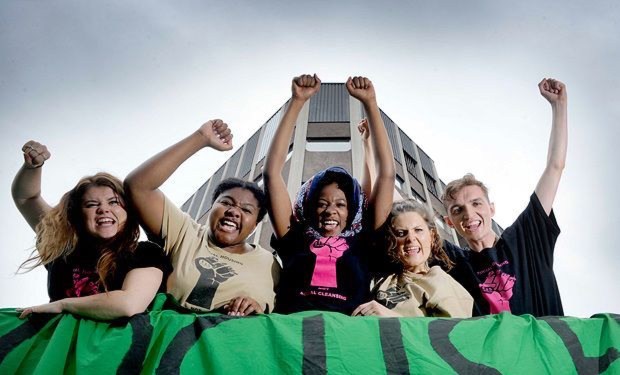
Hamlet, Ophelia – Part One, Edinburgh Festival Fringe

rsz_121

What would Hamlet have been like as a child? Ophelia? Were they close? Did they squabble or were they the best of friends? Shakespearian Lovers, a new female-led company from Italy, attempt to answer these questions in Hamlet, Ophelia – Part One. In this version Hamlet is played by a woman, bringing a quiet, feminine sensitivity to the role considered one of Shakespeare’s greatest. Despite performing in their second language, the two women have a sound connection with the contemporary English text that shows the two grow from playful children to adults at Gertrude’s wedding to her second husband. There are some major issues with staging and the ending needs work, but this gentle, little play stays true to Hamlet’s personality as reflected in Shakespeare’s text and has the strong foundations of a good script.

Of the two performers, the perky Ophelia is the stronger. She has a natural curiosity and handles the English script comfortably. Hamlet is much more reserved and often too quiet to easily hear, but she has an intellectual intensity that suits the character. Though Hamlet’s femininity is not disguised, masculine pronouns are used throughout – the relationship in this piece wouldn’t differ from one gender to the other, Ophelia is clearly female but Hamlet’s ambiguity interferes with any potential statement about his gender.

The script has a sensible progression through childhood and into adulthood. They play as equals but as they grow, the difference between the son of a king and the daughter of a minister informs their interactions. The affection they have for each other is genuine and heartwarming, though the circumstances life deals them requires formal restraint, even through teenage hormones. The ending needs development and resolution in order to emphasise why the it is where it is, and the reason why this story is being told needs clarification, but the characterisation is sound.

The staging is the primary issue with this production. The venue is too small to allow space to be clearly differentiated through either distance or lighting and there is no backstage. Private moments lose their intimacy and physical expression is restricted, particularly when they are playing, and Hamlet tries to express his grief for his father’s death.

This is some promising work from a new international company. Even though a native English speaker’s advice would be useful to sort out a few minor mispronunciations, the confidence and ability both actors display in performing in a foreign language is impressive. With additional work on the script and fully realised staging, this has potential to be a great two-hander.

Hamlet, Ophelia – Part One runs through 28th August.

The Play’s the Thing UK is committed to covering fringe and progressive theatre in London and beyond. It is run entirely voluntarily and needs regular support to ensure its survival. For more information and to help The Play’s the Thing UK provide coverage of the theatre that needs reviews the most, visit its patreon.
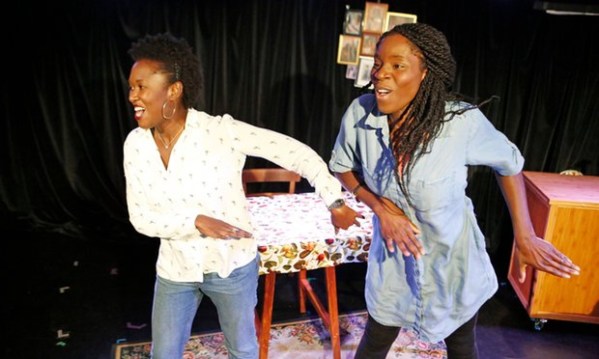
The Ruff Guide to Shakespeare, Edinburgh Festival Fringe

https://files.list.co.uk/images/2016/07/26/ruffguide_large.jpg

There’s a good amount of Shakespeare-based work for children and young people at the fringe, which is a great way to introduce children to his work as well as give theatre makers a chance to experiment with different styles when approaching the bard’s text. The Ruff Guide to Shakespeare is a mashup of his most popular plays and characters with a biography of his life. There’s a lot packed into an hour, perhaps too much for the primary school middle years that are the target audience age. The show is otherwise well written, well performed and the story line constructed out of Shakespeare’s life gives it a solid grounding on which to sample extracts of his work.

Six Bristol Old Vic students perform Toby Hulse’s script. Though there isn’t a weak link amongst the cast, the strongest by far is Georgia Frost. She has a charisma and stage presence that the others lack, though they all show promise. The company handles their verse well, maintains high energy and warmly encourage the audience of children to join in.

The script is quick and punchy, most valuable for giving the young audience context about Shakespeare as a person in a easily digestible format framed by his “seven ages of man” monologue – a fantastic idea that parallels a short piece of text to a story. There are gags, games and songs that are interactive and playful, though more time could be taken within each activity in order to allow the audience to engage fully. The characters and scenes that are included are some of the most well known, kept short and explained well. There are a lot of them though, and the sheer amount is potentially overwhelming for the younger children in the audience.

Comparable to the Reduced Shakespeare Company’s The Complete Works of William Shakespeare (Abridged), this is a jolly, friendly romp through Shakespeare’s life and works that’s great for a young audience. Some tweaking to either cut some of the characters or pitch it to slightly older children would make this an even stronger piece, but it’s polished, slick and jolly good fun compared to similar shows on offer.

The Ruff Guide to Shakespeare runs through 19th August.

The Play’s the Thing UK is committed to covering fringe and progressive theatre in London and beyond. It is run entirely voluntarily and needs regular support to ensure its survival. For more information and to help The Play’s the Thing UK provide coverage of the theatre that needs reviews the most, visit its patreon.

Feature/Review: Children & Shakespeare, Edinburgh Festival Fringe

https://i0.wp.com/unknownmagazine.co.uk/wp-content/uploads/2015/07/York-3-credit-Rob-Freeman-1-1024x683.jpg

Whilst there’s plenty of Shakespeare at the fringe, it doesn’t get much coverage. It’s understandable – the Bard doesn’t count as a potential Next Big Thing, and he’s favoured by student and international groups that usually have short runs and are deemed less worthy of critical attention. It’s obviously necessary to recalibrate expectations and vocabulary when evaluating children and young people’s performances, but directors and teachers can and should be held accountable for the quality of their own creative work and bringing out the best in their students or young cast. They do have the additional pressure of incorporating an educational element and ensuring that their work is suitable for the children and young people they are working with, but that specialism is no more or less different than any other in the performing arts.

To completely ignore young people’s work at the Fringe when sampling the Shakespeare on offer cuts out a large segment of the Shakespeare productions on offer, and considering that these are often international schools as well, the cultural differences can be considered when critiquing. Over one day at the fringe, I watched three distinctly different Shakespeare adaptations – a Scottish stage school including children approximately aged eight through sixteen that looks at Twelfth Night, an American university’s analysis of Shakespeare’s baddies and a Notts young people’s dance-theatre company’s deconstruction of Macbeth.

Admirable Fooling or What You Will by Little Shakespeare School’s Michelle van Rensburg had the most challenging remit in that it is a show suitable for performers over a big age range, but the show she invents is a nonsensical mess. When she sticks to her simplified script with sections of original text more the more able students, it is standard children’s fare – able to be followed, giving the kids a chance to show their skills and including everyone. The random sections from Titanic, though? Inexplicable. None of the children on that stage or in the audience would have even been alive when the film came out, so crowbarring in pop culture references that they wouldn’t understand is gratuitous and self-absorbed. There are also numerous off-text clowning sequences that are unconnected to the story, and a lengthy exposition setting up a storytelling premise that isn’t consistently followed through. The one, shining moment of kitschy, creative inspiration that epitomises fringe Shakespeare is the tiny blond girl who plays the letter Malvolio finds in the garden. She wears a bright yellow sack with felted letters on either side and enthusiastically delivers the text that Malvolio reads from the letter in Shakespeare’s original. She looks about eight years old, maybe nine, certainly no more than ten, and it is an adorable thing of wonder. There are some good actors who are confident and speak well, particularly the eldest girl who plays Olivia, but the show itself is a baffling construction with little through-line or sense.

Bad Shakespeare, by Oklahoma State University drama students, isn’t bad, but it’s just as much of a lecture as it is a performance. Showcasing their intensive summer Shakespeare studies, they work their way though Shakespeare’s development of his villains. The exposition that sets up their five act structure is too long, but the acts’ increasing complexity is a nice touch. Most of the ethnically diverse ensemble are good performers, and all bar one are women – great work towards increasing diversity from the programme director. They handle the language and verse with muscularity and confidence, though there is no evidence of work towards convincingly playing men. Their emotions tend to read more as upset rather than angry or vindictive, and their physicalities are distinctly feminine. The show’s director has chosen faux-period costume; some are in dresses and some in doublet and hose. Neutral, modern dress would suit much better, especially considering the large amount of instructing the audience with contemporary language and pop culture references. Bad Shakespeare is great for learning more about Shakespeare’s characters and some of the scholarship behind them in a relaxed, easy to follow format, but it’s more of a learning experience than a show. However, they wear their confidence and passion for Shakespeare on their sleeves, which is a wonderful thing to see.

Fortitude Dance Theatre’s Macbeth has potential to be the most promising of these three adaptations, and whilst it certainly has some great moments, there are also some misguided creative choices and interpretations, and an inconsistent application of style. The young company demonstrates competence in their dance and verse delivery, though as a whole, they struggle with achieving moments of emotional intensity and staging on a  thrust. The pace was great, but tone consistently conversational. Their opening sequence was a great capture of the 90’s club scene with text and contemporary dance obviously inspired by Frantic Assembly, but the dance element is absent until the discovery of Duncan’s body, about half way through this abrupt edit. There are missed opportunities to incorporate movement into Macbeth and Lady Macbeth’s scenes showing their fluctuating power struggle. This dynamic between characters later between Macbeth and the witches inspires some good tribal, threatening choreography. Macduff’s monologue on hearing of his wife and children’s deaths is a stunning blend of movement and text that the company could to stylistically inspire their future work. They could also do with a stronger director, or dramaturg familiar with Shakespeare pronunciation, to confirm any line interpretations – “Out, damn spot” is not referring to blemishes on her face.

It’s brilliant to see young artists finding their way through making work and discovering styles and forms that work for what they want to communicate in their Shakespeare interpretations. Even though they won’t be up to professional performance standard unless they are extraordinarily gifted, their teachers and directors should be strive for clarity. Though none of these three productions quite reached that point, they each had their merits and watching children and young people discover and explore the joy of performing is a marvelous thing.

The Play’s the Thing UK is committed to covering fringe and progressive theatre in London and beyond. It is run entirely voluntarily and needs regular support to ensure its survival. For more information and to help The Play’s the Thing UK provide coverage of the theatre that needs reviews the most, visit its patreon.


Lines, Edinburgh Festival Fringe

http://www.emmanently.com/wp-content/uploads/2015/03/tubemap-2012-12.png

Every Londoner has strong feelings about the tube. They love it, hate it, love to hate it, depend on it, avoid it, sometimes all at once. In Lines, Rose Bruford students pay homage to the underground by extracting individuals from the millions of faces that blur through stations each day. A collage of movement, narration and dialogue captures the diversity of the city with a lovely affection, but the tangled, underdeveloped plot threads that emerge aren’t followed through.

Writer Ian Horgan has numerous lovely ideas but none of them, even the fictional disaster that has the power to unite passengers, is chosen as the narrative spine. Whilst this adds to the montage effect of individual moments, it’s a format that only works for short periods of time. There are certainly some great stories of individual characters and any of them could be short plays in and of themselves, but here they are unsatisfying. The sections of spoken word vary in the quality of delivery, but this is a style that Horgan uses inconsistently. The use of live music is much more regular, and a great contribution to the piece.

There are some great performances, as should be expected from drama school students. No one stands out as a weak link and their time training together has formed a seamless ensemble. Lines also has the distinction of one of the more ethnically diverse productions of the fringe, which in and of itself is hugely commendable.

Though this affectionate tribute to London transport has plenty of potential, it falls short of true excitement or innovation in its current form.

Lines runs through 15th August.

The Play’s the Thing UK is committed to covering fringe and progressive theatre in London and beyond. It is run entirely voluntarily and needs regular support to ensure its survival. For more information and to help The Play’s the Thing UK provide coverage of the theatre that needs reviews the most, visit its patreon.

Mr Incredible and Deal With a Dragon, Edinburgh Festival Fringe

https://files.list.co.uk/images/m/mr-incredible-main-image-print-LST209719.jpg

Solo performances are popular at the Fringe, and there are some good ones this year. So far, the best production I’ve seen this year is one-woman show Torch, celebrating womenhood in all of its flaws and glory. To portray men from such a perspective is much harder what with society already granting men more privilege than women, but Camilla Whitehill’s powerful Mr Incredible does just that in order to highlight male entitlement.

Adam and Holly have recently split up, and Adam hates it. Men like him aren’t meant to be single. He has a good job, owns a flat in London and desperately wants marriage and children. Whilst he loves Holly’s youth and fighting spirit, he was glad when she started to mellow and come round to the idea of settling down. But she wouldn’t be tamed by his sedate nights in front of the telly watching trashy programmes. She wants to write about important issues and change the world for good.

Though Adam’s account of Holly betrays an obvious, fundamental incompatibility between the two, Adam is blind to it and his desire for Holly to conform, and it’s infuriating. As he details moments from their relationship and its unravelling, he blindly transfers all blame onto her. The script cleverly paints Adam as a generally good guy, making his privilege initially subtle, then growing until their relationship reaches a horrible end. His ingrained entitlement to Holly and the belief that she should conform to his ideal life is a good capture of male immovability around women’s goals and desires, and hopefully framed in a way that triggers male reflection.

Alistair Donegan fleshes out Adam with genuine grief for the loss of his relationship and fully believed justification of the character’s choices. Whitehill’s script paints Adam overly-simplistically at times, but Donegan makes the character three-dimensional.

As a solo performance, it is initially unclear who Adam is talking to, but this is revealed in the play’s final moments when the severity of their breakup is horrifyingly revealed.This moment is subtle and takes some processing, so perhaps a bit more obvious spelling out will make the intended message stronger. Overall, this is a strong, polished production with acute comment on male privilege over women’s bodies and choices.

Deal With the Dragon also looks at male entitlement, but likely not deliberately and with a hefty dose of absurd fantasy. Bren is a gay dragon who finds vulnerable gay men that need looking after and offers to help, but not without signing a contract. The Faustian pact between Bren and artist Hunter looks at artistic temperament and dependency in the arts with both comedy and gravitas, though Kevin Rolston’s piece is lacking in a concise storyline and clear message.

Rolston is an excellent performer who distinguishes between Hunter, another artist Gandy and Bren with physical skill that is delightful to watch. With no costume or props, it’s perfectly clear that Rolston is a dragon. The transformation is simple, but utterly delightful.

The script has a nice premise – What if you had a gay, German dragon to help you get through the unpleasantness of life – but it’s never made clear what the premise is trying to communicate. Are people eventually better off with Bren’s assistance? Worse? What does it say about life’s obstacles as a whole? Should men have someone at their disposal to do their dirty work? These questions go unanswered. Though Rolston’s ability as a performer is undeniable, Deal With the Dragon never makes a definitive statement.

Mr Incredible runs through 28th August, Deal With the Dragon runs through 29th August.

The Play’s the Thing UK is committed to covering fringe and progressive theatre in London and beyond. It is run entirely voluntarily and needs regular support to ensure its survival. For more information and to help The Play’s the Thing UK provide coverage of the theatre that needs reviews the most, visit its patreon.

Two Little Dickie Birds, Brockley Jack Studio Theatre

You know those people who never stop talking, ever? The sort that will strike up a conversation with people at bus stops, in the supermarket or talk to themselves constantly? They thrive in customer service. They make brilliant pub landladies. They’re comforting if they’re your granddad. But as a solo performance character who encounters soap opera-esque levels of misfortune and has a story told through a terribly structured, stereotypical script? Being in their continuously monologuing presence for ninety minutes is excruciating.

Every second of Pauline’s journey of self-discovery from her pub in Oldham to Brazil in Two Little Dickie Birds is fraught with either ridiculous catastrophe or mundane daily life. The sappy, middle-aged blonde who is an everywoman completely lacks unique personality. She perpetually narrates the most minor of details as if the audience were mentally incapacitated and unable to work out any conclusions themselves. Dodgy dates, pub regulars, a fire, the death of a loved one and fights with technology are a mix of boring and absurd topics she covers. Imagine the most boring episode of Eastenders or Coronation Street performed by one person and you’ll be close to this play and its execution.

The script is a monotonous drip feed of linear information with no sense of pace or emphasis of key moments. She speaks to invisible characters, yet directly to the audience who are outside of her immediate reality. The three writers, David Allen, Jonathan Clay and Mandy Hester, seem to have no understanding of how solo performances are meant to work, and the fact that not one but THREE writers thought this script was fit to put in front of an audience is most worrying. The style and structure they employ is more suitable to children’s storytelling – it has no literary finesse, surprise, suspense or humour – despite being marketed as a comedy. The similarly advertised poignancy means a happy ending, but with a lack of empathy. This is the sort of material more appropriate to am dram than professional stages.

Performed in a consistent, even tone with no variation and with a voice that could strip wallpaper (also unvarying), the actor also appears to lack clear direction. Jeffrey Longmore seems to have no sense of a narrative arc, character journey or how to add light and shade to her delivery. Extraordinarily long pauses between scenes also show an incapability of handling transitions, as these last well beyond moving set and props around. There is also the bafflingly costumed stagehand who occasionally interacts with the audience, but not with Pauline.

Dave Benson’s set redeems the production somewhat. It’s detailed, grounded in reality and offers visual variation that the other production elements lack. Projections augment physical build, but these are unnecessary and some occasional CGI animation is downright awful.

Two Little Dickie Birds could snapshot Northern working class life, but the lack of compelling story and sense of how to tell it is the script’s downfall. A poor performance and direction exacerbate the poor text, making this production on par with the hobbyists at the village hall who speak volumes of little substance.

Two Little Dickie Birds runs through 30 July.

The Play’s the Thing UK is committed to covering fringe and progressive theatre in London and beyond. It is run entirely voluntarily and needs regular support to ensure its survival. For more information and to help The Play’s the Thing UK provide coverage of the theatre that needs reviews the most, visit its patreon.