The Four Fridas, Woolwich Barracks

Voladoras_1396b-LWhen she was little, Frida Kahlo yearned to be able to fly. Her parents’ gift of a dress with wings proved disappointing though her dreams of flight remained, particularly following a crippling bus accident that left her with chronic pain and unable to have children. Bedridden for months during her recovery, she channeled her despair and rage into painting. These paintings, along with the ones she made over the rest of her short life, are the inspiration for Bradley Hemmings’ stunning outdoor multimedia event at Greenwich & Docklands International Festival this year. Using pyrotechnics, dance, projections, aerialists, music and the Mexican fertility ritual of the Voladores, The Four Fridas is a visually arresting spectacle but the show that is meant to be a tribute to Kahlo does not provide any particularly unique insight into her life and work.

Divided into for sections that reflect the elements earth, air, water and fire, The Four Fridas chronicles Kahlo’s life. Whilst there were clear acts to the script that took place in different areas of the site, the association with the elements was loose at best. The most sculptural set piece, a bus and tram crash built from metal and crates, was only used briefly towards the beginning. The script itself was fantastical and poetic, but densely written and delivered at a quick, even pace. The language was second rate to the visuals, though what with how impressive they were it would be nigh on impossible to surpass them with any other production element. It was easy to ignore the language in favour of visual performance surrounding the audience allowed to freely wander the performance site.

There were two highlights of the 45-minute long production. The first was an extended projection and aerialist hybrid against a giant screen held up by a crane. The projections were animations based on Kahlo’s work, with the performers against the screen adding texture and further detail. The most exquisite sequence was a flying butterfly, with a performer as the body of the insect. Each aerialist was controlled by a less obvious human counterbalance who scrambled up and down the vertical rigging on the side of the screen. This added an element of puppetry to the performance mediums used. These sections reflected freedom Kahlo felt when painting and her anguish of being trapped in a body that had previously been healthy and unscarred, but made no specific comments on her life.

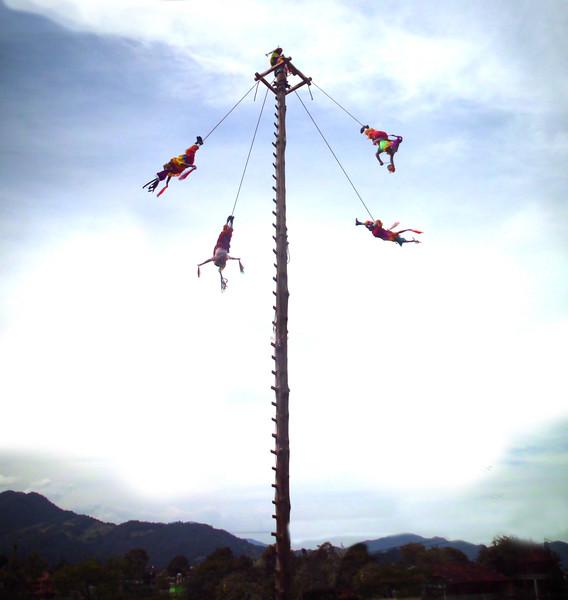
The second most notable feature was the ancient ritual of the Voladores. Using nothing but rope to ensure their safety, four people climbed a wooden pole without harness, only to fall backwards suspended by their feet. The top section of the pole gently spirals, lowering them to the ground. Whilst this is a Mexican fertility ritual, the vague connections to Kahlo are her inability to bear children and that it also hails from Mexico. Surely it is an affront to an infertile woman to end a performance about her life with hope for children? Nevertheless, it is a remarkable cultural phenomenon to witness.

The free access to an event with such high technical requirements is highly commendable, though the tech is at the mercy of the outdoors. On the last night, part of a scaffolding tower collapsed and had to be removed (fortunately no one was hurt). On a previous night, winds meant that the screen was unable to be used. Whilst this adds to the immediacy of live performance, it also means the performance is shortened. Whilst it was free to stand in the site and watch, bleacher seats came at a price. Those that paid may have felt short changed by the abbreviated length.

Hemmings had set the bar high for this kind of accessible public performance though his work on the Paralympic Games Opening Ceremony and stylistically, work like this should be produced often, up and down the country. It is a shame that the spectacle did not particularly support the woman it is meant to honour. Even with basic knowledge of Kahlo and her work; the opportunity was there to communicate a deeper understanding but that was never reached. Though this kind of theatre is still new and infrequently produced, it should aim to develop more nuance and meaning. I look forward to more artists creating large-scale public performances incorporating a rich combination of performance practice and technology. This is the sort of art that has the potential to capture public affection and encourage them to more fully marry art with day-to-day life.


The Play’s The Thing UK is an independent theatre criticism website maintained voluntarily. Whilst donations are never expected, they are hugely appreciated and will enable more time to be spent reviewing theatre productions of all sizes. Click here to make a donation with PalPal.

Bare Essentials, Amersham Arms

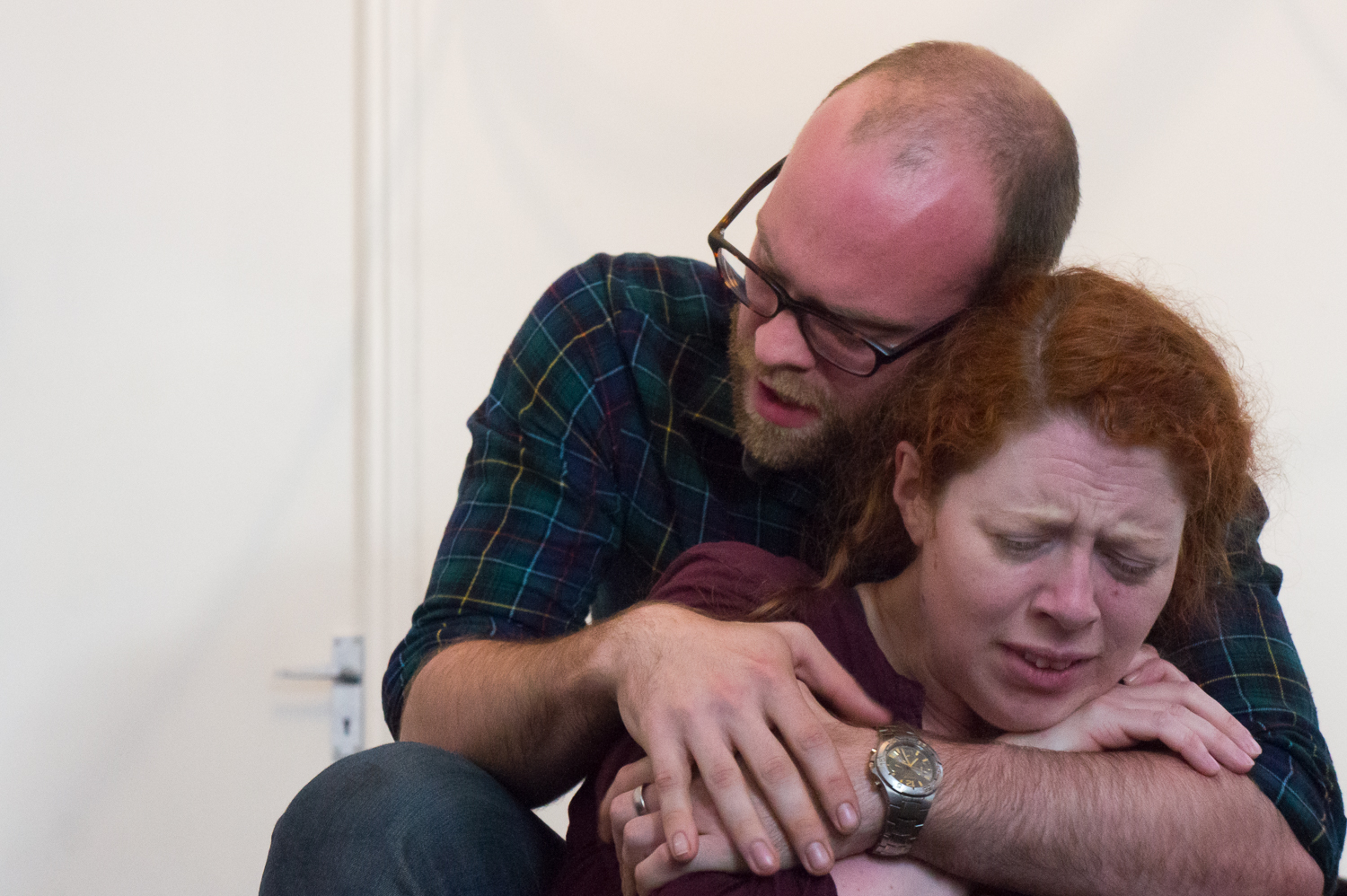
Encompass Productions produce theatre, film and a regular night of new writing, Bare Essentials. Rather than a scratch night, they aim to approach each micro-play with the same dedication as a full production, but with no budget. With plays accepted from all over the world, the current Bare Essentials has seven short plays ranging in style from naturalism to absurdity. The evening is a mixed bag with some scripts significantly better than others, but the performances are quite good. What made the whole evening hard to take had nothing to do with the production: the chosen venue, Amersham Arms in New Cross, isn’t fit for purpose and on the hottest day of the year in a tiny room with no air conditioning, it was a hugely uncomfortable experience that interfered with the enjoyment of the evening. I couldn’t wait to leave, and spent a large part of the evening trying not to be sick (I’m not good in the heat. At all.), which is a real shame because there were some inventive pieces of writing.

  1. CTL, ALT DELETE

This play is a frenetically paced, dystopian depiction of the film industry after the incorporation of robot writers. The robots aren’t pissed off though, because they’re robots. It’s the writers who are angry, and the cold, corporate producers just don’t get it until they have to face the consequences. Rachael Owens and Marcella Carelli are the money-grubbing producers unwilling to listen to writer Alex (David England); all three capture the desperate situation through rapid-fire dialogue and excellent timing. This play is only about five minutes long, but comfortably conveys the story. The idea could be developed into a longer piece, but this micro-play is a perfectly formed, self-contained piece by Dan Page.

  1. THE LEAVING OF THINGS

One of the best and my personal favourite, this play looks at internet suicide pacts, loneliness and hope. Though the dialogue is sometimes forced, performances by James Barbour and Alice Corrigan are some of the best I’ve seen on the fringe. This play could easily develop into a longer character driven one-act about the need for genuine human connection in our digital world. An excellent piece by Dean Moynihan.

  1. PANTHER

A West Country lad fails to understand his father’s affair and goes searching for a big cat in the darkness every night. This is an extended monologue with some character development, but relies on the regional stereotype of West Country equalling stupid or mentally deficient. Structurally, writer R. J. Thomson has a good piece, but doesn’t fully explore the character’s need to find the cat that killed his neighbour’s lamb, perpetuating the family feud that started with his father “tasting the neighbour’s chutney” on a nightly basis. The myths of big cats roaming free are touched on, but this is another area that deserves more time and could add a richer overlay of meaning onto what is currently quite a superficial script. There is room for development however, and this character piece could expand to a full cast and script.

  1. FEEDING TIME AT THE HUMAN HOUSE

Liz McMullen and Pip Barclay play zoo baboons puzzling over human nature and relationships. The physical depiction of their characters is excellent and wholly embodied, drawing attention to the more human traits of our ape cousins. Elements of comedy and poignancy make this view of mating rituals and pair bonding integrated and light-hearted, though if any longer, the idea would be excessively exhausted. As is, this is just the right length to explore writer David Wiener’s idea.

  1. THE NEWS

Lucy Foster’s script looks at three characters (Hannah Lawrence, Joe Bence and Jack Bence) coming to terms with a mutual friend Sarah’s drunken accident that she may not survive. The three dramatically different personalities pass the blame around as they struggle to cope with Sarah’s fall down the stairs and their own directionless lives. This microcosm presents the inner fear of giving up a creative career for a secure job only to find life has no meaning. Foster relies on contrasting stereotypes that are an unlikely group of friends and could do with more development, but if this were a longer play, it would be easy to address. The performances could also use more detail, but what was presented effectively communicated the play’s message.

  1. CONFESSIONS A DEUX

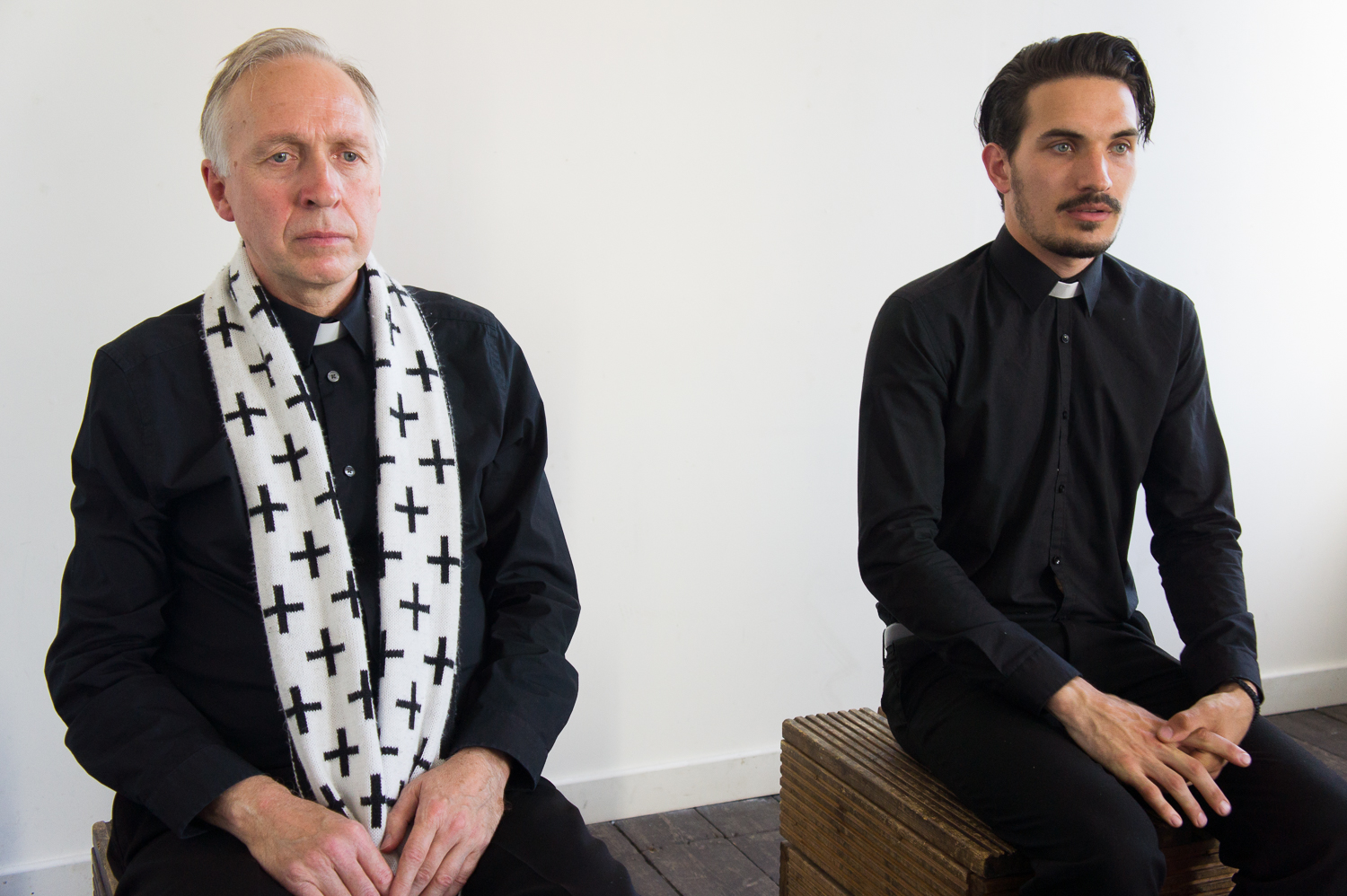
By Stephen Cooper, this one goes beyond the absurd to bizarre and the meaning of the piece isn’t clear on a wider level. Two priests (Graham Christopher and Josh Morter) have encountered a lonely parishioner with a fetish for priests and both have caved into their carnal desires. There is some good situation comedy and cleverly simple staging, but other than a specific comment on the sex lives of priests and their reciprocal confessions, this play has limited appeal and scope for development. This is the weakest one of the evening.

  1. NOTHING COULD SURPRISE ME NOW

Another example of absurdity, this is one of the better productions in Bare Essentials by Alain G. Cloarec. Turning narration and metatheatricality on its head, it is brief but wonderfully funny. Characters enter the room one by one having awoken this morning only able to speak in the third person, rather like Gregor Samsa but less traumatic. The “finale” then transcends the play, leading into a curtain call for the entire company. This is an excellent programming choice and some inventive directing by Michaela Frances Neal.

Overall, this is a varied evening of new writing, though even though the company claims it differs from a scratch night, it appears to have little difference. Scratch nights also approach their work with commitment, and are done on a shoestring in order to trial new writing. Though these pieces were quite polished, most need development. A more suitable space would improve the audience experience and establish a more professional, less scratch-night feel. As is, the room was small with no theatrical lights, white walls, and windows that are not blacked out. It was a room rather than a theatre and it is unclear why Encompass didn’t use the actual theatre downstairs, unless the reason is financial.

Scratch nights and short play showcases remain a good showcase for actors and writers, without the time commitment of a larger production (usually for no money) and the ability to present audiences with a range of styles and topics. Those with short attention spans and a wide range of interests will find this format particularly appealing. This one is has some quite good scripts and excellent performances but if the production company wants it to not feel like a scratch night, a more suitable venue must be chosen, and not just for air conditioning.


The Play’s The Thing UK is an independent theatre criticism website maintained voluntarily. Whilst donations are never expected, they are hugely appreciated and will enable more time to be spent reviewing theatre productions of all sizes. Click here to make a donation with PalPal.
Britannia Fury, Hen & Chickens Theatre

2015-05-07 20.33.52 (2)“Never meet your heroes.”

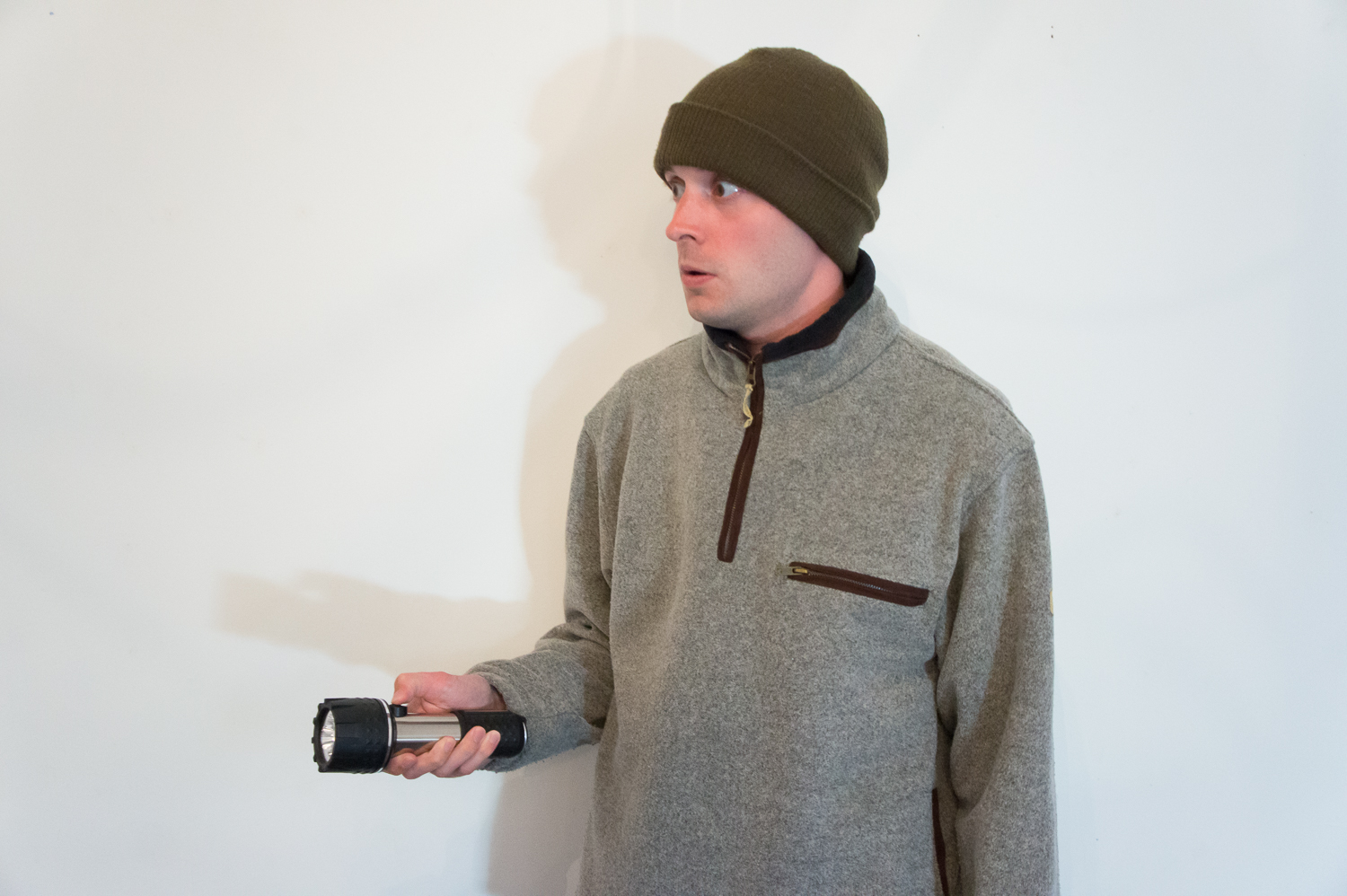
This stark warning from one character to another foreshadows the absurd, disappointing story about to unfold. Part satire, part pantomime, part superhero spin off, Britannia Fury introduces us to Britain’s only real superhero. He is now an elderly alcoholic living in a council flat after his epic rise and consequential fall into obscurity, but a young reporter has located his address and is determined to share his forgotten story with the world. A mix of performance styles and a story that can’t quite seem to determine what it wants to say prevents the concept from developing into a strong script.

Mr Jameson (Kit Smith) is the exaggerated stereotype of an editor of The Daily London Leader. Loud and abrasive, he provides complete contrast to the nervous Charlie (Ethan Loftus), a young reporter not even on Jameson’s radar. Charlie has the scoop of the year and negotiates with Jameson to let him interview 70s and 80s superhero Britannia Fury, who saved the nation from villainy only to mysteriously retire and disappear. Charlie wants to share the story of this forgotten hero with the nation. Loftus plays Charlie naturalistically, with a quiet, geeky passion for Fury. Whilst both Smith and Loftus embody their characters respective styles well, they clash and cause the production concept to look like it lacks direction. The other characters add to the soupy style mash up rather than siding with one of the earlier, established performance styles. Fury (Geoffrey Kirkness) is a mix of stereotype and naturalism, which adds depth but only further confuses the production’s identity. This is an issue with the script and direction rather than the performers, but one that can be solved by the playwright choosing one approach and sticking with it across all the characters.

The storyline, with its clear premise, becomes convoluted as Charlie and Fury meet and delve into his past. There are some predictable plot twists that lead to a tragic end; again, the initial idea has good potential to explore the human condition through Fury’s story but this is glossed over and made light of with comedy and exaggeration. Charlie’s initial shock of meeting his fallen hero is underplayed, then forgotten, but his emotional journey hits some good points. Their interview occasionally drags, as if the play is trying to buy time rather than following the natural narrative arc and getting to the point. As Charlie delves deeper into Fury’s twisted Tory past, it becomes clear that Jameson’s initial warning rings true.

The idea of the fallen hero in modern times certainly has mileage and Hillcrest Artists begin to solidify interpretations of the theme but they don’t quite come to fruition. Is the play about politics? Is it about society’s short attention span? Or, is it smaller and about the relationship between two people? Is it making fun of superheroes? Is it about Fury’s humanity? Really, it is all of these things and more, but for a play not much longer than an hour, this is too much to try to address. There are some touching moments and witty dialogue but underlying substance doesn’t quite materialise in Britannia Fury.


The Play’s The Thing UK is an independent theatre criticism website maintained voluntarily. Whilst donations are never expected, they are hugely appreciated and will enable more time to be spent reviewing theatre productions of all sizes. Click here to make a donation with PalPal.
This Is How We Die, Battersea Arts Centre

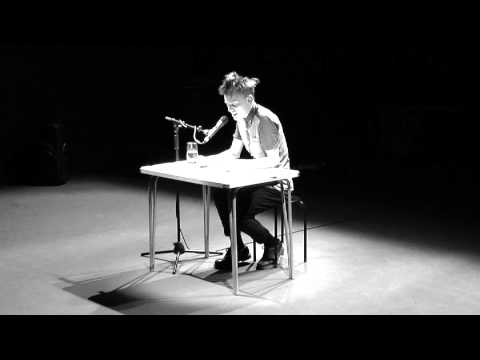
Chris Brett Bailey is a bard of thhqdefaulte modern age. Like Elizabethan theatre the audience went to hear rather than to see, This Is How We Die is a bombardment of the ears rather than the eyes. Using spoken word and beat poetry to tear open the world as we know it, Bailey forces us to confront the horrors and beauty of everyday existence. This piece of theatre moves away from the trend of visual theatre, taking the audience on a self-reflective ride of their lives.

At just over an hour, we are hurtled on a journey through Bailey’s rage against “-isms” and “-ists,” a brutal first meeting with his overly-literal girlfriend’s parents and a Hunter S. Thompson-like roadtrip through the American desert. His delivery is relentless, pausing only for comic effect or to take small sips of water from the glass that sits on his desk. Yes, a desk. He sits at a desk, with his script in front of him. This form rails against the increasingly visual culture we live in but it forces the audience to really and truly listen. He has a lot to say that he feels strongly about and you need to hear it.

Trying to describe what This Is How We Die is about is futile. Anything descriptive about plot or narrative arc will make this piece sound simplistic and trite. The feature that really makes this a must-see is Bailey’s visceral use of language. He savours it, relishes it and throws it away. A sea of sound washes over us, then pummels us, unarmed, in a back alley behind some dingy American bar. His imagery alternates between abstract and concrete, the highlight being his girlfriend’s neo-Nazi father left shaped like a swastika after a car accident.

The last ten minutes or so abandons speech, instead favouring live ambient music and harsh lighting. This is his Elizabethan jig, the audience’s catharsis after the emotional Sturm und Drang of the last hour. There was no point in fighting the journey of This Is How We Die so you may as well join him. Share in his rage, his joy and his passion. Relish the world you live in and the sounds of the words that pour so easily from his mouth. This isn’t about how we die, but how we should live.


The Play’s The Thing UK is an independent theatre criticism website maintained voluntarily. Whilst donations are never expected, they are hugely appreciated and will enable more time to be spent reviewing theatre productions of all sizes. Click here to make a donation with PalPal.
No Take Backs, everything theatre

“What do you do when you’ve lost your dad, your girlfriend dumps you and a stranger breaks into your new flat, handcuffing you to the radiator? Engage in a battle of wits for your freedom of course!

“…Emily (Lucy Litchfield) is handcuffed to a radiator whilst the Lara Croft-esque Megan (Rachel Eireann) lords over her…The pace is almost akin to Beckett, and there are a few moments when I wonder if the action is going to progress…

“During their conversation it emerges that both of these young women carry lots of issues and baggage. The dialogue is mostly rapid fire and both characters are highly intelligent, if emotionally damaged. Power shifts again when Emily’s brother (Daniel Farley) enters the scene and recognises Megan after she beats him up. Things spiral out of control, and after the boss (Sylvie England) has cleaned up the mess the truth behind the whole hostage situation is made amusingly clear…

“The writing is tight, though playwright Michael Eckett could have easily shaved fifteen minutes from the beginning to make it even more pacy. He has a great sense of comic timing and a great understanding of sound dramatic structure, even if the twist at the end felt slightly formulaic…No Take Backs is a strong one-act offering for this years’ Camden Fringe Festival, and shows that not all good theatre relocates to Edinburgh for the summer!”

Read the entire review on everything theatre here.

Respawn, Hackney Attic

logosrespawnI really want to like Stars or Mars latest sci-fi offering, Respawn. Not because I like science fiction – quite the opposite. I really don’t enjoy the genre in any form, be it films, books or television. There isn’t much sci-fi theatre out there, though. The only sci-fi production I can ever recall seeing is Theatre Ad Infinitum’s Light. Light has the distinction of being my first five-star review, and it had nothing to do with the genre. I want to continue bucking my own trend by liking science fiction theatre (if you can call loving one show “bucking a trend”), but it can’t happen with Respawn.

The primary issue with this play is the script, a combination of Pinteresque vagueness and Beckettian lack of action set in a technology-ridden future. I’m sure playwright Susan Gray has an idea in her head of what she wants to communicate to the audience, but it struggles to transfer from page to stage. Her script is set in a world where people become artificial intelligences (AIs) when they die, but no clear message came through the muddled story. Characters were not named, instead referred to with pronouns. This added to the confusion. The programme states that two actors played multiple characters, but not all of the characters were clearly distinguished. Gray herself is credited with playing three roles, but two were so similar they seemed to be the same person. Melanie Crossey had a much clearer performance, playing an AI as a voiceover that lives in a hotel and interacts with living people, and the AI “in person”. Another structural issue lies in this occurrence: if the AIs don’t have bodies, why are we seeing them wearing Phantom of the Opera masks and performed as otherwise completely naturalistic characters? Even if the storyline were to be a clear-cut narrative, there is no overriding theme other than the idea that the AIs want to be human again, but can’t be. It is an interesting idea, but one that can serve as a starting point rather than the crux of an entire play.

Crossey’s performance is a saving grace of this production. With a confident but relaxed stage presence, she holds this convoluted one-act together. She is obviously a skilled performer that deserves the challenge of meaty, contemporary characters. A sound designer is credited, but no director, lighting director or script advisor. These creative roles would be a wise addition to the company’s upcoming Camden Fringe productions.

The Hackney Attic is an unconventional venue, more of a cabaret or comedy venue that a theatre. At the top of a cinema, it is a long, white room with tables rather than rows of seats and a staffed bar in the room. The stage lights are either on or off, the dressing rooms can be seen through a curtain, and a paint job is needed in order to achieve blackout. The space needs some alterations to become suitable for a wider range of performance styles, but the location is great. There was also no signage warning audiences of the strobe light effect that occurred several times in the play.

Furthering the sci-fi theatre genre is certainly a noble pursuit, as it is a genre sorely neglected. LA has Sci-Fest, but London is only this year bringing a celebration of the genre to the fringe at Chelsea Theatre in October. There is huge potential to reach a brand new audience base who spend their weekends at comicons and cosplay events rather than at the theatre. I admire Gray’s aim of developing science fiction theatre, but first she needs to continue refining her own craft.


The Play’s The Thing UK is an independent theatre criticism website maintained voluntarily. Whilst donations are never expected, they are hugely appreciated and will enable more time to be spent reviewing theatre productions of all sizes. Click here to make a donation with PalPal.
Don Q, Greenwich Theatre

Production shot 4 croppedI really struggled to come up with a suitably erudite introduction to this review of Flintlock Theatre’s Don Q. Not because it’s hard to summarize – quite the opposite. The structure works, the message and plot are clear and the performances are excellent in this suitable-for-all-ages appropriation of Cervantes’ Don Quixote. I am chalking my difficulties up to this being such an enchanting and moving play that words aren’t quite capturing that “warm and fuzzy but actually quite sad” feeling I had the entire time. Everything I tried to write came across as cold and clinical. It’s a rare occasion that I go to theatre and nearly forget to take notes because what I am seeing on stage grips me by the proverbials that as a woman, I don’t even have. Seeing Don Q evoked the joy and wonderment I had on my first experience of theatre as a small child.

It’s not a simple show, though. Four actors take on numerous levels of characterization. Like Shakespeare’s A Midsummer Night’s Dream, a group of unrelated characters bookend the play. In this case hapless librarians, frustrated by the council’s efforts to close them down, highlight the importance of storytelling by relating the tale of Norman Vaughan to us. Norman, as we soon find out, is probably their most infamous patron. Norman’s nameless nephew thinks Norman, now 81 years old, has gone mad. You see, Norman loves to read and reenact the stories he reads with his younger friend Sam and anyone else he cajoles into joining him. It is immediately and painfully clear that Norman is completely lucid; he just has a joyful passion for stories and acting them out. The younger generation are so busy being adults that they have forgotten the pleasure of playacting and the power of an absorbing tale. So not only are the audience reminded of the importance of reading and allowing ourselves to be absorbed in a good book, we are also more subtly admonished for not taking the time to listen to our elders and treat them like human beings. So what if Norman (or any other elderly person) loves what he does? As long as no one gets hurt, we are told to leave well enough alone.

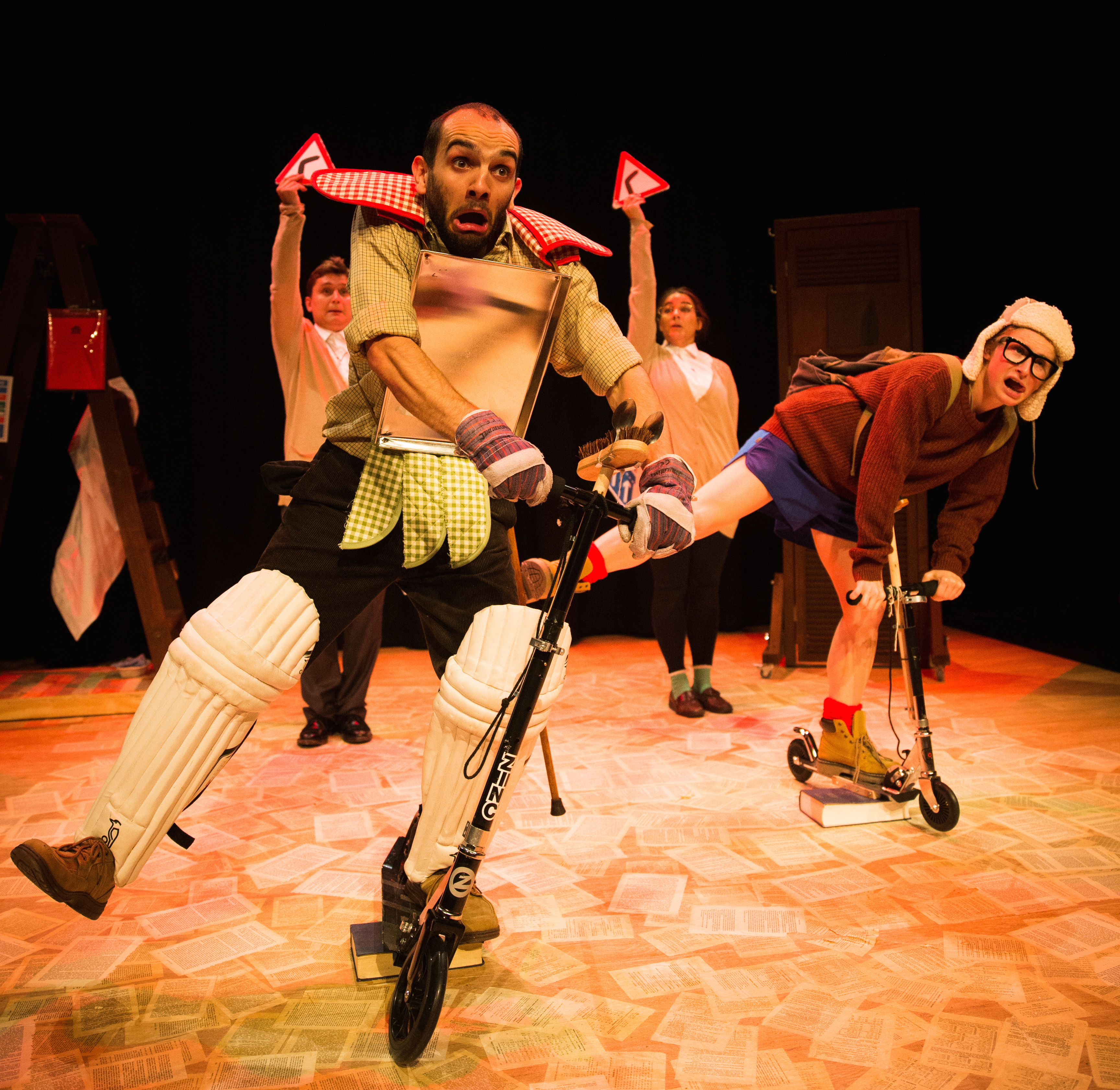
Norman’s nephew, having had enough of Norman’s mishaps and convinced he has gone mad, puts him in a nursing home to be looked after properly. He strictly forbids Norman from having access to any books. Sam, on one of his visits, smuggles in a copy of Don Quixote into the nursing home. A comedy chase results in their escape and an adventure imitating a selection of escapades from the original novel. Sam is a begrudging Sancho Panza, a pair of scooters augmented with push brooms and spoons are their trusty steeds and other people they encounter on the way play other characters (some more willingly than others). Their madcap journey is full of whimsy, spontaneity and emotional turmoil but with a potentially tearful ending for the more sentimental of audience members.

Director Robin Colyer skillfully employs physical theatre sequences to add variation and an atmosphere of a touring troupe of players. This is clearly a well-rehearsed, established production; not a breath was out of time. Objects and costume pieces are used liberally and often comically, in a style reminding me of the West End’s 39 Steps. The set and costumes are simple and rustic, but versatile and thought through. Nothing is excessive, nor sparse; the production design is just right.

The performances unite a fantastic script with heaps of audience interaction, and the great design to create a beautifully polished little show. Some call and response would have made more people feel included, as well as giving costume and lines to those in all parts of the auditorium rather than only those sat in the front row. Actors Jeremy Barlow, Francesca Binefa, Kate Colebrook and Samuel Davies are versatile multi-rollers with outstanding chemistry as an ensemble. Whilst I considered that having an older man play the role of Norman would have brought more to the story, the role is incredibly physically demanding and would be difficult to play at a more advanced age.

Don Q is only at Greenwich Theatre for a brief time, but then continues its national tour. This Oxford-based company is worth seeing no matter what your age, where you are or what you do. They use physical theatre, Brecht, storytelling and meta theatre but in an unobtrusive, charming way to create this lovely, warm, gem of a play.

Intention: ☆☆☆☆☆

Outcome: ☆☆☆☆

Star Rating: ☆☆☆☆ 1/2


The Play’s The Thing UK is an independent theatre criticism website maintained voluntarily. Whilst donations are never expected, they are hugely appreciated and will enable more time to be spent reviewing theatre productions of all sizes. Click here to make a donation with PalPal.
Significant Other; Object of Affection, Tristan Bates Theatre

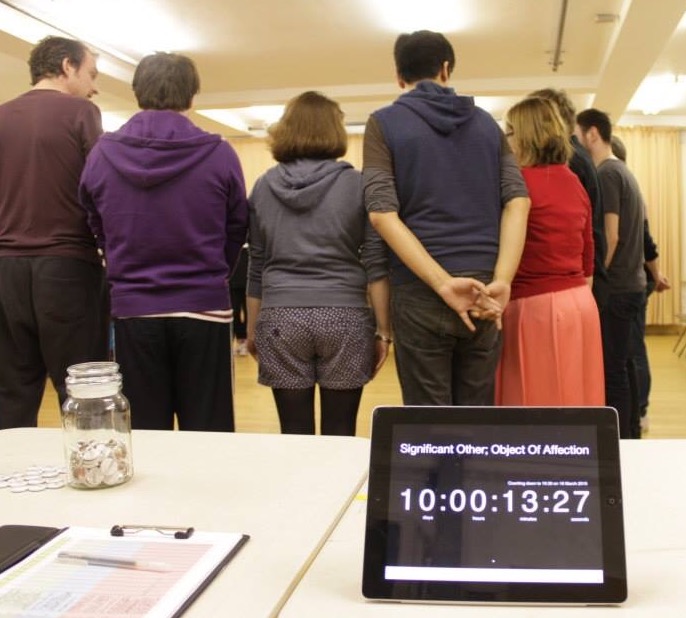
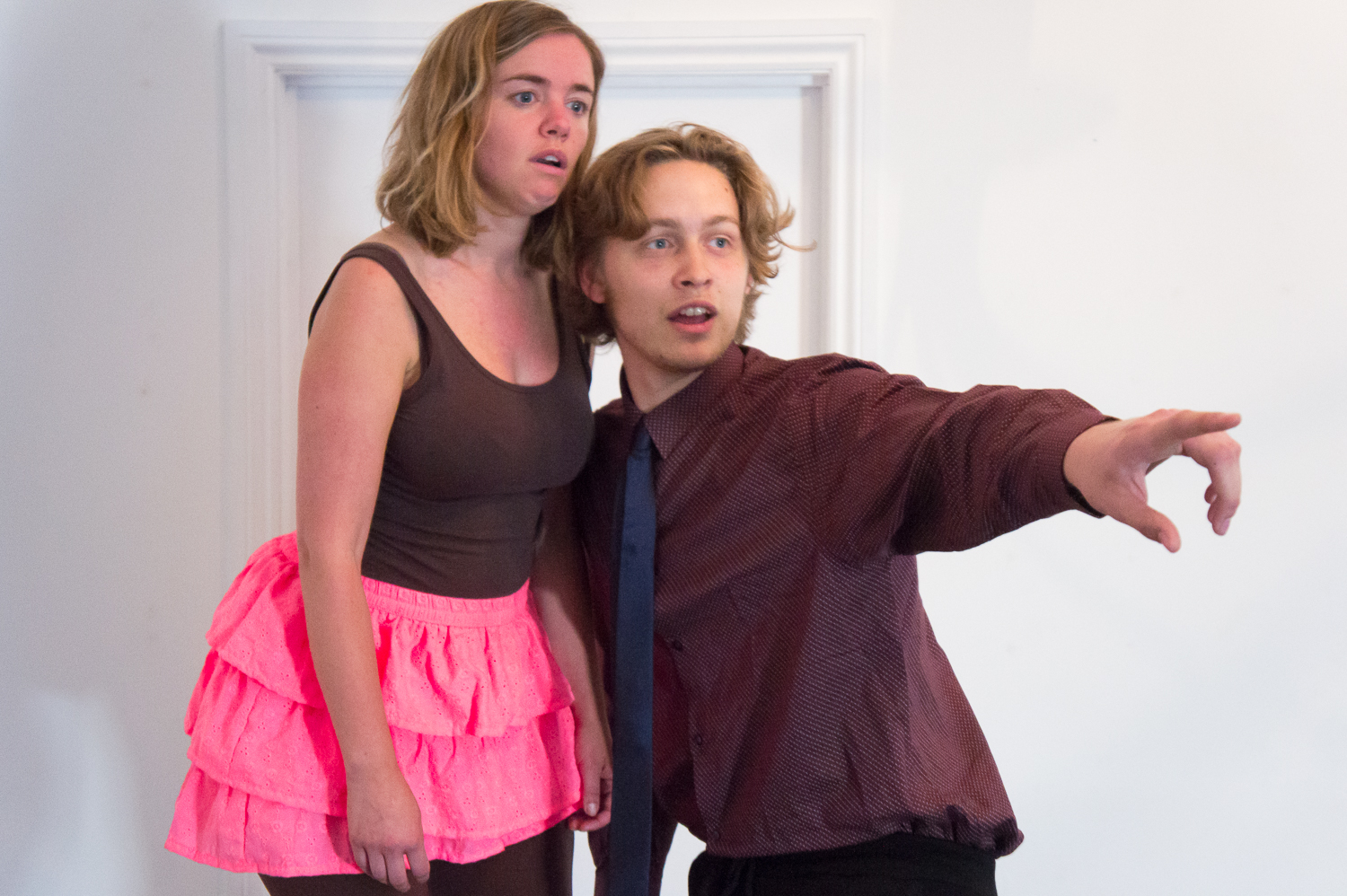
FullSizeRenderWhat do you get when you give ten playwrights, ten directors and twenty actors ten days to make some theatre? (This isn’t a Maths question.) You’ll have The Pensive Federation’s annual collection of ten, ten-minute plays, Significant Other. Inspired by modern relationships, The Pensive Federation celebrates the ups and downs of our human connections with this event. This year, each writer was given an object that had to be included in the scene and serves as the short plays’ titles. On the whole, they were funny, touching and well performed, especially considering the playwright had only five days to write the script and the director and actors had five days to rehearse them. One of the scenes was even a musical, with songs and choreography.

The relationships presented run the gamut from flatmates, sisters, straight couples, mates to co-workers. Whilst most of the plays dealt with romantic relationships, others confront familial complexities and troublesome colleagues. As it’s an issue commonly ignored in an industry that favours youth, Panties commands attention for being the sole play focusing on older characters. Here, a couple try to find the love and excitement in their relationship again now that their children are grown. All provided objects were completely random; some writers worked them into the plot more effectively than others did. My particular favourite was a life-sized cardboard cut-out of Harrison Ford, absurdly fought over by a couple who both fancied him.

As for the scripts, some are certainly stronger than others. None of them are poor and some had potential to be brilliant. Of note, Blu-Ray (by Anna Forsyth), Shirt (by Joseph Lidster and composed by Griffinn Candey), Ring (by Leah Cowan) and Life-size Cardboard Cut-out (by Breman Rajkumar) have the most potential and can certainly stand up to further development. Direction is simple but effective in all plays, with minimal set used and a focus on characters and their relationships. Of the performances, though all are consistent, Catherine Nix-Collins and Jeremy Donovan particularly shone as best friends and flatmates in Blu-Ray, with Jeremy’s character about to move in with his boyfriend and Catherine’s coming to terms with him leaving. Anthony Couzens in Cash evoked pity with his washed up underground ticket seller who fancies his much younger colleague.

Singling out one of the plays as a favourite, or “best,” is impossible. Stylistically, most are initially grounded in reality with subject matter that the audience can relate to, even if on a basic level. Rather than being complete plays, most were snapshots of a larger issue and well-rounded characters. This really is an event that appeals to everyone: gay, straight, young, old, people with children, people who work, people who have friends and people who have families. The default was comedy rather than drama, with some excellent execution of comic timing and sensibility. Performances could become quite heightened, but the emotions matched. Despite the comedic bent, there was plenty of poignancy across the board as well. Including a focus on an object draws attention to the attachment we have to material goods, particularly when we associate them with someone we love, or hate, or otherwise feel strongly about. The only play where this idea could be more fully realised is Oil Can (by Giles Fernando) but the tension created between two former schoolmates is commendable.

This is an enjoyable evening in The Actors’ Centre Tristan Bates Theatre. Plenty of comedy and writing that couldn’t be fresher help ease the predictability of the format in an evening that could do with being a couple of plays shorter. The Pensive Federation clearly have a great instinct for discovering and showcasing new talent and will should develop some these micro-plays further.

Intention: ☆☆

Outcome: ☆☆☆☆

Star Rating: ☆☆☆


The Play’s The Thing UK is an independent theatre criticism website maintained voluntarily. Whilst donations are never expected, they are hugely appreciated and will enable more time to be spent reviewing theatre productions of all sizes. Click here to make a donation with PalPal.