Bare Essentials, Amersham Arms

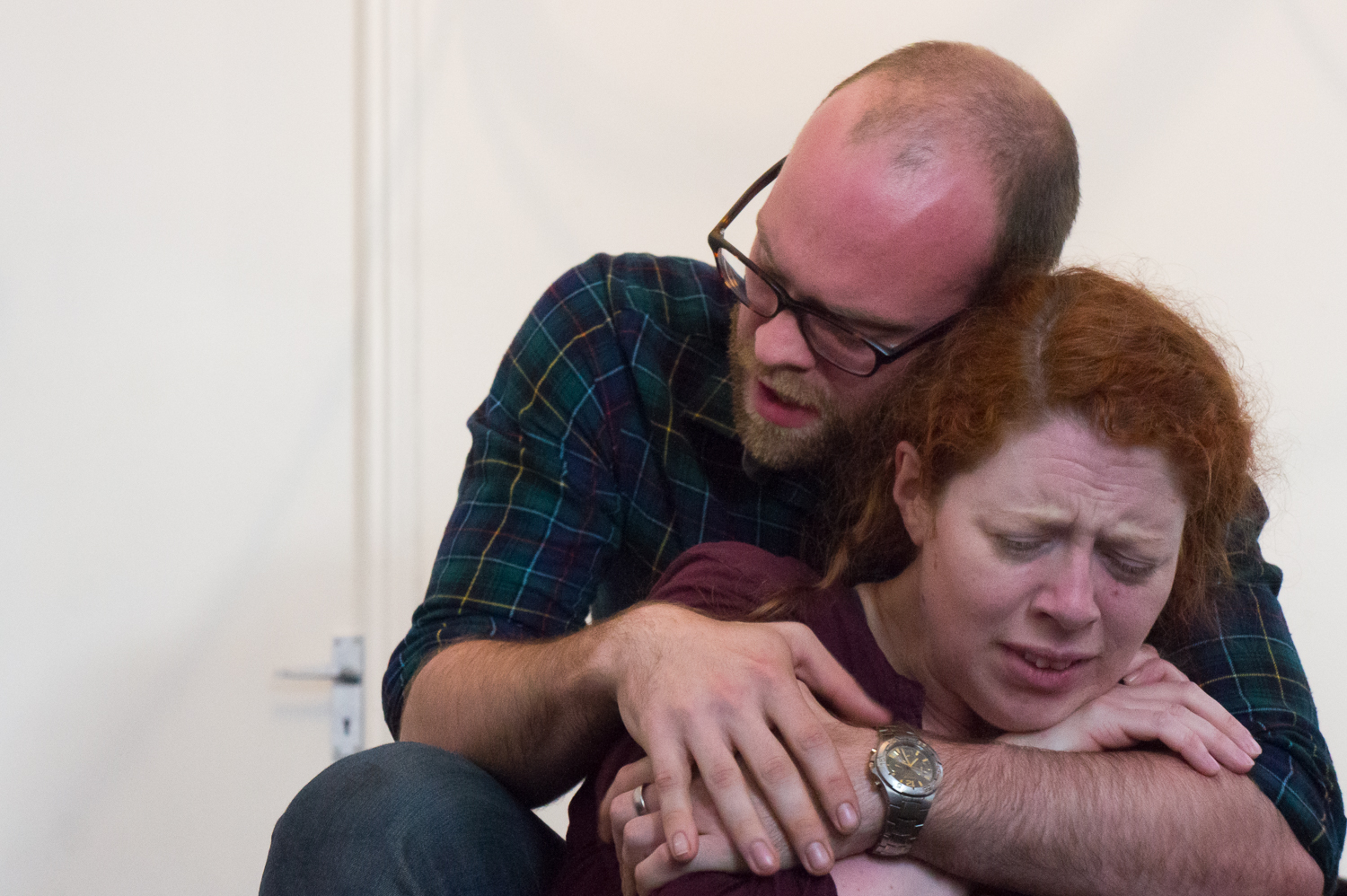
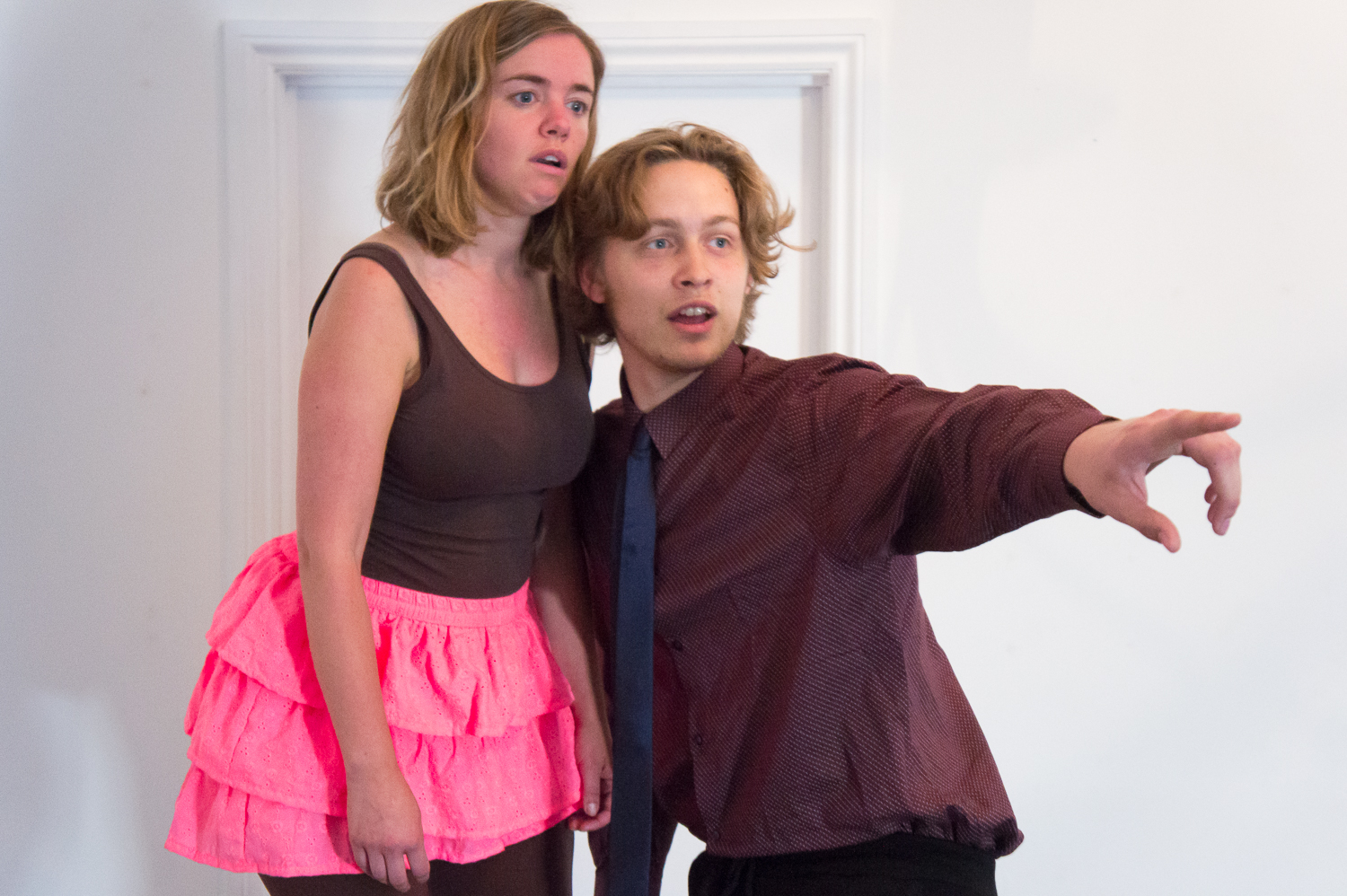
Encompass Productions produce theatre, film and a regular night of new writing, Bare Essentials. Rather than a scratch night, they aim to approach each micro-play with the same dedication as a full production, but with no budget. With plays accepted from all over the world, the current Bare Essentials has seven short plays ranging in style from naturalism to absurdity. The evening is a mixed bag with some scripts significantly better than others, but the performances are quite good. What made the whole evening hard to take had nothing to do with the production: the chosen venue, Amersham Arms in New Cross, isn’t fit for purpose and on the hottest day of the year in a tiny room with no air conditioning, it was a hugely uncomfortable experience that interfered with the enjoyment of the evening. I couldn’t wait to leave, and spent a large part of the evening trying not to be sick (I’m not good in the heat. At all.), which is a real shame because there were some inventive pieces of writing.

  1. CTL, ALT DELETE

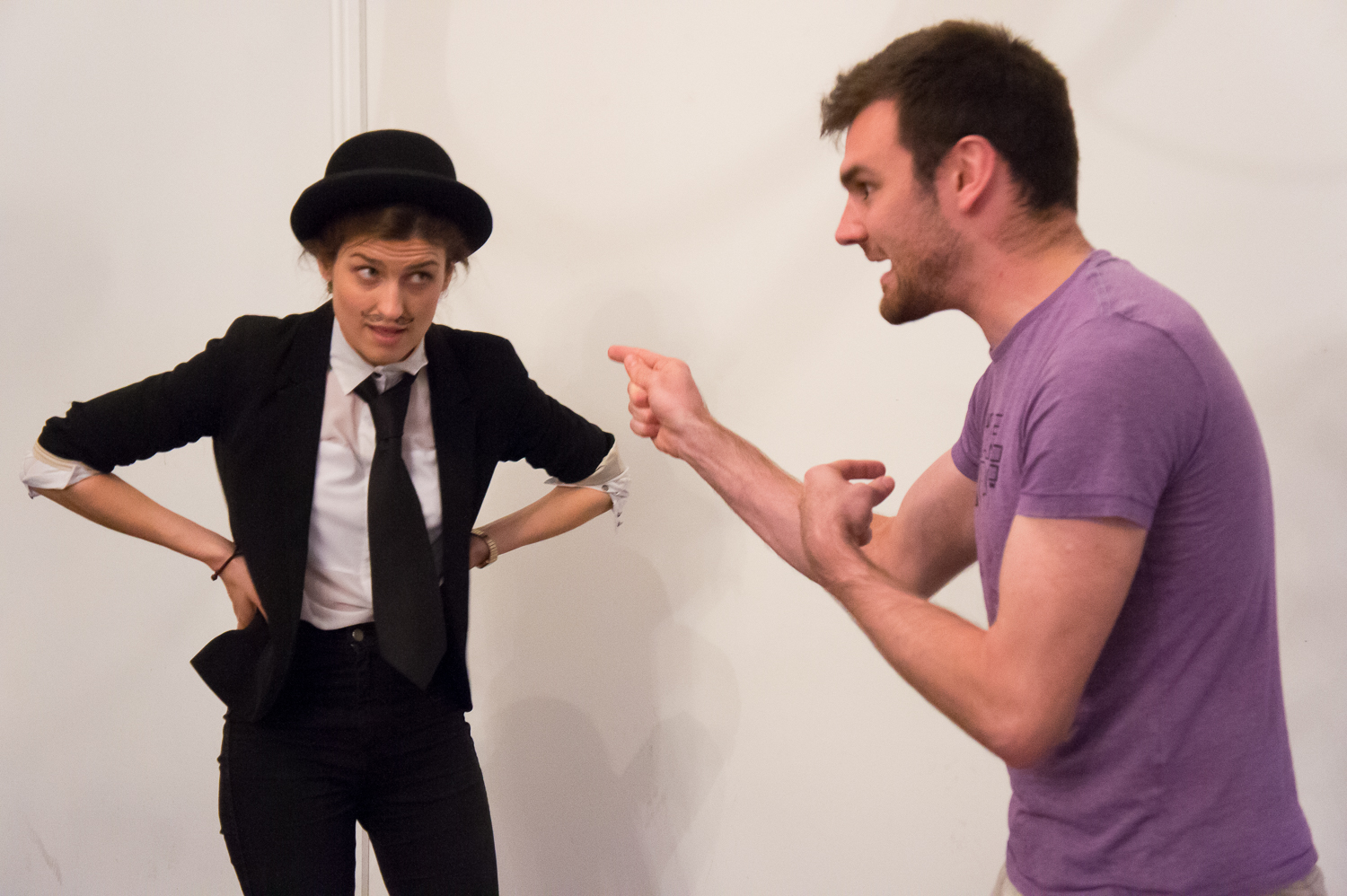
This play is a frenetically paced, dystopian depiction of the film industry after the incorporation of robot writers. The robots aren’t pissed off though, because they’re robots. It’s the writers who are angry, and the cold, corporate producers just don’t get it until they have to face the consequences. Rachael Owens and Marcella Carelli are the money-grubbing producers unwilling to listen to writer Alex (David England); all three capture the desperate situation through rapid-fire dialogue and excellent timing. This play is only about five minutes long, but comfortably conveys the story. The idea could be developed into a longer piece, but this micro-play is a perfectly formed, self-contained piece by Dan Page.

  1. THE LEAVING OF THINGS

One of the best and my personal favourite, this play looks at internet suicide pacts, loneliness and hope. Though the dialogue is sometimes forced, performances by James Barbour and Alice Corrigan are some of the best I’ve seen on the fringe. This play could easily develop into a longer character driven one-act about the need for genuine human connection in our digital world. An excellent piece by Dean Moynihan.

  1. PANTHER

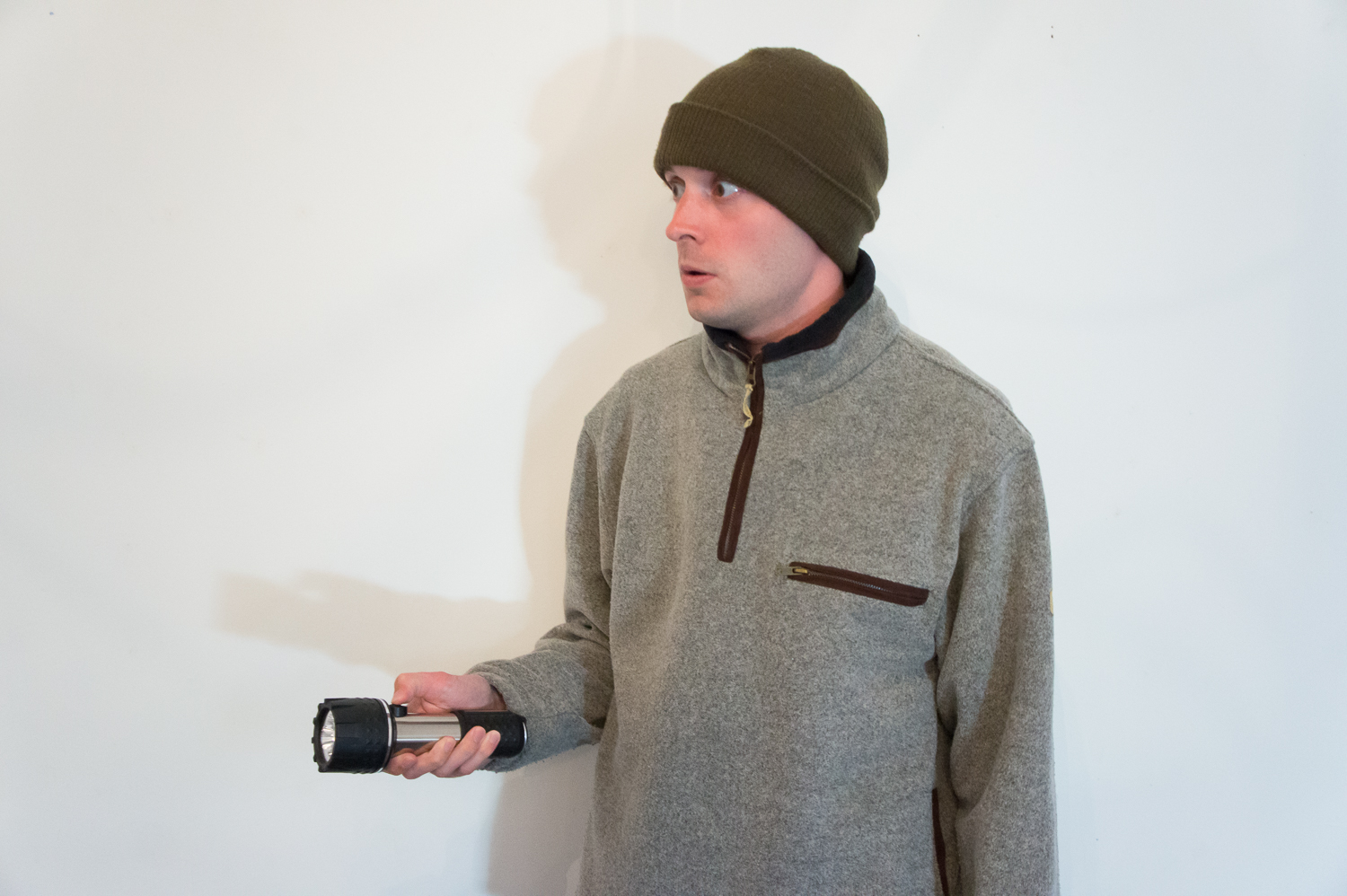
A West Country lad fails to understand his father’s affair and goes searching for a big cat in the darkness every night. This is an extended monologue with some character development, but relies on the regional stereotype of West Country equalling stupid or mentally deficient. Structurally, writer R. J. Thomson has a good piece, but doesn’t fully explore the character’s need to find the cat that killed his neighbour’s lamb, perpetuating the family feud that started with his father “tasting the neighbour’s chutney” on a nightly basis. The myths of big cats roaming free are touched on, but this is another area that deserves more time and could add a richer overlay of meaning onto what is currently quite a superficial script. There is room for development however, and this character piece could expand to a full cast and script.
  1. FEEDING TIME AT THE HUMAN HOUSE

Liz McMullen and Pip Barclay play zoo baboons puzzling over human nature and relationships. The physical depiction of their characters is excellent and wholly embodied, drawing attention to the more human traits of our ape cousins. Elements of comedy and poignancy make this view of mating rituals and pair bonding integrated and light-hearted, though if any longer, the idea would be excessively exhausted. As is, this is just the right length to explore writer David Wiener’s idea.

  1. THE NEWS

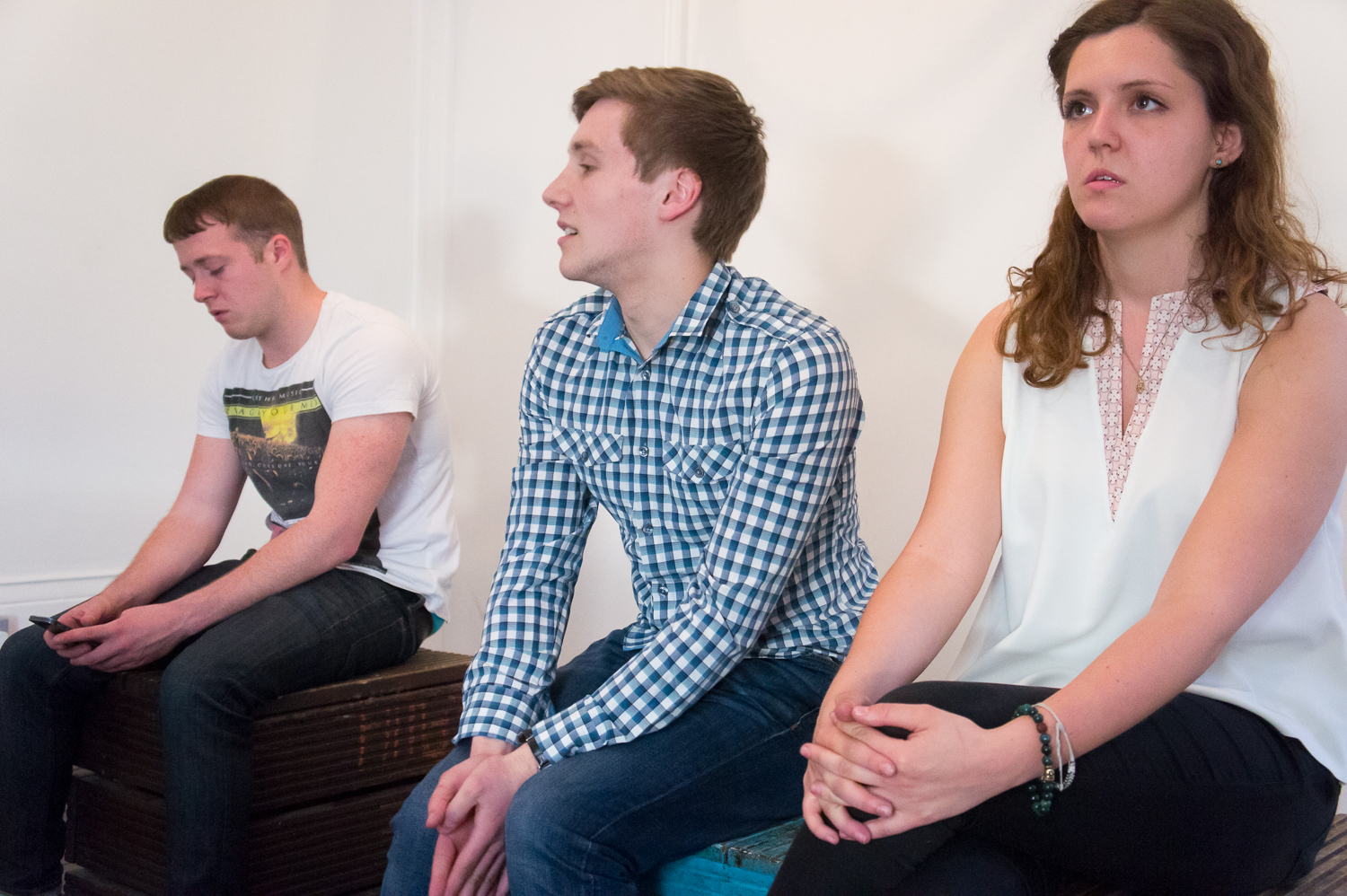
Lucy Foster’s script looks at three characters (Hannah Lawrence, Joe Bence and Jack Bence) coming to terms with a mutual friend Sarah’s drunken accident that she may not survive. The three dramatically different personalities pass the blame around as they struggle to cope with Sarah’s fall down the stairs and their own directionless lives. This microcosm presents the inner fear of giving up a creative career for a secure job only to find life has no meaning. Foster relies on contrasting stereotypes that are an unlikely group of friends and could do with more development, but if this were a longer play, it would be easy to address. The performances could also use more detail, but what was presented effectively communicated the play’s message.
  1. CONFESSIONS A DEUX

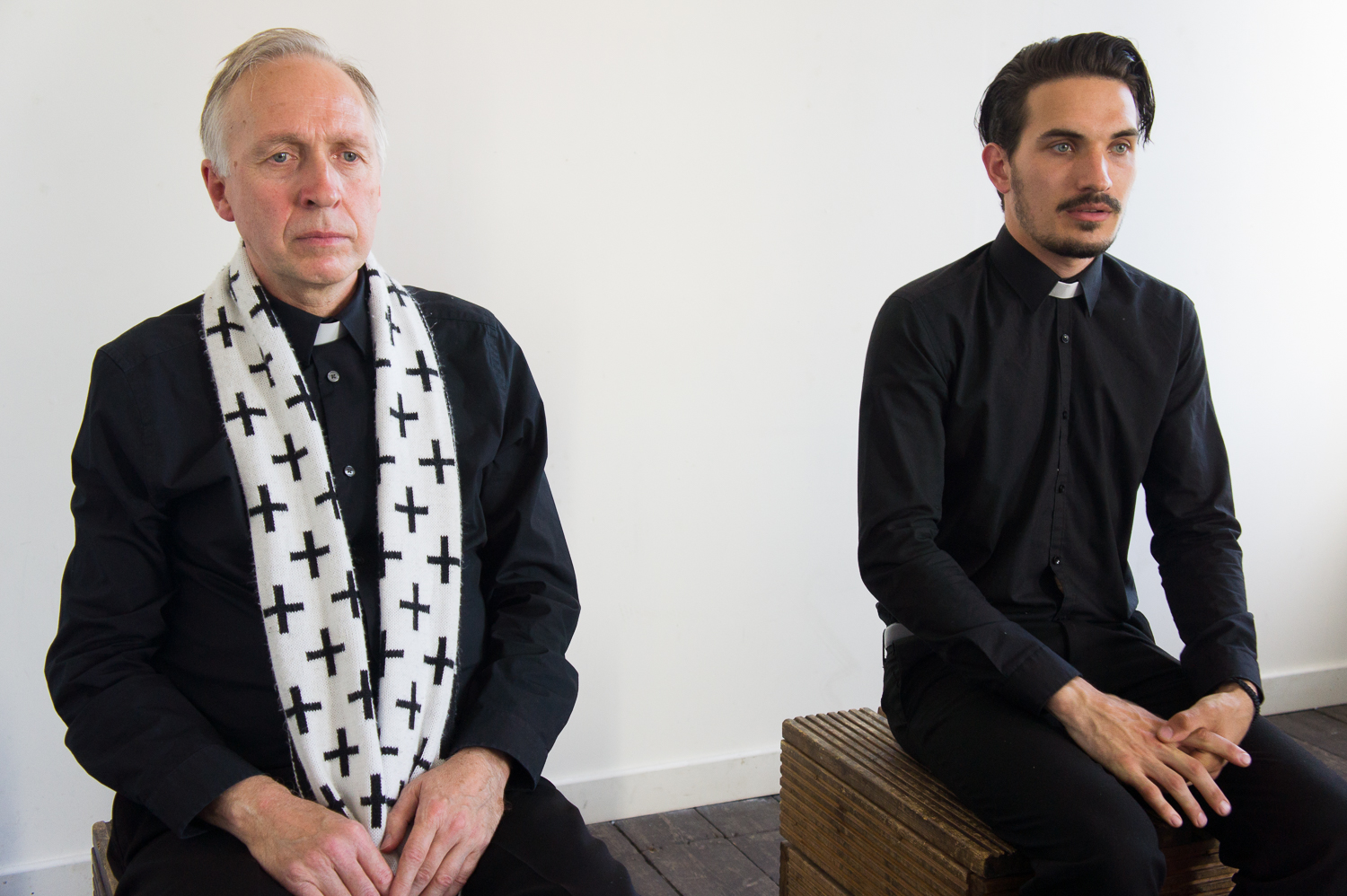
By Stephen Cooper, this one goes beyond the absurd to bizarre and the meaning of the piece isn’t clear on a wider level. Two priests (Graham Christopher and Josh Morter) have encountered a lonely parishioner with a fetish for priests and both have caved into their carnal desires. There is some good situation comedy and cleverly simple staging, but other than a specific comment on the sex lives of priests and their reciprocal confessions, this play has limited appeal and scope for development. This is the weakest one of the evening.
  1. NOTHING COULD SURPRISE ME NOW

Another example of absurdity, this is one of the better productions in Bare Essentials by Alain G. Cloarec. Turning narration and metatheatricality on its head, it is brief but wonderfully funny. Characters enter the room one by one having awoken this morning only able to speak in the third person, rather like Gregor Samsa but less traumatic. The “finale” then transcends the play, leading into a curtain call for the entire company. This is an excellent programming choice and some inventive directing by Michaela Frances Neal.
Overall, this is a varied evening of new writing, though even though the company claims it differs from a scratch night, it appears to have little difference. Scratch nights also approach their work with commitment, and are done on a shoestring in order to trial new writing. Though these pieces were quite polished, most need development. A more suitable space would improve the audience experience and establish a more professional, less scratch-night feel. As is, the room was small with no theatrical lights, white walls, and windows that are not blacked out. It was a room rather than a theatre and it is unclear why Encompass didn’t use the actual theatre downstairs, unless the reason is financial.

Scratch nights and short play showcases remain a good showcase for actors and writers, without the time commitment of a larger production (usually for no money) and the ability to present audiences with a range of styles and topics. Those with short attention spans and a wide range of interests will find this format particularly appealing. This one is has some quite good scripts and excellent performances but if the production company wants it to not feel like a scratch night, a more suitable venue must be chosen, and not just for air conditioning.


The Play’s The Thing UK is an independent theatre criticism website maintained voluntarily. Whilst donations are never expected, they are hugely appreciated and will enable more time to be spent reviewing theatre productions of all sizes. Click here to make a donation with PalPal.
Britannia Fury, Hen & Chickens Theatre

2015-05-07 20.33.52 (2)“Never meet your heroes.”

This stark warning from one character to another foreshadows the absurd, disappointing story about to unfold. Part satire, part pantomime, part superhero spin off, Britannia Fury introduces us to Britain’s only real superhero. He is now an elderly alcoholic living in a council flat after his epic rise and consequential fall into obscurity, but a young reporter has located his address and is determined to share his forgotten story with the world. A mix of performance styles and a story that can’t quite seem to determine what it wants to say prevents the concept from developing into a strong script.

Mr Jameson (Kit Smith) is the exaggerated stereotype of an editor of The Daily London Leader. Loud and abrasive, he provides complete contrast to the nervous Charlie (Ethan Loftus), a young reporter not even on Jameson’s radar. Charlie has the scoop of the year and negotiates with Jameson to let him interview 70s and 80s superhero Britannia Fury, who saved the nation from villainy only to mysteriously retire and disappear. Charlie wants to share the story of this forgotten hero with the nation. Loftus plays Charlie naturalistically, with a quiet, geeky passion for Fury. Whilst both Smith and Loftus embody their characters respective styles well, they clash and cause the production concept to look like it lacks direction. The other characters add to the soupy style mash up rather than siding with one of the earlier, established performance styles. Fury (Geoffrey Kirkness) is a mix of stereotype and naturalism, which adds depth but only further confuses the production’s identity. This is an issue with the script and direction rather than the performers, but one that can be solved by the playwright choosing one approach and sticking with it across all the characters.

The storyline, with its clear premise, becomes convoluted as Charlie and Fury meet and delve into his past. There are some predictable plot twists that lead to a tragic end; again, the initial idea has good potential to explore the human condition through Fury’s story but this is glossed over and made light of with comedy and exaggeration. Charlie’s initial shock of meeting his fallen hero is underplayed, then forgotten, but his emotional journey hits some good points. Their interview occasionally drags, as if the play is trying to buy time rather than following the natural narrative arc and getting to the point. As Charlie delves deeper into Fury’s twisted Tory past, it becomes clear that Jameson’s initial warning rings true.

The idea of the fallen hero in modern times certainly has mileage and Hillcrest Artists begin to solidify interpretations of the theme but they don’t quite come to fruition. Is the play about politics? Is it about society’s short attention span? Or, is it smaller and about the relationship between two people? Is it making fun of superheroes? Is it about Fury’s humanity? Really, it is all of these things and more, but for a play not much longer than an hour, this is too much to try to address. There are some touching moments and witty dialogue but underlying substance doesn’t quite materialise in Britannia Fury.


The Play’s The Thing UK is an independent theatre criticism website maintained voluntarily. Whilst donations are never expected, they are hugely appreciated and will enable more time to be spent reviewing theatre productions of all sizes. Click here to make a donation with PalPal.
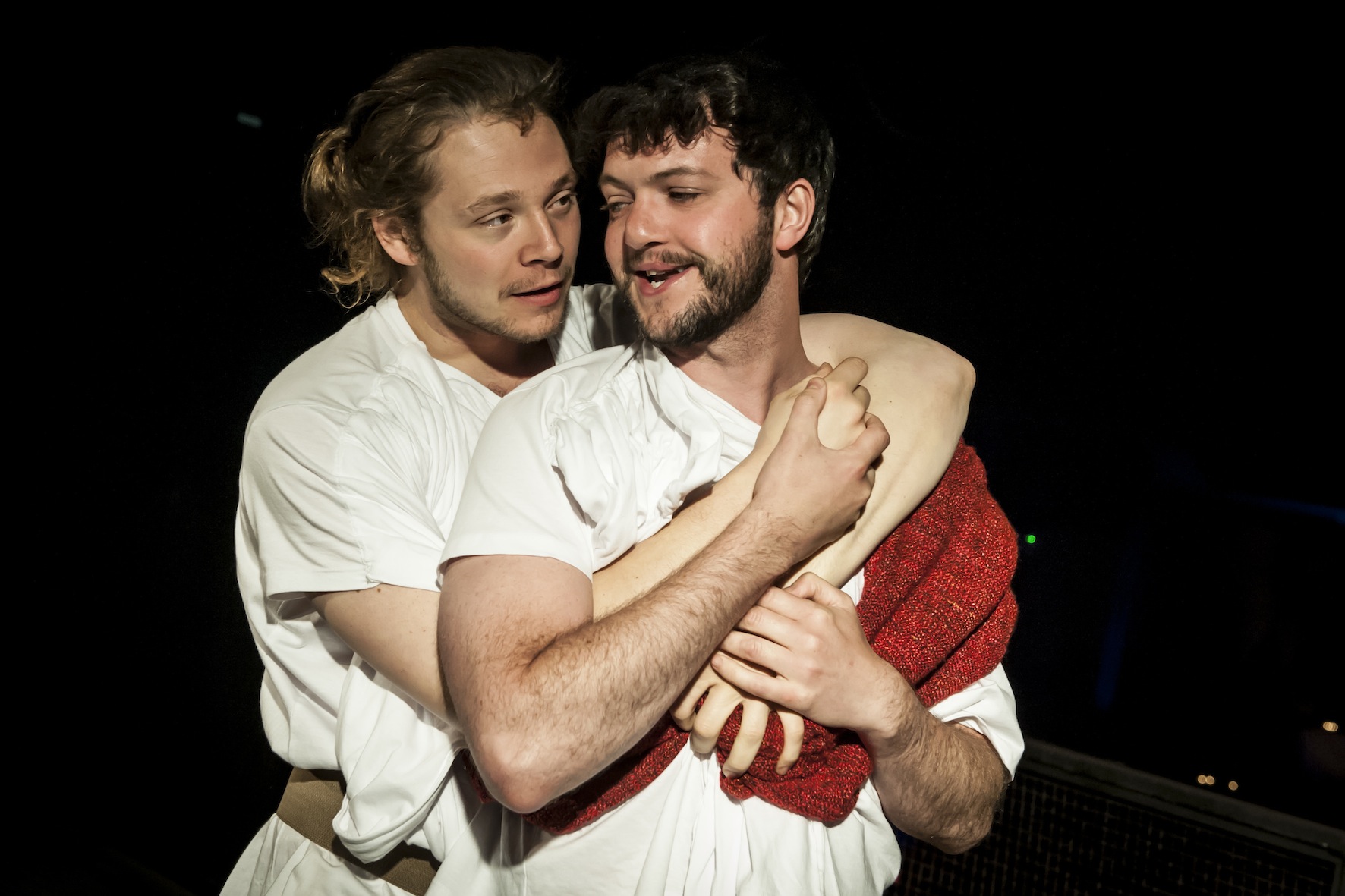
Perfect Lovers, Theatro Technis

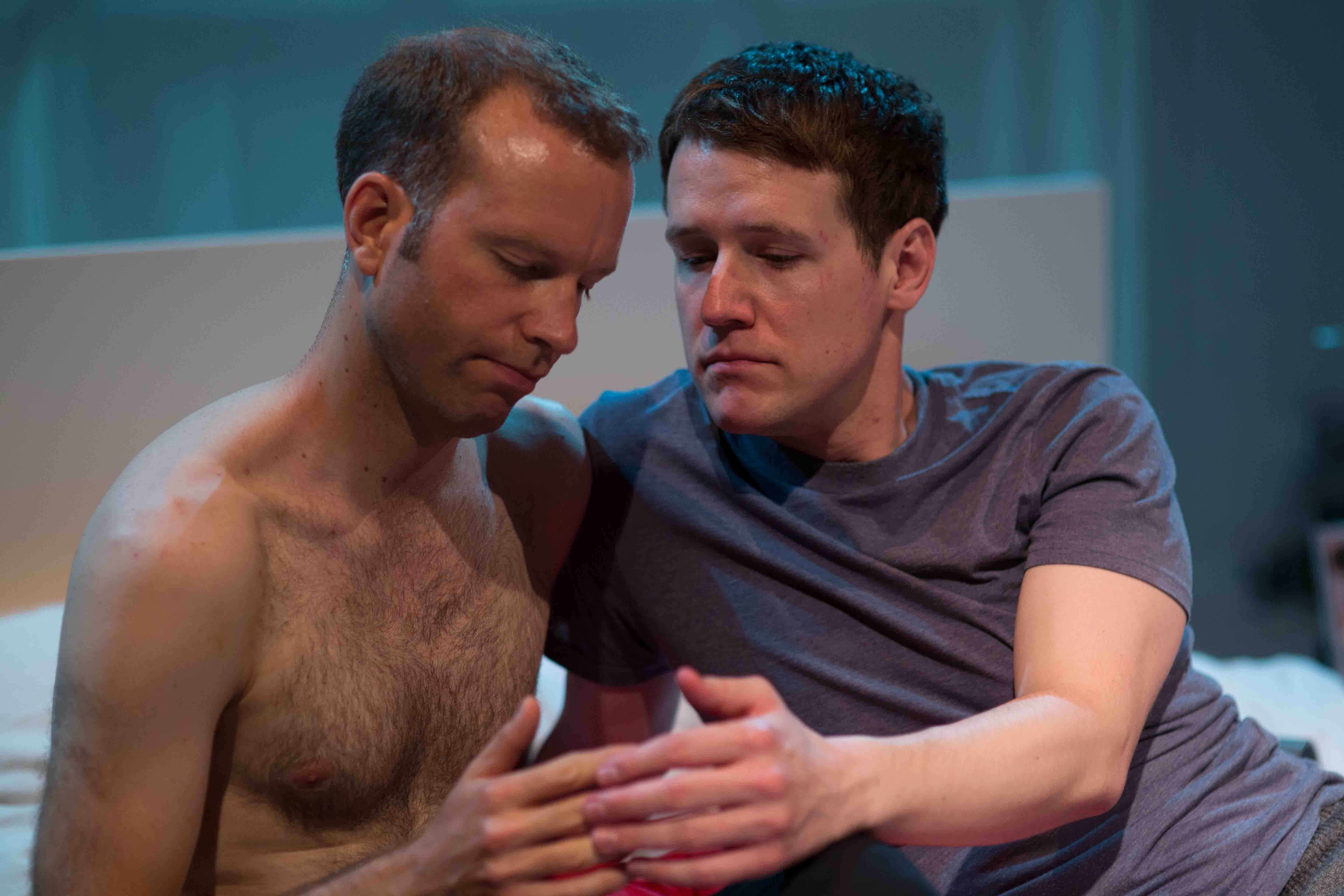
Four men, two clocks and all po_N2A6465ssible relationship dynamics meet within different moments, in one bed. Scenes bounce back and forth across time supported by symbolic projections and lighting, each one intimately presenting a different couple combination. Individuals meet and connect for a brief moment in time, then inevitably move on. La Montanya’s Perfect Lovers is a new play that explores the ups, downs and transience of gay relationships, proving they are no different than straight ones. We all seek that perfect relationship even though no such thing exists.

This is the second play by Jazz Martinez-Gamboa. It episodically documents the dysfunctional but well-intentioned connections of four characters at different points in their lives. There was some detailed writing with good instinct for both comedy and pathos. After the first couple of scenes the rhythm settled into a consistency that needed more variation, but the director and actors could solve this easily through delivery. The script is a one act, but its current structure lends itself to easy expansion. It would need more of a plot arc to add variation of pace, and the characters are robust enough to withstand closer examination of their lives.

The performances are generally good, though energy and pace dipped at points. There were too many pauses, though it isn’t clear whether this is due to the script or the direction. Actors Chris Hoskins, Oliver Hewett, Joe Leather and Craig Deucher are a tight ensemble with seemingly natural chemistry. They contrast each other without playing to any particular gay stereotypes; instead they focused on individual loneliness and their characters’ need for meaningful connection.

The design is excellent. Richard Hillier’s lighting design blends seamlessly with Alex Wells’ projections. Two adjacent, synchronised clocks racing through time are a motif influenced by artist Felix Gonzalez Torres, emphasising our own transience as well as the temporary nature of our bonds with others. Characters cling to digital photo albums of their past lovers, friends and families as they continue to search for that perfect man who will change their lives forever. The set is a never-changing bed. An adjacent nightstand becomes more and more cluttered with the characters’ detritus ranging from tea lights ,to cups of tea, to lines of cocaine. The amount of action the room sees results in a set resembling Tracy Emin’s My Bed.

Even though this production can be categorised as LGBT theatre, that is far from its end message, merely a vehicle of communication. These characters could have been straight couples; in fact, it has strong parallels with Patrick Marber’s Closer though without a linear narrative. We are all people: broken, malfunctioning people, who reach for meaning in one another. It rarely works. But that’s what makes us gloriously human, which Martinez-Gamboa presents to audiences as if he stands before us and holds up a mirror.


The Play’s The Thing UK is an independent theatre criticism website maintained voluntarily. Whilst donations are never expected, they are hugely appreciated and will enable more time to be spent reviewing theatre productions of all sizes. Click here to make a donation with PalPal.
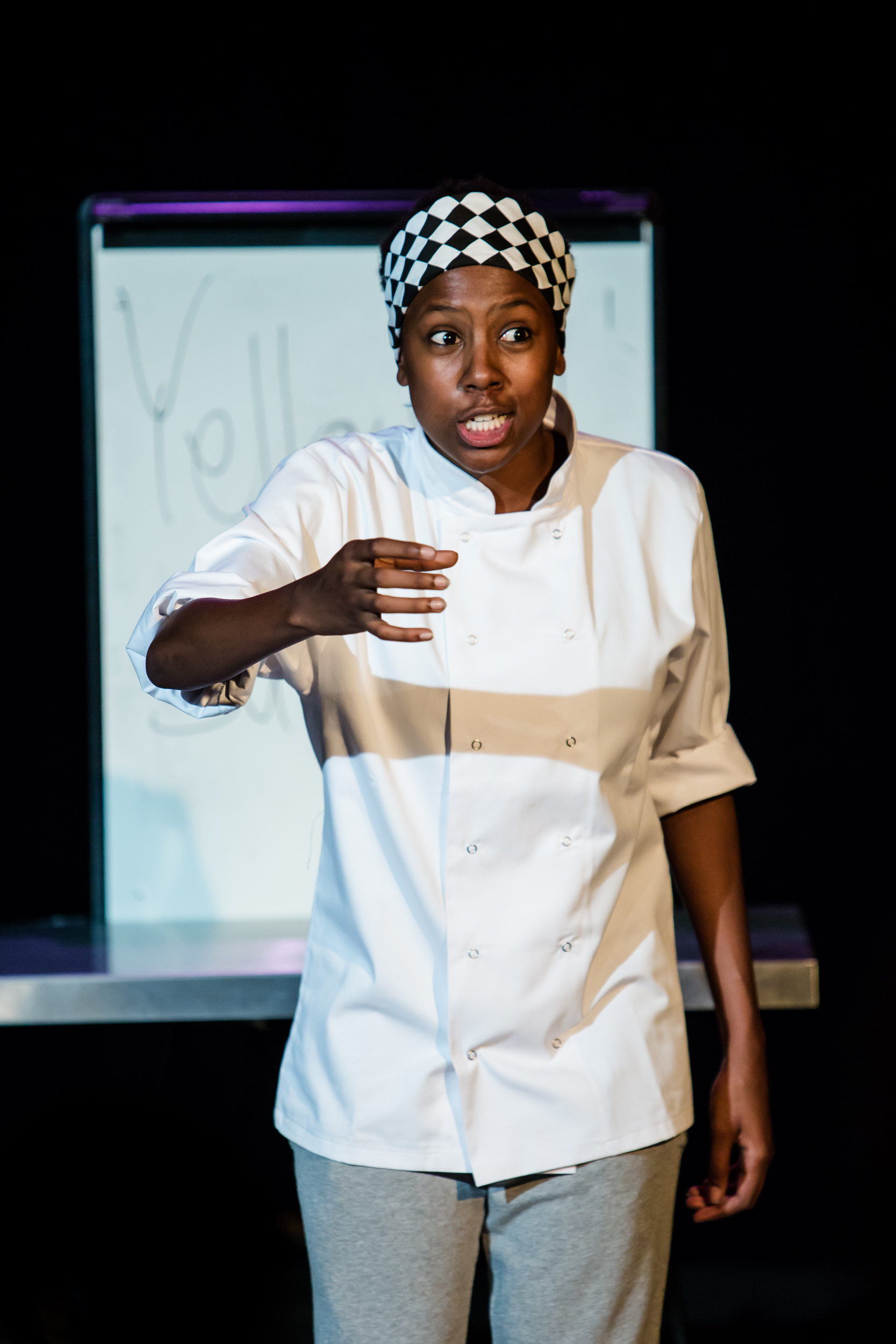
Iphigenia at Tauris, Rose Theatre

by Lidia Crisafulli

by Lidia Crisafulli

At the far edge of the Rose’s pool that preserves the remains of the original theatre, perches the temple of Diana. Blue and purple lighting reflects in the pool; waves are heard lapping at the shore. This is Iphigenia’s world where she serves as a priestess to the goddess on the island of Tauris, ruled by King Thoas. He loves Iphigenia and respects her wishes, but wants to kill the foreigners who turned up on the coast. She wants to not only save them, but escape with them.

Using rich, imagery-laden language, Goethe has adapted Euripides original tragedy, translated into English by Roy Pascal. The austere, Mediterranean set and rich sound design made this production a soothing but rich sensorial feast that compliments Goethe’s text. Unfortunately, unconnected performances and unvarying delivery from some of the cast who seem to focus more on the sound of their own voices rather than communicating their intentions makes a sleep-inducing affair.

The best work comes from Ben Hale as Iphigenia’s brother Orestes and his lifelong “friend” Pylades (Andrew Strafford-Baker). They contribute vibrant performances and excellent chemistry, a welcome respite from the indulgence presented to the audience prior to their entrance. Pylades’ comforting of Orestes as he is tortured by the furies for murdering his mother is the stuff fanfic is made of, it’s that homoerotic and genuinely lovely. Even though their behaviour is rather laddish (they came to Tauris to steal Diana’s statue from her temple), they are charming, passionate and a joy to watch. Their eventual clash with James Barnes’ Thoas is inevitable, but well contrast against Thoas’ steely reserve.

Title role Iphigenia (Suzanne Marie) is a complex character and could even be considered feminist despite the play premiering in 1779. Her reunion with her brother is underplayed, but her longing for her homeland is clear. She eventually uses her manipulation and womanly charms to talk down Thoas from attacking her brother and Pylades, but none of the character’s power comes across in the delivery that hasn’t altered from her opening speech. Marie shows obvious pleasure at speaking Goethe’s words but gives equal weight to most of them, causing much of meaning to be lost. Her pace could have done with being kicked up a few notches in more urgent situations, but her grief for her family was touching.

The staging was an excellent balance of the foreground and the rear of the archaeological site. It was used enough to not be ignored, but not so much that action was lost. The set and lighting from Diana’s temple along the back wall created plenty of atmosphere, even as a backdrop when the action was on the stage. Director Pamela Schermann worked well with designers Gillian Steventon and Petr Vocka to create such an evocative atmosphere. Sound design by Philip Matejtschuk really ties the rest of the design elements together. The constant waves remind on we are by the sea and perfectly suits the large pool that dominates the Rose. A cinematic soundtrack emphasises moments of conflict or suspense, ending in the start of a storm as Thoas relents. The only design letdown is the costumes. They attempt to replicate Greek tunics and robes, but they are obviously altered t-shirts held in with women’s belts and the footwear is painfully modern. Iphigenia’s flowing gown is beautiful though, and suitable to a temple priestess.

It is a play not staged often and one particularly suited for the unique space of the Rose, so it is disappointing that the lead performance let it down. Fortunately two of the supporting actors add life and energy to a beautifully crafted script. This is one of the most effectively staged productions I’ve encountered at the Rose with thoughtful design elements that can easily become the star of the show.


The Play’s The Thing UK is an independent theatre criticism website maintained voluntarily. Whilst donations are never expected, they are hugely appreciated and will enable more time to be spent reviewing theatre productions of all sizes. Click here to make a donation with PalPal.
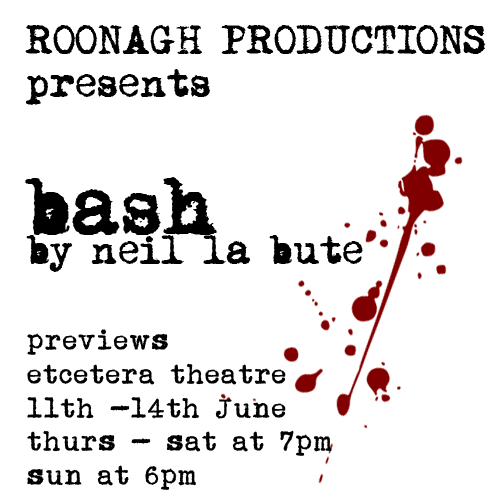
Chef, Soho Theatre

Chef, Ed Fringe 2014, courtesy Richard Davenport 035“Incredible innit, Food.”

Sabrina Mahfouz’s Chef is a one-woman play in the kitchen of a women’s prison. It’s no Orange is the New Black, though. Jade Anouka’s nameless chef shares her passion for food, recipes and stories of broken families and prison life. Anouka’s captivating, nuanced performance and Mahfouz’s poetic, imagery-filled verse holds the audience’s attention for nearly an hour without faltering.

Anouka’s performance is the primary pillar that supports this production’s success. With an innate musicality and unwavering energy, she balances the character’s true love for her work with the traumatic tales of an abusive father, a shady boyfriend and an incident that happened in her prison kitchen yesterday. Her interpretation both honours and personalises Mahfouz’s character, bringing an infectious optimism to a character that has endured so much hardship. Though this play probably works best in intimate theatres like Soho’s upstairs space, it is a great shame to deny larger numbers of people from seeing her performance.

Mahfouz’s writing is the next pillar that makes this story into a great play. Her use of poetry flips back and forth with street slang and swears, a continual reminder that not all inmates have limited vocabulary or intelligence but still keeps her believable. She gives us a truly human character with all flaws and perfections laid bare. She creates devastating empathy for this unnamed young woman doing so well at rising from the ashes of her childhood by becoming a fine dining head chef, only to be locked away for a crime she swears she didn’t commit. (Though all convicts swear their innocence, don’t they?)

Mahfouz and Anouka have worked together previously, on Chef and another play. These two clearly make a fantastic team, but both are excellent, established artists in their own right. Mahfouz is certainly a playwright to watch out for, and Anouka is a performer not to be missed.

Despite the stellar performance and writing, the scene transitions occasionally felt abrupt. Line delivery and technical transitions could have slowed down slightly, though that may have caused energy levels to drop. Another uncertainty is who the audience is in relation to chef. She is in her kitchen alone. They are not questioning her about her suspected involvement in yesterday’s incident, nor do they seem to be fellow inmates. Anouka addresses directly, so they don’t seem to be in her imagination, either. Her story keeps audience focus nonetheless.

As brilliant as Orange is the New Black is, the vibrancy and depth in Mahfouz and Anouka’s chef makes the show feel shallow and stereotyped. Even though it works excellently as a stand-alone short play, this is a character that should be seen again. This is not a production to skip over, despite its diminutive size and the fact it’s a one-woman show.


The Play’s The Thing UK is an independent theatre criticism website maintained voluntarily. Whilst donations are never expected, they are hugely appreciated and will enable more time to be spent reviewing theatre productions of all sizes. Click here to make a donation with PalPal.
Bash, Etcetera Theatre

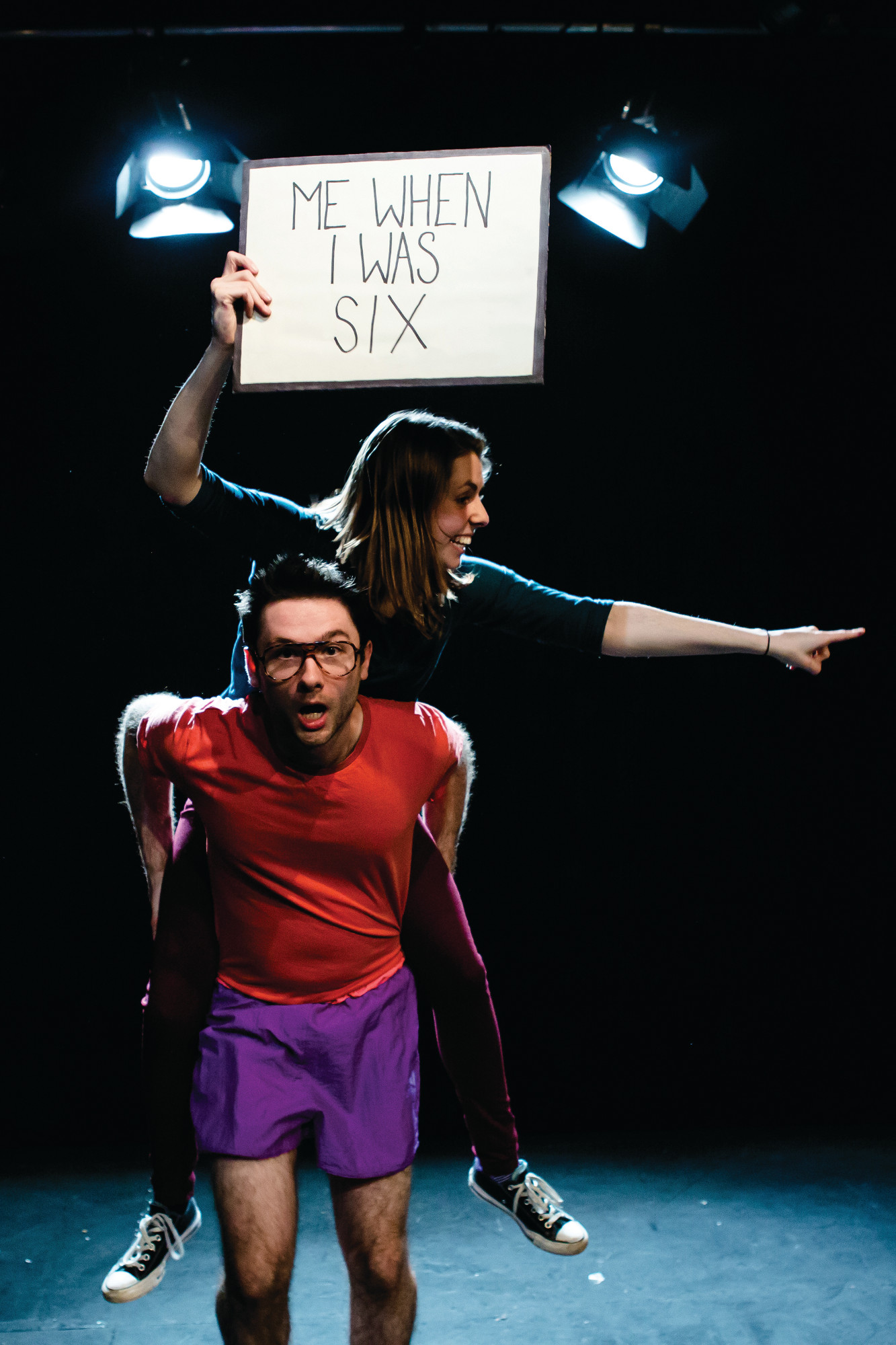
BashPoster_DetailsNeil Labute’s Bash is a distinctively 1990’s play containing three unrelated parts that are one-act plays in themselves. The component pieces have enough detail to stand alone and have unrelated characters, but a common theme: all of the characters are Mormon and commit horrific acts of violence. True to LaBute’s style, Bash exhibits the depravity that people sink to, despite these characters living on the supposed religious, moral high ground. This two-hander is the debut of Roonagh Productions, founded by Irish actors Stephen Gibbons And Sarah Purcell who perform all roles.

Act one. An unnamed man sits in his hotel room, sipping a glass of water. He has somehow convinced another guest to join him because he needs someone to talk to. What unfolds is the lengthy filicidal monologue from this fellow who seems to have it all: God, a wife, children, a good job. Gibbons initially plays the part nervously, not fully connecting with his character’s guilt. He finally relaxes when he moves onto talking about work and the fear of losing his job, but the first third of the scene had a constant, restrained delivery. When Gibbons connects his family to this prospect, all the pieces fall into place along with his performance. Though he could have more urgency and energy in the beginning of his speech, he eventually captures this calculatingly despicable man and unapologetically lays him at the audience’s feet for their self-righteous consumption.

Act two. A couple from Boston reminisces about a party in New York City they attended when they were students. Sue is sweet and wholesome; John is an all-American frat boy jock. Both characters are stereotypical and two-dimensional. Though there are two characters together on stage, they never talk to each other. Instead, they relay alternating lines to the audience in past tense, which has potential for tedium but Gibbons’ and Purcell’s work is dynamic and keeps the audience interested. John has a murderous, deliberate story similar to the man in first act, but Sue was asleep in the hotel room after the party and only has fond memories of the evening. The religion is more blatant in this story and a driving factor for John and his friend’s actions in a Central Park toilet at an early hour of the morning. The only particular issue in this part of the play is the choice of costume for Sue. If she’s a practicing Mormon, she certainly would not have worn a strapless dress.

Act three. Called “Medea Redux”, this is another monologue featuring Purcell in a police interview. Her story is by far the most complicated and sympathy-inducing but her crime is just as heinous as the previous two. When the woman was thirteen, she and one of her teachers had an ongoing affair; he then abandoned her when she fell pregnant with his child. She was fourteen. Driven to desperation by her lover’s abandonment of her, she repeats Medea’s final act of vengeance. Yes, her crimes are shocking but what is most frustrating is that she was the only character of the three criminals we’ve met who were caught. This is a much meatier role for Purcell, and she performs it with more nuance than she did Sue. This is the most interesting of the three stories, so fitting LaBute saves it for last.

The performances from the two actors are mostly good. There are a few accent slips and Irish intonations here and there, but perhaps not noticeable to British ears. Bash does feel rather dated now, but the writing and the characters are great. It’s an easy production to mount with little set needed, so a wise choice for a debut production. Purcell and Gibbons are older than your average early twenty-somethings thinking it’s cool to start a theatre company so even though there was nothing risky or inventive in this production, it was well done and chosen to suit their types and strengths. Besides, not all theatre has to be revolutionary. As long as its good theatre performed well, it is still to be commended.


The Play’s The Thing UK is an independent theatre criticism website maintained voluntarily. Whilst donations are never expected, they are hugely appreciated and will enable more time to be spent reviewing theatre productions of all sizes. Click here to make a donation with PalPal.
So It Goes, Greenwich Theatre

SOITGOES_CMYK_1

Hannah used to love running with her dad. When she was 17, her dad died and Hannah kept on running, silently and alone. She refused to speak about his death with anyone, including her family. So she decided rather than to navigate the burden of speech, she would create a silent play that tells her dad’s story and her process of dealing with his death. So It Goes is a sweet two-hander that manages to avoid over-sentimentality by focusing on the honest, deeply individual story of navigating life after the death of a parent.

Other than the last line, there is absolutely no speech in this play. All text is written on small whiteboards worn around the actors’ necks or on pre-made signs. This keeps written communication basic; it is rather like watching a comic book or graphic novel being written. This could occasionally feel slow and it was often easy to predict what was coming next on the whiteboard within a scene, but not overly so and not often. The set and props are also simple, with signage and symbolic items representing other characters and jumps in time and place. Most props are drawn outlines of objects, adding humour and a sense of youthful play to the story. The physical performance style matches- it is exaggerated but simplified, physical theatre but not ornate, embellished or for the sole purpose of showing the actors’ physical prowess. So It Goes wants to tell Hannah’s story as clearly and simply as possible, focusing on truthfulness and emotional honesty. The look of the play would certainly appeal to children, but accessing adults’ inner child makes the experience of losing a parent a journey that ends with positive reflection rather than the bitterness of loss.

The performances are equally lovely. Hannah Moss plays herself, and has “help” telling the story from David Ralfe, who plays her Dad and Mum. Ralfe in drag has an initial hit of comedy, but he taps into Mum’s outward expression of hopelessness that soon makes the audience forget that it’s a bloke in a dress. The two actors embody an exaggeration familiar to children’s theatre that is also in keeping with the cartoon aesthetic of the production, but is not crude. If they did not employ the exaggeration or humour in their physical comedy, it would make audiences want to slit their wrists. Instead, there was a lot of sniffling and nose blowing mixed in with laughter.

This is the third play I have seen about death in recent weeks. Each production used a dramatically different approach to convey the same message. Hannah spelled it out for us by writing that her dad “didn’t just die, he lived.” There’s an overabundance of factors in the world that can easily depress us and forget to look for the little moments of daily joy in our own lives, but So It Goes provides a celebratory reminder to do so through a pared down, visual-textual hybrid of physical theatre. Though the tour has now finished of their debut production, On the Run Theatre is certainly a company to watch.

Intention: ☆ ☆ ☆ ☆ ☆

Outcome: ☆ ☆ ☆

Star Rating: ☆ ☆ ☆ ☆


The Play’s The Thing UK is an independent theatre criticism website maintained voluntarily. Whilst donations are never expected, they are hugely appreciated and will enable more time to be spent reviewing theatre productions of all sizes. Click here to make a donation with PalPal.

This Is How We Die, Battersea Arts Centre

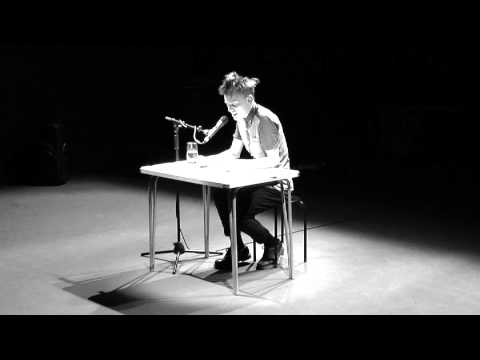
Chris Brett Bailey is a bard of thhqdefaulte modern age. Like Elizabethan theatre the audience went to hear rather than to see, This Is How We Die is a bombardment of the ears rather than the eyes. Using spoken word and beat poetry to tear open the world as we know it, Bailey forces us to confront the horrors and beauty of everyday existence. This piece of theatre moves away from the trend of visual theatre, taking the audience on a self-reflective ride of their lives.

At just over an hour, we are hurtled on a journey through Bailey’s rage against “-isms” and “-ists,” a brutal first meeting with his overly-literal girlfriend’s parents and a Hunter S. Thompson-like roadtrip through the American desert. His delivery is relentless, pausing only for comic effect or to take small sips of water from the glass that sits on his desk. Yes, a desk. He sits at a desk, with his script in front of him. This form rails against the increasingly visual culture we live in but it forces the audience to really and truly listen. He has a lot to say that he feels strongly about and you need to hear it.

Trying to describe what This Is How We Die is about is futile. Anything descriptive about plot or narrative arc will make this piece sound simplistic and trite. The feature that really makes this a must-see is Bailey’s visceral use of language. He savours it, relishes it and throws it away. A sea of sound washes over us, then pummels us, unarmed, in a back alley behind some dingy American bar. His imagery alternates between abstract and concrete, the highlight being his girlfriend’s neo-Nazi father left shaped like a swastika after a car accident.

The last ten minutes or so abandons speech, instead favouring live ambient music and harsh lighting. This is his Elizabethan jig, the audience’s catharsis after the emotional Sturm und Drang of the last hour. There was no point in fighting the journey of This Is How We Die so you may as well join him. Share in his rage, his joy and his passion. Relish the world you live in and the sounds of the words that pour so easily from his mouth. This isn’t about how we die, but how we should live.


The Play’s The Thing UK is an independent theatre criticism website maintained voluntarily. Whilst donations are never expected, they are hugely appreciated and will enable more time to be spent reviewing theatre productions of all sizes. Click here to make a donation with PalPal.

No Take Backs, everything theatre

“What do you do when you’ve lost your dad, your girlfriend dumps you and a stranger breaks into your new flat, handcuffing you to the radiator? Engage in a battle of wits for your freedom of course!

“…Emily (Lucy Litchfield) is handcuffed to a radiator whilst the Lara Croft-esque Megan (Rachel Eireann) lords over her…The pace is almost akin to Beckett, and there are a few moments when I wonder if the action is going to progress…

“During their conversation it emerges that both of these young women carry lots of issues and baggage. The dialogue is mostly rapid fire and both characters are highly intelligent, if emotionally damaged. Power shifts again when Emily’s brother (Daniel Farley) enters the scene and recognises Megan after she beats him up. Things spiral out of control, and after the boss (Sylvie England) has cleaned up the mess the truth behind the whole hostage situation is made amusingly clear…

“The writing is tight, though playwright Michael Eckett could have easily shaved fifteen minutes from the beginning to make it even more pacy. He has a great sense of comic timing and a great understanding of sound dramatic structure, even if the twist at the end felt slightly formulaic…No Take Backs is a strong one-act offering for this years’ Camden Fringe Festival, and shows that not all good theatre relocates to Edinburgh for the summer!”

Read the entire review on everything theatre here.

Respawn, Hackney Attic

logosrespawnI really want to like Stars or Mars latest sci-fi offering, Respawn. Not because I like science fiction – quite the opposite. I really don’t enjoy the genre in any form, be it films, books or television. There isn’t much sci-fi theatre out there, though. The only sci-fi production I can ever recall seeing is Theatre Ad Infinitum’s Light. Light has the distinction of being my first five-star review, and it had nothing to do with the genre. I want to continue bucking my own trend by liking science fiction theatre (if you can call loving one show “bucking a trend”), but it can’t happen with Respawn.

The primary issue with this play is the script, a combination of Pinteresque vagueness and Beckettian lack of action set in a technology-ridden future. I’m sure playwright Susan Gray has an idea in her head of what she wants to communicate to the audience, but it struggles to transfer from page to stage. Her script is set in a world where people become artificial intelligences (AIs) when they die, but no clear message came through the muddled story. Characters were not named, instead referred to with pronouns. This added to the confusion. The programme states that two actors played multiple characters, but not all of the characters were clearly distinguished. Gray herself is credited with playing three roles, but two were so similar they seemed to be the same person. Melanie Crossey had a much clearer performance, playing an AI as a voiceover that lives in a hotel and interacts with living people, and the AI “in person”. Another structural issue lies in this occurrence: if the AIs don’t have bodies, why are we seeing them wearing Phantom of the Opera masks and performed as otherwise completely naturalistic characters? Even if the storyline were to be a clear-cut narrative, there is no overriding theme other than the idea that the AIs want to be human again, but can’t be. It is an interesting idea, but one that can serve as a starting point rather than the crux of an entire play.

Crossey’s performance is a saving grace of this production. With a confident but relaxed stage presence, she holds this convoluted one-act together. She is obviously a skilled performer that deserves the challenge of meaty, contemporary characters. A sound designer is credited, but no director, lighting director or script advisor. These creative roles would be a wise addition to the company’s upcoming Camden Fringe productions.

The Hackney Attic is an unconventional venue, more of a cabaret or comedy venue that a theatre. At the top of a cinema, it is a long, white room with tables rather than rows of seats and a staffed bar in the room. The stage lights are either on or off, the dressing rooms can be seen through a curtain, and a paint job is needed in order to achieve blackout. The space needs some alterations to become suitable for a wider range of performance styles, but the location is great. There was also no signage warning audiences of the strobe light effect that occurred several times in the play.

Furthering the sci-fi theatre genre is certainly a noble pursuit, as it is a genre sorely neglected. LA has Sci-Fest, but London is only this year bringing a celebration of the genre to the fringe at Chelsea Theatre in October. There is huge potential to reach a brand new audience base who spend their weekends at comicons and cosplay events rather than at the theatre. I admire Gray’s aim of developing science fiction theatre, but first she needs to continue refining her own craft.


The Play’s The Thing UK is an independent theatre criticism website maintained voluntarily. Whilst donations are never expected, they are hugely appreciated and will enable more time to be spent reviewing theatre productions of all sizes. Click here to make a donation with PalPal.