Shakespeare as You (Might) Like It, Rosemary Branch Theatre

rsz_b551c7178d1c33dd1b480aca6c14387c3b89b05f2301913df15fd10fc38737bf

Four hundred years ago this April, Shakespeare died. A bunch of academics decided to take advantage of this bizarre anniversary and launched Shakespeare 400. It’s a great excuse for a nationwide Shakespeare celebration, but few of the involved events appear to acknowledge that the celebration is of his death and that he most definitely would write no more. Shook Up Shakespeare hasn’t let this fact bypass them, though. Their 45-minute Shakespearian cabaret mash up, Shakespeare As You (Might) Like It, is a quad centenary wake celebrating some of the Bard’s best female roles and the chaotic spirit of Elizabethan and Jacobean performance conventions.

Performer/creators Roseanna Morris and Helen Watkinson energetically and easily flip from Shakespeare’s verse to contemporary audience banter. Their show doesn’t have a plot, but involves party games, cakes, wine, singing and audience interaction as well as some cracking excerpts. In the intimate Rosemary Branch Theatre, it’s hard to hide but after the initial refreshments, party bags and taking a register, it feels more like a group of friends out for a laugh so people willingly volunteer. There’s a hint of The Complete Works of William Shakespeare (abridged) but with less structure, though it doesn’t feel like it needs it at such a short length.

Morris and Watkinson, as well as being friendly, charismatic and unintimidating, are excellent performers. They perform three scenes and at a push, the Desdemona/Emilia scene is the best but the other two are still fantastically endowed with a seemingly-easy commitment. Though not the best of singers, they confidently carry the Willow song. They switch their tone on a pin, which is truly lovely to watch.

Shakespeare As You (Might) Like It is their debut show as a company and as fun as it is, it could use some developing. With more material it will probably need more shaping and a more clearly outlined purpose/message, but Morris and Watkinson are natural talents with clear passion for sharing Shakespeare’s work with joy rather than quiet reverence.

The Play’s the Thing UK is committed to covering fringe and progressive theatre in London and beyond. It is run entirely voluntarily and needs regular support to ensure its survival. For more information and to help The Play’s the Thing UK provide coverage of the theatre that needs reviews the most, visit its patreon.

Big Brother Blitzkrieg, King’s Head Theatre

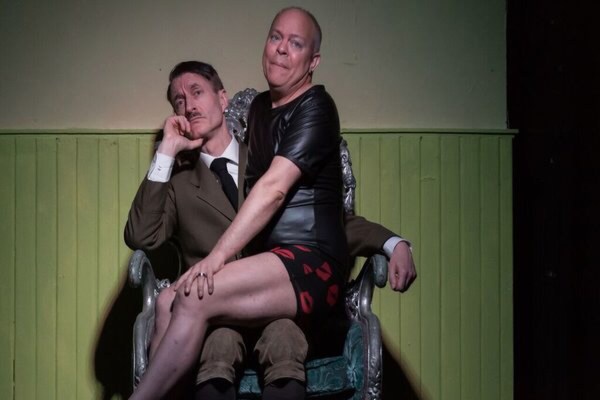
Lots of things seem like a great idea at uni. Some of them are genuinely good ideas. A great deal more aren’t. Writing a play about Hitler in the Big Brother House is one of the latter. In 2014, Newcastle University students Hew Rous Eyre and Max Elton founded Bitter Pill Theatre to produce their debut play, Big Brother Blitzkrieg, at Edinburgh Fringe that year. With a couple of other shows now under their belt, they bring their popular first production to London. Meant to somehow satirise Big Brother and Hitler, this stereotype-driven piece doesn’t follow any sort of consistent narrative logic and doesn’t manage to rise to satirical humour. The performances are very good despite the character limitations, but the script comes across as a drunks, nonsensical idea that would have been better off forgotten.

When Hitler fails to kill himself after his final rejection from art school, he wakes up in the garden of the Big Brother House during its final season. True to life, no one watches the programme anymore and the contestants are just in it for the money. Bafflingly, none of them no who Hitler is, even the educated, middle class housemates. Clearly this is a world where WWII never happened, but I’m not sure what point that’s meant to make. Similarly, the plot follows what I imagine to be standard Big Brother events: evictions, competitions, surprises and character clashes that are largely unfunny and offer no new perspective on the show or reality TV format. Though the story defies the laws of Physics through the use of time travel, this element is wholly neglected.

The cast are very good, or at least at playing their respective stereotypes. Stephen Chance is an expressive, quick-witted Hitler with no idea of how to deal with charming, bouncy Essex lad M-Cat (Kit Loyd) and ageing queen Felix (Neil Summerville). He finds kinship in corporate PR and Tory Lucy (Jenny Johns), a delightfully despicable Katie Hopkins homage. The house is completed with femi-gendered Charlie (Hannah Douglas) who has some cracking exchanges with Lucy, and the bland as plain toast housewife Rachel (Tracey Ann Wood), who Hitler immediately distrusts. The combinations invites inevitable situation comedy but again, it’s not sophisticated enough to count as satire, or have any sort of message at all. A shame, as the actors all seem to have great potential but are stuck playing two dimensions.

The show would suit a much smaller format, like a reoccurring sketch as part of a comedy show limiting each slot to ten minutes. About half an hour in, Big Brother Blitzkrieg already feels too long. There were a few good lines, but in 75 minutes, a few isn’t enough to save this play even with the hardworking cast. Despite the commendation these young practitioners deserve for setting up a company whilst still studying and keeping it going for nearly two years, part of artistic development is knowing when to let an idea go. This is a production that needs to retire in favour of more advanced, relevant work.

The Play’s the Thing UK is committed to covering fringe and progressive theatre in London and beyond. It is run entirely voluntarily and needs regular support to ensure its survival. For more information and to help The Play’s the Thing UK provide coverage of the theatre that needs reviews the most, visit its patreon.

King & Country, Barbican Centre/RSC

rsz_king-and-country

Shakespeare’s history plays are some of his best. Epic tales with tragedy and comedy, love and war, politics and history are brought to life on stage, with the storyline of some characters spanning years and multiple plays. The RSC and Barbican have, over the last few years, presented the first four as separate productions but to celebrate the 400th anniversary of Shakespeare’s death this year, unite them as a single ticket. King and Country is Richard II, Henry IV part i, Henry IV part ii and Henry V is a marathon package deal of roughly twelve hours of theatre (plus intervals) spread over several days. A large ensemble cast play all roles across the four plays, with the same actors satisfyingly playing the same parts that stretch across multiple productions. Set and design also carry through; this quartet is slick, engaging and brings together original and contemporary practice.

Big names in the cast are an initial draw and live up to their hype (David Tennant, Antony Sher, Julian Glover), but the thirty-strong ensemble are just as good, if not better. Sam Marks as Aumerle, Poins and the Constable of France is excellent, particularly as Prince Hal’s laddish sidekick with a magnetic energy that bounces around the stage and fills the 1,156-seat theatre with youthful vigour. Matthew Needham comically interprets Hotspur; random, extreme outbursts get laughs, making the character’s tragic flaw the reason for his defeat. He also plays Mowbray and Shadow, the latter being a minor role but played with such commendable contrast that he is unrecognisable. Jennifer Kirby is a feisty Lady Percy and a naughty and nice Katherine, endowing both small roles with heaps of personality. The best comedic performances include Oliver Ford Davies as Shallow (also a fantastic Duke of York and Chorus), Emma King as Doll Tearsheet, Sarah Parks as Mistress Quickly and Joshua Gardner as Fluellen.

Tennant is just as exquisite as Richard II as two years ago, and Jasper Britton’s Bolingbroke/Henry IV is endowed with pathos, guilt and an extraordinary character journey. Alex Hassell is delightful as the devil-may-care Prince Hall, but his quieter, matter of fact Henry V is sensitive but less dynamic. He aims for intimacy rather than bombast and arrogance, a unique interpretation but one that is not overly effective due to a lack of power, particularly in his famous speeches. Antony Sher nails Falstaff’s characterisation, but his even, rhythmic delivery lacks variation and harks back to the old fashioned declamatory RSC stage speech – hugely disappointing.

Stephen Bromson Lewis’ set is the same as it was for Richard II’s performance two years ago and has little variation over the four productions. Paired with Tim Mitchell’s lighting, the audience sees austere courts, earthy battlefields and debauched public houses that don’t interfere with the action. The acrylic floor of under lit ploughed furrows is the surprise of the event, not viewable from the stalls closest to the stage but adds a striking dynamic and atmosphere from the gods: a delight for us peasants with the cheapest seats. Costumes (presumably also by Lewis) hint at a time period, but have a contemporary, minimalist touch that please the eye but not dominating.

There are some odd directorial choices by Gregory Doran in these otherwise stunning productions. Rumour (Antony Byrne) is in contemporary dress, accompanied by a projected digital cascade of hashtags and “rumour”. The Chorus (Oliver Ford Davies) is similarly dressed, which makes sense with the text. The token technology reference? Much less so. These are jarring in their modernity, unneeded and contribute nothing to the meaning and aesthetic of the plays. He misses an opportunity to put Henry V on the elevated walkway heavily used in Richard II; instead he lowers him to a wooden cart and diminishes the gravity of the St. Crispan’s Day speech.

It was an utter joy to see Doran incorporate audience interaction; even though there weren’t many of these moments. They unite the audience and actors in a love for Shakespeare’s work, bringing everyone together in a celebration of living, breathing theatre rather than maintaining a distant reverence for it. Henry V’s adorable insecurity in the presence of French princess Katherine leads to asking the audience for advice, and Hassell’s corpsing during a pub scene as Hal (when an audience member loudly blew his nose and another actor acknowledged it within the action) was a delight. His easy confidence with this style of performance clearly stems from his early work with The Factory and The Globe; Doran should have exploited this more, particularly during the character’s youthful exploits. The audience could have easily been his army or his mates down the pub more often.

Though RSC productions have often missed the mark in the past, these four are almost as on it as they can get. They do not force a modern concept that only tenuously relates to the themes in the script, but they are not stuck in a stilted, stuffy style of yore. Doran’s productions are unified, alive and vibrant with stellar design and performances. Here’s hoping they see life in the UK beyond this Barbican run and their international tour this spring.

The Play’s the Thing UK is committed to covering fringe and progressive theatre in London and beyond. It is run entirely voluntarily and needs regular support to ensure its survival. For more information and to help The Play’s the Thing UK provide coverage of the theatre that needs reviews the most, visit its patreon.

Auld Acquaintance, Bread & Roses Theatre

Imogen and Jake are a trendy, young couple with a new born daughter. It’s nearly Christmas and they are at their mother’s house with Jake’s brother Rob and his wife, Natasha. Everything should be perfect, but it’s far from it: Jake and Rob’s mum is dying in a hospice, Imogen has fallen out of love with Jake whilst struggling with post-natal depression, Rob and Imogen hate each other but Imogen and Natasha are old school friends with an intimate secret.

This one act play by Natalie Audley, newly re-worked for London after a 2014 run at Brighton Fringe, still needs some refining. There are some killer one-liners and painfully spot-on insight on fertility and relationships, but an abrupt ending and wordy lines that uncomfortably stumble from the actors’ mouths give the script a weight that goes against it comedic instincts. The pace varies, but feels slower than it ought to. Audley clearly leans towards poetry and language-driven plays, but some trimming here and there would go a long way.

Performances are mixed and take some time to find their rhythm. Charlie Lees-Massey is by far the best of the cast of four as Natasha. Her moment of surrender to Imogen (Emily Ambler) is sexy as hell, and she maintains a consistent energy and believability throughout. Ambler’s best moments are with Lees-Massey, as are Tom Everatt’s at Rob. Matthew Corbett as Jake seems awkward throughout, though this could be a character choice. Director Courtney Larkin deftly moves her actors around the tiny stage without it feeling crowded or blocking sight lines.

There’s still a clunkiness to the script but further expansion and chiselling will refine the dialogue and turn this into a polished piece of contemporary naturalism. The issues presented are crucial ones to examine on stage, especially as they are told from a female perspective and with a 50/50 gender split cast, but more development is crucial to give them the power they deserve.

The Play’s the Thing UK is committed to covering fringe and progressive theatre in London and beyond. It is run entirely voluntarily and needs regular support to ensure its survival. For more information and to help The Play’s the Thing UK provide coverage of the theatre that needs reviews the most, visit its patreon.

The Xmas Carol, Old Red Lion Theatre

rsz_2cc9d33d00000578-3250546-i_ve_never_doubted_that_mr_cameron_like_most_of_his_generation_w-m-2_1443338742165Dominic Cavendish thinks this year’s theatre lacks relevance to current affairs. He’s probably been working under a commercial and subsidized theatre-shaped rock (as mainstream critics are prone to), citing Anders Lustgarten’s Lampedusa as, “number one in a field of one” where, “nothing stood out as ‘the’ play for today.” Matt Trueman defends theatre’s ability to respond at the speed Cavendish would like, and also cites several examples Cavendish neglected: “The Fear of Breathing by Zoe Lafferty and Lucien Bourjeily’s 66 Minutes in Damascus, part of the 2012 LIFT festival, spring to mind, though Cordelia Lynn’s Lela & Co was set in an unnamed country gripped by a similar civil war.” Also springing to mind and not set in Syria but Liberia, Danai Gurira’s Eclipsed starkly presents the victims of another civil war.

The nightmare in Syria driving tens of thousands of people to flee their homeland in search of safety demands global action and aid, of course. But there were numerous other hotbed issues addressed in British theatre over the past year, even the last couple of weeks. Theatre Ad Infinitum’s Light looked at government surveillance, As Is reminded us that AIDS diagnoses are on the rise, Goodstock describes the uncertain life as a young woman with a high risk of breast cancer. Down & Out in Paris and London rallies support for the working poor, The State vs. John Hayes gives us the last night of a schizophrenic woman on death row, and Skyline is a relentless attack on the London housing crisis. There are many others as well, and that’s just in the past year of one critic’s theatregoing.

Within the past week, The Old Red Lion opened Arthur Miller’s first play, No Villain, a love letter to communism and the strikers of 1936 New York City. Accomplished theatre critic and author T L Wiswell also offered her latest work for two nights only, a satirical update of Dickens’ classic Christmas novel to the current 10 Downing Street, The Xmas Carol. That’s just at one venue, not specifically known for political theatre. The Xmas Carol has a dig at pop culture/The X-Factor to frame the consequences of David Cameron’s legislation on everyday, working people after his annual Christmas party, similar to Miller’s use of the strikes to focus on the life of one family out of millions. Both plays need further development (though it’s obviously too late for Miller), but both brashly and fearlessly confront the politics of their day.

In The Xmas Carol, Simon Cowell (Chris Royds) introduces his latest programme that’s sure to be a ratings hit; it’s an interesting meta-theatrical device that works towards justifying Cameron’s (Warren Brooking) travels through his past, present and future. Jason Meininger’s lighting and Keri Danielle Chesser’s sound effectively evoke transitions in time and space. Some more exposition to set up the television show that Cowell is steering would have clarified Cameron’s complicity and aim to improve his ratings, but the device itself is a creative deviation from having Cameron fall asleep and dream the whole thing.

There are some great impressions in the cast, particularly from Luke Theobald as Ghost of Christmas Past Margaret Thatcher. Brooking could have been a louder, bolder Cameron but he captures an element of the man in his gestures and general lack of humanity. Will Bridges is an amusing, though not particularly accurate Jeremy Corbyn but as this is a satire, his punditry can be excused. Jenny Wills as Cameron’s PA Bob Cratchett brings some grounded naturalism to this piece. She’s a lovely character, warm and family focused, with some good dialogue, but her performance style jars with the heightened delivery from the rest of the cast. It works to ground Cameron’s devastating policies in reality, but she could use some backup from other characters. As the play’s currently just under on hour, more down-at-heel, working people could easily be brought in to further emphasise the battle between the ridiculous politicians and celebrities, and the everyday man.

Having gone to a reading of The Xmas Carol about a month ago, the concept has developed quite a bit since then, but the structure could still use additional tightening and detail. More dialogue and exposition will help, particularly in the beginning and end. There are some genuinely funny moments and well-crafted scenes, but a brief resolution. The Tory criticism is relentless and mocking but also pointed and moving. Wiswell is certainly in the process of striking a good balance within the piece, but it needs just a bit more shaping.

Both The Xmas Carol and No Villain are highly political, but in very different ways; the same can be said of many of the aforementioned productions. Sure, they’re not about Syrian civil war and refugees, but they focus on diverse, divisive issues relevant to contemporary life. Perhaps Cavendish needs to visit the fringe more: it’s where angry voices can express their views unfettered, without the burden of corporate sponsors and other such bureaucratic obstacles. These shows don’t have the high production values or years of development and funding that commercial theatre does, but political theatre on the fringe is some of the most raw, honest, relevant theatre I have seen this year.


The Play’s the Thing UK is committed to covering fringe and progressive theatre in London and beyond. It is run entirely voluntarily and needs regular support to ensure its survival. For more information and to help The Play’s the Thing UK provide coverage of the theatre that needs reviews the most, visit its patreon.


Jackson’s Way: The Christmas Top-Up Power Seminar!, Battersea Arts Centre

rsz_jacksons_way_battersea_arts_centre

Will Adamsdale’s standup/solo performance creation Chris Jackson is a motivational speaker and life coach, and the audience is at his seminar to learn his life changing methods. Jackson’s Way: The Christmas Top-Up Power Seminar! teaches you the importance of attempting meaningless or impossible actions, or “jactions”, in our lives that are otherwise filled with purpose. Adamsdale’s script has a clear narrative but somewhat lacking in follow through – we never really learn precisely WHY we should be filling our time with jactions, but the character’s detailed biography and emotional journey through the Christmas story is satisfyingly seasonal.

Just so you know, jactions have levels, can be compounded and done in groups or individually. You know you’ve succeeded when you have a mild feeling of nausea but manage to Push Through It (PTI). Some of Jackson’s most famous jactions include trying to move the floor, preventing a thrown towel from hitting the ground, and making your hand be in two places at once. The absurdity and existentialism are wonderfully funny, as is the conviction with which Adamsdale gets the audience to attempt jactions.

The autobiographical storyline and the use of projections add to the theatricality of the piece, as does Adamsdale’s immersion in the character he created and his sudden change of mood. Though the structure seems pre-formatted some of the content is improvised and there’s loads of audience interaction.

The ending is rushed but generates plenty of laughs with the character’s narcissism and has a degree of resolution. A bit more time on end and clearer goals for the seminar premise would give this already polished piece of performance more finesse, but it definitely isn’t lacking in humour that functions on multiple levels.

Adamsdale is clearly a skilled, charismatic (and sweaty!) performer with an innate sense of comedy and stage presence, as it should be for such a seasoned performer. Though English, his American accent is flawless. Running for over ten years now, it’s no wonder that Jackson’s Way has staying power in the performance and comedy circuits, and Jackson’s Way: The Christmas Top-Up Power Seminar! is a great variation on usual holiday theatre offerings and a reminder to enjoy the frivolity of Christmas rather than stressing out over its logistics.


The Play’s The Thing UK is an independent theatre criticism website maintained voluntarily. Whilst donations are never expected, they are hugely appreciated and will enable more time to be spent reviewing theatre productions of all sizes. Click here to make a donation with PayPal.

Spin Cycle, Theatre N16

https://pbs.twimg.com/media/CTpuSCxWcAEiYNI.jpgWe’ve seen “Mad Men,” or at least heard the clichés about cutthroat ad agency types. Competition for clients, drug and drink fueled late nights, ruthless bidding for commissions regardless of morals. Steve Thompson’s Spin Cycle uses all these ingredients, but the writing style doesn’t match director Stephen Oswald’s delivery. It’s either a farce that was delivered as naturalism, or a naturalistic piece (albeit with a liberal use of humour) that attempts a farcical production. All of the characters are pretty stereotypical with at least some degree of reinforcement from the script, causing the two hours of day-to-day office life to feel repetitive and lacking in depth. There are clear individual storylines, but everything that goes wrong is treated as a crisis that’s conveniently and speedily resolved. The performances are generally quite good in this strong ensemble, but the actors are unable to show much range or development due to a lack of character journey.
Jane (Anneli Page) is the boss, with a good balance of motivation and friendliness. Page easily adopts Jane’s quick wit but also shows some warmth and vulnerability; it’s a shame she is prevented from more than a bit of this. The character has an underlying humanity that is neglected in favour of style, but I chalk this up to a directorial choice. Ash Merat as Piers is the prodigal son with a dangerous edge, also well played. Both Mary Looby and Dan Shelton play three roles each and show excellent contrast between them. They are clearly skilled performers who deserve a shot at a meaty lead, but are excellent character actors as well.

My inkling is that the script is the issue here. It tends towards a circular structure with slow development and a few random sections of rhyming verse that don’t contribute anything other than questions about the reason for their existence. The storyline doesn’t follow a standard dramatic arc, which isn’t necessarily a problem, but the repetition employed quickly becomes tedious. The script could easily be halved and still make its point about the awfulness of the advertising industry, but at least the performances were good enough to get us through two hours of corporate rhetoric and pandering to the Tory party to make a buck.


The Play’s The Thing UK is an independent theatre criticism website maintained voluntarily. Whilst donations are never expected, they are hugely appreciated and will enable more time to be spent reviewing theatre productions of all sizes. Click here to make a donation with PayPal.

La Soirée, Southbank Centre

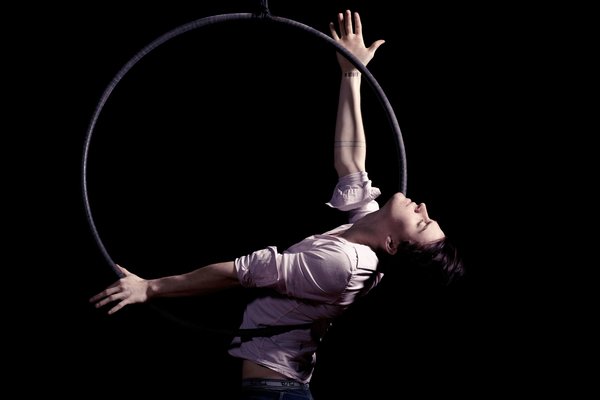
rsz_1bret_pfister_image_by_bertil_nilssonSouthbank Centre has a spiegeltent in residence under the Hungerford Bridge; it’s a sexy, glam, velvet and mirrored thing miles away from shabby travelling circuses with tired acts. It’s a fitting home for La Soirée, a heady mix of circus, cabaret and variety performance from around the world. Each act has a distinct character combined with extraordinary skill sets, often leaning towards adult and edgier content. Though the characters created as a vehicle for the skills on display generally rely on stereotypes, this doesn’t diminish the impressiveness of the techniques. The sumptuous environment and range of talent on show makes for a frivolous, fun night of light entertainment with heaping dose of sex appeal.

Though not solely circus, La Soirée seems to focus on circus arts and use other performance styles to add variation. They also change the lineup on a regular basis, so any given night is unique. These artists are multi-skilled, too: The English Gents are a pair of balancing acrobats, who separately are a bubble artist and a pole dancer. Captain Frodo contorts himself through tennis racquets as well as doing a bit of comedy magic. My favourite is Asher Treleaven, who has a sexual Diablo routine as well as a side-splittingly funny stand up act around a Mills & Boon novel. Then there’s a hoop artist, an aerialist using a single strap and a hand balancer on a motorbike. A singer, and modern clown/comedian Mooky with a double act composed of herself and a willing audience member complete the lineup. All of these performances take place on a tiny round stage, no more than 2 metres across.

There’s plenty of subversion in the event, as there always has been in circus – the exotic on display for the everyday Joe to get a glimpse at those who are unwilling or unable to conform to the status quo. From large tattoos and a lesbian kiss, to deliberately dislocated joints and extreme flexibility, that “otherness” is still very much present, even though its more mild forms no longer shock us. That subversion is sexy, titillating and occasionally grotesque, making the groups of business people on corporate outings squirm as well as gasp. It’s so easy to be impressed by the physical abilities, but the additional layers of characterization make these acts stand out from others I’ve seen previously. I don’t see much circus, cabaret or variety, but La Soirée has such a high quality range of acts that it’s hard not to be impressed.


The Play’s The Thing UK is an independent theatre criticism website maintained voluntarily. Whilst donations are never expected, they are hugely appreciated and will enable more time to be spent reviewing theatre productions of all sizes. Click here to make a donation with PayPal.

The Devil is an Ass, Rose Playhouse

rsz_devil-is-an-ass-700x455Enthusiastic little devil Pug wants a crack at antagonizing mortals, but big man Satan isn’t sure he’s ready. After some discussion, Pug eventually gets his way and finds himself in London, where he is encouraged to bother greedy Fabian Fitzdottrell, an odd little man obsessed with using the dark arts to get rich. Taking up a position as his servant, Pug witnesses all sorts of bad behaviour and scheming from Fitzdottrell and the various con men after his money. Ben Jonson’s The Devil is an Ass is less about the devil and more about devilment, and Mercurius bring this farcical, Jacobean world to life with a snappy edit, good energy and some excellent performances in original dress.
At just over an hour, the edited script becomes focused on plot points rather than character development, but it works well for this story consisting of constant attempts at trickery that go wrong. Short, energetic scenes keep the action ticking along nicely in The Rose’s intimate staging area; only two moments are staged at the back of the archaeological site across the pool of water preserving the theatre’s remains. It’s a shame to rarely this part of such a unique venue, particularly as it would have expedited some of the longer transitions. Director Jenny Eastop’s use of fabric drapes and a few wooden chairs to create various locations is lovely though, particularly when arranged to make windows across a courtyard from which handsome Wittipol (Monty D’Inverno) attempts to woo Fitzdottrell’s much abused wife (Beth Eyre). Handy signs also add clarity and sumptuousness to a story driven by money and deception.

The men lead in the performances, with Michael Watson-Gray as the hapless Fitzdottrell who is unable to decline Meercraft’s (Benjamin Garrison) blatant exploitation of his greediness. Watson-Gray’s Fitzdottrell is also wonderfully abhorrent in the way he treats his wife and the men that he, in turn, also tries to con. Garrison gives a performance nearly identical to the style of Jack Whitehall, but this professional debut of a recent graduate shows confidence, presence and style. D’Inverno is delightful disguised as a Spanish lady in his attempts to get some alone time with Mistress Fitzdottrell, and Nicholas Oliver as Ambler is also very good. Some of the other performances lack confidence and seem unsure about handling the text, but do not detract from the others much.

Rather than forcing this play into an unrelated time period, Eastop wisely focuses on the text-based comedy and leaves the setting in its original time and place. As Pug becomes more and more baffled by the antics of these mere mortals and misses the roaring fires of home, his frustration eventually explodes after a run in with a lady of fashion, of which there is no greater hell. With a focus on money as much as the dark arts, there is some contemporary relevance, but it is very much a relic of its time. There are definitely some great choices in Mercurius’ funny production of Jonson’s rarely staged play that makes it worth seeing in this very special venue.


The Play’s The Thing UK is an independent theatre criticism website maintained voluntarily. Whilst donations are never expected, they are hugely appreciated and will enable more time to be spent reviewing theatre productions of all sizes. Click here to make a donation with PayPal.

Payne Killer, London Horror Festival

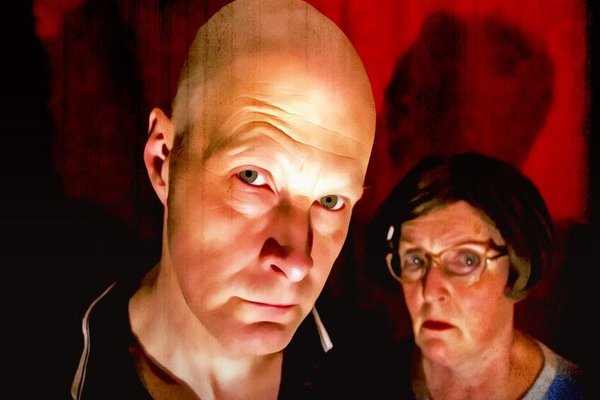
rsz_1payneAny theatre festival programme is hit or miss if you aren’t familiar with individual shows or participating companies. So far, the productions I’ve seen at the London Horror Festival have ranged from ok to quite good, until Payne Killer. Lack of direction and a hackneyed story concept caused rushed, hammy performances and poor technical choices. There is also some awkward stage combat, no subtlety and a twist at the end ruined by the final moment. Phil Newman’s detailed set design helps provide some relief from the experience, as do a few moments in Rowan Dixon’s script that are probably quite funny if delivered well, but these two features aren’t enough to save the production from inflicting the horrors of bad theatre on its audience.

In a production that requires suspense, varied pace is a vital element, particularly at the beginning. The actors in this two-hander start off relentlessly, with no pauses to allow for phrasing or building up to the first major plot revelation. They tire and slow down just as things should be picking up, so they phone it in for the rest of the play. No director is credited so I assume that the two performers, also founders of producing company The Uplifters, self-directed – a mistake that could have easily been avoided and choosing otherwise would have had a hugely positive impact on the production. A director or a lighting designer could have also sorted out the cheesy lighting states during the characters’ reflective, confessional monologues that were also confusing and unnecessary: spotlights indicated soliloquies, but the other character could hear them and subsequently commented on the revealed information.

The set, a middle class, older woman’s living room, is unusually detailed for such a small theatre but fits the space well. Down to the newspaper holder and the trinket-filled bookcase, it creates the feel of a lived-in home that is well looked after, even if the furniture hasn’t been replaced since the 70s. It serves the production well, with only a slippery rug causing any interference to the actors.

Dixon’s script isn’t bad per se, but neither is it inventive or seemingly well researched. The characters are rather under-developed and cliched; something that research on serial killers may have helped. There are some nice moments, particularly when the two display some vulnerability, but due to the aforementioned performance issues these are glossed over.

A good production team, script rewrites and possible recasting might salvage Payne Killer, but The Uplifters may choose to move on and focus on the musicals they typically produce, which are familiar ground and probably better quality than their venture into horror theatre, a genre that should be scary for its content rather than its production values.


The Play’s The Thing UK is an independent theatre criticism website maintained voluntarily. Whilst donations are never expected, they are hugely appreciated and will enable more time to be spent reviewing theatre productions of all sizes. Click here to make a donation with PayPal.