Measure for Measure, Young Vic

https://i0.wp.com/www.officiallondontheatre.co.uk/servlet/file/store5/item336663/version1/fileservice770/336663_770_preview.jpgThere’s a mountain of inflatable sex dolls on the stage. Shiny, blank faces with gaping, toothless mouths, spherical tits and gargantuan cocks everywhere. The pile is so big that the actors have to wade through the dolls, a metaphor for the seedy Viennese streets where Shakespeare sets his Measure for Measure. Director Joe Hill-Gibbins wrenches this world into the present with a symbolism-laden, visually orgasmic production designed by Miriam Buether, and a great performance by Romola Garai as Isabella. Live video feeds, projection and pulsing beats marry a space that has ghosts of Elizabethan theatre structures, but some choices don’t sit well. Though the visuals are relevant and bold, there’s a disappointing tendency towards shouting, and a dubious (to the point of discomfort) characterization choice for infamous pimp Pompey. As the characters physically and emotionally wrestle through the heavily edited, relentless two hours of sex and religion, there is still a strong feeling that this production values style over substance.

Most modernized Shakespeare I see tacks on a more contemporary setting through costuming whilst changing little else. These sorts of adaptations tend to not generate any new insight on the play, its story or characters. This production manages to escape that trap through fully integrated design that cleverly functions on both a practical and representational level. The sex dolls, the most jarring of the updates, are in turn Angelo’s repressed sexuality, the sinners that Isabella (a novice nun) rejects, prisoners, and the duke’s citizens. The live feed is the media and public perception (as it was in the Old Vic’s 2005 Richard II), the duke’s altered perspective of events, and creates clear boundaries between locations. It’s also very Big Brother, and the audience is the all-seeing, both on and off camera. These design elements are grotesquely amplified, with every pore visible as faces are broadcast and projected at a massive size, and the dolls, well, they’re everywhere and thrown around like a cheap commodity to be used and discarded.

The dolls eventually move to a back room, akin to an Elizabethan inner stage, that’s often sealed off by sterile sliding panels, but we are regularly reminded of their presence both on and off camera. The live feed doesn’t let the audience forget about the bad behaviour happening in the concealed prison where Angelo’s offenders await execution. Some of the characters linger on stage even when not in a scene, giving time and space a fluidity but one that is understood to be separate from the action in any given moment. This rejection of set also harks back to Elizabethan performance convention. Projections of medieval art gorgeously juxtapose whirling, close-up photographs of the dolls and projections from the live feed, two worlds colliding in Hill-Gibbins and Buether’s updated Vienna. This contrast pointedly comments on the hypocrisy of modern religious fundamentalism; pro-lifers who are so pro-life that they kill abortion providers immediately spring to mind, though there is a plethora of other examples.

Though Garai’s performance has the power and confidence that Isabella often lacks in more demure interpretations, others in the cast let it down. Zubin Varlo as Duke Vincentio is quick to shout; this soon becomes excessive and a loss of power. Though a great performance from Tom Edden as Pompey the pimp, it’s disturbing that he has been characterized as a stereotypical Jewish New Yorker obsessed with money. However, Ivanno Jeremiah is an excellent Claudio with a quietness that is great contrast to the fiery Isabella. The colour-blind casting proudly shows off the UK’s diverse talent, with a female Sarah Malin as Escalus, PA to the duke and his deputy. Paul Ready as Angelo, the floundering, conservative who covers Vincentio during has absence and tries to bed Isabella in exchange for her brother’s life is definitely despicable but also incredibly conflicted. It’s easy to almost feel pity for him at times.

There is no doubt that this production looks fantastic, particularly in the opening and closing sequences. It updates well and has contemporary relevance on several levels, but there’s little unity across the design elements. This reminds me of Baz Luhrmann’s 1990’s Romeo & Juliet – all angry and dystopian and fast. It’s non-specific to a time and place, just broadly Western contemporary. It’s diverse in race, gender and accent and could easily be London, Paris, New York, or any other sleazy, urban environment. This gives it universality, but also shows laziness. I wonder if the design was initially chosen because it looks lush rather than makes a specific comment. Despite my interpretation of the underlying meaning of the design, I can’t help but to consider that my mind is constructing meaning that isn’t actually there. This was a relentless unease that lingered for the duration of the performance, though it didn’t spoil the experience.


The Play’s The Thing UK is an independent theatre criticism website maintained voluntarily. Whilst donations are never expected, they are hugely appreciated and will enable more time to be spent reviewing theatre productions of all sizes. Click here to make a donation with PayPal.

The Tempest, Bloomsbury Festival

circle

By a guest reviewer who wishes to remain anonymous:

This adaptation of The Tempest by Kelly Hunter was a one-off performance as part of the Bloomsbury Festival at the Bloomsbury Studio Theatre. Hunter specifically designed this piece to enable children on the autism spectrum to participate in the show with the actors. These children’s parents/carers are invited to sit and watch.

I think this was the most unique Shakespeare productions I’ve seen. Hunter and her excellent cast of six set themselves the challenge of using The Tempest as a means of interacting and helping several young people on the autism spectrum to improve their self expression and communication with each other. Initially, I was uncertain how this would work as, personally, I’ve always found the Tempest a tricky play to follow. As the story progressed I saw that The Tempest actually lends itself perfectly to this kind of devised, interactive theatre. The play of course deals in magic; there’s also a clear physicality to many of the characters and a certain playfulness which allows the actors to introduce the young participants to the world of the play. This was not a full production of the Tempest and nor did it need to be. Considering its aims, the production was undoubtedly a huge success. All of the participants seemed to benefit hugely from playing simplified versions of various scenes from the play with these very experienced stage actors. More importantly they, along with the parents and carers watching, seemed to really enjoy themselves. When the play ended there was a lovely, warm feeling in the room. Everyone seemed enlivened by the experience, adults and children alike.

I sincerely hope that Flute Theatre will continue its success producing this kind of work in the future. It is extremely important and valuable to non-traditional theatregoers.


The Play’s The Thing UK is an independent theatre criticism website maintained voluntarily. Whilst donations are never expected, they are hugely appreciated and will enable more time to be spent reviewing theatre productions of all sizes. Click here to make a donation with PayPal.

Twelfth Night: A Gender Experiment (opposite gender cast), The Rose Playhouse

Most Shakespeare I see is performed with the actors’ genders matching that of the characters they play. Sometimes I see token cross-gender or gender-blind casting within an own-gender cast, sometimes all-male productions and less often, all-female productions (I wrote about the scarcity of all-female Shakespeare companies in the UK for The Shakespeare Standard last month). What I hadn’t seen however, was a completely cross-gendered production. As part of a gender experiment, actor/director Natasha Rickman stages Twelfth Night: A Gender Experiment four ways: all-female, all-male, same gendered and cross-gendered. Rather than seeing all four, I went for the most rare of the options out of curiosity, which was satisfied by excellent performances and a 90-minute edit with plenty of fun and energy. I’m now tempted to see the remaining three as I can’t decipher quite what Rickman seeks to prove or disprove with her experiment, but the questions surrounding the nature of the experiment did not dampen the enjoyment of the evening.

A cast of seven, three men, three women and a sock puppet, play all parts. There are the same number of men and women in all four versions, supporting Equity’s goal for 50/50 gender representation in theatre. Rickman is a RADA grad, as are most of her cast so handle Shakespeare’s text easily. Julia Goulding is an outstanding, versatile Orsino, Sir Andrew and Feste, using accents to clearly differentiate her characters. Shauna Snow is, hands down, the best Malvolio I have ever seen – serpentine and androgynous, but utterly buffoonish upon discovery of Maria’s planted letter and vulnerable after her release from prison. Henry Gilbert is a lovely Olivia, feminine but not helpless. Christopher Logan’s Viola has a hard, threatening edge when fending off Olivia’s advances, rare in a female playing the role. There is a notable lack of racial diversity, though. This cast is all white and the actors that make up the rest of the company appear to be as well, or at least look like it in the small, black & white photographs in the copied programme.

Sorcha Corcoran clothes the women in costumes inspired by Smooth Faced Gentlemen’s skinny jeans, shirts and braces, showing masculinity without hiding feminine features. The men wear dresses, but don’t hide their short hair with wigs. Though they still play the gender of the characters, Rickman doesn’t strive for realism in design or performance, which works well for this play that has such a heavy focus on gender. She indicates gender with the costume rather than playing it, creating a self-referential style more in keeping with Shakespeare’s original performance practice than contemporary productions that seek total naturalism. Also, she draws on stereotypes to create the roles; there is a heavy dose of Commedia dell’arte in the characters’ movements, which would have been a large influence on Shakespeare’s comedic characters in both writing and performance. The overall feel is light, funny and camp from both the men and women, with any references to the characters’ genders heightened due to the reversed casting. Combined with a good sense for pace and timing, the 90 minutes feel more like a relaxed hour filled with laughter and music.

Rickman uses diagonals well on the small stage, but doesn’t place much action around the rest of the Rose’s site despite the tea lights scattered around the pool and back wall. Sir Andrew and Viola’s almost-fight is oddly conducted with tree branches, which feel out of place. There’s a good dose of music and a jig during Feste’s final song, ending the evening with a flourish and reinforcing the sheer joy of Shakespeare’s comedies. This is one of The Rose Playhouse’s stronger offerings, and a rare opportunity to see a cast with impressive credits perform Shakespeare in an intimate space, regardless of any gender “experiments” the production seeks to conduct.


The Play’s The Thing UK is an independent theatre criticism website maintained voluntarily. Whilst donations are never expected, they are hugely appreciated and will enable more time to be spent reviewing theatre productions of all sizes. Click here to make a donation with PayPal.

The Tempest, Bread & Roses Theatre

The Tempest cut down to an hour performed by an all-female cast in a newish fringe venue in south London? Go on, then! Gender bending Shakespeare gives women opportunities to play seminal roles and audiences the chance to see Shakespeare’s characters in a new light. Get Over It Productions have been producing all-female Shakespeare for several years, having set up in order to direct and perform in their own work. They also seek to cast a mix of seasoned pros with actors just starting out, and have a small budget. All of this is bloody brilliant in principle.
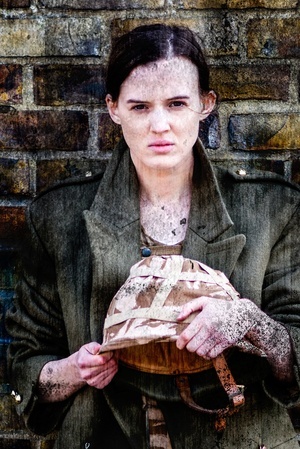
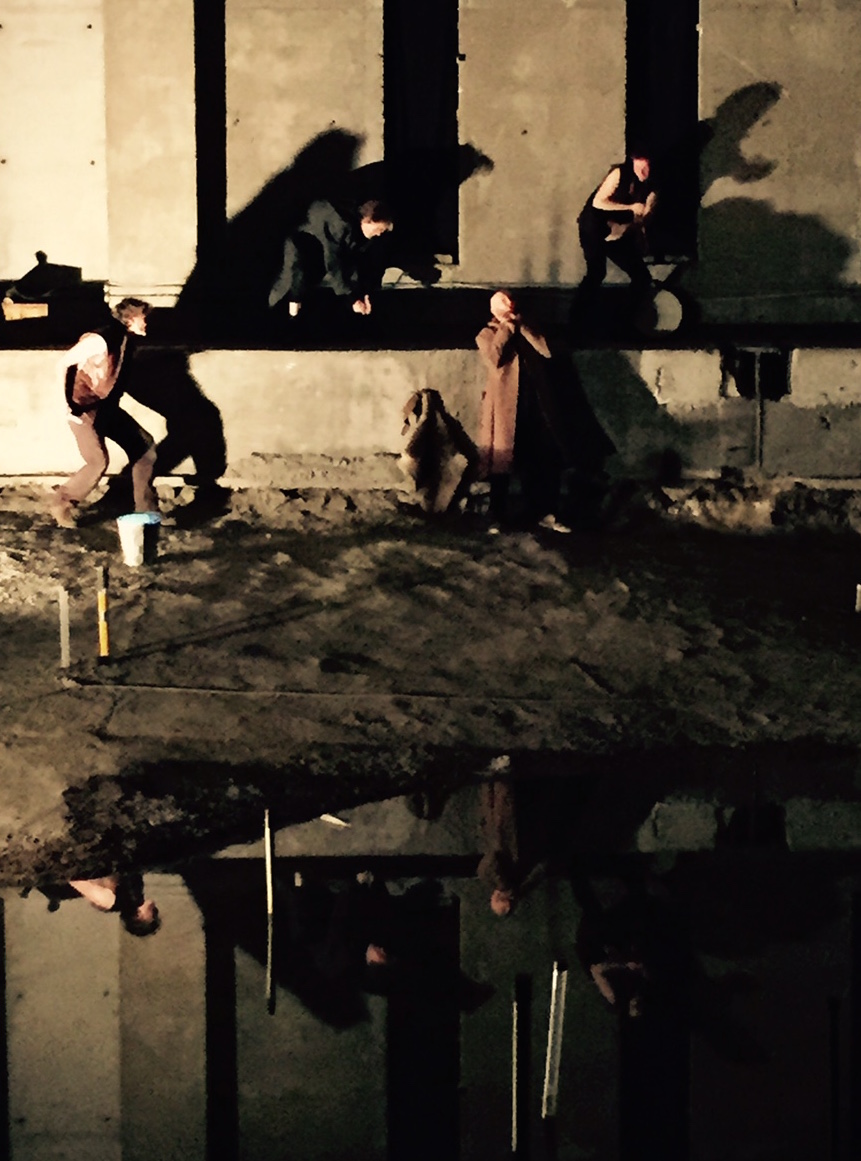
But it’s incredibly difficult to do well. Taking on multiple roles within the production team, working with a range of abilities and experiences, and not having much to spend on a good venue is hard work. What was a good concept didn’t really work in practice here. There were some cracking performances, but the mix of naturalism and Victorian melodrama showed a lack of cohesive vision within the Victorian music hall design. Director Paula Benson, who also played Prospero and is the artistic director of the company, could have done with an impartial outside eye to provide additional support and guidance. Clapham’s Bread & Roses, though a lovely space, is too small for the 11-strong cast and often led to stilted, restrained physicality and actors bumping into each other during transitions. This had a knock-on effect on line delivery, breaking up the metre and muddying line endings, and flattening energy. Shakespeare’s language is intrinsically linked to the actors’ movement and when one is blocked, it obstructs the other. There were no weapons; instead they were mimed. Unarmed combat would have been a more active choice, as the actors looked self-conscious with the lack of weapons.

The performance quality varied, but is to be expected with a company of mixed ability and experience. Benson’s melancholy, plotting Prospero was a unique and effective perspective I haven’t seen before. Sassy Clyde’s goofy, posh Ferdinand was equally unique and very funny. The contrast with the naïve Miranda (Velenzia Spearpoint) was wonderful; if she had more worldly experience she would most certainly not go for such a useless fellow. Both Clyde and Benson are convincing as blokes, with much focus on masculine gesture and movement. Joan Potter as Gonzalo and Cindy Evans as Alonso also play excellent men. Telma Rocha has the comic ability to contort her face into one resembling Commedia masks, and also has a well-developed, albeit stylized, character in Trinculo.

Despite the several issues with the production, they are ones that are easily solvable and with a few tweaks, including sharing production responsibility with a larger, trusted creative team will really ramp up Get Over It’s work. Lengthening the show, even a little bit, will make the cuts to the script less jarring and the action more fluid. Budget obviously can’t be helped much, but an adjustable space like The Bread & Roses allows for a different audience layout that would give the performers more space. I could see traverse staging working well with this production concept. Get Over It Productions ambitions are certainly commendable and the talent is clearly present. Perhaps this production was a weaker one, and I look forward to seeing future work.


The Play’s The Thing UK is an independent theatre criticism website maintained voluntarily. Whilst donations are never expected, they are hugely appreciated and will enable more time to be spent reviewing theatre productions of all sizes. Click here to make a donation with PalPal.

Shakespeare & The Alchemy of Gender, Rose Playhouse

At 19 years old, Lisa Wolpe fell in love with Shakespeare. She’s now performed more of Shakespeare’s male roles than any woman in history after founding Los Angeles Women’s Shakespeare Company twenty years ago. She is currently touring the world with her solo show, Shakespeare & The Alchemy of Gender. Although it sounds like an academic lecture, it contains some of the best Shakespeare performances I have seen. The play pays homage to her father, telling the man’s story and how he affected her life. The man who killed himself when Wolpe was four is brought to life in a deceptively simple show that finds hope in a history of suicide, abuse and war.

Though to say the show is about her father’s life oversimplifies the content. Yes, a large portion is about him, but it also covers her life after he had gone, her relationship to specific Shakespeare characters, gender, performance, religion, Elizabethan society, family and alchemy – the transformation of a base material into something precious. These themes intertwine, with no moment unrelated or superfluous and the 55-minute show amazingly manages to not feel overloaded with messages. As she works through her life and her father’s, she relates Shakespeare’s characters to individual moments in time. As she reflects on her relationship with him now, she becomes Hamlet remembering his father’s ghost, in the best performance of the role I’ve encountered. Her father’s WWII escape and joining up with the Canadian forces as a double agent lead into Henry V. We also meet Richard III, Hermione, Shylock and others in relation to herself and her family’s history. Wolpe is not only adept as any man at embodying the male roles, she excels. She also effortlessly switches between men, women and herself, functioning in an androgynous state when addressing us out of character.

Wolpe is comfortable addressing us with an open honesty about difficult episodes in her life without coming across as confessional or masturbatory, as one-person shows run the risk of being when used to come to terms with the performer’s or writer’s issues, whatever they may be. The show is relaxed and conversational with the audience nodding, laughing, even verbally agreeing. The intimate venue helps, but she certainly has the energy to fill a huge theatre. She had a profound effect on the audience, particularly when sharing moments about her relationship with her family and dressing in boys’ clothes to defend herself against her predatory stepfather.

Her interpretation of the characters she performs seems rooted in physical and vocal distinctions, with her General American accent capturing the visceral-ness of the language that the more recently created RP/Standard English. These characters come from her gut, and she explains how she is able to relate to each one and perform them with truth. This is evidence of Shakespeare’s continuing relevance to modern life. Not only is Shakespeare: An Alchemy of Gender an excellent piece of solo theatre, it is also a lesson in performing the great Shakespearean roles of both genders and an encouragement for all to defy gender boundaries dictated by society.

Because this is a woman that must be experienced, here is an extract from her Iago. Enjoy.


The Play’s The Thing UK is an independent theatre criticism website maintained voluntarily. Whilst donations are never expected, they are hugely appreciated and will enable more time to be spent reviewing theatre productions of all sizes. Click here to make a donation with PalPal.

Henry V, Union Theatre

I’ve known Lazarus THTP-037-4heatre Company and artistic director Ricky Dukes’ work for a long time. We first met back in 2010 sharing a venue at Camden Fringe when I was a fledgling producer. Since then, I’ve seen several of their shows and reviewed others, including The Spanish Tragedy (my first review for everything theatre) and last summer’s Troilus & Cressida. Dukes is visually inventive, with a solid grasp on the challenges of classical theatre. He boldly reconceptualises plays, honouring the language but ensuring productions are energetic and a feast for the eyes and ears. I expect Lazarus shows to provide a creative, unique perspective on the play, with high quality performances. Until this Henry V at The Union Theatre, they have always fulfilled these expectations.

The all-female, barefoot cast is rendered androgynous by identical navy blue boiler suits, emphasising Lazarus’ dedicated ensemble approach. Whilst this easily allows for multi-rolling, there is no visual distinction between characters. This hinders understanding of the story, particularly with the sweeping cuts to the text. The dark colour is a striking contrast to the dominating white table in the middle of the thrust stage, covered in religiously symbolic items, all white or light coloured: candles, an ornate bible, an alter cloth, a bowl of water for ritualistic washing, and Henry’s crown. These objects justify Henry’s contentious claim to France. A stack of self-referential Arden scripts is tucked under the table. There is no other set, save for black metal chairs ringing the playing space for actors to sit when not performing. The cast are on stage the entire time, a Brechtian technique used to emphasise the narrative aspect of theatre. Additional visuals include a creepily masked French herald, bright pink gift bags filled with the Dauphin’s luminous green tennis balls and a single pink helium balloon. These remain on stage for the duration, as well as the balls, which are thrown about the space upon delivery, causing the actors to tread warily. The overall look of the production harks back to the 1960’s.

The colour combinations and excellent lighting design looks fantastic. Dukes and the actors use the stage effectively, playing to all sides of the audience. Any individual moment could be photographed and it would make a striking image. The issue is that none of these visual choices supports the production concept. Dukes wants the audience to question whether Henry really has the right to invade France. Clutching at straws, I connected the boiler suits to mechanics, or builders – perhaps these characters are tearing down England and rebuilding it to be bigger, faster and stronger? This is tenuous, at best.

I really want this production to be as good as Lazarus’ past productions I’ve seen. Adaptations of Shakespeare should give the audience new insight into the play and provide a clear level of understanding, but this time Lazarus did not succeed in doing so. Other than it looking great, the reason behind the design choices remains unclear and they do not support the production concept.

The ensemble has some excellent performances. Colette O’Rourke is a feisty Northern Henry that holds attention throughout her lengthy trademark speeches. She is grounded, but with a volatile, pent up aggression. Her performance is reminiscent of Clare Dunn’s Hal in Phyllida Lloyd’s Henry IV at the Donmar last year. Just as watchable is RJ Seeley as Fluellen, who has some great scenes with Emily Owens’ Pistol. Nuala McGowan is vibrant and dynamic as the disturbing French herald and Captain MacMorris. The rest of the cast struggle to distinguish themselves from each other, delivering the text with nearly identical rhythm and pace.

Other devices that add distinctive features but no further clarification to the production concept include a loud hailer through which Henry rallies his troops, but it flattens delivery. Some speeches are delivered in prayer, emphasising the driving force of religion in Henry’s mission. Direct address is used copiously as it should be, but not excessively so. The St. Crispin’s speech is a wonderfully intimate interpretation. Pistol adds in some “fuck you’s”, which although gratuitous, suit the character. The diverse female cast, whilst laudable for diversity reasons, also provides no unique insight into the play, as their costume and performance style does not pander to any particular gender identity.

This Henry V is certainly not a bad production, but it is not up to Lazarus’ usual standard of excellence. A great performance from the title role and striking visuals help hold audience interest to some extent, but the lack of concept and design unity prevent total audience engagement.


The Play’s The Thing UK is an independent theatre criticism website maintained voluntarily. Whilst donations are never expected, they are hugely appreciated and will enable more time to be spent reviewing theatre productions of all sizes. Click here to make a donation with PalPal.

Romeo & Juliet, everything theatre

“Lauderdale House is the Elizabethan-era home of a former Lord Mayor of London… Behind the house, Shooting Stars Theatre Company perform their modern take on Shakespeare’s Romeo & Juliet

“Romeo (Joe Sargent) is a sensitive, intellectual hipster who hangs out with Roisin Keogh’s tomboyish Benvolio and Graham Dron’s oversexed, brash Mercutio. They drink, smoke, probably do drugs and generally make a nuisance of themselves…Sargent’s relationship with Emily Loomes’ Juliet is flawless, turning my insides to mush by the interval…

“Rory Fairbairn (Peter/Balthasar) gives us some excellent multi-rolling and physical comedy. Maxwell Tyler has a forbidding presence as the Prince and a sleazy, Cockney Paris. Ruth E. Mortimer, playing Capulet as a cold, corporate businesswoman, is all the more disturbing whilst arranging her daughter’s marriage…The whole cast is fantastic…

“The fight choreography (using flick knives and unarmed combat)…occasionally felt a bit mechanical…

“The second half struggled to find momentum initially…As it got dark, the dimming light reflected the darkening of the action even though it made it harder to see…

This is a truly excellent production with clear, creative directorial vision in a gorgeous setting. Hie thee to Highgate and catch it before it goes.”

Read the entire review on everything theatre here.

Macbeth, Rose Playhouse

FullSizeRender-3 copyWith inventive staging, text deconstruction and some great performances, East London’s Malachites continue their takeover of South London following last month’s excellent King Lear with Macbeth at The Rose Playhouse. Director Benjamin Blyth approaches this unique venue head on, staging scenes in all parts of the concrete expanse that stretches beyond the pool of water protecting the remains of the Elizabethan Rose. Some moments were effective due to the grandiose scale, some did not work due to sight line issues and distance from the audience. Textual edits were similarly brave, rearranging sections to emphasize Lady Macbeth’s and the witches’ control over the fate of the play. Those dogmatic about the text would probably not appreciate such actions, but they are very much in the spirit of Shakespeare: celebrate language and the improvisational nature of theatre, do not slavishly bind yourself to the text. Overall, this is a confident, experimental production to be commended for its efforts and irreverent approach to the text. Some of the choices made did not work, but Blyth is still to be commended for his effort and conviction.

To open, Lady Macbeth reads the letter conveying Macbeth’s news from battle by candlelight. The action she reads about plays out at the back of the theatre, by the edge of the pool preserving the Rose’s foundations, like a memory or mental picture. Cinematic-style transitions break up her speech, hold a modern audience’s attention, but effectively tell the story. Choosing to begin with Lady Macbeth’s speeches and interspersing the opening scenes with them empower the character, emphasizing the control she has over her husband. This is blatant reconfiguring of the text, but it has a strong message, suits the storyline and creates a completely different tone from more typical productions. Orla Jackson gives a calmly fierce Lady Macbeth, who later on deteriorates from grief and remorse.

Following the initial rearranging of the text, the play carried on with some cuts, until the end, which was also untraditional but showed the cyclical nature of evil and the omnipresence of the witches. In this production, the witches were tall, spidery and male, almost entirely kept at the back of the site. This pulled focus from the action on stage at times and made it impossible to see detail such as facial expression, but they were well lit and cast intimidating shadows on the industrial back wall. They would have been a more powerful presence if brought onto the stage more than the once that they were.

The performances in this production were largely good, though not as consistent as last month’s King Lear. Benjamin Blyth is the highlight in the title role, playing Macbeth with outstanding nuance and emotion I have never seen in the part before. Beginning weak, he becomes more reckless but still dominated by a rich inner life of guilt, pain and fear. I daresay this is the best portrayal of Macbeth I have ever seen. Playing a role with such conviction as he did whilst directing the production indicates immense talent on Blyth’s part. Also notable is the versatile Robert Madeley as Banquo and the Porter (though his Banquo was the better performance) and David Vaughan Knight as a militaristic Macduff. Though he struggled to connect with grief upon hearing of the murder of his family, his stern, grounded performance provided lovely contrast to emotional Macbeth.

Blyth showed determination to use all available playing space at The Rose, placing a large proportion of the action on the far side of the archeological site. Whilst he does the space a service by not ignoring it, there are some obstructive railings and the distance caused visual detail to be lost. More of the action, particularly key moments in the plot, could have been moved to the stage closer to the audience. Clever lighting ensured everyone was lit well, but the presence of actors at the back of the site can distract for foreground action.

The Malachites are certainly a brave company, unafraid to adapt Shakespeare’s text to modern audiences and storytelling techniques. Blyth is a rising star worth watching. This company would benefit from more financial resources in order to add polish to their productions, but they are quickly becoming a key player in staging productions in unusual spaces.

Intention: ☆☆☆☆

Outcome: ☆☆

Star Rating: ☆☆☆


The Play’s The Thing UK is an independent theatre criticism website maintained voluntarily. Whilst donations are never expected, they are hugely appreciated and will enable more time to be spent reviewing theatre productions of all sizes. Click here to make a donation with PalPal.

Richard III, everything theatre

“Upon entering the theatre, a castle wall that looked like painted cardboard greeted me, and my heart sank. The set had the look of a budget Shakespeare production interpreted by enthusiastic amateurs, or something at home in a school hall…Fortunately, the set was an insignificant backdrop to some marvelous performances…

“The theatre company Custom/Practice claimed this production was a response to the upcoming re-internment of Richard’s remains. Expecting something current, I was confused by the mostly medieval costumes and traditional staging. The costumes, like the set, were redolent of a school or college production because of their inconsistencies…

“Director Rae Mcken made some excellent casting choices…Ousellam’s performance suggests that Richard charmingly murdered his way to the throne. His stage presence is magnetic and his verse handling flawless…Imogen Slaughter, as Elizabeth, is fantastic in her fight against Richard and eventual consent of his marriage to her daughter…Some of the characters could have used more development, such as Rebecca Loudon’s Lady Anne and Mott’s doubling as Richmond.

“Although nearly three hours with an interval, and despite the uncomfortable bleacher-style seating at The Cockpit, the production’s pace and energy ensured it did not feel that long…Mcken certainly has good ideas, but some could use refining…

“If a solid, well-acted Shakespeare is something you enjoy, this certainly hits the spot, as long as you overlook the design.”

Intention: ☆☆☆☆

Outcome: ☆☆

Star Rating: ☆☆☆

Read the entire review here on everything theatre.

Titus Andronicus, Greenwich Theatre

*sAll-male Shakespeare companies justify their existence in the name of historical accuracy and providing audiences with insight into this important aspect of original Shakespearean practice. Whilst I do not negate the educational importance of such companies, the number of female theatre roles compared to male roles hardly makes this practice fair. Smooth Faced Gentlemen is an emerging all-female Shakespeare company that helps redress this imbalance and allow women the opportunity to take on great roles normally only open to male actors. Whilst they are extremely successful in creating masculine performances, capturing the energy of the text, and director Yaz Al-Shaatar has a superb instinct for striking visual theatre, the reasons behind some of their production choices in Titus Andronicus are unclear and casting tends towards younger performers.

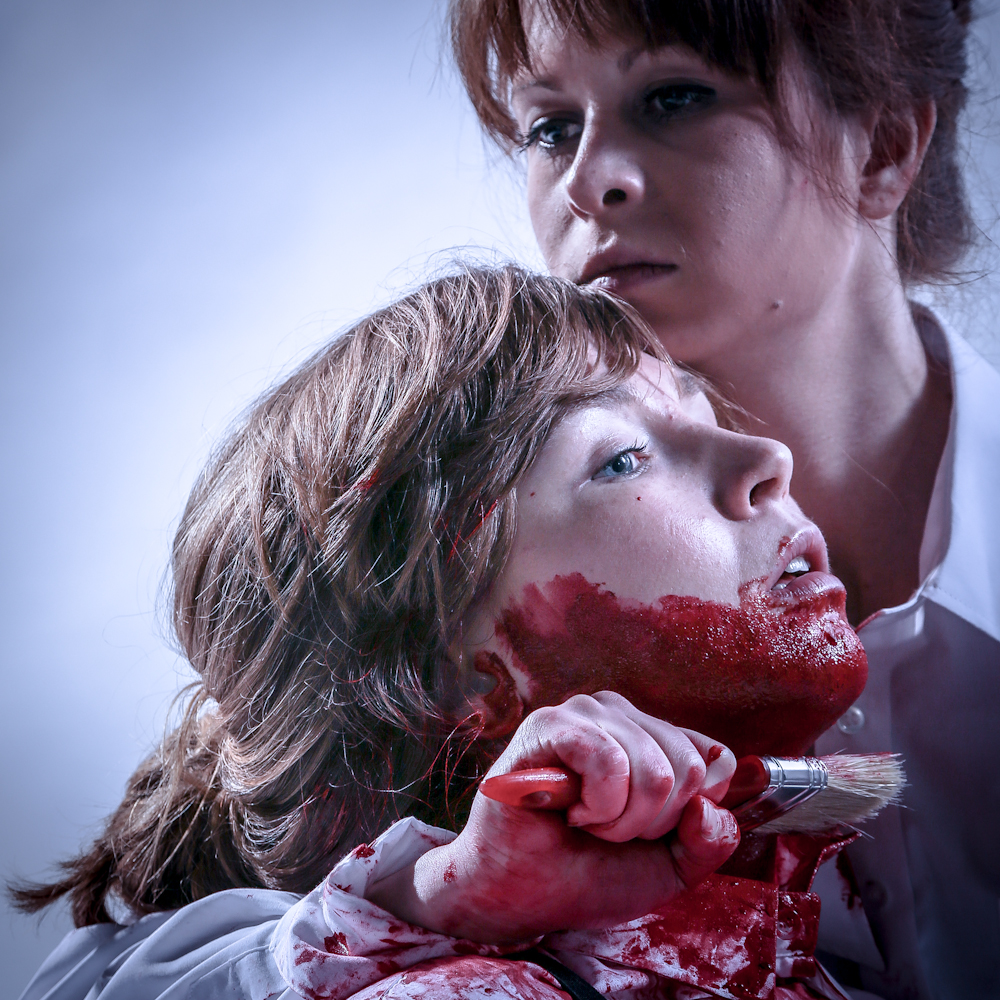
The eight-member cast wears a monochrome uniform of black skinny jeans, ankle boots, white shirts and black braces. Coats, scarves and a wheelchair identify character changes, as do physical and vocal alterations. The set is completely white, but not for long. As Shakespeare’s most gruesome play energetically unfolds and characters are mutilated and killed, the red paint in the tins on the stage edges soon covers the floor, walls and the actors. I’m rather surprised the audience managed to escape any paint splatter. Rather than swords, they have paintbrushes tucked into their waistbands that are dipped in paint before an attack. The paintbrushes were used with the same movements as swords, slicing and stabbing. With such a striking use of weaponry that normally creates rather than kills, it would have been a more unique choice to explore stylized movement rather than emulating real life. As it was, there was a level of absurdity to stabbing someone in the back or slitting a throat with a paintbrush. Perhaps this was a comment on the absurd amount of death and destruction in the play? Perhaps the murders are being compared to art, or even DIY where the old and excess is cleared to make room for new? Or perhaps I am reading too much into it and Al-Shaahtar made this choice simply because it was unique and looked great. White, black and red will always be a powerful colour scheme. The liberal use of red paint highlighted just how brutal this play is.

The performances were on the whole very good. Ashlea Kaye’s Marcus and Demetrius were a highlight of contrast between an ill, old man and scrappy, oversexed young manhood. Kaye is clearly a versatile performer with outstanding stage presence. Ariane Barnes was a formidable Titus, fully believable as the successful general that ruthlessly seeks revenge for his downfall. The ensemble work is excellent with smooth transitions at a fast pace. The ensemble aspect didn’t quite work as the actors remained on stage most of the time, but lounged casually on the periphery, half in the wings, watching the action when not performing. The goal is to enhance the ensemble aspect of the production, but the halfway approach came across as non-committal. Either be present on stage and dynamically contribute to the stage picture, or be out of sight. Otherwise, it lends itself to distractions. I would guess that the oldest cast member is in her early 30s; having a wider range of ages would make their diversity even more commendable.

With a running time of about an hour and 15 minutes, this was a good length to convey the main focal points of the story, but cutting this play can be tough. As one of Shakespeare’s earliest plays and his first attempt at writing a tragedy, it can feel quite clunky. Cutting it cannot overcome this quality and can occasionally exacerbate it. In this case, the tragic downfall of the central characters occasionally felt rushed, but not overly so. An interval wasn’t particularly necessary and felt like it occurred very late in the story. Generally in this version, the editing did a good job at preserving the story and capturing Titus’ life rapidly collapsing around him.

As previously mentioned, the energy was extremely high and well-maintained throughout. Moments of humour lightened the tragedy, particularly good was Tamora and her sons’ portrayal of Revenge, Rape and Murder. Another lovely moment is Aaron (Anita-Joy Uwajeh) meeting his newborn son for the first time and refusing to allow the child to be killed. There were numerous others. Smooth Faced Gentlemen have a clear gift for making Shakespeare accessible and telling a cracking story. They are certainly a company to follow as they grow and develop their performances.


The Play’s The Thing UK is an independent theatre criticism website maintained voluntarily. Whilst donations are never expected, they are hugely appreciated and will enable more time to be spent reviewing theatre productions of all sizes. Click here to make a donation with PalPal.