Shooting With Light, Greenwich Theatre

1930s Paris. Jewish Europeans are moving west to escape the rise of Nazism. Two of them meet: one of them is a Hungarian photographer, the other is a German activist. Both are full of youthful confidence and fearless in pursuit of their goals. Emerging company Idle Motion uses physical theatre, light, sound to tell the story of these young lovers, their legacy and the importance of photography.

Firstly, Shooting With Light is a loveShooting-With-Light_018 story. Two young people meet, fall in love and take the world by storm before ending in tragedy. These young people are Gerda Taro and partner Robert Capa (after they changed their names), pioneering photojournalists of the Spanish Civil War. Gerda and Robert start working together; Gerda is initially his assistant who supports him in reinventing his persona in order to make the professional contacts he needs to succeed. Her talent overcomes this role however, and she eventually develops an independent reputation for honest, brave documentation. Partly fictionalized but based on Gerta’s brief life, we see Robert teach her to use a camera followed by her passionate rise to renowned photojournalist needing to show the world the reality of life on the front lines. Alternating with this storyline is the time-jumping subplot of Robert’s brother Cornell and his assistant June, seeking to amalgamate Robert’s work after his death. They are frantically searching for a mysterious red suitcase Robert once spoke of in order to complete the archive of Robert’s work.
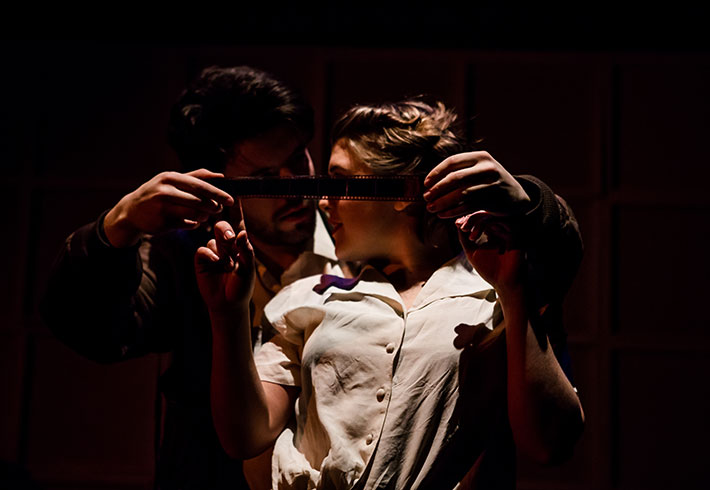
Interspersing the scenes of historical naturalism are transitions using visual and physical theatre, similar in style to Frantic Assembly. This is an on-trend performance aesthetic, but one that is visually appealing and provides another level of insight into the characters and their struggles. The most effective of these sequences show Taro and Capa falling in love over rolls of negatives towards the beginning, and Taro’s fight to access the front lines with her camera towards the end. The set is simple in appearance as several blocks and a white screen, but they transform using projections, light and a series of doors. Like their narrative, the structure is simple but highly effective and tells an excellent story. Projections of Taro’s work add further historical context and support the world of the play – the audience sees what she sees and experiences.

The company of five twenty-somethings work wonderfully together, and so they should as they met in secondary school. Shooting With Light captures the infectious enthusiasm and ambition of youth, no doubt mirroring their own attitudes that the world is theirs to have and success is a given if they work hard enough. It will be interesting to see how their work develops as they age and experience the challenges and hardships of working in the arts. As visually appealing as their work in now, it needs more depth of human experience. June and Cornell’s quest to locate Capa’s missing work is arguably the more interesting side of the story, but neglected in favour of Taro’s and Capa’s exciting lives and career progression. The ensemble also lacks diversity of age and ethnicity, something that I hope they increase in the future. Idle Motion have an obvious gift for storytelling and integrating various performance styles at this young age, so the world really could be their oyster as they continue to grow.

Intention: ☆ ☆ ☆ ☆

Outcome: ☆ ☆ ☆

Star Rating: ☆ ☆ ☆ 1/2


The Play’s The Thing UK is an independent theatre criticism website maintained voluntarily. Whilst donations are never expected, they are hugely appreciated and will enable more time to be spent reviewing theatre productions of all sizes. Click here to make a donation with PalPal.
Macbeth, Rose Playhouse

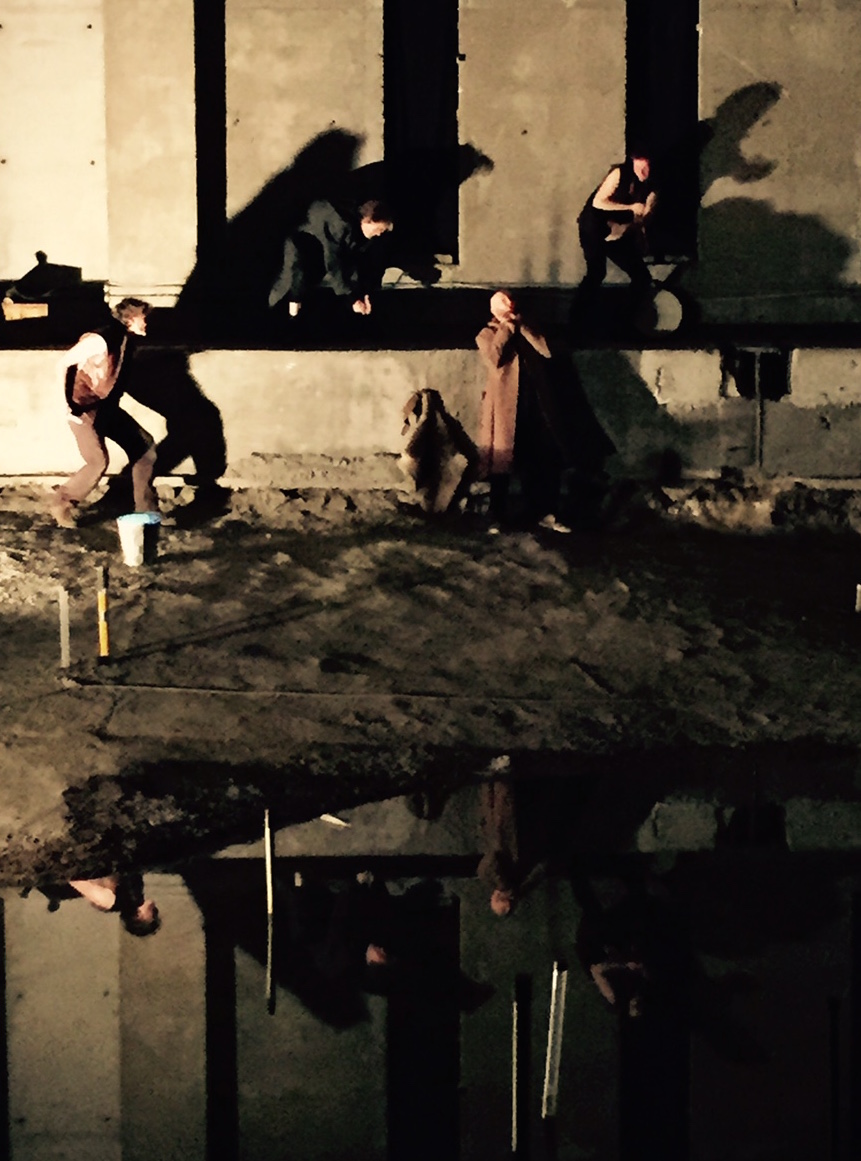
FullSizeRender-3 copyWith inventive staging, text deconstruction and some great performances, East London’s Malachites continue their takeover of South London following last month’s excellent King Lear with Macbeth at The Rose Playhouse. Director Benjamin Blyth approaches this unique venue head on, staging scenes in all parts of the concrete expanse that stretches beyond the pool of water protecting the remains of the Elizabethan Rose. Some moments were effective due to the grandiose scale, some did not work due to sight line issues and distance from the audience. Textual edits were similarly brave, rearranging sections to emphasize Lady Macbeth’s and the witches’ control over the fate of the play. Those dogmatic about the text would probably not appreciate such actions, but they are very much in the spirit of Shakespeare: celebrate language and the improvisational nature of theatre, do not slavishly bind yourself to the text. Overall, this is a confident, experimental production to be commended for its efforts and irreverent approach to the text. Some of the choices made did not work, but Blyth is still to be commended for his effort and conviction.

To open, Lady Macbeth reads the letter conveying Macbeth’s news from battle by candlelight. The action she reads about plays out at the back of the theatre, by the edge of the pool preserving the Rose’s foundations, like a memory or mental picture. Cinematic-style transitions break up her speech, hold a modern audience’s attention, but effectively tell the story. Choosing to begin with Lady Macbeth’s speeches and interspersing the opening scenes with them empower the character, emphasizing the control she has over her husband. This is blatant reconfiguring of the text, but it has a strong message, suits the storyline and creates a completely different tone from more typical productions. Orla Jackson gives a calmly fierce Lady Macbeth, who later on deteriorates from grief and remorse.

Following the initial rearranging of the text, the play carried on with some cuts, until the end, which was also untraditional but showed the cyclical nature of evil and the omnipresence of the witches. In this production, the witches were tall, spidery and male, almost entirely kept at the back of the site. This pulled focus from the action on stage at times and made it impossible to see detail such as facial expression, but they were well lit and cast intimidating shadows on the industrial back wall. They would have been a more powerful presence if brought onto the stage more than the once that they were.

The performances in this production were largely good, though not as consistent as last month’s King Lear. Benjamin Blyth is the highlight in the title role, playing Macbeth with outstanding nuance and emotion I have never seen in the part before. Beginning weak, he becomes more reckless but still dominated by a rich inner life of guilt, pain and fear. I daresay this is the best portrayal of Macbeth I have ever seen. Playing a role with such conviction as he did whilst directing the production indicates immense talent on Blyth’s part. Also notable is the versatile Robert Madeley as Banquo and the Porter (though his Banquo was the better performance) and David Vaughan Knight as a militaristic Macduff. Though he struggled to connect with grief upon hearing of the murder of his family, his stern, grounded performance provided lovely contrast to emotional Macbeth.

Blyth showed determination to use all available playing space at The Rose, placing a large proportion of the action on the far side of the archeological site. Whilst he does the space a service by not ignoring it, there are some obstructive railings and the distance caused visual detail to be lost. More of the action, particularly key moments in the plot, could have been moved to the stage closer to the audience. Clever lighting ensured everyone was lit well, but the presence of actors at the back of the site can distract for foreground action.

The Malachites are certainly a brave company, unafraid to adapt Shakespeare’s text to modern audiences and storytelling techniques. Blyth is a rising star worth watching. This company would benefit from more financial resources in order to add polish to their productions, but they are quickly becoming a key player in staging productions in unusual spaces.

Intention: ☆☆☆☆

Outcome: ☆☆

Star Rating: ☆☆☆


The Play’s The Thing UK is an independent theatre criticism website maintained voluntarily. Whilst donations are never expected, they are hugely appreciated and will enable more time to be spent reviewing theatre productions of all sizes. Click here to make a donation with PalPal.
The Verb, To Love and Portia Coughlan, Old Red Lion

Love, loss and obsession: Aria Entertainment’s double bill explores these themes with dramatically different outcomes. New British musical The Verb, To Love follows college lecturer Simon’s attempts to find a lasting relationship after breaking up with his boyfriend of 23 years. Mid-90’s Irish play Portia Coughlan shows the title role’s failure to function in day-to-day life whilst clinging to memories of her twin brother who drowned 15 years previously. Both productions, which can be seen singly or one after the other, depict emotion in its most raw, desperate state with committed performances and unique design elements.

The Verb, To LThe Verb, 'To Love', Old Red Lion Theatre, 29 April - 23 May 2015. Copyright Claire Bilyard -16ove by Andy Collyer is a two-hander but focuses almost exclusively on Simon (Martin Neely). He falls in love with fellow teacher, the wide-eyed, much younger Ben (Gareth Bretherton) after a breakup. Simon sings us the story of their friendship progressing to a reluctant confession of love, but there is no happily ever after. Several years later after building a successful career, Ben decides its time to move on even though doting Simon would do anything for his “baby boy”. Simon’s songs then journey through the stages of grief and forays in online dating until he finds peace with his houseplants.

Though billed as a musical there is little spoken dialogue. The contemporary musical theatre songs continuously flow into each other with few breaks and Ben doesn’t enter until he breaks up with Simon halfway through the show. Until their breakup, we hear their story exclusively from Simon’s perspective. Ben doesn’t interject often after he arrives, making this almost a one-man show. Even though it was only an hour, it’s a long time for Neely to sing almost continuously, which he does splendidly.

This is clearly a musical under development, but it has plenty of potential. Simon’s character is detailed and well developed; Neely adds plenty of nuance. The songs have enough variation to not sound too similar, but with a strong motif. It would not take much to make this a full-length show: more scenes, more Ben, and possibly some other characters – though The Last 5 Years proves a two-hander works beautifully, particularly when telling the rise and fall of a relationship. More substance will also help dilute the sentimentality, though it was never cloying. Focusing the bulk of the story on Ben and Simon’s relationship gave the show a sturdy narrative arc rather than showing a snapshot from Simon’s life. There was no dancing, lighting changes corresponded with emotional intensity and the flowery parkland set reminded the audience that there is light at the end of every tough time. I look forward to seeing The Verb, To Love develop and hope Aria Entertainment stages it again in a more fully formed state.

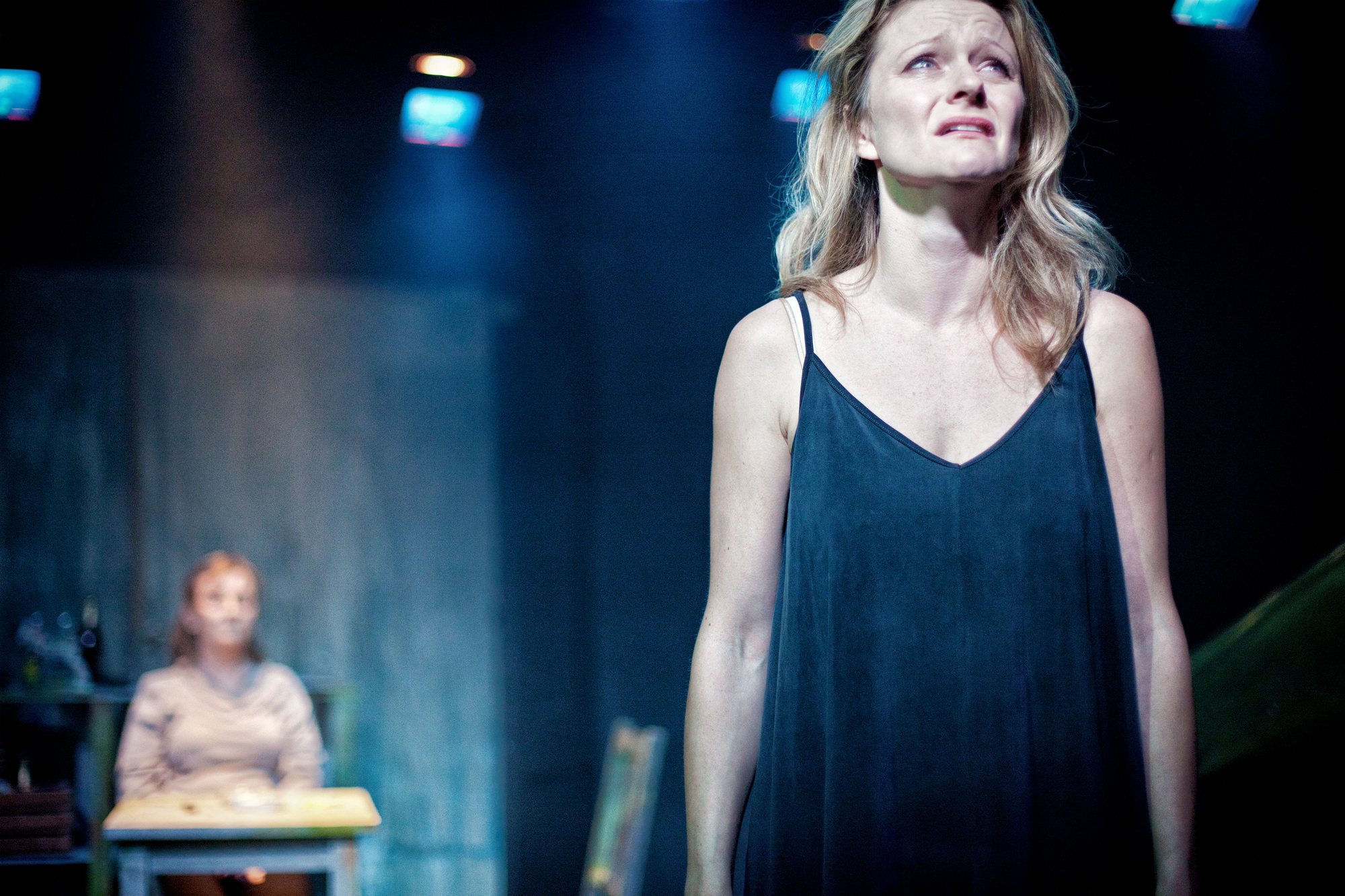
Marina Carr’s Portia Coughlan is mPortia Coughlan, Old Red Lion Theatre, 28 April - 23 May 2015. Copyright Claire Bilyard -42uch darker and more complete fare. Set in rural Ireland, Portia celebrates her thirtieth birthday. Fifteen years ago tomorrow, her twin brother drowned in the Belmont River that runs behind her father’s farm. She never recovered from his death, despite having a life that reads perfectly on paper: a wealthy husband, close family and three sons. Susan Stanley plays tortured Portia with a coiled spring intensity that never relents, even when drinking and flirting in the local pub. The verdant, grassy floor from The Verb, to Love remains, but a pool of water is Belmont River and a rustic kitchen set is her country home. The lighting is darker and ethereal music draws attention to the appearances of Portia’s ghostly brother, Gabriel.

Similarly broken people with hidden family secrets inhabit Portia’s world. Her parents pop in uninvited and berate her for not fulfilling her wifely duties. Her paternal grandmother abuses her and her mother relentlessly. Her best friend Stacia helps Portia with the kids, but only has one eye and needs of her own. Her patient husband Raphael (Ben Mulhern) does his best to look after their children when Portia says she wants nothing to do with them, as she’s afraid she’ll harm them. She never wanted to be a mother. She never wanted to marry Raphael. She doesn’t really want anything to do with this world at all, instead dwells on her brother’s death. She tries to distract herself with love affairs, to no avail. The day after her birthday has a predicable outcome halfway through the play, but then the action jumps back in time for more horrific familial revelations.

A cast of eleven creates Portia’s intimate, oppressive world of family, lovers and friends. Most have good intention in their hearts, but none of their efforts can save Portia from her deteriorating mental stability and Grabriel’s increasingly frequent, haunting presence. The dialogue is frank, but taps into an innate Irish poetry and spirit world of Celtic mythology. Though these characters simultaneously evoke pity and disdain, there is a grounded earthiness about them and their connections to each other. The ensemble work is excellent, particularly from those playing Portia’s family, though the other roles are certainly to be commended. Veronica Quilligan and James Holmes as older family friends, the Doorley’s, provide some comic relief and comfort amongst the abuse. Portia’s lovers Damus Halion (Alan Devally) and Fintan Goolan (Conan Sweeny) both barely conceal pent up rage and disdain for Portia. Even though she does not help herself, Portia is framed as a tragic hero, the victim of circumstances beyond her control. Carr’s writing is outstanding captures the often stark isolation of village life. Director Bronagh Lagan successfully captures the tone and mood of the play as it barrels towards its inevitable end. This is a production that would benefit from a larger venue and more space to create an even more atmospherically complex set.

Though radically different in tone, these two productions show desperate characters on the brink of collapse. Simon has a much more supportive, comfortable life and manages to pull himself back from edge after some facebook stalking and late night phone calls to Ben. Portia’s brother eventually catches up with her, but no one in her village is functional enough to save her. We could all to easily find ourselves in similar circumstances, but I hope we tend more towards Simon than Portia. The pairing of these two pieces shows great insight and intuition in producer Katy Lipson of Aria Entertainment. An accomplished young producer who focuses on British musicals, she made a wise choice to pair The Verb, To Love with Portia Coughlan.


The Play’s The Thing UK is an independent theatre criticism website maintained voluntarily. Whilst donations are never expected, they are hugely appreciated and will enable more time to be spent reviewing theatre productions of all sizes. Click here to make a donation with PalPal.
 

Titus Andronicus, Greenwich Theatre

*sAll-male Shakespeare companies justify their existence in the name of historical accuracy and providing audiences with insight into this important aspect of original Shakespearean practice. Whilst I do not negate the educational importance of such companies, the number of female theatre roles compared to male roles hardly makes this practice fair. Smooth Faced Gentlemen is an emerging all-female Shakespeare company that helps redress this imbalance and allow women the opportunity to take on great roles normally only open to male actors. Whilst they are extremely successful in creating masculine performances, capturing the energy of the text, and director Yaz Al-Shaatar has a superb instinct for striking visual theatre, the reasons behind some of their production choices in Titus Andronicus are unclear and casting tends towards younger performers.

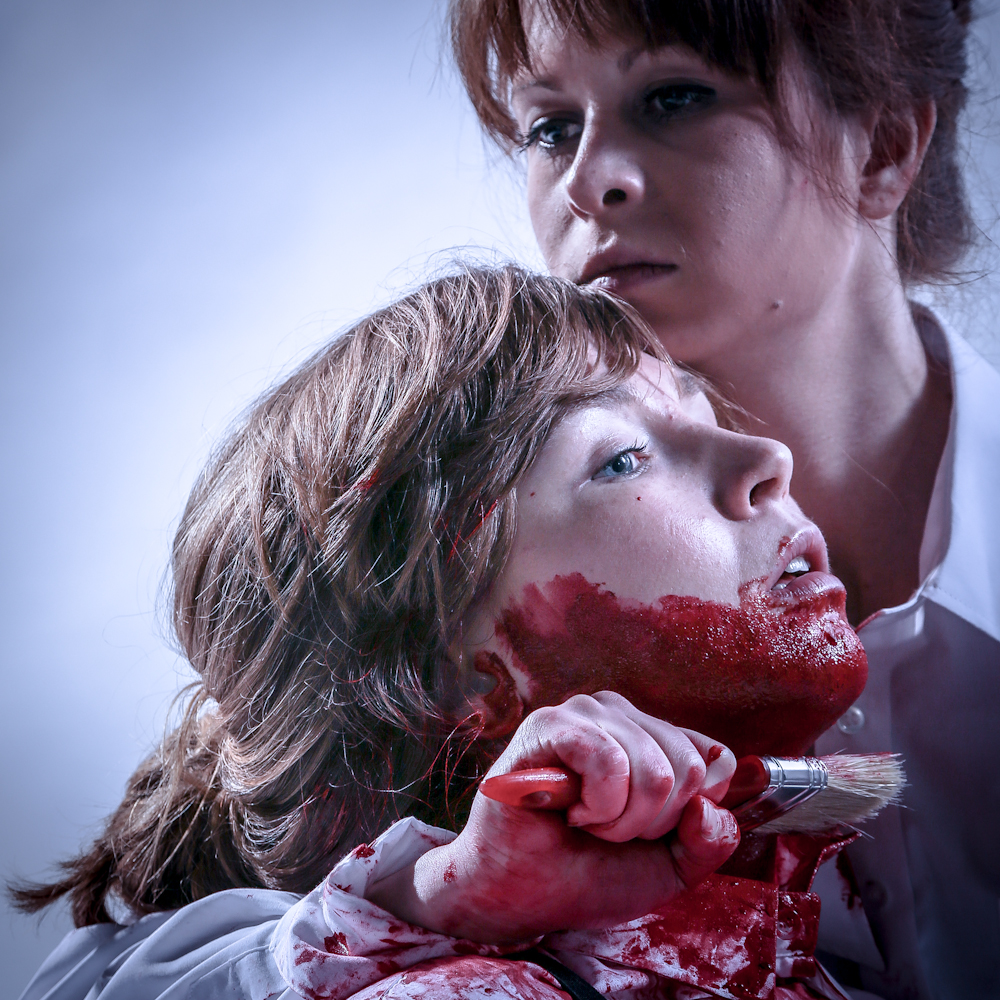
The eight-member cast wears a monochrome uniform of black skinny jeans, ankle boots, white shirts and black braces. Coats, scarves and a wheelchair identify character changes, as do physical and vocal alterations. The set is completely white, but not for long. As Shakespeare’s most gruesome play energetically unfolds and characters are mutilated and killed, the red paint in the tins on the stage edges soon covers the floor, walls and the actors. I’m rather surprised the audience managed to escape any paint splatter. Rather than swords, they have paintbrushes tucked into their waistbands that are dipped in paint before an attack. The paintbrushes were used with the same movements as swords, slicing and stabbing. With such a striking use of weaponry that normally creates rather than kills, it would have been a more unique choice to explore stylized movement rather than emulating real life. As it was, there was a level of absurdity to stabbing someone in the back or slitting a throat with a paintbrush. Perhaps this was a comment on the absurd amount of death and destruction in the play? Perhaps the murders are being compared to art, or even DIY where the old and excess is cleared to make room for new? Or perhaps I am reading too much into it and Al-Shaahtar made this choice simply because it was unique and looked great. White, black and red will always be a powerful colour scheme. The liberal use of red paint highlighted just how brutal this play is.

The performances were on the whole very good. Ashlea Kaye’s Marcus and Demetrius were a highlight of contrast between an ill, old man and scrappy, oversexed young manhood. Kaye is clearly a versatile performer with outstanding stage presence. Ariane Barnes was a formidable Titus, fully believable as the successful general that ruthlessly seeks revenge for his downfall. The ensemble work is excellent with smooth transitions at a fast pace. The ensemble aspect didn’t quite work as the actors remained on stage most of the time, but lounged casually on the periphery, half in the wings, watching the action when not performing. The goal is to enhance the ensemble aspect of the production, but the halfway approach came across as non-committal. Either be present on stage and dynamically contribute to the stage picture, or be out of sight. Otherwise, it lends itself to distractions. I would guess that the oldest cast member is in her early 30s; having a wider range of ages would make their diversity even more commendable.

With a running time of about an hour and 15 minutes, this was a good length to convey the main focal points of the story, but cutting this play can be tough. As one of Shakespeare’s earliest plays and his first attempt at writing a tragedy, it can feel quite clunky. Cutting it cannot overcome this quality and can occasionally exacerbate it. In this case, the tragic downfall of the central characters occasionally felt rushed, but not overly so. An interval wasn’t particularly necessary and felt like it occurred very late in the story. Generally in this version, the editing did a good job at preserving the story and capturing Titus’ life rapidly collapsing around him.

As previously mentioned, the energy was extremely high and well-maintained throughout. Moments of humour lightened the tragedy, particularly good was Tamora and her sons’ portrayal of Revenge, Rape and Murder. Another lovely moment is Aaron (Anita-Joy Uwajeh) meeting his newborn son for the first time and refusing to allow the child to be killed. There were numerous others. Smooth Faced Gentlemen have a clear gift for making Shakespeare accessible and telling a cracking story. They are certainly a company to follow as they grow and develop their performances.


The Play’s The Thing UK is an independent theatre criticism website maintained voluntarily. Whilst donations are never expected, they are hugely appreciated and will enable more time to be spent reviewing theatre productions of all sizes. Click here to make a donation with PalPal.
Eclipsed, Gate Theatre

Issues surrounding modern war and conflict are rarely simple. Feminism certainly isn’t, either. Neither are families, romantic relationships, child soldiers, or individual identity. Danai Gurira’s Eclipsed rolls all of these deeply complex themes into a five-character play set in the Liberian civil war, but does so with brilliant writing and a raw, close-up view of characters in a world torn apart.

Eclipsed focuses almost completely on the lives of the four “wives” of the Commanding Officer of one of the rebel factions, living communally and enjoying a life of privilege. Their privilege consists of not being raped by other soldiers, instead only having to go to the C.O. when he summons them from offstage with booming handclaps. The women enjoy looted clothing, and mostly get along. Though all have names, they refer to each other by their rank: number 1, number 2, and so on, with number 1 being in charge. Number 2’s the outcast of the four as a soldier fighting Charles Taylor’s government, but she still periodically returns to the hut bearing gifts and aggravation. Though they all have lost family and hide their real names, these women feel incredibly privileged because they’re alive, and don’t have to be raped by anyone other than the C.O.

The dialogue flows easily, but was deeply uncomfortable to experience from the position of Western privilege. Moments of levity are stepping stones that prevent the audience from drowning in the bleak circumstances that drive the play. I find this level of audience discomfort is rare in theatre, but one that is absolutely vital. Actually, theatre needs more of it – the majority of regular theatregoers are middle class and have no experience of life in a war zone other than watching the news. These audiences need to be shaken, hard, and reminded that whilst we have lots of nice things in our lives, many more people in the world don’t. Particularly women trying to survive in war zones.

This is, without question, a feminist play. My initial instinct is to say it’s radically feminist, but on reflection I believe that thought came from the exotic “otherness” of the production rather than any particular issue. Childbirth, education and reproductive consent are at the forefront, which are pretty mainstream feminist topics. Sisterhood is ever present, with its bonding and conflict. Less common and utterly horrific is Number 2’s belief that being an armed soldier empowers young women and keeps them safe from rape. The downside is that you then have to kill the enemy and give the surviving women and girls to your side’s own soldiers. Sorry, there’s my privilege showing again.

This otherness also contributes to the excellence of the overall production; I have never seen a play so simultaneously brutal and brilliant. The production values are flawless in that the production needs no alteration or development. It’s raw, in-yer-face, and will linger with you and your privileged guilt for a long time. All five performances are a masterclass in acting. The design is strikingly simple with an inclusive audience arrangement. There are belly laughs. There are moments you feel like your guts are being slowly tugged from your body and your eyes are held open. With all the terror Eclipsed lays bare, it should be a legal requirement for everyone living a comfortable life away from war to see this play. The world would be a better place.

Intention: ☆☆☆☆☆

Outcome: ☆☆☆☆☆

Star Rating: ☆☆☆☆☆


The Play’s The Thing UK is an independent theatre criticism website maintained voluntarily. Whilst donations are never expected, they are hugely appreciated and will enable more time to be spent reviewing theatre productions of all sizes. Click here to make a donation with PalPal.
Don Q, Greenwich Theatre

Production shot 4 croppedI really struggled to come up with a suitably erudite introduction to this review of Flintlock Theatre’s Don Q. Not because it’s hard to summarize – quite the opposite. The structure works, the message and plot are clear and the performances are excellent in this suitable-for-all-ages appropriation of Cervantes’ Don Quixote. I am chalking my difficulties up to this being such an enchanting and moving play that words aren’t quite capturing that “warm and fuzzy but actually quite sad” feeling I had the entire time. Everything I tried to write came across as cold and clinical. It’s a rare occasion that I go to theatre and nearly forget to take notes because what I am seeing on stage grips me by the proverbials that as a woman, I don’t even have. Seeing Don Q evoked the joy and wonderment I had on my first experience of theatre as a small child.

It’s not a simple show, though. Four actors take on numerous levels of characterization. Like Shakespeare’s A Midsummer Night’s Dream, a group of unrelated characters bookend the play. In this case hapless librarians, frustrated by the council’s efforts to close them down, highlight the importance of storytelling by relating the tale of Norman Vaughan to us. Norman, as we soon find out, is probably their most infamous patron. Norman’s nameless nephew thinks Norman, now 81 years old, has gone mad. You see, Norman loves to read and reenact the stories he reads with his younger friend Sam and anyone else he cajoles into joining him. It is immediately and painfully clear that Norman is completely lucid; he just has a joyful passion for stories and acting them out. The younger generation are so busy being adults that they have forgotten the pleasure of playacting and the power of an absorbing tale. So not only are the audience reminded of the importance of reading and allowing ourselves to be absorbed in a good book, we are also more subtly admonished for not taking the time to listen to our elders and treat them like human beings. So what if Norman (or any other elderly person) loves what he does? As long as no one gets hurt, we are told to leave well enough alone.

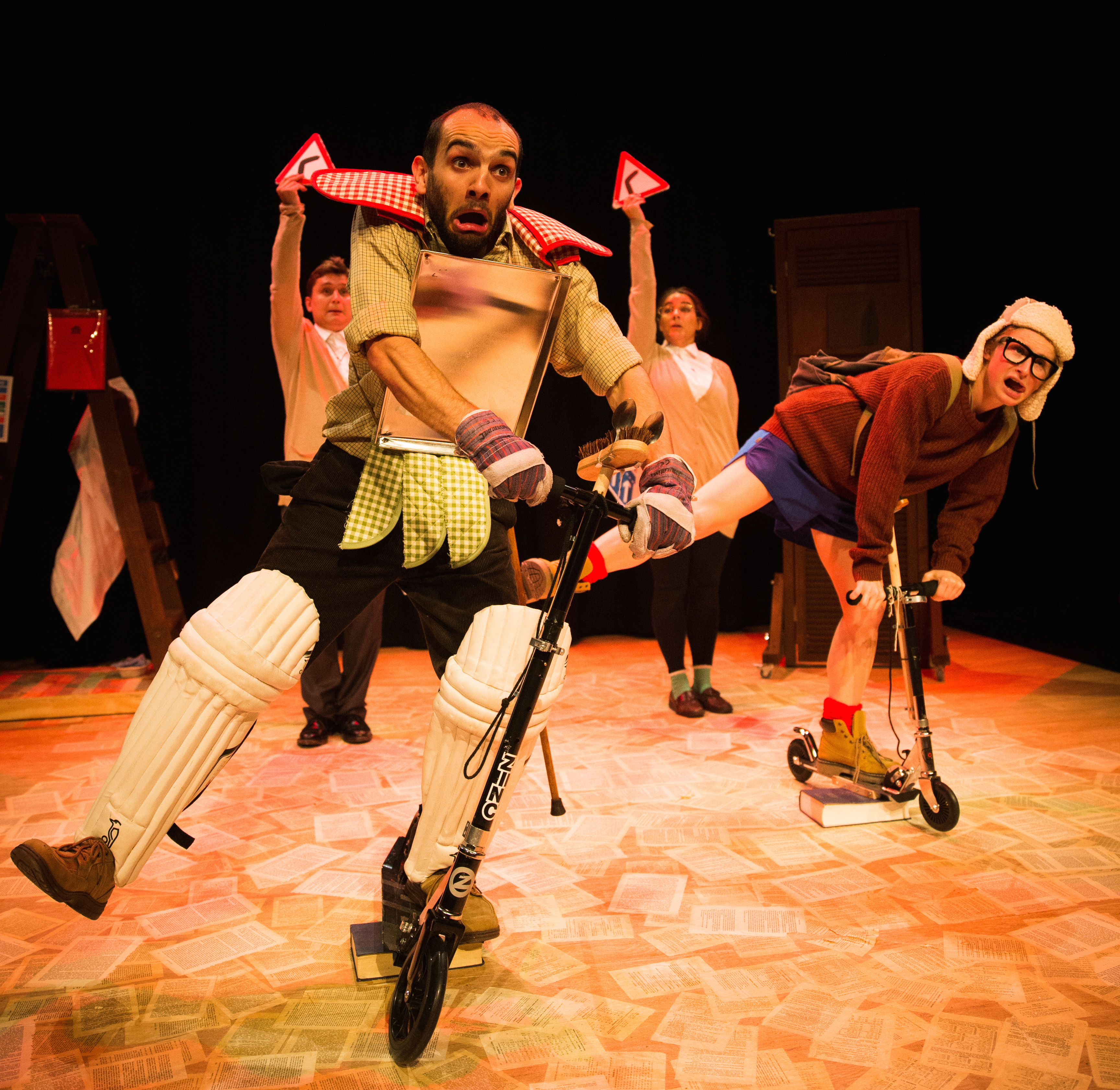
Norman’s nephew, having had enough of Norman’s mishaps and convinced he has gone mad, puts him in a nursing home to be looked after properly. He strictly forbids Norman from having access to any books. Sam, on one of his visits, smuggles in a copy of Don Quixote into the nursing home. A comedy chase results in their escape and an adventure imitating a selection of escapades from the original novel. Sam is a begrudging Sancho Panza, a pair of scooters augmented with push brooms and spoons are their trusty steeds and other people they encounter on the way play other characters (some more willingly than others). Their madcap journey is full of whimsy, spontaneity and emotional turmoil but with a potentially tearful ending for the more sentimental of audience members.

Director Robin Colyer skillfully employs physical theatre sequences to add variation and an atmosphere of a touring troupe of players. This is clearly a well-rehearsed, established production; not a breath was out of time. Objects and costume pieces are used liberally and often comically, in a style reminding me of the West End’s 39 Steps. The set and costumes are simple and rustic, but versatile and thought through. Nothing is excessive, nor sparse; the production design is just right.

The performances unite a fantastic script with heaps of audience interaction, and the great design to create a beautifully polished little show. Some call and response would have made more people feel included, as well as giving costume and lines to those in all parts of the auditorium rather than only those sat in the front row. Actors Jeremy Barlow, Francesca Binefa, Kate Colebrook and Samuel Davies are versatile multi-rollers with outstanding chemistry as an ensemble. Whilst I considered that having an older man play the role of Norman would have brought more to the story, the role is incredibly physically demanding and would be difficult to play at a more advanced age.

Don Q is only at Greenwich Theatre for a brief time, but then continues its national tour. This Oxford-based company is worth seeing no matter what your age, where you are or what you do. They use physical theatre, Brecht, storytelling and meta theatre but in an unobtrusive, charming way to create this lovely, warm, gem of a play.

Intention: ☆☆☆☆☆

Outcome: ☆☆☆☆

Star Rating: ☆☆☆☆ 1/2


The Play’s The Thing UK is an independent theatre criticism website maintained voluntarily. Whilst donations are never expected, they are hugely appreciated and will enable more time to be spent reviewing theatre productions of all sizes. Click here to make a donation with PalPal.

La Merda, everything theatre

“After reading the press release and previous star ratings for La Merda, I was very much looking forward to an edgy, raw and arty performance with a strong message that would stay with me for several days…My experience, however, was quite the opposite.

“…dim spotlights illuminated a naked woman (Silvia Gallerano) sitting on a tall platform, quietly singing something Italian into a microphone…she launched into a monologue. It began by telling us we all needed courage, then connected the idea to her father’s courage to commit suicide by throwing himself in front of a train…

“Gallerano’s character then moved onto body image: her unusually large thighs, and her teenage experience with a “beauty parlour” that had tried to reduce them. Whilst I believe body image is an issue that needs to be addressed, every teenager has insecurities about their looks, and theatre has dealt with this before, so the topic is not new, or particularly edgy…

“Gallerano’s character…didn’t develop into anything particularly interesting, or personalised. We never learned much about her other than she was an actress, her dad died when she was thirteen, and she had a slightly unconventional upbringing. I struggled to care about the woman and her issues because her issues weren’t unique. She was just like everyone else…Originally written in Italian for Italian audiences, there was a slight undercurrent of national identity, but unfortunately I missed more of this because I am not Italian…I wondered…why was she still naked?

“The piece was delivered exclusively in three long monologues…Towards the end of each section, she shouted down the microphone, which was physically uncomfortable, but I remained emotionally unmoved. Vague themes were mentioned…but my questions remained: Why was I watching this? What does the writer want us to take away? Why is she naked?”

Read the entire review here.

King Lear, The Rose Playhouse

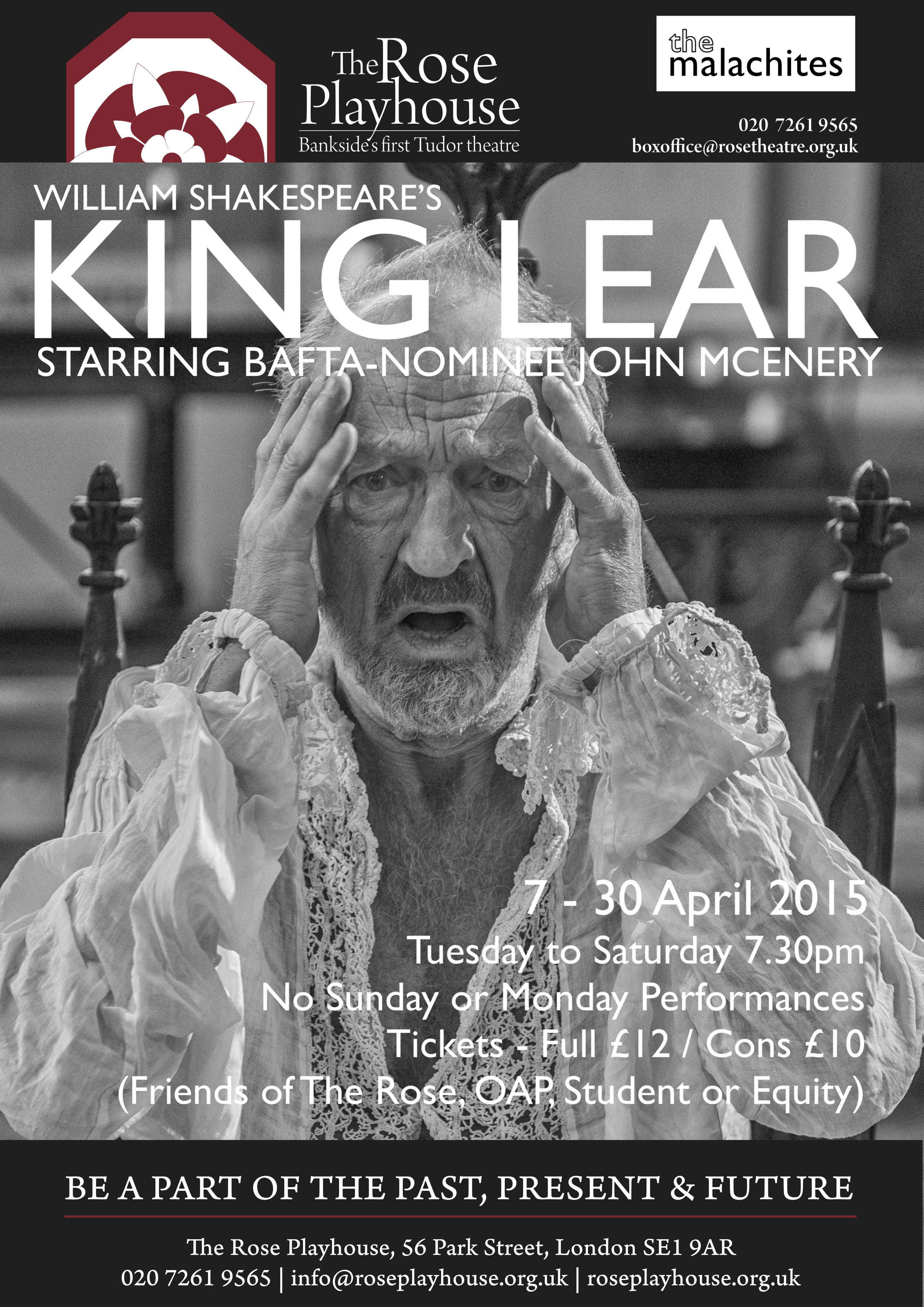
KING LEAR Poster JPEG April 2015Last summer, I left The Malachites’ Shoreditch rooftop A Midsummer Night’s Dream lukewarm. I hoped their current production of King Lear, currently running at The Rose Playhouse after a transfer from Peckham Asylum, would be a more unified, consistent production. Fortunately, these hopes were not just met, but exceeded. With an outstanding cast headlined by John McEnery, original Early Music accompaniment and a full utilization of the unique performance space at The Rose, it far surpassed my expectations and proved to be an exemplary showcase of the potential at The Rose and of fringe Shakespeare.

Due to the vastness of the theatre, its large pool of water and only a relatively small section of the space able to be used, design and staging are particularly crucial in order to make productions here feel polished and professional. Trying to ignore the size and feel of the space simply does not work and diminishes the historical importance of the venue. Director Benjamin Blyth embraces these characteristics. He clothes his performers in neutral blacks, whites, grays and browns. Even the Fool was blandly dressed. The costumes were generally contemporary winter dress with a Russian or Eastern European look. Furs, capes, leathers, scarves and multiple layers abound but the odd piece of costume was jarringly and frivolously classical, such as Oswald’s cloak. The drab colours and mostly angular lines match the concrete expanse that stretches out from the stage. Though the play is set in cold weather, the obvious winter wear also highlighted a man’s struggle through the winter of his life, and made Poor Tom’s near-nudity all the more ghastly. A simple throne and wooden chairs were the sole set pieces; stark white lighting emphasized the grim realities of Lear’s treatment by his family and decent into madness. Some direct address was used, but the audience felt sufficiently included due to the small playing area. The pool of water preserving the Rose’s foundations doubled as a lake or seaside and Poor Tom’s hovel was a fort of black drapes in a rear corner. The musicians were dark silhouettes to the side of the pool. Most of the action took place on the tiny wooden platform stage, but the rest of the site was not ignored. Blyth set Lear’s world at the edges of sanity, existence and human decency and suited the production’s look and feel to the venue with great skill and intuition.

There was not a poor performance in the company and due to this being a transfer, the ensemble and their chemistry came with ease and depth. There were some unique and refreshing character choices, such as Cordelia (Emma Kirrage) played as mature and practical in the beginning rather than innocent and naïve, as she is often portrayed. David Vaughan Knight gives us a stern, militaristic Kent and shows a wide performance range through his character’s disguise and devotion to Lear. William De Coverly shows similar ability in his portrayal of Edmund, skillfully manipulating Gloucester and Edgar through status, movement and voice. Samuel Clifford’s Fool is extremely intelligent with moments of deadpan and quiet sarcasm, drawing more attention to Lear’s mental collapse. I could listen to Anatole Gadsby (France and doctor) read a shopping list in his mesmerizing speaking voice; he will make a great Hamlet with his intensity and watchability if he hasn’t already played the role. Claire Dyson and Orla Jackson are deliciously evil as Goneril and Regan. Finally, John McEnery as Lear brings over half a century of Shakespearian expertise, fully committing to this sensitive, fragile old man who falls victim to the cruelty of the changing world around him.

Though this is an excellent production, it is not flawless. Dr Deborah Pritchard and Danielle Larose composed the original music for the production. Atmospheric and haunting, it was beautifully written and well-used in moments of high tension, but could have been used more often. It was unobtrusive enough that the entire play could have been underscored with carefully chosen moments of silence instead of the other way around. Stage combat sequences can be longer, with Edmund and Edgar’s fight lengthened to show the inherent conflict between the two characters. The scenes were quick and transitions energetic, though some of the energy dropped in the intimacy and quiet of the final scene between Lear and Cordelia. Though it was intimate and moving, the small scale of it did not quite carry through the venue.

These issues are minor, however. The high level of talent and creativity in such an intimate and unique venue is extraordinary, and certainly worth catching whilst tickets are still available.

Intention: ☆☆☆☆☆

Outcome: ☆☆☆

Star Rating: ☆☆☆☆


The Play’s The Thing UK is an independent theatre criticism website maintained voluntarily. Whilst donations are never expected, they are hugely appreciated and will enable more time to be spent reviewing theatre productions of all sizes. Click here to make a donation with PalPal.

The Beautiful Game, everything theatre

“As someone who is not a huge Andrew Lloyd Webber fan and has a dislike of football, I did not have high expectations for this production. I was, delightfully, proven wrong for the most part. Creative direction, fantastically tight ensemble work, endearing characters and some beautiful ballads were some of the highlights of the show…

“Lotte Wakeham uses the intimate Union Theatre space brilliantly. Traverse staging creates both a joyful football pitch and the dangerous streets of 1970s Belfast. During the football matches, the characters watching the game stand behind the audience so we are part of the experience…A few benches are versatile set pieces; they become church pews, locker room benches and a coffin.

“Niamh Perry leads the young but skilled ensemble as the charming, feisty Mary who falls in love with 18-year-old footballer John, played by a skillful Ben Kerr…Joanna O’Hare is the other shining star... Here, the audience sees the root of the conflict: both sides have unwavering belief that Ireland is theirs…

“…The second half starts with John and Mary’s wedding, but the plot deteriorates from this point. Suddenly, the characters have aged and are going their different ways. Whilst this is a sad fact of growing up, it is the undoing of a musical that relies too heavily on the misadventures and celebrations of youth…The story abruptly ends with a short, quiet number, with little resolution…

“Overall, this show is certainly worth seeing for the novelty factor of its rarity and the excellent performances by a cast with impressive credits…”

Intention: ☆☆☆☆

Outcome: ☆☆

Star Rating: ☆☆☆

Originally posted here on everything theatre.

Heresy, for everything theatre

An austere, dimly lit set of arches and benches captures the heat and lethargy of a time in Spain when smoke fills the air with the Spanish Inquisition at its peak…The whole of the first act provides the audience with character exposition, but nothing progresses until much later in the play. Although playwright Tilo Ulbrecht expresses himself beautifully through the language, this part of the play could be drastically trimmed in order to focus more on the latter acts, rather than the prologue-like first…

“From Act II, set five years later, the story begins to progress. The action is set in the house of Don Felipe (Nick Simons), a very old blind man. He is a Cathar, a branch of Catholicism deemed heretical by the medieval church. He hides in plain sight as the audience learns that his dear friend and former student Don Carlos is the new Inspector General of the Inquisition…

“The performances are largely good, with excellent work from Macavie and Simons. It is incredibly refreshing to see a cast of older actors in fringe theatre rather than 20-somethings playing at being old. Maya is also a force of calm strength that is lovely to watch. Saracen is good as the conflicted Inspector but his moments of anger are difficult to find convincing. Gaoler Bernard O’Sullivan provides some light relief and good contrast to the heavy content of his scenes…

“The characters are well developed and Ulbricht skillfully uses language to create atmosphere, but the plot is somewhat neglected. The play as a whole certainly has potential, but needs re-structuring. The story is a great idea and it gives a very personal humanity to a period of history associated with the devastating capabilities of the Spanish Inquisition…

Intention: ☆☆☆☆

Outcome: ☆☆

Star Rating: ☆☆☆

Read the entire everything theatre review here.