Big Guns, Yard Theatre

https://cdn.thestage.co.uk/wp-content/uploads/2017/03/24172345/Big-Guns-The-Yard-137.jpg

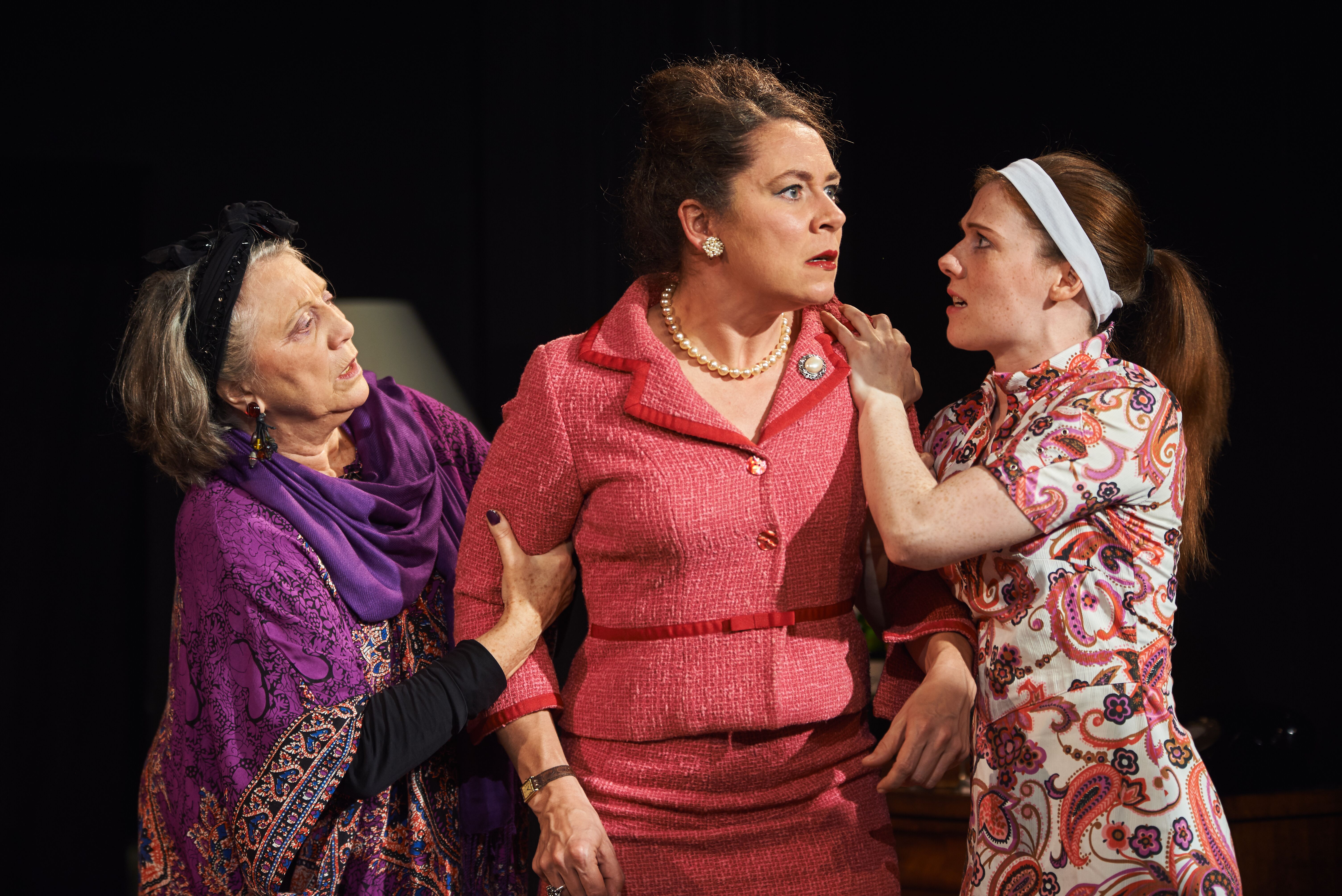
Do social media and violence against women go hand in hand? Are we all rendered voyeurs or exhibitionists by the internet? Is the web the downfall of society? Nina Segal’s two-hander Big Guns suggests that the answer to these big questions is a resounding “yes”. The relentless delivery of violent imagery doesn’t tell us anything new about the modern world, but in its red-soaked telling, Segal forces us to take a look at ourselves and decreasing sensitivity to the horrors around us.

Continue reading

Made in India, Soho Theatre

https://files.list.co.uk/images/2017/02/14/made-in-india-LST233293_large.jpg

@hannahnicklin: Since reading this I keep on thinking in quiet moments ‘women are raped nightly so I can have tomatoes in winter’

We know we exploit foreign workers for cheap goods, because we’re liberal and aware. But does that stop us? Largely, no – because we can’t afford to. I buy my clothes from Primark and my fruit and veg from the stalls that line Peckham Rye because I work in the arts and I’m poor. I don’t give any thought to where they come from in the transactional moment, but am righteously moved by articles like the one above that Hannah Nicklin tweeted. Sure, this makes me a hypocrite. But I need only to look at the other people also shopping on Sunday mornings to reinforce that I am far from alone. Most of my fellow “liberal elites” (educated, urban and left leaning) are the same, and centuries of imperialism (obviously white, male and western-led) have established the systems that the whole of society (including the liberal factions) implicitly condones through consumerism.

Continue reading

Dr Carnesky’s Incredible Bleeding Woman, Soho Theatre

https://cdn0.vox-cdn.com/thumbor/08BLiZi0k-g-w2TYXY9nOkQTz_4=/800x0/filters:no_upscale()/cdn0.vox-cdn.com/uploads/chorus_asset/file/2316126/shutterstock_132379235.0.jpg

From a lectern in the corner of the stage, Dr Marisa Carnesky fights the social taboo of periods. Resembling a character from a Tim Burton film, the PhD holder in menstrual rituals and synchronicity shares her collective research with a group of performance artists she assembled, the Menstruants. Sideshow/cabaret Dr Carnesky’s Incredible Bleeding Woman is a wonderfully quirky manifestation of sisterhood, womanhood and the wonders of the female body.

Every month on the new moon, Dr Carnesky and the Menstruants met on a beach in Southend to develop and performed rituals around their menstrual cycle. The Menstruants come from an array of backgrounds and sexualities, and their rituals are as unique and individual as they are. Through their performances, every woman’s personal experiences with their bodies is validated and celebrated.

The performances on show are distinctive and compelling. There is some spectacle: sword swallower MisSa Blue has a customised set of swords that suit her oesophagus shape each day of her cycle. Some of the work is more reflective and otherwordly, like Nao Nagal’s use of traditional Japanese masked performance. Molly Beth Morossa provides a creepy sideshow element with her twitchy, Victorian high tea. H Plewis performs a visceral movement piece with her menstrual jelly. Rhyannon Styles simply speaks to us directly about her experience of cycles as a trans woman. Fancy Chance, with the rest of the company, performs a phenomenal circus act as a finale, after an empowering, proud sequence of feminine reclamation. All of the acts celebrate female abilities and bodies without aggression.

In between the vulnerable, performative manifestations of female cycles, Dr Carnesky talks to the audience through an array of historical and cultural mores surrounding menstruation. She particularly focuses on myth and symbolism – death and rebirth, shedding of skin and female unity. Her tone is gentle and matter-of-fact; the the content may be revolutionary but she comes across as warm and supportive.

In a show that has the potential to come across as alienating, it is instead welcoming – no one in the audience (men included) seem uncomfortable, and the stories shared on the stage are supported from the house. Instead,this diverse, inclusive variety show is a divine honouring of the feminine mystery and a reclamation of one of the features that defines women, and a showcase of some excellent live artists.

Dr Carnesky’s Incredible Bleeding Woman runs through 7 January.

The Play’s the Thing UK is committed to covering fringe and progressive theatre in London and beyond. It is run entirely voluntarily and needs regular support to ensure its survival. For more information and to help The Play’s the Thing UK provide coverage of the theatre that needs reviews the most, visit its patreon.

Acorn, Courtyard Theatre

acorn-c-hannah-ellis-1

Persephone and Eurydice’s myths are defined by men. What happens when these men are removed and the characters plunged into a modern dreamscape? Maud Dromgoole’s Acorn brings these women and their fates together in a world of fragmented narratives and moments of biting wit, but the worlds that Dromgoole weaves together are so disconnected from each other in this cerebral play that it interferes with its immediacy.

Rather than nurturing plants, this Persephone looks after people – she is a doctor, but one that struggles to connect with her patients. Her opening monologue justifying her disdain for patients’ personal lives is equally hilarious and disturbing, the best scene in the play. Deli Segal brings a simple humanity to this cold character, making her quirky and likeable despite an autistic-like inability to understand others. Lucy Pickles’ Eurydice is a sweet contrast, alternating between a blushing bride and mental health hospital patient. Pickles is no less of a performer, but Persephone has the more dynamic and well-written character.

Dromgoole employs a range of styles, arguably too many for an hour long script. Though this strengthens the ability to relate to the story within individual scenes, the overall effect is one of indecision. An unrelated, recorded dialogue between two men fills transitions unnecessarily and doesn’t link to the women’s stories, then overlapping speech cause dialogue to be missed.

Phil Lindley’s design is simple and precise, allowing for detail and layers to emerge through Jai Morjaria’s lighting and Tom Pearson’s underused projections. The design concepts are most excellently married and add polish to a script that feels under-developed.

Acorn certainly deserves to extending and refining – the characters are excellent, as are the foundations of the stories seen here. Dromgoole uses language well and is clearly confident experimenting with form, style and classical influence, but reinvention with the goal of creating a modern myth doesn’t quite reach the enduring scale of the original material.

Acorn runs through 29 October.

The Play’s the Thing UK is committed to covering fringe and progressive theatre in London and beyond. It is run entirely voluntarily and needs regular support to ensure its survival. For more information and to help The Play’s the Thing UK provide coverage of the theatre that needs reviews the most, visit its patreon.

Fire Burn: The Tragedy of Macbeth, Edinburgh Festival Fringe

https://i0.wp.com/cdn3.historyextra.com/sites/default/files/imagecache/623px_wide/Macbeth%202.jpg

It must be rather dull hanging out on a Scottish Heath with your sisters, waiting for some poor soul to come along to manipulate to the point of ruin. Fire Burn: The Tragedy of Macbeth tries to show the three witches re-enacting the tragedy they catalysed, or perhaps they act it out for the first time and the story Shakespeare depicts is all in their imagination. In either case, the concept of their playacting isn’t clear through their intentions or performance styles.

The three women who play all of the parts are good enough performers, differentiating characters well and endowing the text with energy and purpose. The Macbeth is occasionally a touch flat, but the young trio otherwise make good sense of the story. The witches’ spidery, angular movement and distorted voices contrasts the naturalism of the rest of the characters, and the application and removal of face paint also indicates character changes. This good choice plays up the ritual of the ancient story and adds a dressing-up element to the witches acting out the story.

If the witches are indeed portraying the characters, it is doubtful they would have the interest or ability to employ a contemporary conventional performance style. There is no hint of the witches’ personality or character when taking on the others, and there are no off-text moments to remind the audience that this is the concept. There should be a ruthless brutality and also a sense of play coming through to some extent, either in outbursts or as an undertone to the other roles.

Though not a bad production per se, the intended concept doesn’t read at all. As the show gets underway, there is little to indicate that this is anything more than a three-person version of the play. A three-person Macbeth, whilst a fine incarnation, is less inventive and insightful than the witches’ views on the people’s lives that they toy with.

Fire Burn: The Tragedy of Macbeth runs through 27th August.

The Play’s the Thing UK is committed to covering fringe and progressive theatre in London and beyond. It is run entirely voluntarily and needs regular support to ensure its survival. For more information and to help The Play’s the Thing UK provide coverage of the theatre that needs reviews the most, visit its patreon.

A Fool’s Paradise, Edinburgh Festival Fringe

rsz_shakespeare-in-ecn

“Americans can’t do Shakespeare,” joke the five women from A Fool’s Paradise.

The self-deprecating, all-female company of players from Baltimore boot that myth out of the theatre with relish. Having learnt 45 scenes, speeches and moments from Shakespeare’s cannon, they promise to perform 30 of them in 60 minutes or else one of the actors gets a pie in the face.

In this delightfully raucous hour, the audience chooses what the actors perform from a bingo card that adds play to their autonomy, and they’re encouraged to take photos as well. The performances are a mix of styles, from emotionally committed and realistic through to outrageous slapstick. Some stick to Shakespeare’s text, some eschew it all together. Some use audience volunteers, some use props. The range is reminiscent of variety, vaudeville and US-style improvisation shows, creating a wonderful mix of theatrical traditions. It’s part-game show and part-celebration of Shakespeare teetering on the edge of total chaos. The atmosphere becomes wonderfully Elizabethan, with the actor/audience and actor/character boundaries heavily blurred.

Kids get involved in order to fill their bingo cards and win sweets, adults are swept away by playful joy. The performers’ response rate is lightening fast and each of them plays about a dozen or so roles. It’s a fantastic display of improvisation, multi-rolling, ensemble and physical skill, and the company are warm and charismatic, sharing enthusiasm rather than alienating through an acrobatic display of Shakespeare knowledge. The material isn’t all from his most popular plays, either – they include histories and the late romances though not all of the scenes include context, which makes it a challenge for even the most Shakespeare-familiar to keep up.

It’s a shame they aren’t here for the whole festival as it promises to be different each night and the exuberance of the company is a delightful celebration of Shakespeare’s greatest moments.

A Fool’s Paradise runs through 12th August.

The Play’s the Thing UK is committed to covering fringe and progressive theatre in London and beyond. It is run entirely voluntarily and needs regular support to ensure its survival. For more information and to help The Play’s the Thing UK provide coverage of the theatre that needs reviews the most, visit its patreon.

Agent of Influence: The Secret Life of Pamela More, Edinburgh Festival Fringe

https://i0.wp.com/www.underbellyedinburgh.co.uk/images/made/images/uploads/pamela_more_750_500_60_c1.jpg

Lady Pamela More covers fashion and socialites for The Times and she has no interest in any other topic. As Britain’s involvement in the war becomes certain, her disinterest in politics and international affairs wanes, and her social circles are split into those who support Germany and those who believe the whispered stories coming across the channel. With newfound purpose and contacts, the use of her journalistic skills changes direction to a more practical use – she is recruited to spy on Britain’s elite.

Sarah Sigal reinvents Pamela from her 2014 Park Theatre play World Enough and Time, now making the character the primary subject of a solo performance. Reprised by Rebecca Dunn, Pamela recounts her wartime adventures through past-tense narration and dialogue between herself and impersonated peers. She meets and watches real people from British history, moulding a clear perspective of their wartime activities – this is the most interesting aspect of the narrative. Who the audience is, or why she is telling us her story is never made clear, though. Her tale is interesting enough, but what is it’s point?

The scenes Dunn enacts are more dynamic than the stretches of narration that span the years surrounding the war. She employs accents and an impressive vocal range to differentiate between herself and those she converses with, often with charm and humour. Her storytelling is good enough to maintain attention, but as no moral or message emerges from the text, the ambiguity of the script dwarfs Dunn’s ability.

Agent of Influence: The Secret Life of Pamela More suits a written format much more so than a staged one – it would make a lovely novella what with its detailed description of the setting and characters involved. Though its well performed and a good story in and of itself, theatricality gets in the way, making this solo performance piece fall flat.

Agent of Influence: The Secret Life of Pamela More runs through 28th August.

The Play’s the Thing UK is committed to covering fringe and progressive theatre in London and beyond. It is run entirely voluntarily and needs regular support to ensure its survival. For more information and to help The Play’s the Thing UK provide coverage of the theatre that needs reviews the most, visit its patreon.
bare., Courtyard Theatre

rsz_clbw12owyaau3v8

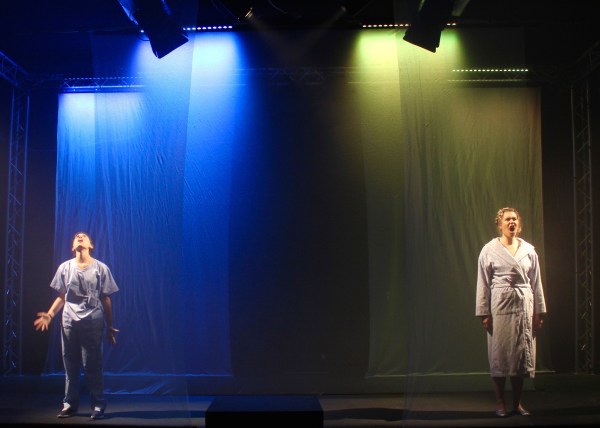
Three young women, three short solo performance pieces, three stories of vulnerability make bare., a thematically linked evening of new writing. Each of the three mini-plays has a distinct style and is performed by the writer. They vary in the quality of writing and inventiveness, and feel very new – more like scratch performances rather than finished pieces. bare. is a lovely concept – short, female solo performances that reveal hopes, fears, aspirations and conflict. It could easily become a regular event, giving women the chance to try out one-person work in front of an audience. As is, these pieces certainly need development but the three writer/performers show much promise and commendable initiative that, with development and experience, will certainly improve their work.

Kat Ronson is first, performing ‘IBZ’. This fragmented work follows a young woman’s journey from singledom into a loving relationship. The wild, drug fueled club nights transform into something more gentle and intimate, but her story does not end happily ever after. The young woman’s transformation is lovely, but the choppy writing makes for an unclear narrative and timeline. Ronson uses comedy punch lines and moments of reflective sincerity effectively, but this doesn’t balance out the vague writing. This piece would benefit from dramaturgical support and a hefty re-write, but the concept and central character are certainly workable.

American Steffanie Freedoff shows that yanks can handle their poetry and spoken word with ‘in the beginning there was Word’, a biographical monologue in verse about hating poetry as a teenager and growing to love it as an adult. This is also a coming-of-age story, but a much more positive one on self-discovery and confidence. It’s a bit cheesy and motivational, but the two stand-alone poems she ends on are angry, provocative and polished. The focus is on these pieces, which feel disconnected from the first part of the performance but add variation in style and tone. This second mini-play also needs development and shaping to find its overarching message, but it feels like it could be lengthened without becoming dull.

Madeleine Dunne brings a strong character piece to the trio with ‘Mind the Gap’, a piece that looks at the struggle of overcoming mental health issues. Lucy is a little girl terrified of breaking the rules and a young adult still limited by these fears. Told in two parts, Dunne’s gift for transformation is revealed in these two naturalistic monologues. It’s not clear who she is talking to and why in either section, but the character is a suitably interesting one. Lucy could also work well as the protagonist in a full play with multiple characters, perhaps even better with others to respond to rather than limited in a solo performance.

A quiet, sung finale wraps up the evening, a nice touch that adds some unity to these unrelated plays. bare. still feels like a scratch or showcase with a range in quality, but as a themed performance event, it is poignant and well curated. All three pieces need refining and/or expansion, though each shows at least some element of promise.

bare. runs through 16 July.

The Play’s the Thing UK is committed to covering fringe and progressive theatre in London and beyond. It is run entirely voluntarily and needs regular support to ensure its survival. For more information and to help The Play’s the Thing UK provide coverage of the theatre that needs reviews the most, visit its patreon.

Shakespeare as You (Might) Like It, Rosemary Branch Theatre

rsz_b551c7178d1c33dd1b480aca6c14387c3b89b05f2301913df15fd10fc38737bf

Four hundred years ago this April, Shakespeare died. A bunch of academics decided to take advantage of this bizarre anniversary and launched Shakespeare 400. It’s a great excuse for a nationwide Shakespeare celebration, but few of the involved events appear to acknowledge that the celebration is of his death and that he most definitely would write no more. Shook Up Shakespeare hasn’t let this fact bypass them, though. Their 45-minute Shakespearian cabaret mash up, Shakespeare As You (Might) Like It, is a quad centenary wake celebrating some of the Bard’s best female roles and the chaotic spirit of Elizabethan and Jacobean performance conventions.

Performer/creators Roseanna Morris and Helen Watkinson energetically and easily flip from Shakespeare’s verse to contemporary audience banter. Their show doesn’t have a plot, but involves party games, cakes, wine, singing and audience interaction as well as some cracking excerpts. In the intimate Rosemary Branch Theatre, it’s hard to hide but after the initial refreshments, party bags and taking a register, it feels more like a group of friends out for a laugh so people willingly volunteer. There’s a hint of The Complete Works of William Shakespeare (abridged) but with less structure, though it doesn’t feel like it needs it at such a short length.

Morris and Watkinson, as well as being friendly, charismatic and unintimidating, are excellent performers. They perform three scenes and at a push, the Desdemona/Emilia scene is the best but the other two are still fantastically endowed with a seemingly-easy commitment. Though not the best of singers, they confidently carry the Willow song. They switch their tone on a pin, which is truly lovely to watch.

Shakespeare As You (Might) Like It is their debut show as a company and as fun as it is, it could use some developing. With more material it will probably need more shaping and a more clearly outlined purpose/message, but Morris and Watkinson are natural talents with clear passion for sharing Shakespeare’s work with joy rather than quiet reverence.

The Play’s the Thing UK is committed to covering fringe and progressive theatre in London and beyond. It is run entirely voluntarily and needs regular support to ensure its survival. For more information and to help The Play’s the Thing UK provide coverage of the theatre that needs reviews the most, visit its patreon.

The Killing of Sister George, London Theatre Workshop

JHDTHmHNUC5s8ahQ6vv0FnjNF0ywJmSNOl7h0gT9Ch8,hFmORSc8H8GW1FxpEpv8GOdBhVvJqoliuWLo_jZszeU,PCCZDB9Yh7LIfBnwbk-dicJH55Con_eOwl7icS3jyXYIf a play includes the BBC, lesbians and emotional instability within the arts, it would be fair to assume it’s a contemporary text. The Killing of Sister George, written in 1964 by Frank Marcus, is refreshingly ahead of its time and despite its age, doesn’t feel particularly dated. In an excellent production by Artful Theatre, this all-female four hander kills off a beloved radio drama character to look at the difference between public perception and actual reality.

The cast of characters is a vibrantly coloured one. June Buckridge (Sioned Jones) has played Sister George on the popular radio drama “Applehurst” for over six years. Over that time, she’s lived with her “flatmate,” Alice “Childie” McNaught (Bryony Rawle) who she emotionally manipulates and abuses. Sister George is lovely and virtuous, June is anything but. Jones captures the blur between actor and long-embodied character exquisitely, embodying June’s aggression that covers her fragility. Sarah Shelton is Mrs. Mercy Croft, the BBC’s assistant executive head who is tasked with breaking bad news to June. Initially cold and businesslike, she warms to Rawle’s vulnerable Childie. Rounding off the cast is Janet Amsden as the eccentric clairvoyant Madame Xenia who lives upstairs, a woman who adds some much needed levity and stability. Marcus would have done well to include more of Madame Xenia, as even though there is plenty of comedy written into the script, the story is a dark one indeed. The four women fill the intimate venue with energy so it’s fit to burst.

Despite mentions of telegrams and conspicuously absent mobile phones and computers now vital to working professionals, the play feels modern due to themes that are still relevant. June and Sister George could not be more different, and the public adore Sister George; June doesn’t cope well under the immense pressure of living up to the ideals belonging to someone imaginary. June’s work-life balance is disturbed when Mrs Croft visits her home for meetings, a feeling actors know all to well what with the amount of admin and line learning that happen at home. There is also the implication that these women have no one else in the world that’s a friend or family. Of course there are work colleagues, clients, and fellow cast members, but there’s a desperation and heavy loneliness that hangs over these four.

I hadn’t been to London Theatre Workshop before, or seen a production of the quintessentially English The Killing of Sister George, and was impressed by both. A well-looked after gastro pub theatre space and a new-to-me play that could easily come across as stuffy and old fashioned is instead filled with life.


The Play’s The Thing UK is an independent theatre criticism website maintained voluntarily. Whilst donations are never expected, they are hugely appreciated and will enable more time to be spent reviewing theatre productions of all sizes. Click here to make a donation with PayPal.