How Nigeria Became, everything theatre

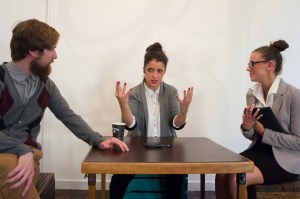
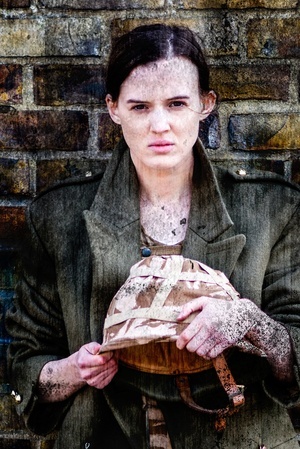
“It’s 1914. The British government has merged the tribes and kingdoms to create modern Nigeria. King George V has sent Charles (Christian Roe) to visit Herbert Ogunde (Tunji Falana) to ask him and his theatre troupe to perform at the unity celebrations…

“The story the theatre troupe shares with Charles follows young girl Jenrola (Rita Balogun) on her quest to find the spear of Shango…Also looking for the spear are Aguzani (Stephanie Levi-John) and Obaze (Rebecca Omogbehin). The three women engage in a battle of wit and strength to see who can get to the spear first…

“The story of Charles, Herbert and his actors is framed by a Yoruba creation myth that starts and finishes the production…As lovely as this story was, it felt disconnected from the main plotline, even though it provided the background to the spear…

“All of the actors except Roe play multiple roles, and they do so incredibly skillfully. Falana…employs great physical skill to differentiate these characters and shows the inherent misogyny of 1914 Nigeria through comedy rather than nastiness…

“The set is simple but colourful and effective. The stage is a painting of a river delta and coast, forming the natural curve of the stage. There are mats and cushions on the front of the stage for young children, which gives them more of an opportunity to engage with the interactive elements of the production…

“This production is highly polished and engages the young members of the audience as well as the older ones. It was a great experience…seeing numerous young people engage with the action unfolding before them.”

Read the entire everything theatre review here.

Feature – Redefining “Emerging”

When I think of the word “emerging”, I picture the finite stage between pupae and butterfly: a damp, crumpled creature working it’s way out of a safe, confined shell, in a completely different form to what it was previously. Within that set time frame, the butterfly must climb upwards and into the sunlight so its wings can straighten and dry out. If it fails, it will not be able to fly and fulfill the potential of its adult form. The time in which the emerging must be accomplished is set; at the end it has either succeeded or failed and there is no going back.

“Emerging” is a commonly used theatre term used to categorise those that have finished their training and are in the process of finding their feet within the industry. It implies they haven’t found success yet, but it is a definitely achievable point in the not-so-distant future. “Emerging” indicates transition and must be completed within a determined time frame, after which “success” is reached. Many actors have a concrete idea of “success” at the onset of their careers and say they will give up if they haven’t “made it” within three years/five years/by the time they’re 30, and so forth. Of course, the reality is far different. This definition of “success” is often reconfigured as they navigate working in the arts. The problem with using the words “success” and “emerging” in such a fickle industry is that the elusive “success” “emerging” hinges on is unlikely to be achieved at all, let alone within a predetermined time. Also, an artist’s definition of success is likely to be reconfigured time and time again as they grow and change. They easily could, due to the realities of the business, be in a state of emerging forever.

In theatre, “emerging” also usually applies to those under twenty-six or more rarely, thirty. The general use of the term means an early-to-mid twenty something who completed training within the last few years. Until recently, the now-no-more IdeasTap briefs were almost exclusively available to artists in those age brackets. After enough feedback from members, they began to lift those age ceilings to allow their ageing membership to participate more widely. (Then they closed because the costs of running the organisation were no longer being met.) This is rare, though. I still widely see grants, internships, and participation programmes limiting ages. I even see jobs that are exclusively open to those under 26 and unemployed. What about the unemployed 28-year-olds? Or those even older?

I am most certainly not saying that young artists don’t need and deserve support, but that older artists do too. They may still be in the state of emergence, having never reached that elusive “success” even after many years in the industry working for free or low-paid. Or, they may have entered the profession at an older age. I have met numerous people (usually actors) that changed careers and began working in theatre and film in their 30s, 40s or even older. Last year I met Hugh Hemmings, who became an actor after he retired. There are also people in theatre who start working in one field, then moved to another. A common transition I have seen is from actor to director, or actor to producer. Other people straddle several roles within the industry. They were emerging too (and still may be), and deserve the support of any other emerging artist, even if their emergence does not fall into the general understanding of the word.

What that support looks like may be radically different from people in their early 20s. I recently wrote about the issue of childcare in the arts, which applies to artists at all stages of their careers, but particularly those that are not yet “successful.” Housing, particularly in London, is a primary issue for working artists. Why should any working adult have to live with their parents in a perpetually infantilised state in order to pursue a career? It’s now depressingly commonplace for young people to be living at home into their 30s if they work in low-paying fields. Over all of this is availability of funds, courses and programmes that are designed to support artists’ work, but as previously mentioned, these often come with an age limit.

So, let’s collectively re-examine our mindsets. Arts organisations and funding bodies must learn that “emerging” includes all ages and does not indicate how long someone has worked in the industry. It can include those who have taken career breaks, or changed their career path within the industry. In this precarious time of funding cuts, the last thing we need is to pigeonhole those that need support as “established” or “successful” when that couldn’t be further from the truth.


The Play’s The Thing UK is an independent theatre criticism website maintained voluntarily. Whilst donations are never expected, they are hugely appreciated and will enable more time to be spent reviewing theatre productions of all sizes. Click here to make a donation with PalPal.

Pieces, Rosemary Branch Theatre

web.phpI’ve seen theatre that seeks to raise awareness about all sorts of issues. Racism, classism, social justice, particular moments in history, individuals, you name it. I hadn’t seen a play about organ transplants and donation until Spare Parts Theatre Company’s one-person Pieces. Founded by actor and transplant patient Steven Mortimer, Spare Parts both raises awareness about issues surrounding organ transplants and fundraises for several related charities. Pieces tells the stories of six different people affected by organ failure and the need for a transplant. Mortimer performs six separate, extended monologues demonstrating that organ failure can hit any age, class or body type, causing life to stand still until that organ is found. Mortimer effectively plays a range of characters in scripts by a few different writers that vary in quality, but maintains audience focus for the 50-minute show and succeeds in reminding audiences about the importance of organ donation.

Piece 1: a Cockney ex-taxi driver sits in the back of a black cab on his way to hospital for a double cornea transplant, chatting incessantly to the unseen driver. His fear of death is evident in his regular conversation diversions to what it must have been like processing towards your hanging at Tyburn. Some of the topic transitions are rather jerky, but Mortimer smooths them over as best as he can. The ending also terminates abruptly and quickly; some time for the character’s reflection would have also given the audience additional processing time.

Piece 2: This is the weakest of the six pieces. The monologue is framed around a man watching his twin brother Jono run a 5k in preparation for the marathon. A year ago, this was unthinkable. Periodically, we hear a group of runners go past, but Jono isn’t there. The sections where he is waiting tend to ramble, but the ending is lovely even though a bit sentimental.

Piece 3: Johnny is a character similar to the visually impaired taxi driver in piece one; Mortimer struggles to differentiate the two. To add more space between them, this piece could have come later in the production, providing stronger contrast. He’s in an AA meeting sharing his life story. This piece becomes much more dynamic by focusing on Johnny’s drinking and homelessness and less on him needing a liver transplant. His emotional reunion with his parents after fifteen years also helps broaden the story; these wide themes indicate this monologue could develop into a play with additional characters and plot. This is one of the better plays because it provides us with a much broader picture of the character’s life.

Piece 4: Radically different in style. This fragmented fever dream from a scared child under anaesthetic is excellent. Obsessed with Doctor Who, the child’s thoughts flick back and forth through time, showing his fears and hopes for a life beyond dialysis. Mortimer could have played him even younger to have a stronger effect on the audience, though the language showed that John was quite young, no more than eight or nine years old. The sound design is particularly detailed, with a tardis motif.

Piece 5: Another child, this one is older and stroppy. He is struggling with his younger sister’s need for a heart transplant. The childishness is interrupted by profoundly adult moments as he debates whether he should kill himself so she can have his heart. He also endearingly compares her upcoming transplant with gardening. This piece shows how organ failure causes those involved to grow up quickly, often too fast. This is another excellent piece; Mortimer found it easier to embody this child. Perhaps the frustration and helplessness are emotions he can access particularly well.

Piece 6: Five-year-old Liz is in a hospital bed attached to a ventilator. She’s five, has Cystic Fibrosis and is waiting for a double lung transplant. Mortimer plays her father, dreaming of a healthy child that can run and play like all the other children. He also considers the family of the child that will donate his/her lungs to Liz and how their parents must feel. Mature and complex, this is the second piece that has a character detailed enough to turn into a longer play, with additional roles acted out. This piece has a sombre and moving tone very different to the previous pieces and a good choice for an ending.

Pieces is certainly a unique production, and one that will develop further with additional variation to style and character development. The sound design by Justin Teasdale was atmospheric but not dominating and could enhance the addition of design elements including costume and set. This production relies on verbal communication; the set was a single folding chair and Mortimer’s costume never changed. Though it enhanced the storytelling aspect of the production and allowed its messages to sink in, some visual variation would also be welcome. Despite its shortcomings, this remains a unique production with important messages.


The Play’s The Thing UK is an independent theatre criticism website maintained voluntarily. Whilst donations are never expected, they are hugely appreciated and will enable more time to be spent reviewing theatre productions of all sizes. Click here to make a donation with PalPal.

The Quentin Dentin Show, ACT Theatre at Kingston College

IYAF 1Disclaimer: due to TfL journey planner buggery I arrived at the theatre, the ACT at Kingston College in deepest, darkest zone 6, about ten minutes into the show. Fortunately, I only missed exposition that was covered as the story continued.

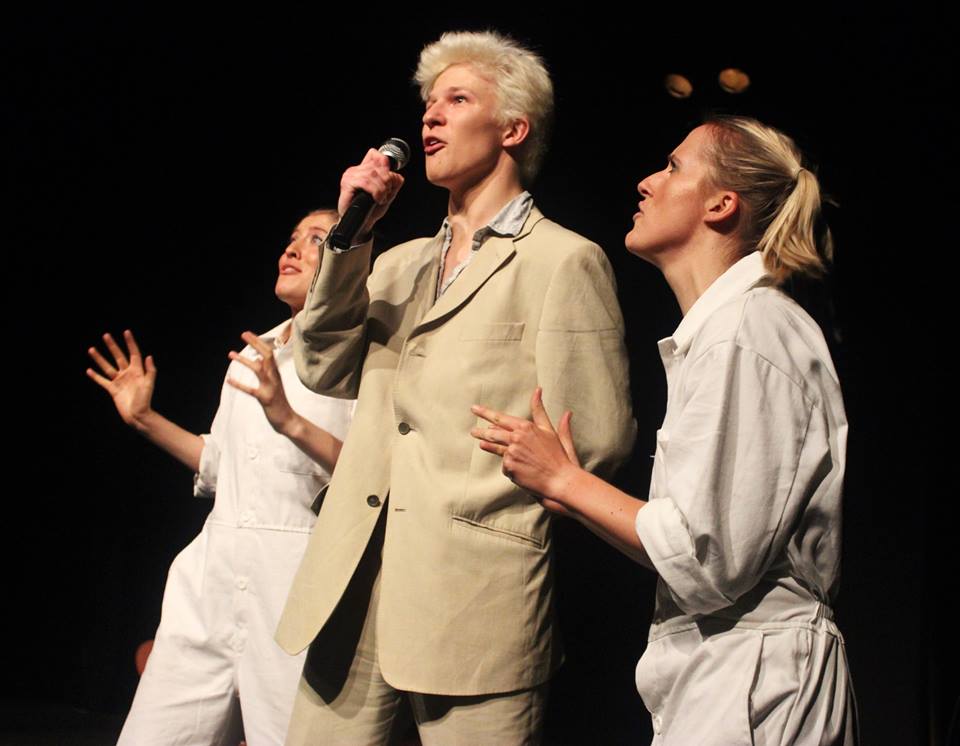
Keith (Jack Welch) and Nat (Shauna Riley) have been together for a while now. Their relationship has stagnated, as has Keith’s writing career. Nat’s had enough. They’re both chronically unhappy. The final straw as Keith’s radio breaking, but out of the static arrives weird and wonderful singing therapist Quentin Dentin (Henry Carpenter), and his two Friends (Caldy Walton and Ella Donaldson). Cloaked in white with matching hair, Quentin is a Christ-like figure there to save Nat and Keith’s relationship and to make them happy again.

Of course, this is all rather creepy and surreal. The story takes a turn to a darker side as the couple’s treatments prove ineffective. Production company Slick Rat state that one of the primary influences on the show is The Rocky Horror Picture Show; Quentin has similar qualities to Frank N. Furter, and the couple are a rather more street-wise, contemporary Brad and Janet who go along with the strange man that appeared out of their radio with little question. Musically, the songs have a 1970’s glam rock vibe and Quentin also looks a bit like David Bowie. In summary, the title role is a Frank N. Furter/Jesus/David Bowie hybrid in a new rock musical. What’s not to like?

Not much, actually. Though this is a new musical by a young company, a long development period and support from places such as Rich Mix and The National Theatre Studio have helped Slick Rat shape their idea into a quirky little show with potential.

There are still some issues that should be looked at, such as clichéd lyrics (“Swim with the fishes/all that glitters is gold”) and an abrupt ending. Not that it necessarily needs to be positive, but it’s quite vague in its current form. The transitions into the songs are similarly abrupt, but all that is needed to correct this would be more lead-in music and/or dialogue that echoes the coming lyrics. Even though I missed to beginning exposition, is ten minutes of a one-hour show too much of an introduction?

The performances are good, particularly from Donaldson, Walton and Riley (Friends and Nat). Quentin could use an injection of charisma to avoid him becoming too creepy, but this could also be addressed in the writing. Similarly, Keith could do with more external artistic angst, frustration and clear isolation from the rest of the world. The music is fun and the premise both entertaining and thought-provoking: are we allowing society to dictate that we must be happy all the time? Are we too enamoured of miracle cures? What role does religion play in this?

This one-act could nicely develop into a more complex story with the addition of more characters and songs without losing its message. It has a distinctive musical style that manages to not muddy from all its influences. It would certainly benefit from the addition of a bigger budget, good design and a whole band rather than the sole onstage guitarist. In its current state, it captures the innovation and spirit of fringe theatre and admirably contributes to new British musicals, an area sorely underdeveloped in favour of revivals and American imports. It’s worth catching at Edinburgh Fringe, particularly for those interested in new musical theatre.


The Play’s The Thing UK is an independent theatre criticism website maintained voluntarily. Whilst donations are never expected, they are hugely appreciated and will enable more time to be spent reviewing theatre productions of all sizes. Click here to make a donation with PalPal.

The Four Fridas, Woolwich Barracks

Voladoras_1396b-LWhen she was little, Frida Kahlo yearned to be able to fly. Her parents’ gift of a dress with wings proved disappointing though her dreams of flight remained, particularly following a crippling bus accident that left her with chronic pain and unable to have children. Bedridden for months during her recovery, she channeled her despair and rage into painting. These paintings, along with the ones she made over the rest of her short life, are the inspiration for Bradley Hemmings’ stunning outdoor multimedia event at Greenwich & Docklands International Festival this year. Using pyrotechnics, dance, projections, aerialists, music and the Mexican fertility ritual of the Voladores, The Four Fridas is a visually arresting spectacle but the show that is meant to be a tribute to Kahlo does not provide any particularly unique insight into her life and work.

Divided into for sections that reflect the elements earth, air, water and fire, The Four Fridas chronicles Kahlo’s life. Whilst there were clear acts to the script that took place in different areas of the site, the association with the elements was loose at best. The most sculptural set piece, a bus and tram crash built from metal and crates, was only used briefly towards the beginning. The script itself was fantastical and poetic, but densely written and delivered at a quick, even pace. The language was second rate to the visuals, though what with how impressive they were it would be nigh on impossible to surpass them with any other production element. It was easy to ignore the language in favour of visual performance surrounding the audience allowed to freely wander the performance site.

There were two highlights of the 45-minute long production. The first was an extended projection and aerialist hybrid against a giant screen held up by a crane. The projections were animations based on Kahlo’s work, with the performers against the screen adding texture and further detail. The most exquisite sequence was a flying butterfly, with a performer as the body of the insect. Each aerialist was controlled by a less obvious human counterbalance who scrambled up and down the vertical rigging on the side of the screen. This added an element of puppetry to the performance mediums used. These sections reflected freedom Kahlo felt when painting and her anguish of being trapped in a body that had previously been healthy and unscarred, but made no specific comments on her life.

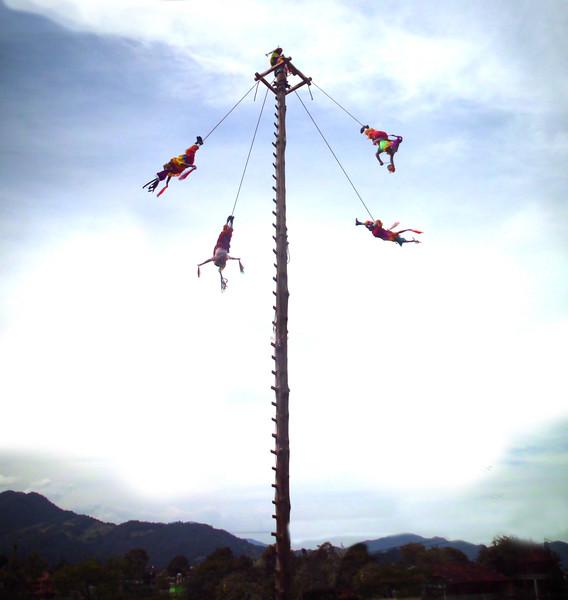
The second most notable feature was the ancient ritual of the Voladores. Using nothing but rope to ensure their safety, four people climbed a wooden pole without harness, only to fall backwards suspended by their feet. The top section of the pole gently spirals, lowering them to the ground. Whilst this is a Mexican fertility ritual, the vague connections to Kahlo are her inability to bear children and that it also hails from Mexico. Surely it is an affront to an infertile woman to end a performance about her life with hope for children? Nevertheless, it is a remarkable cultural phenomenon to witness.

The free access to an event with such high technical requirements is highly commendable, though the tech is at the mercy of the outdoors. On the last night, part of a scaffolding tower collapsed and had to be removed (fortunately no one was hurt). On a previous night, winds meant that the screen was unable to be used. Whilst this adds to the immediacy of live performance, it also means the performance is shortened. Whilst it was free to stand in the site and watch, bleacher seats came at a price. Those that paid may have felt short changed by the abbreviated length.

Hemmings had set the bar high for this kind of accessible public performance though his work on the Paralympic Games Opening Ceremony and stylistically, work like this should be produced often, up and down the country. It is a shame that the spectacle did not particularly support the woman it is meant to honour. Even with basic knowledge of Kahlo and her work; the opportunity was there to communicate a deeper understanding but that was never reached. Though this kind of theatre is still new and infrequently produced, it should aim to develop more nuance and meaning. I look forward to more artists creating large-scale public performances incorporating a rich combination of performance practice and technology. This is the sort of art that has the potential to capture public affection and encourage them to more fully marry art with day-to-day life.


The Play’s The Thing UK is an independent theatre criticism website maintained voluntarily. Whilst donations are never expected, they are hugely appreciated and will enable more time to be spent reviewing theatre productions of all sizes. Click here to make a donation with PalPal.

As Is, Trafalgar Studios

As Is, Bevan Celestine, Natalie Burt, Steven Webb & Russel Morton,Trafalgar Studios, 1 July - 1 August 2015. Courtesy Scott Rylander-022The AIDS play of my generation was Rent. I saw the original cast on Broadway when I was 15 or 16 and felt a strong bond with the characters that weren’t much older than me. By that age, my peers and I had the fear of AIDS drilled into us over several years of sex education. It was still a death sentence then, but treatment was available and quality of life was improving. We knew the history of the disease, though. We knew how it exploded into the gay community, then spread to everyone else. We knew how many people died, and how horribly. We knew that no one was safe.

In 1985, the first AIDS play, As Is was staged in New York City. The AIDS epidemic is ravaging the city, particularly the gay community. As the disease spreads and people die, fear mounts. Diagnosis is a death sentence. Oblivious in the New York City suburbs, I was 3 years old.

Now I’m 33, and this is the 30th anniversary production of As Is. AIDS is still here, and the number of AIDS cases is rising. The fear isn’t so strong any more due to advances in medicine; it’s certainly not something on my radar like it was when I was a child. People are forgetting the disease’s history and the impact it had only a few decades ago because it’s now possible to lead a full life with medication and early diagnosis. That’s why staging As Is, a production that captures the desperation and rising panic of the generation first exposed to AIDS, is crucial. Though dated, it is a vital depiction of an era of social history that must be remembered, but does so with humour, humanity and a fantastic cast.

Centered around recent exes Rich (Steven Webb) and Saul (David Poyner) who initially meet to divide up their belongings, their world suddenly alters after Rich confesses he has “it.” The story becomes a detailed and intimate journey of a man struggling to come to terms with his illness, and his ex-boyfriend’s obsessive urge to care for him. Six other actors play a variety of characters associated with Rich and Saul’s life ranging from drug dealers, to family, to medical staff. Some of the best supporting characters include Natalie Burt as best friend Lily and older hospice worker Jane Lowe. Performances are excellently committed across the board, capturing the microcosmic struggle of a disease that has affected millions since it first appeared. The only performance issue is the over-egged accents. People from the New York City area haven’t spoken with accents that stereotypical for a long time, but this is not something a non-American is likely to notice.

Written by William M. Hoffman, the dialogue races through a gamut of emotions, evoking belly laughs one moment and tears the next. Without the regular levity, the script would be entirely too depressing, and proves the necessity of laughter when coping with personal trauma. Even though the humour is ever present, so is fear. The script walks a fine line that wavers between the two, and every other emotion associated with the devastation of an AIDS diagnosis. Particularly evocative scenes include Rich nihilistically on the pull in a nightclub shortly after learning of his condition, a support group of mostly gay men with the striking presence of a pregnant woman who’s husband infected her, and Rich’s first hospital stay with Saul devotedly by his side.

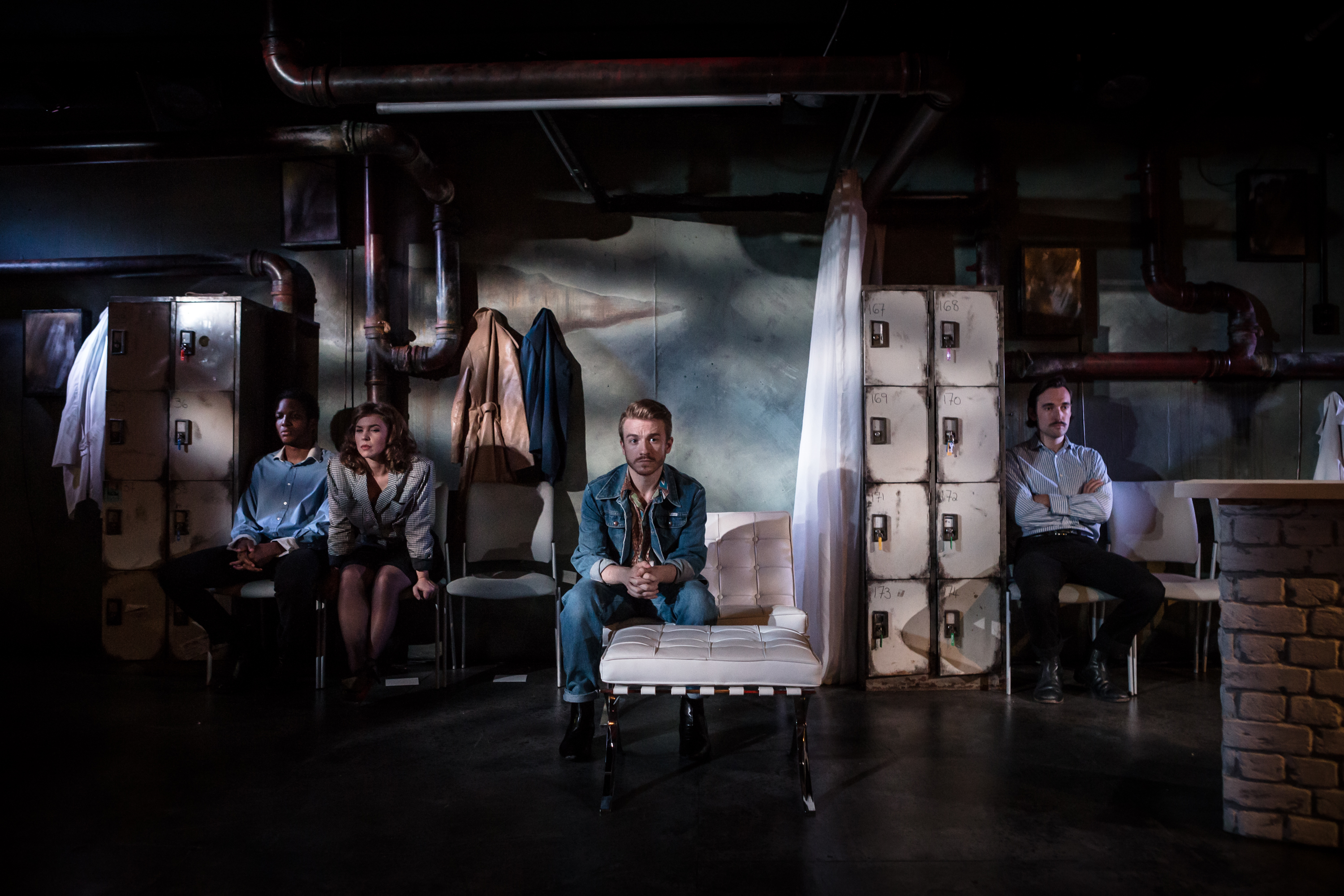
The costumes are distinctly early 1980s, and the simple, versatile set of lockers, chairs and pipes captures the industrial dinginess of New York City that is still present today. The design contrasts the script, a montage of fast-paced, overlapping scenes and a frantic depiction of fear and desperation that is sweeping the city.

Trafalgar Studios 2 is an intimate venue, perfect for the immensely personal journeys depicted in the play. The actors boldly interact with the audience, atypical of naturalism. This allows the audience to feel embedded in their world and reminds us that AIDS can affect all of us. Even though it is a lovely experience to see this play in a small venue, it definitely deserves larger audiences and would be able to fill a bigger stage.

As Is perfectly balances humour and seriousness to remind audiences that AIDS is still here and has the power to irrevocably alter lives, despite medical care. It accurately evokes a fearful time that I remember in flashes of news broadcasts, interviews and health classes. Stunning, fearless performances and a great script capture a unique moment in American history, but one that has left an indelible mark on global society. We are reminded that Rich’s “it” could still happen to any of us.


The Play’s The Thing UK is an independent theatre criticism website maintained voluntarily. Whilst donations are never expected, they are hugely appreciated and will enable more time to be spent reviewing theatre productions of all sizes. Click here to make a donation with PalPal.

Henry V, Union Theatre

I’ve known Lazarus THTP-037-4heatre Company and artistic director Ricky Dukes’ work for a long time. We first met back in 2010 sharing a venue at Camden Fringe when I was a fledgling producer. Since then, I’ve seen several of their shows and reviewed others, including The Spanish Tragedy (my first review for everything theatre) and last summer’s Troilus & Cressida. Dukes is visually inventive, with a solid grasp on the challenges of classical theatre. He boldly reconceptualises plays, honouring the language but ensuring productions are energetic and a feast for the eyes and ears. I expect Lazarus shows to provide a creative, unique perspective on the play, with high quality performances. Until this Henry V at The Union Theatre, they have always fulfilled these expectations.

The all-female, barefoot cast is rendered androgynous by identical navy blue boiler suits, emphasising Lazarus’ dedicated ensemble approach. Whilst this easily allows for multi-rolling, there is no visual distinction between characters. This hinders understanding of the story, particularly with the sweeping cuts to the text. The dark colour is a striking contrast to the dominating white table in the middle of the thrust stage, covered in religiously symbolic items, all white or light coloured: candles, an ornate bible, an alter cloth, a bowl of water for ritualistic washing, and Henry’s crown. These objects justify Henry’s contentious claim to France. A stack of self-referential Arden scripts is tucked under the table. There is no other set, save for black metal chairs ringing the playing space for actors to sit when not performing. The cast are on stage the entire time, a Brechtian technique used to emphasise the narrative aspect of theatre. Additional visuals include a creepily masked French herald, bright pink gift bags filled with the Dauphin’s luminous green tennis balls and a single pink helium balloon. These remain on stage for the duration, as well as the balls, which are thrown about the space upon delivery, causing the actors to tread warily. The overall look of the production harks back to the 1960’s.

The colour combinations and excellent lighting design looks fantastic. Dukes and the actors use the stage effectively, playing to all sides of the audience. Any individual moment could be photographed and it would make a striking image. The issue is that none of these visual choices supports the production concept. Dukes wants the audience to question whether Henry really has the right to invade France. Clutching at straws, I connected the boiler suits to mechanics, or builders – perhaps these characters are tearing down England and rebuilding it to be bigger, faster and stronger? This is tenuous, at best.

I really want this production to be as good as Lazarus’ past productions I’ve seen. Adaptations of Shakespeare should give the audience new insight into the play and provide a clear level of understanding, but this time Lazarus did not succeed in doing so. Other than it looking great, the reason behind the design choices remains unclear and they do not support the production concept.

The ensemble has some excellent performances. Colette O’Rourke is a feisty Northern Henry that holds attention throughout her lengthy trademark speeches. She is grounded, but with a volatile, pent up aggression. Her performance is reminiscent of Clare Dunn’s Hal in Phyllida Lloyd’s Henry IV at the Donmar last year. Just as watchable is RJ Seeley as Fluellen, who has some great scenes with Emily Owens’ Pistol. Nuala McGowan is vibrant and dynamic as the disturbing French herald and Captain MacMorris. The rest of the cast struggle to distinguish themselves from each other, delivering the text with nearly identical rhythm and pace.

Other devices that add distinctive features but no further clarification to the production concept include a loud hailer through which Henry rallies his troops, but it flattens delivery. Some speeches are delivered in prayer, emphasising the driving force of religion in Henry’s mission. Direct address is used copiously as it should be, but not excessively so. The St. Crispin’s speech is a wonderfully intimate interpretation. Pistol adds in some “fuck you’s”, which although gratuitous, suit the character. The diverse female cast, whilst laudable for diversity reasons, also provides no unique insight into the play, as their costume and performance style does not pander to any particular gender identity.

This Henry V is certainly not a bad production, but it is not up to Lazarus’ usual standard of excellence. A great performance from the title role and striking visuals help hold audience interest to some extent, but the lack of concept and design unity prevent total audience engagement.


The Play’s The Thing UK is an independent theatre criticism website maintained voluntarily. Whilst donations are never expected, they are hugely appreciated and will enable more time to be spent reviewing theatre productions of all sizes. Click here to make a donation with PalPal.

Bare Essentials, Amersham Arms

Encompass Productions produce theatre, film and a regular night of new writing, Bare Essentials. Rather than a scratch night, they aim to approach each micro-play with the same dedication as a full production, but with no budget. With plays accepted from all over the world, the current Bare Essentials has seven short plays ranging in style from naturalism to absurdity. The evening is a mixed bag with some scripts significantly better than others, but the performances are quite good. What made the whole evening hard to take had nothing to do with the production: the chosen venue, Amersham Arms in New Cross, isn’t fit for purpose and on the hottest day of the year in a tiny room with no air conditioning, it was a hugely uncomfortable experience that interfered with the enjoyment of the evening. I couldn’t wait to leave, and spent a large part of the evening trying not to be sick (I’m not good in the heat. At all.), which is a real shame because there were some inventive pieces of writing.

  1. CTL, ALT DELETE

This play is a frenetically paced, dystopian depiction of the film industry after the incorporation of robot writers. The robots aren’t pissed off though, because they’re robots. It’s the writers who are angry, and the cold, corporate producers just don’t get it until they have to face the consequences. Rachael Owens and Marcella Carelli are the money-grubbing producers unwilling to listen to writer Alex (David England); all three capture the desperate situation through rapid-fire dialogue and excellent timing. This play is only about five minutes long, but comfortably conveys the story. The idea could be developed into a longer piece, but this micro-play is a perfectly formed, self-contained piece by Dan Page.

  1. THE LEAVING OF THINGS

One of the best and my personal favourite, this play looks at internet suicide pacts, loneliness and hope. Though the dialogue is sometimes forced, performances by James Barbour and Alice Corrigan are some of the best I’ve seen on the fringe. This play could easily develop into a longer character driven one-act about the need for genuine human connection in our digital world. An excellent piece by Dean Moynihan.

  1. PANTHER

A West Country lad fails to understand his father’s affair and goes searching for a big cat in the darkness every night. This is an extended monologue with some character development, but relies on the regional stereotype of West Country equalling stupid or mentally deficient. Structurally, writer R. J. Thomson has a good piece, but doesn’t fully explore the character’s need to find the cat that killed his neighbour’s lamb, perpetuating the family feud that started with his father “tasting the neighbour’s chutney” on a nightly basis. The myths of big cats roaming free are touched on, but this is another area that deserves more time and could add a richer overlay of meaning onto what is currently quite a superficial script. There is room for development however, and this character piece could expand to a full cast and script.
  1. FEEDING TIME AT THE HUMAN HOUSE

Liz McMullen and Pip Barclay play zoo baboons puzzling over human nature and relationships. The physical depiction of their characters is excellent and wholly embodied, drawing attention to the more human traits of our ape cousins. Elements of comedy and poignancy make this view of mating rituals and pair bonding integrated and light-hearted, though if any longer, the idea would be excessively exhausted. As is, this is just the right length to explore writer David Wiener’s idea.

  1. THE NEWS

Lucy Foster’s script looks at three characters (Hannah Lawrence, Joe Bence and Jack Bence) coming to terms with a mutual friend Sarah’s drunken accident that she may not survive. The three dramatically different personalities pass the blame around as they struggle to cope with Sarah’s fall down the stairs and their own directionless lives. This microcosm presents the inner fear of giving up a creative career for a secure job only to find life has no meaning. Foster relies on contrasting stereotypes that are an unlikely group of friends and could do with more development, but if this were a longer play, it would be easy to address. The performances could also use more detail, but what was presented effectively communicated the play’s message.
  1. CONFESSIONS A DEUX

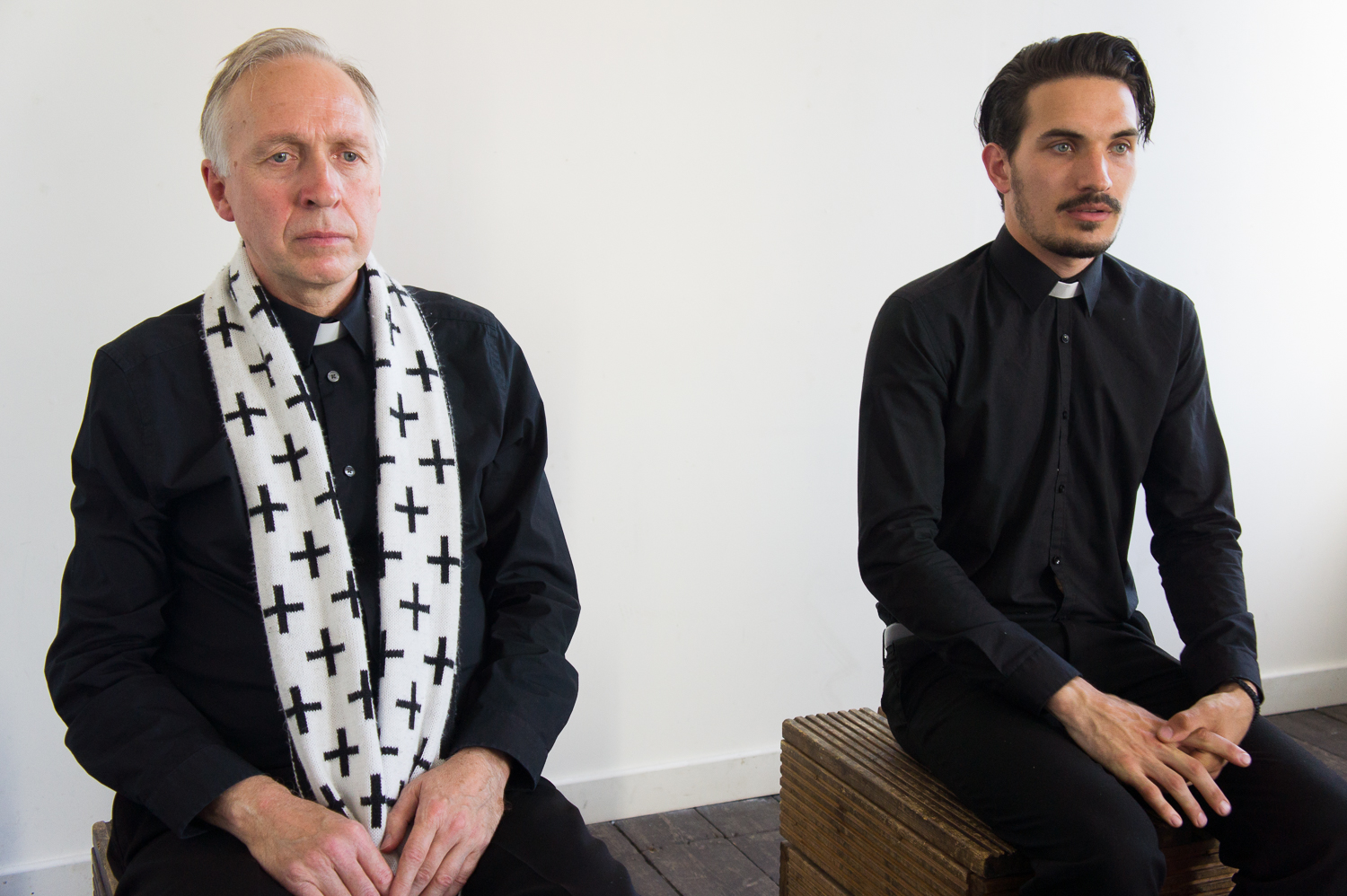
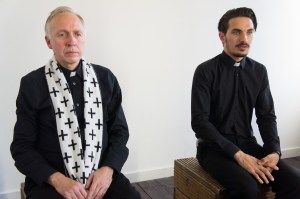
By Stephen Cooper, this one goes beyond the absurd to bizarre and the meaning of the piece isn’t clear on a wider level. Two priests (Graham Christopher and Josh Morter) have encountered a lonely parishioner with a fetish for priests and both have caved into their carnal desires. There is some good situation comedy and cleverly simple staging, but other than a specific comment on the sex lives of priests and their reciprocal confessions, this play has limited appeal and scope for development. This is the weakest one of the evening.
  1. NOTHING COULD SURPRISE ME NOW

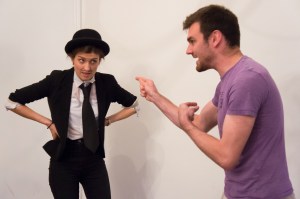
Another example of absurdity, this is one of the better productions in Bare Essentials by Alain G. Cloarec. Turning narration and metatheatricality on its head, it is brief but wonderfully funny. Characters enter the room one by one having awoken this morning only able to speak in the third person, rather like Gregor Samsa but less traumatic. The “finale” then transcends the play, leading into a curtain call for the entire company. This is an excellent programming choice and some inventive directing by Michaela Frances Neal.
Overall, this is a varied evening of new writing, though even though the company claims it differs from a scratch night, it appears to have little difference. Scratch nights also approach their work with commitment, and are done on a shoestring in order to trial new writing. Though these pieces were quite polished, most need development. A more suitable space would improve the audience experience and establish a more professional, less scratch-night feel. As is, the room was small with no theatrical lights, white walls, and windows that are not blacked out. It was a room rather than a theatre and it is unclear why Encompass didn’t use the actual theatre downstairs, unless the reason is financial.

Scratch nights and short play showcases remain a good showcase for actors and writers, without the time commitment of a larger production (usually for no money) and the ability to present audiences with a range of styles and topics. Those with short attention spans and a wide range of interests will find this format particularly appealing. This one is has some quite good scripts and excellent performances but if the production company wants it to not feel like a scratch night, a more suitable venue must be chosen, and not just for air conditioning.


The Play’s The Thing UK is an independent theatre criticism website maintained voluntarily. Whilst donations are never expected, they are hugely appreciated and will enable more time to be spent reviewing theatre productions of all sizes. Click here to make a donation with PalPal.


Britannia Fury, Hen & Chickens Theatre

2015-05-07 20.33.52 (2)“Never meet your heroes.”

This stark warning from one character to another foreshadows the absurd, disappointing story about to unfold. Part satire, part pantomime, part superhero spin off, Britannia Fury introduces us to Britain’s only real superhero. He is now an elderly alcoholic living in a council flat after his epic rise and consequential fall into obscurity, but a young reporter has located his address and is determined to share his forgotten story with the world. A mix of performance styles and a story that can’t quite seem to determine what it wants to say prevents the concept from developing into a strong script.

Mr Jameson (Kit Smith) is the exaggerated stereotype of an editor of The Daily London Leader. Loud and abrasive, he provides complete contrast to the nervous Charlie (Ethan Loftus), a young reporter not even on Jameson’s radar. Charlie has the scoop of the year and negotiates with Jameson to let him interview 70s and 80s superhero Britannia Fury, who saved the nation from villainy only to mysteriously retire and disappear. Charlie wants to share the story of this forgotten hero with the nation. Loftus plays Charlie naturalistically, with a quiet, geeky passion for Fury. Whilst both Smith and Loftus embody their characters respective styles well, they clash and cause the production concept to look like it lacks direction. The other characters add to the soupy style mash up rather than siding with one of the earlier, established performance styles. Fury (Geoffrey Kirkness) is a mix of stereotype and naturalism, which adds depth but only further confuses the production’s identity. This is an issue with the script and direction rather than the performers, but one that can be solved by the playwright choosing one approach and sticking with it across all the characters.

The storyline, with its clear premise, becomes convoluted as Charlie and Fury meet and delve into his past. There are some predictable plot twists that lead to a tragic end; again, the initial idea has good potential to explore the human condition through Fury’s story but this is glossed over and made light of with comedy and exaggeration. Charlie’s initial shock of meeting his fallen hero is underplayed, then forgotten, but his emotional journey hits some good points. Their interview occasionally drags, as if the play is trying to buy time rather than following the natural narrative arc and getting to the point. As Charlie delves deeper into Fury’s twisted Tory past, it becomes clear that Jameson’s initial warning rings true.

The idea of the fallen hero in modern times certainly has mileage and Hillcrest Artists begin to solidify interpretations of the theme but they don’t quite come to fruition. Is the play about politics? Is it about society’s short attention span? Or, is it smaller and about the relationship between two people? Is it making fun of superheroes? Is it about Fury’s humanity? Really, it is all of these things and more, but for a play not much longer than an hour, this is too much to try to address. There are some touching moments and witty dialogue but underlying substance doesn’t quite materialise in Britannia Fury.


The Play’s The Thing UK is an independent theatre criticism website maintained voluntarily. Whilst donations are never expected, they are hugely appreciated and will enable more time to be spent reviewing theatre productions of all sizes. Click here to make a donation with PalPal.
Perfect Lovers, Theatro Technis

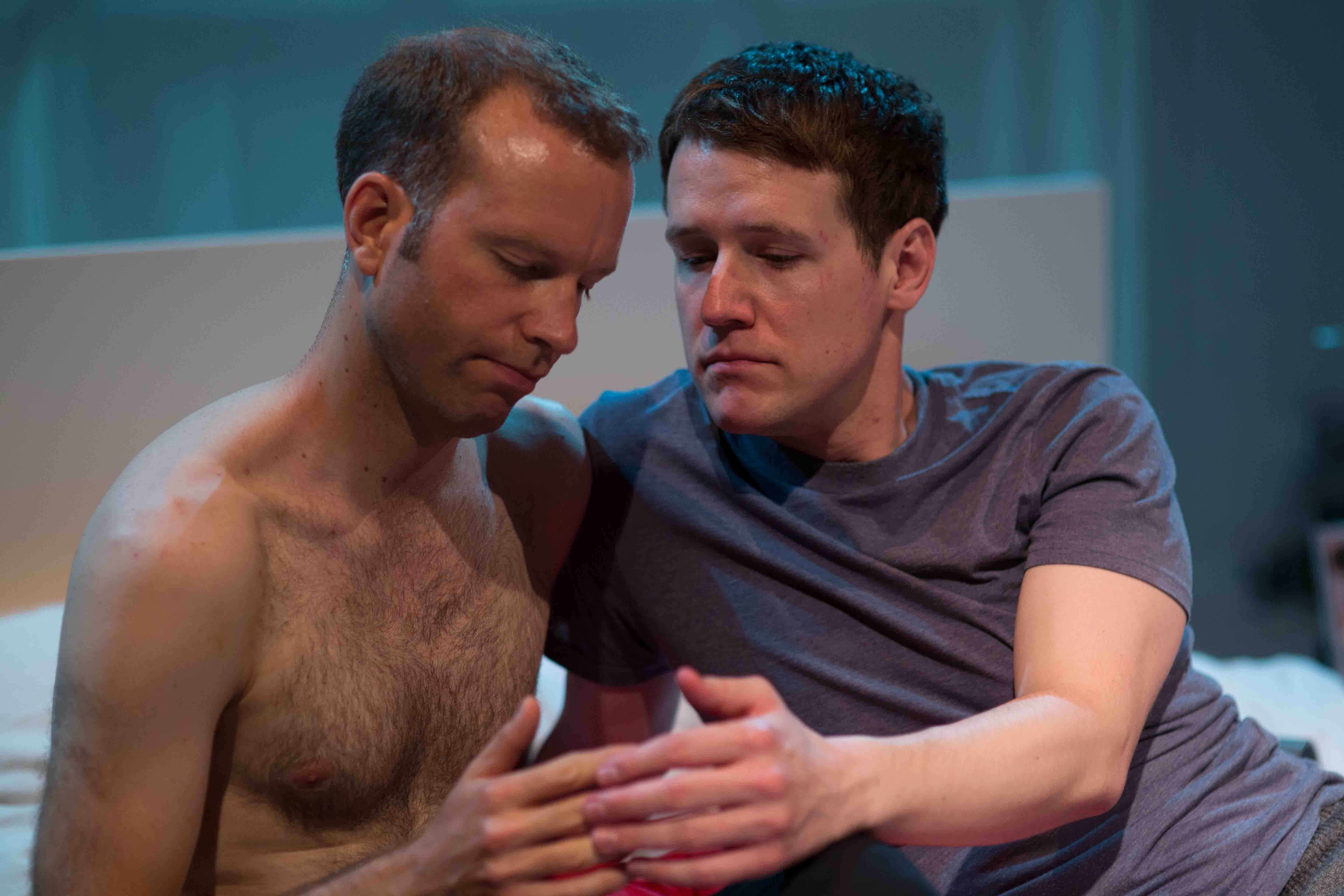
Four men, two clocks and all po_N2A6465ssible relationship dynamics meet within different moments, in one bed. Scenes bounce back and forth across time supported by symbolic projections and lighting, each one intimately presenting a different couple combination. Individuals meet and connect for a brief moment in time, then inevitably move on. La Montanya’s Perfect Lovers is a new play that explores the ups, downs and transience of gay relationships, proving they are no different than straight ones. We all seek that perfect relationship even though no such thing exists.

This is the second play by Jazz Martinez-Gamboa. It episodically documents the dysfunctional but well-intentioned connections of four characters at different points in their lives. There was some detailed writing with good instinct for both comedy and pathos. After the first couple of scenes the rhythm settled into a consistency that needed more variation, but the director and actors could solve this easily through delivery. The script is a one act, but its current structure lends itself to easy expansion. It would need more of a plot arc to add variation of pace, and the characters are robust enough to withstand closer examination of their lives.

The performances are generally good, though energy and pace dipped at points. There were too many pauses, though it isn’t clear whether this is due to the script or the direction. Actors Chris Hoskins, Oliver Hewett, Joe Leather and Craig Deucher are a tight ensemble with seemingly natural chemistry. They contrast each other without playing to any particular gay stereotypes; instead they focused on individual loneliness and their characters’ need for meaningful connection.

The design is excellent. Richard Hillier’s lighting design blends seamlessly with Alex Wells’ projections. Two adjacent, synchronised clocks racing through time are a motif influenced by artist Felix Gonzalez Torres, emphasising our own transience as well as the temporary nature of our bonds with others. Characters cling to digital photo albums of their past lovers, friends and families as they continue to search for that perfect man who will change their lives forever. The set is a never-changing bed. An adjacent nightstand becomes more and more cluttered with the characters’ detritus ranging from tea lights ,to cups of tea, to lines of cocaine. The amount of action the room sees results in a set resembling Tracy Emin’s My Bed.

Even though this production can be categorised as LGBT theatre, that is far from its end message, merely a vehicle of communication. These characters could have been straight couples; in fact, it has strong parallels with Patrick Marber’s Closer though without a linear narrative. We are all people: broken, malfunctioning people, who reach for meaning in one another. It rarely works. But that’s what makes us gloriously human, which Martinez-Gamboa presents to audiences as if he stands before us and holds up a mirror.


The Play’s The Thing UK is an independent theatre criticism website maintained voluntarily. Whilst donations are never expected, they are hugely appreciated and will enable more time to be spent reviewing theatre productions of all sizes. Click here to make a donation with PalPal.