Human Animals, Royal Court

https://i0.wp.com/www.officiallondontheatre.co.uk/servlet/file/store5/item365300/version1/fileservice770/365300_770_preview.jpg

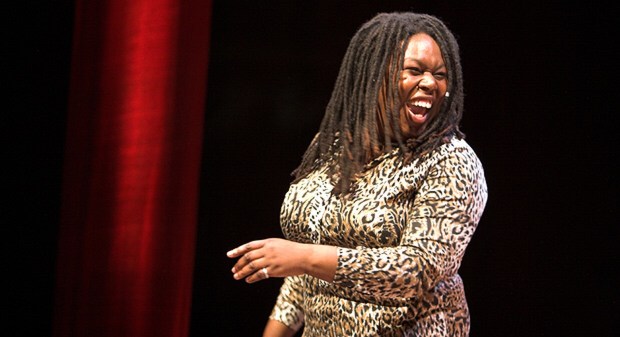
I adore animals, certainly more than I like humans, and I think I missed my calling to be a zookeeper or conservationist. I can’t bear any depiction of animals being harmed on stage or film; even mentions of animal abuse is hugely upsetting. So, I found Stef Smith’s Human Animals a pretty horrible ordeal. Smith’s frantic, apocalyptic story captures society’s instinctive, “Must. Destroy. Everything.” response to the natural world threatening contemporary human sovereignty. As the government wreaks havoc on the natural world in the name of security, half a dozen civilians have a range of reactions to the animal population’s invasion of their homes. This visceral, destabilising drama blasts the audience with 75 minutes of shocking, reactive action as the infection spreads across species, but with the fast pace and constant suspense, it’s difficult to relate to any of the characters. Canny design avoids much mess and graphic depictions of the described carnage, but the narrated horror is all too easy enough to imagine from most modern nations, and his highly disturbing on several levels.

Lisa (Lisa McGrills) and Jamie (Ashley Zhangazha) are a young couple supposedly very much in love, though lacking chemistry. Lisa doesn’t like animals much, so isn’t fazed when the government starts killing off the wild ones who are trying to invade people’s homes. She’s had enough of birds smashing into her windows and either dying or injuring themselves. Jamie can’t handle the ruthless killing; his collapse is well written and convincingly performed. Lisa’s boss Si (Sargon Yelda) is one of “them”, a vile, slimy little man profiting from the disaster. Young activist Alex (Natalie Dew) has just returned from travelling abroad, but mum Nancy (Stella Gonet) still tries to treat her as a child. There’s a lot of gorgeous intimacy and tension between them, often diffused by their genial family friend John (Ian Gelder), who clashes with Si regularly in the local boozer. Otherwise, there is little contact between these conflicting personalities, but the reactions from each character to the growing destruction are heartfelt and saddening.

Smith’s best writing is her conflict scenes between the characters. The rest certainly isn’t bad at all, but the storyline requires either depicting the violent extermination of animals or copious narration. Her choice is understandable and, though well incorporated into natural dialogue, there’s a lot of describing. The design team (Camilla Clarke, Lizzie Powell and Mark Melville) work with director Hamish Pirie to break up the text effectively, with sound, lighting, projection and jets of paint constantly interrupting and surprising/startling the audience. Being constantly kept on edge for over an hour is exhausting, with the story causing additional trauma. As horrible as it is, the whole effect is intricately constructed and totes a powerful message.

Also of note is the set design. The cast and audience are inside a zoo-style animal enclosure, disempowering the characters and trivialising their problems because the outside world is dominant and ever watching. Though the set does not literally indicate the characters’ world and gives no hints of the government-ordered extermination and arson that they describe, its tranquillity is calmly sinister.

The production elements and dialogue are excellent, through the relentlessness of Human Animals can alienate – but that’s the point. It’s terrible, clever commentary on contemporary environmentalism, fear of social disorder and individuals’ reactions to what is effectively a civil war and its strong effect will be long remembered by this animal lover.

Human Animals runs through 18 June.

The Play’s the Thing UK is committed to covering fringe and progressive theatre in London and beyond. It is run entirely voluntarily and needs regular support to ensure its survival. For more information and to help The Play’s the Thing UK provide coverage of the theatre that needs reviews the most, visit its patreon.


Hardy Animal, Battersea Arts Centre

https://sites.google.com/a/georgetown.edu/mdarts/_/rsrc/1439559537290/units/unit-3/section-2/performance-laura-dannequin-s-hardy-animal/Dannequin.png

What happens when a dancer and performance maker loses the ability to dance due to chronic pain? She makes a solo dance piece with hardly any dance in it. A mix of emotive description, encounters with medical and health practitioners, and her own research tell the story of an injury and the subsequent pain that wouldn’t leave her body. Pointedly still and so quiet that she needs a mic, Laura Dannequin’s resilience makes a compelling piece of solo storytelling that mourns the dances her body wouldn’t allow her to make.

An impassioned monologue about all of the dances she wants to create is followed by a voiceover describing her dancing, whilst Dannequin stands perfectly still. Though her expression gives away nothing, she exudes a sense of loss; the simplicity and contrast between aural and visual imagery are captivating and heavy with grief. A sequence of small flexing movements of her bare back against a litany of treatments and diagnoses she sought from all over the world creates a similar effect, this one with added existentialism and frustration with a medical community that still knows precious little about the human body and its mechanisms. It’s captivating viewing in its simplicity.

Much of the piece examines Dannequin’s relationship with her body and her pain. It becomes a separate entity that she confronts with a range of emotions and dogged research to understand why hers is so persistent. There’s a scientific lecture on types of pain and her own educated theories, but like the rest of her piece’s components, there’s an emotional undercurrent that carries her words. A cathartic climax celebrates her mysterious recovery and the overarching effect is one of beauty and wonder.

Dannequin miraculously withholds the anger she is more than entitled to feel, instead she shares a grounded story of bodily rebellion imbued with emotion and strength. Hardy Animal is a piece of simple, quiet beauty that doesn’t let itself be bogged down with science or negativity.

Hardy Animal ran from 28-29 April and tours regularly.

The Play’s the Thing UK is committed to covering fringe and progressive theatre in London and beyond. It is run entirely voluntarily and needs regular support to ensure its survival. For more information and to help The Play’s the Thing UK provide coverage of the theatre that needs reviews the most, visit its patreon.

A Nation’s Theatre: Wail and The Beanfield, Battersea Arts Centre

For two months, theatre makers from across the country are coming to London to celebrate the state of British theatre. One of the A Nation’s Theatre venues is Battersea Arts Centre, currently hosting the double bill of Little Bulb’s Wail and Breach Theatre’s The Beanfield. Wail is an exuberant cabaret about whales and human expression; The Beanfield uses multimedia to examine the impact of police violence on peaceful people and the need to fit in. Though different from each other in content and tone, both Little Bulb and Breach play with performance conventions to create innovative new structures that are at the forefront of theatre performance.

WAIL_Little Bulb Theatre

There’s a lot of science in Wail, and a lot of musical instruments. Actor-musicians Clare Beresford and Dominic Conway, performing as themselves, also have boundless enthusiasm and impressive music repertoires. With material ranging from folk to metal, they share their enthusiasm for whales through songs alternating with monologues of scientific facts. Their charisma and cheer keeps these sections engaging, particularly with the addition of audience interaction. Though the overall energy is light and positive, Beresford’s melancholy for never actually seeing a whale in the flesh provides a bit of contrast to the Male Whale Choir, a hilarious whole-audience exploration of whale songs that males use when on the pull in the coastal waters of Madagascar.

There isn’t as much material on the promised exploration of why humans wail, but a song about why they sing songs is a tender, poignant homage to feeling fragile. This fun, frivolous show is light on the gravitas that a bit more time on this topic could bring, but Wail is still a wonderful, joyful piece as is. The symphonic final number is a fantastic climax wrapping up an excellent contribution to A Nation’s Theatre.

The Beanfield_014_please credit Richard Davenport

The Beanfield by Warwick University’s Breach Theatre wowed audiences at Edinburgh last summer, and understandably so. Drawing on the historic clash between new age travelers heading to Stonehenge and police fresh from the miners’ strikes, they add the framing device of a uni reenactment group researching the event in order to recreate it, and a counter narrative of a group of students going to Solstice. It’s a sophisticated script with plenty of absurdity to lighten the bleak depiction of police violence against unarmed civilians, but still serves as a potent reminder that this happens today in the UK and abroad. Part documentary, interview footage with witnesses on both sides is broadcast liberally; even though the inclusion of police is sympathetic, The Beanfield firmly supports the travelers. Rightly so – pregnant women and children were among the 600 or so attacked with truncheons and projectiles by 1000-odd police.

There is no explicit link between the Beanfield story and that of the contemporary, skeptical students at Solstice, but the inclusion of the latter provides some necessary humour. It’s not a needed subplot though, and detracts from the power behind the political statement of the Beanfield standoff. The script is a great collage of experiences past and present, the sweet naivety of students juxtaposing the atrocities that happened at thirty years previously. The Beanfield, a bit less polished than Wail, is still an excellent piece of theatre with some important thoughts on police brutality.

With multimedia at its forefront, The Beanfield captures the rapid-fire sensory bombardment of present day youth and the desire to instigate change as well as fit in with our peers. Wail, mostly analogue and much less angry, implies the importance of conservation and sympathy for all creatures, human and not. Both shows excellently address concerns of people in this country and experiment with performance, fitting contributions to A Nation’s Theatre.

Wail runs until 23 April, The Beanfield until 21 April then touring.

The Play’s the Thing UK is committed to covering fringe and progressive theatre in London and beyond. It is run entirely voluntarily and needs regular support to ensure its survival. For more information and to help The Play’s the Thing UK provide coverage of the theatre that needs reviews the most, visit its patreon.
The Broke ‘N’ Beat Collective, Battersea Arts Centre

https://i0.wp.com/www.20storieshigh.org.uk/wp-content/uploads/2016/02/Jack-and-Lateefah-1280x853.jpg

Kids have it tough, especially if they’re poor. Decreasing social mobility, higher costs of education and living, and decreasing welfare are trapping our future generations in inescapable cycles of poverty. They are just as aspirational as young people from more privileged backgrounds and aware of the opportunities they don’t have. They are angry, frustrated and lack the opportunity to constructively express their feelings that often go completely disregarded by more comfortable members of society.

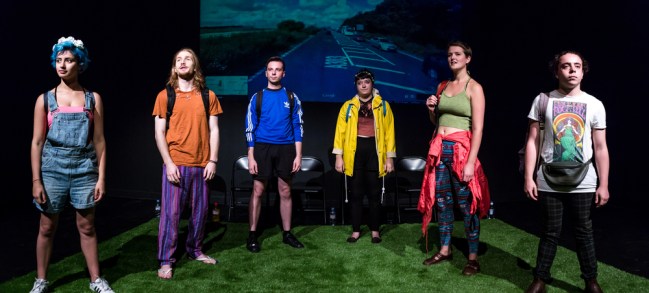
Theatre-Rites and 20 Stories High, seeing validity in their voices, worked with numerous young people in this demographic to devise a gig-theatre show that shares experiences of being a poor teenager in Britain today. The Broke ‘N’ Beat Collective is an empowering, important work that uses fantastic puppetry, mask and music to create a gloriously messy collage of young people’s concerns and issues. Structurally mirroring the rough and ready, fractured existence of urban youth culture, it rebels against theatrical and cultural preconceptions without apology for its flaws.

Elisha Howe’s (aka Elektric) soaring rhymes and Jack Hobbs (aka Hobbit) beatboxing energise the audience and establish a defiant, proud tone that carries through the show. They are not backing down, nor are B-boy Ryan Harson (aka LoGisTics) and puppeteer Mohsen Nouri. They literally zoom in on the tiny model tower blocks and street scenes of urban Britain, replicated in cardboard wonderfully extracted from the plain back wall, creating a landscape of alternating songs with monologues. These set pieces and puppets pass on the otherwise unknown life stories of young people they’ve met.

Omar is an insecure, confrontational grey hoodie that takes the whole show to find his voice. Jack’s a wannabe gangsta who knocks up Latifa (both with cartoonish, cardboard heads) and ditches her and the resulting child that reflects on how that’s shaped his life goals. Joanne is the Papergirl who cuts herself because her mum’s boyfriend abused her. There’s also the incredible Speaker Boy, a rotund, playful chap with a boombox for a head. Each puppet is as unique as the young person behind it, and just as inspiring. (Seriously, go look at the puppets’ photos in the gallery part way down the page; they are some of the most emotionally endowed bits of paper and foam I’ve ever encountered. All of these characters unashamedly demand attention with precise, evocative storytelling and a joyfully visualised presence. These stories are broadcast along side an ever-changing soundtrack with interjections of dance, banter and spoken word, simultaneously creating an atmosphere of celebration and seriousness. Though fun, it never loses the sense of the weight behind the work.

Despite the boldness in the work and the importance of its messages, there are some sloppy transitions that cause the piece to lose momentum. Elektric unnecessarily introduces each number by name, and there are some in-jokes between the performers that, whilst sweet, don’t carry energy with their small scale. This gives the whole piece a choppiness that makes it feel unfinished.

All four performers’ exemplary skillsets and vibrance are fantastic vehicles for the young people of this country seeking escape from the poverty that is so limiting to their ambition. Each moment connects to the next through a theme rather than a storyline, but the effect mirrors modern society: a bit messy, emotional and ambitious for a better life. The fun doesn’t override or trivialize the seriousness, and neither is it too weighty. The unpolished feel is very much ingrained in the gig-theatre style, and though it would be great to learn more about the characters presented, The Broke ‘N’ Beat Collective truly holds a mirror up to nature.

The Broke ‘N’ Beat Collective runs through 2 April.

The Play’s the Thing UK is committed to covering fringe and progressive theatre in London and beyond. It is run entirely voluntarily and needs regular support to ensure its survival. For more information and to help The Play’s the Thing UK provide coverage of the theatre that needs reviews the most, visit its patreon.

The Marvellous Adventures of Mary Seacole, Rosemary Branch Theatre

I had never heard of Mary Seacole until I began working in UK schools, several years after my arrival to the UK. What a woman!  No wonder her entrepreneurial, caring Victorian spirit is on the National Curriculum and she has been the subject of several plays, including Rosemary Branch co-artistic director Cleo Sylvestre’s one-woman show, The Marvellous Adventures of Mary Seacole. With a simple narrative structure, Sylvestre’s piece focuses on characterisation and biography. It is well performed, though some adjustments to the script and tech could make this an even better solo show.

We are never told who we are, but Seacole treats us like a society or club she has come to lecture about her life.  She speaks in the past tense shortly after her return from the Crimea; we hear her life story starting with her childhood in Jamaica, helping her mother run their Hotel, Blundell Hall and learnt about her “remedies” from foraging. Continuing onto her London, Central America and finally The Crimean War, Sylvestre endows her with a confident, charismatic warmth – no wonder she was so popular with soldiers and civilians alike. Her performance peaks when recalling her mother first teachings her about plants, and later memories of battlefields heaving with wounded soldiers – her “boys.” These are lovely moments to witness, but some of the more mundane content is delivered on autopilot.

Structurally, the script is a simple, linear narrative. This would be an excellent piece to tour to primary schools, as it’s easy to follow and has plenty of captivating anecdotes. The content is interesting enough to hold an adult audience’s attention for nearly an hour, but it would be a refreshing experiment to see this piece as episodic, with more lighting and sound than is presently used to highlight pivotal moments. This is not a new show, and solo performance has evolved since its inception. Sylvestre’s imagery-laden work would suit regularly used bigger projections, detailed soundscapes stronger lighting changes. Even though this is an important story, it is not an innovative production, but it certainly has the potential to be.

Cleo Sylvestre’s performance is the highlight of The Marvellous Adventures of Mary Seacole, but this long-running solo performance needs some revisiting to give it an extra burst of life worthy of such a vibrant character.

Running at The Rosemary Branch, 9-11 April.

The Play’s the Thing UK is committed to covering fringe and progressive theatre in London and beyond. It is run entirely voluntarily and needs regular support to ensure its survival. For more information and to help The Play’s the Thing UK provide coverage of the theatre that needs reviews the most, visit its patreon.

Mirrors, Rosemary Branch Theatre

rsz_tim_smyth-mirrors-siobhan_mcmillan_54

Photography © Tim Smyth

Maybe the witch in Snow White isn’t that bad. Or, maybe her badness is justified, like she had a traumatic childhood or suffers from a mental illness. Siobhan McMillan proposes just that: Shivvers realizes she’s past her prime and, with insecurity taking over rational thought, she decides to hunt down the young woman who dethroned her from her position as the fairest in the land. This quest takes shape as a solo performance told in the third person, like a fairytale. McMillan regularly interjects with contemporary references and using sarcastic humour to great advantage, makes a strong comment on women’s insecurity about aging.

The use of third person narration is one of the more interesting features of Mirrors; it distances McMillan from the audience and herself. Her physicality and energy cannot be denied as she embodies the characters she simultaneously describes. The audience is told her story but has plenty to watch, and a liberal use of sound and vocal effects create a dynamic aural landscape, even if a touch too loud at times.

The use of an occasional live feed adds another visual layer by which the audience scrutinises Shivvers, but a backlight interferes. The intention shows good instinct by director Jesse Raiment. The set isn’t particularly dyanmic with its black flats and mirrors, save for the ornate frame mounted on a table centre stage – a symbol of modern obsession with female appearance and its dominance in Shivver’s life.

This feminist solo show is an excellent display of performance storytelling and a witty comment on modern life as a woman. Not just about aging, it also looks at female competition, the need to be desired and the perils of dating. With the opportunity of a longer run, Mirrors could upgrade its tech and design to create a more polished production matching its content, creating a piece great for touring small to mid-scale venues.

The Play’s the Thing UK is committed to covering fringe and progressive theatre in London and beyond. It is run entirely voluntarily and needs regular support to ensure its survival. For more information and to help The Play’s the Thing UK provide coverage of the theatre that needs reviews the most, visit its patreon.

One Under, Vault Festival

rsz_img_6902[1]

Amy Fleming’s dad committed suicide when she was four years old. Fleming struggles with mood swings and wonders if she’s “mental,” like her dad. Luckily, she studied Molecular Medicine before becoming an actor so she understands how genetics dictates our characteristics. She also knows that talking about our problems and developing positive habits helps us overcome them. Combining her science and performance backgrounds, Fleming’s One Under is part conversational lecture, part interactive game. She relies on narration, humour and audience involvement to share her message, but the piece as a whole feels unfinished. It’s a nice idea, but it lacks theatricality and detail.

There’s no character, just Fleming and her generally cheerful honesty. She relaxes the audience straight away and easily facilitates discussion. After a frank introduction about her childhood and how genes are passed from parents to child; there’s some framing by her biography and a multi-round game/quiz with easily answerable mental health questions. These two elements aren’t solidly connected to each other, and the piece’s message isn’t spelled out until the very end. Structurally, it’s weak. By that point though, the message is less interesting that the journey we took to get there and the camaraderie that emerges en route.

This solo show isn’t very theatrical, but it’s lovely for its warm cuddliness and playful approach to form. Fleming is clearly passionate about helping people improve their quality of life and their mental health, which is a commendable mission. Her openness and her anti-performance make me feel uncomfortable writing any sort of negative judgement – it’s such a personal piece. But at an hour long, glossing over parts of her past with some audience debate over quiz questions about how to approach mental health issues at work, there’s a noticeable lack of depth.

The Play’s the Thing UK is committed to covering fringe and progressive theatre in London and beyond. It is run entirely voluntarily and needs regular support to ensure its survival. For more information and to help The Play’s the Thing UK provide coverage of the theatre that needs reviews the most, visit its patreon.

Shifter, Crick Crack Club at Soho Theatre

Going to a Crick Crack Club storytelling event is a bit like joining a private members’ club. This club doesn’t have strict entry criteria, nor is it cold and exclusive – quite the opposite. A welcoming spirit of community and the use of ritual enhance Jan Blake’s and TUUP’s four globe spanning stories. The first half of the two-hour, four-story Shifter has sturdier narratives, but the tales of trickery and metamorphosis interspersed with simple call and response create a magical, engrossing evening despite a few structural shortcomings.

We begin in Scotland, where young prince Raymond on a hunting trip meets a beautiful woman in the depths of the forest. He takes her home and the two soon marry. After many years and the births of their ten children who all have some sort of foreshadowing deformity, the prince makes a surprising discovery after spying on his wife whilst she bathes one evening. After a public reveal, the myth quickly relocates to a chateau in France, where inexplicable marks on a high window ledge are made clear. The prince is very much the victim of his bride’s deceit, but their love is also held up for admiration. Told by TUUP, this story is particularly male focused, demonising the female but also giving her power. It would be an interesting experiment to see what a woman storyteller could bring to this story. The climax and denouement are rushed, but the final line satisfies. TUUP has a relaxed, magnetic presence and his delivery of this warped love story is endowed with empathy and respect.

Blake now takes us to the Gulla Islands off the coast of America, one of the first settlements by African slaves. This is a another love story, again with a man who falls in love with a powerful, shape-shifting woman. Mary is less friendly than Raymond’s wife, and the threat to hew new husband John is tangible in Blake’s telling. This unnamed tale alludes to Rumpelstiltskin and Sleeping Beauty with the prominence of a spinning wheel and mysterious nighttime happenings. The strongest of the four stories in Shifter, its madness and imminent danger give this story a thrill, heightened by the various percussive instruments TUUP uses to accompany.

After the interval, two tribal, pre-Christian tales evoke the savannahs of Africa and the prestige that comes with being a successful hunter. The morals in these stories aren’t about the fear of powerful women in the Christian West; they more broadly apply to all humanity – don’t allow yourself to lose sight of your life goals, and practice rather than magic will bring you success. This half has a more epic sense of coverage, but the narrative arcs are less familiar to Western stories. They are more rounded, with a greater sense of the world outside of the characters; this makes them initially unsatisfying, but more universal.

TUUP and Blake both have natural warmth and charisma that draws in the audience like a hug. They are energetic but not ostentatious, simply relying on the rhythms and language of their stories. Much of the pleasure from Shifter comes from their presence, though hearing these stories grants a comfortable sense of inclusiveness despite some rocky moments in the stories themselves.

The Play’s the Thing UK is committed to covering fringe and progressive theatre in London and beyond. It is run entirely voluntarily and needs regular support to ensure its survival. For more information and to help The Play’s the Thing UK provide coverage of the theatre that needs reviews the most, visit its patreon.