No Particular Order, Theatre503

by Laura Kressly

An Optimist’s Take

Children’s TV performer Fred Rogers once said, “When I was a boy and I would see scary things in the news, my mother would say to me, “Look for the helpers. You will always find people who are helping.” Though horrific events drive Joel Tan’s eon-spanning play, it celebrates those who get us through the worst of times.

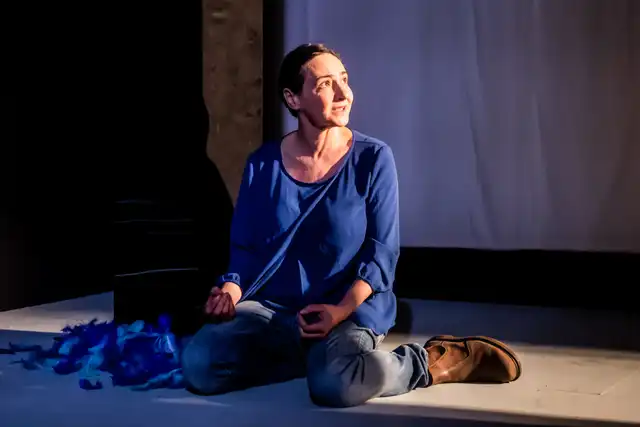
Four actors (Jules Chan, Pandora Colin, Pía Laborde-Noguez, and Daniel York Loh) play what feels like dozens of characters across multiple cities, nations and worlds over more than 300 years. The people we meet in each self-contained scene of the episodic script are unrelated to all the others; instead they are brought together by survivorship and hope. The cumulative effect of these people and their experiences is one where they blur into each other regardless of when and where their scenes unfold, but this doesn’t matter. It also tests the limits of each actor’s range with varying results – some characters aren’t particularly distinct. However, what resonates is that humanity keeps going because of its drive to look after each other.

Ingrid Hu’s set design is simple, but soft and timeless. White and black cloth forms a textured back wall and a pillowy, cloud-like ceiling that gently holds the cast of four. The transitions between each scene are clearly signalled with lighting and sound motifs. Their predictability is somewhat comforting because we know that despite the horrible things the characters experience in any given moment, their lives will eventually improve.

Though it would be great to have more time with some of these characters and see how their stories unfold, by the end the human race-wide perseverance serves as a reminder that we are more powerful as a collective rather than individuals during times of adversity. Though this is an intimate staging with a small cast, it is boundless in its esteem for humanity.

A Pessimist’s Reflection

An eternal truism of the human race is that we are and forever will be awful to each other. In Joel Tan’s eon-spanning play, which is essentially a collage of short scenes both on our planet and beyond, his vast collection of characters inhabits times and places where war, dictatorship and violence shape their lives.

The cast of four (Jules Chan, Pandora Colin, Pía Laborde-Noguez, and Daniel York Loh) play what feels like dozens of characters across multiple cities, nations and worlds over more than 300 years. The people we meet in each self-contained scene of the episodic script are unrelated to all the others; instead they are brought together by shared horrific circumstances. The overarching effect is one of the never-ending despair and suffering that shape the human condition. There are no meaningless platitudes about things eventually looking up or rose-tinted views of the real world; instead we are reassured that our individual pain is real, but shared. Everyone is going through it, and always will be.

Designer Ingrid Hu uses drapes of plain black and white cloth to lower the theatre’s ceiling and line its walls. The neutral colours and pillowy shapes dampen the sound and create a timeless claustrophobia from which the cast cannot escape. The stark palate evokes the good-evil binary that shapes each of these people’s existence. Militaristic sound effects underpin each transition and relentlessly propel time forward.

Though it would be great to have more time with some of these characters to see how their stories unfold, by the end of the play the relentless conflict between groups of people (and other creatures) remind us that ultimately, most of us have little to no power within society’s hierarchies. However, we must keep going despite the injustice we endure because this is what really makes us human. Though this is an intimate production with many moments of care, Tan’s play is an epic reminder that people never change and we must simply do our best to carry on.

No Particular Order runs through 18 June.

The Play’s the Thing UK is committed to covering fringe and progressive theatre in London and beyond. It is run entirely voluntarily and needs regular support to ensure its survival. For more information and to help The Play’s the Thing UK provide coverage of the theatre that needs reviews the most, visit its patreon.
Barry Humphries: The Man Behind the Mask, Churchill Theatre

by Bill Dyson

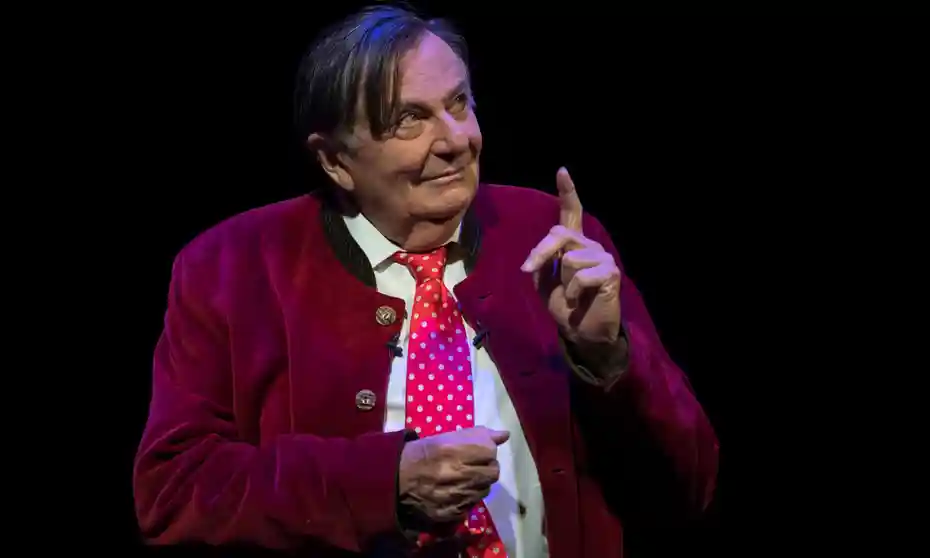
This is a terrific evening in which Humphries appears as himself with no disguises. This show is an exploration of his life and career, and what influenced and prompted him to ultimately become an international star selling out theatres in the West End and on Broadway.

Continue reading

Feature | Building (Hi)stories: Ladyfriends in Rehearsals

by Diana Miranda

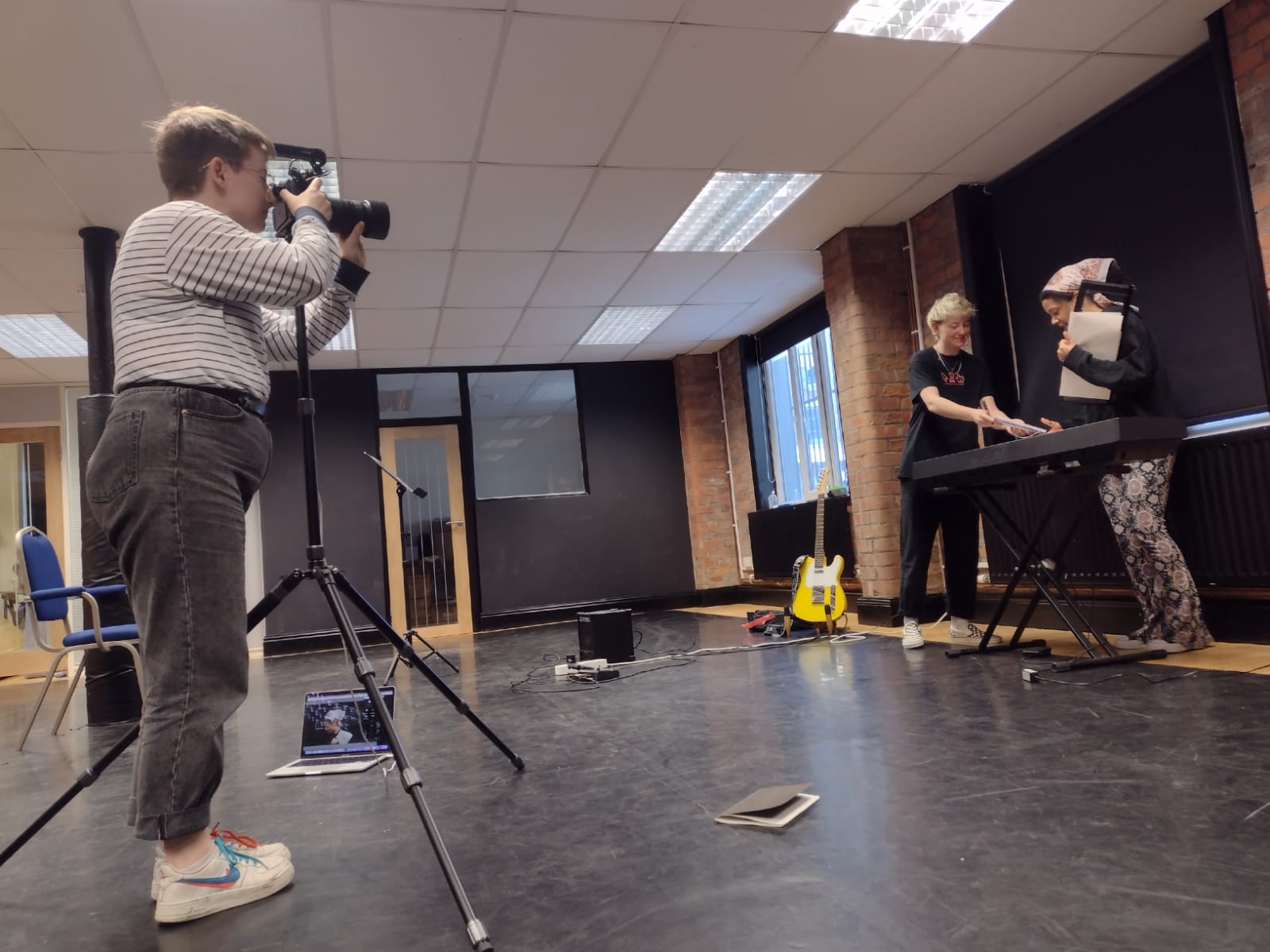
Period dramas have become the ultimate weekend watch according to trending British media. And while Ladyfriends, written and directed by Clodagh Chapman, is pretty much suffragettes Christabel Pankhurst and Annie Kenney’s story, this isn’t one of those dramas. Ladyfriends starts from the premise that Annie and Christabel are dating. Though historians dispute this based on ‘lack of scholastic rigour’, Chapman’s take doesn’t engage in these controversies and sees Chris and Annies’ dating as a fact. To her, a more exciting endeavour is to explore how people relate to history, and what lays behind re-visiting it and pursuing new readings.

Continue reading

Richard II, The Vaults

by Laura Kressly

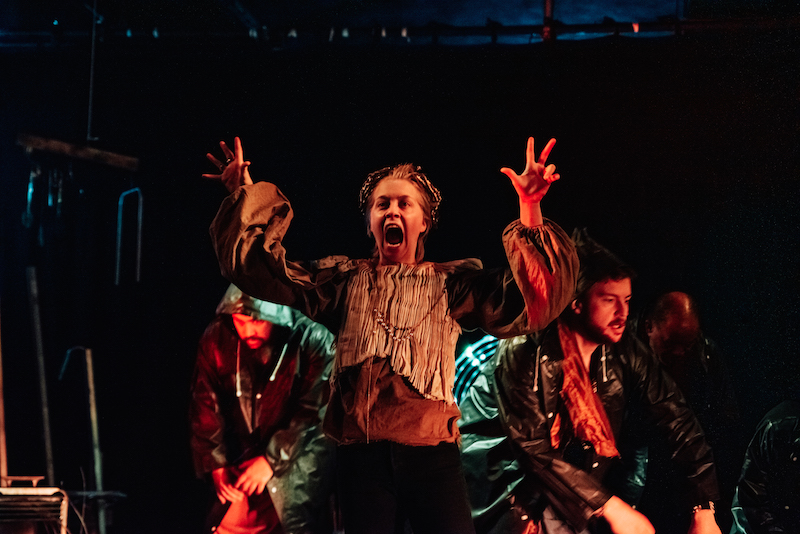
Shakespeare depicts Richard II as an ineffective and selfish ruler with little regard for his people or country. Instead of ruling fairly, he wastes the country’s money on unnecessary wars and steals from citizens to recoup the costs. In director Annie McKenzie’s production, this results in a kingdom ridden with violence and poverty, signified by costumes little more than filthy rags, copious stage blood, and recurring fights. This concept largely works but is undermined by a slow start, unneeded movement sequences, and some inconsistent handling of the text. Though the second half dramatically improves, the first is somewhat baggy and lacking in urgency, reducing the cumulative impact of the whole.

Continue reading

CONCHA, Brixton House

by Diana Miranda

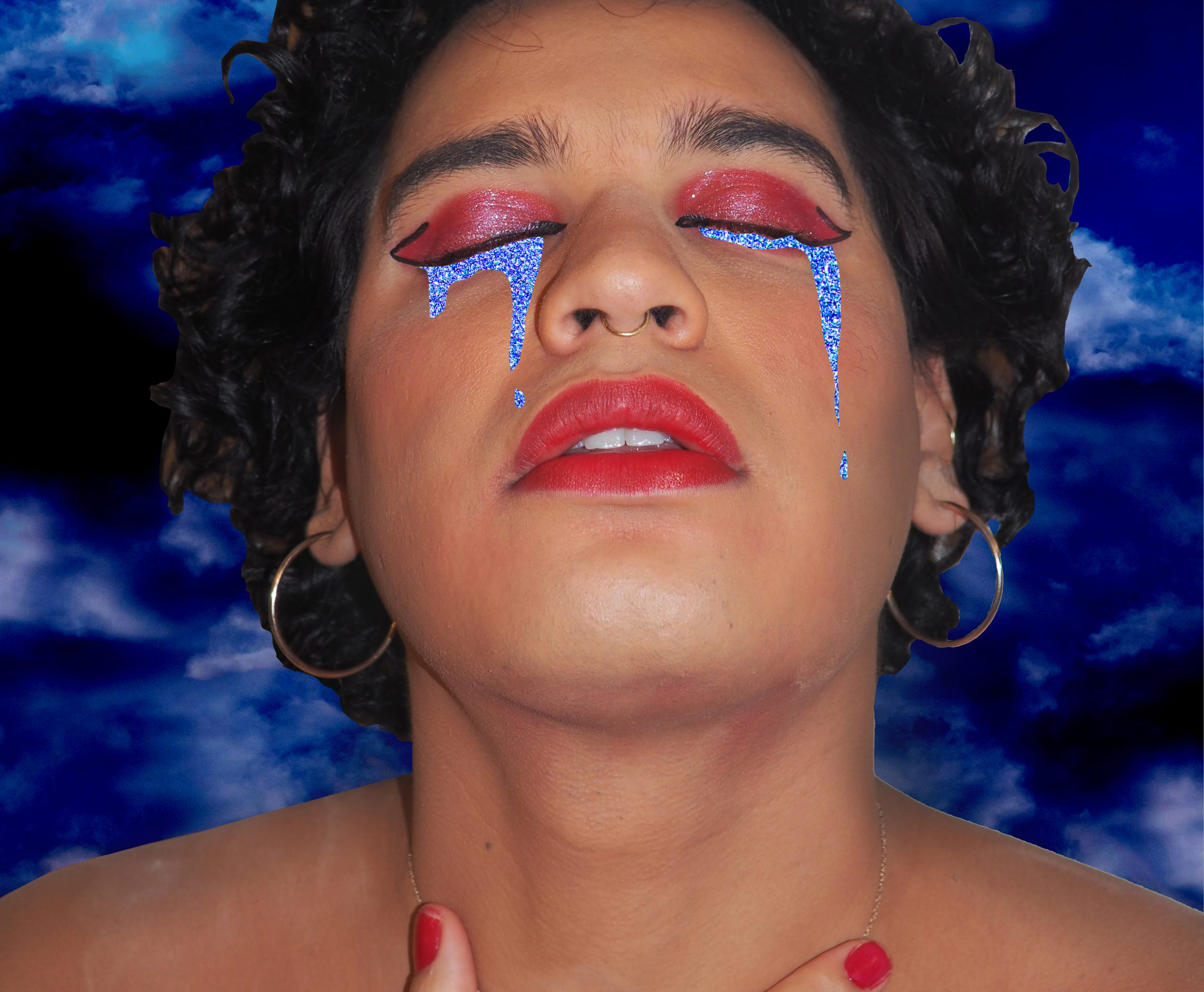
As part of The Housemates Festival, City Lighthouse Theatre Company presents CONCHA, a one-person show (written and performed by Carly Fernandez) telling a semi-autobiographical story about intersectionality of queer and immigrant experiences in the UK. After the protagonist finds out they’ve contracted an STD, they navigate past and current relationships interacting with multiple characters through voice-overs.

Continue reading

Eating Myself, King’s Head Theatre

by Diana Miranda

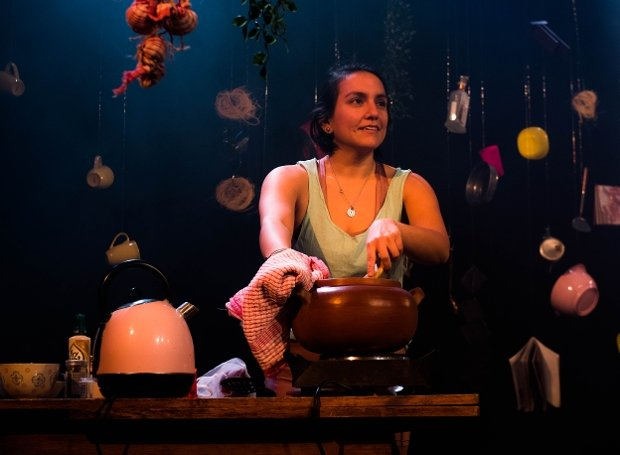
Unfussy and rich – that’s what Eating Myself is, in a good way. Although, one of the key takeaways from this one-woman show is that no rich Peruvian dish goes without a fuss. Eating Myself is an endearing monologue by Pepa Duarte about food that navigates the intersections between body stereotypes, family, traditions and cuisine.

Continue reading

For Black Boys Who Have Considered Suicide When the Hue Gets Too Heavy, Royal Court

by Romy Foster

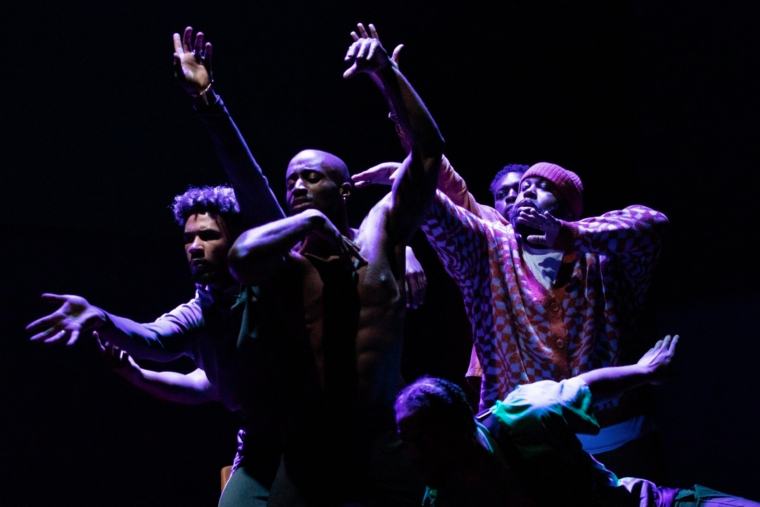
Frank Ocean fills the air, and audience members tap their feet and nod their heads in time. I jokingly ask my mum if she recognises the song as I recall how I wailed and begged about 10 years ago for her to download his album onto her iPod. Indulging in Frank Ocean’s music is like a Black right of passage. I don’t know anyone who doesn’t adore his range, and if you don’t – you’re lying.

Continue reading

Bacon, Finborough Theatre

by Laura Kressly

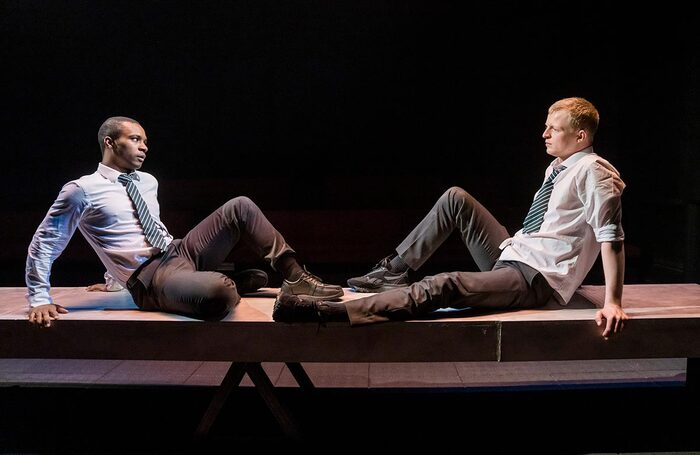
Toxic masculinity is entrenched in contemporary life, from wider political and social systems to the minutiae of our daily interactions. It doesn’t just harm women; it also broadly shapes men and boys’ relationships with each other. One way this manifests is through displays of overt heterosexuality and other stereotypically masculine behaviour particularly in places like schools, where teenage boys constantly scuffle for power and try to fit in. Any new students need to quickly find their place in the hierarchy, preferably near the top. However, those who are already there sense their position is precarious so they bully anyone that could be perceived as a threat. Darren is one such lad who senses weakness in the quiet and bookish Mark who just joined their year 10 cohort, but Darren also senses something in himself that he believes must be kept in check.

Continue reading

Feature | Sombreros and Other Stereotypes: rehearsing Playing Latinx

by Diana Miranda

Playing Latinx is a co-production by Guido García Lueches and MarianaMalena Theatre Co. The script is inspired by Guido’s real-life experiences auditioning within the UK theatre and film industries, navigating the exploitation of Latin stereotypes, and the thin line between going harmlessly along and complying with problematic myths. The Latin American theatremakers have devised a one-person show in which they’re doing and saying all the wrong things, Guido tells me, but making sure that people know it’s all wrong.

Continue reading

Playing Latinx, Camden People’s Theatre

by Laura Kressly

Guido Garcia Lueches is an actor from Uruguay who lives and works in the UK, which means that xenophobia and racism shape his day-to-day life. When he’s not attending auditions where he is asked to embody Latinx stereotypes, he regularly endures microaggressions from British people. This constant stereotyping is so unrelenting that he’s made a satirical, interactive show about the importance of fitting in as a migrant.

Continue reading