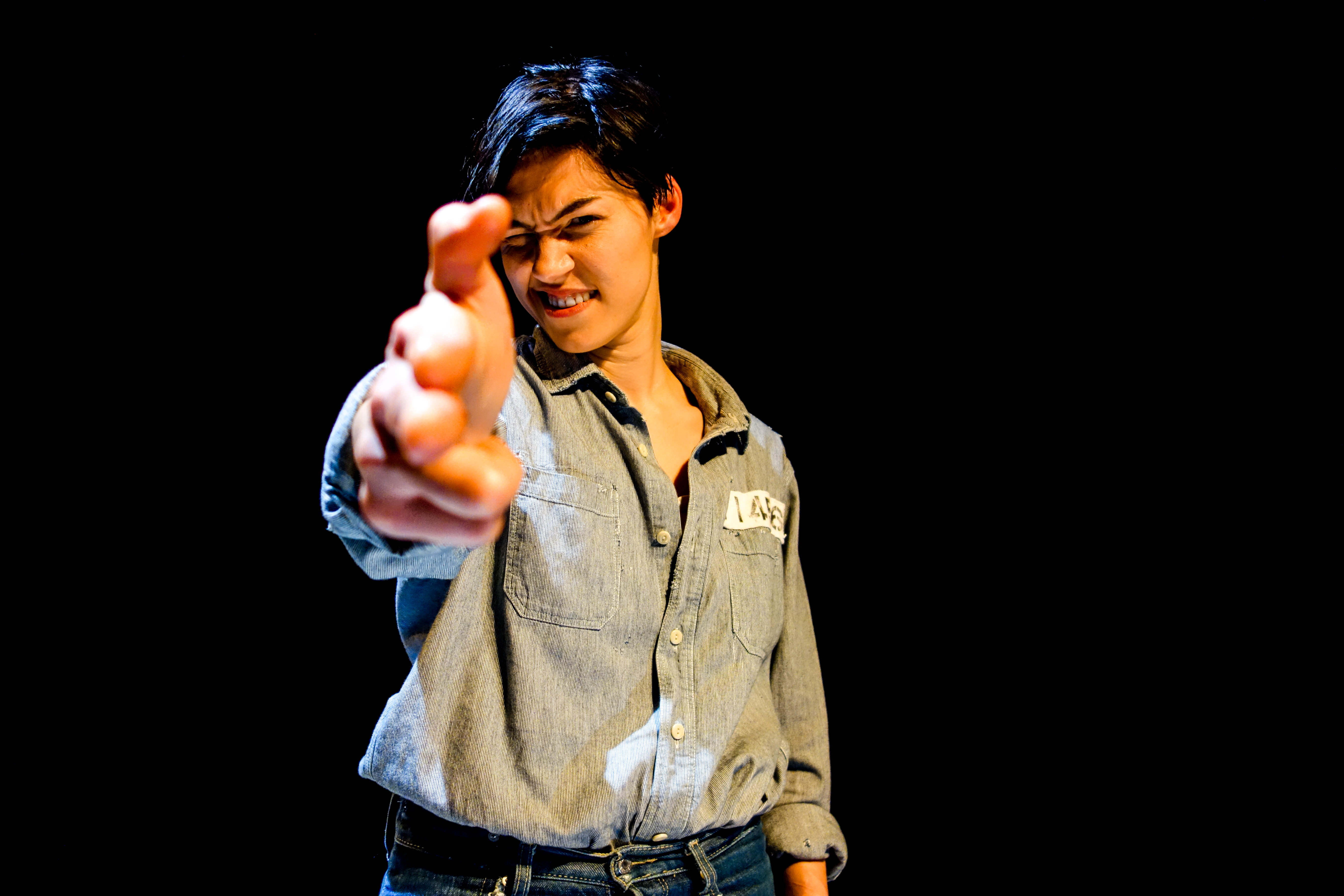
They are new to the King’s Head, but Charles Court Opera aren’t new to pantomime. This year’s Mirror Mirror: A Snow White Pantomime is their ninth “boutique” panto. Though an opera company, this show and cast of six are anything but stereotypical opera fare. John Savournin’s script is fresh and witty, the performances are camp and vibrant, and the re-written pop song soundtrack is so well sung that it deserves a cast recording. There’s plenty of typical panto interaction, made easier and more personal in a fringe venue but doesn’t overwhelm the space, either. Though the costumes are detailed and fun, the set is a bit analog and takes up a lot of playing space, restricting movement and choreography. Some of the performances were more genuine than others, but this remains a wonderfully current panto with excellent writing.
Savournin also directs and plays Snow White, the ditzy, ingénue widow of Barry White living with the seven dwarfs, all distinctly and energetically played by Matthew Kellet. Greedy queen Andrea Tweedale uses her mirror (Simon Masterton-Smith) to help her search for a husband, but her plans are thwarted when prince Larry Black (Amy J Payne) and his valet Harry (Nichola Jolly) show up looking for a bride and instead of being impressed by her beauty, Larry falls for Snow. The traditional story veers off in numerous contemporary directions from there, which adds to the audience’s delight and prevents the show from becoming stale or generic. The music is mostly cleverly reworked pop songs, but there’s a bit of musical theatre thrown in and the Act one Finale numbers are fantastic.
No individual performer overshadows the others, instead they are a balanced lot with clear strengths. Payne and Jolly are a charismatic pair, with Kellett’s range of dwarves a hilarious counterpoint to the leads. Savournin’s Snow is shallow but sweet and doesn’t fall short in any of the creative roles he takes on. Tweedale stokes the audiences’ booing and aww-ing brilliantly. The height difference between Savournin and Payne supports the comedy heavily peppering the dialogue, as does the cross-gender casting that goes beyond the dame and principal boy. There is some lovely chemistry between some of the characters but even though it’s a panto, there could be more between Payne and Savournin.
There’s loads of audience interaction and mess, the best being a Great British Bake Off-style competition that results in dough everywhere. Of course, there’s your usual panto call and response but not so much so that the script is otherwise flimsy. The unique visual gags Savournin employs are much more satisfying, anyway (pro tip: look out for Barry). A few give a nod to tradition, but this is definitely a language-focused script. This gives the performance a richness and depth missing from more traditional fare, hence the “boutique” label. Charles Court Opera is certainly onto a winning formula here within London pantomime offerings and is not one panto fans should miss.
The Play’s the Thing UK is committed to covering fringe and progressive theatre in London and beyond. It is run entirely voluntarily and needs regular support to ensure its survival. For more information and to help The Play’s the Thing UK provide coverage of the theatre that needs reviews the most, visit its patreon.

 It’s panto season, and our stages are filled with villains, heroes and dames. Playwright David Bottomley’s new work-in-progress has some passing resemblance to the characters in Britain’s traditional seasonal offerings, but his new play on the London housing crisis is darker, angering fare. Capturing its victims’ lack of power and its perpetuators’ greed, Skyline doesn’t offer a solution but still states a clear opinion on the issue. With a cast of five playing seven characters, the audience sees a microcosmic cross section of social classes who, with poetic and pointed language, are a powerful reminder of the importance of secure housing. There is still some work to be done on the script, but the staged reading in conjunction with a pre-show talk and an exhibition by
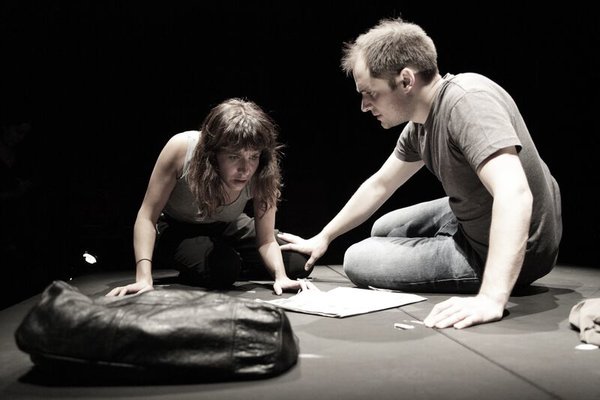
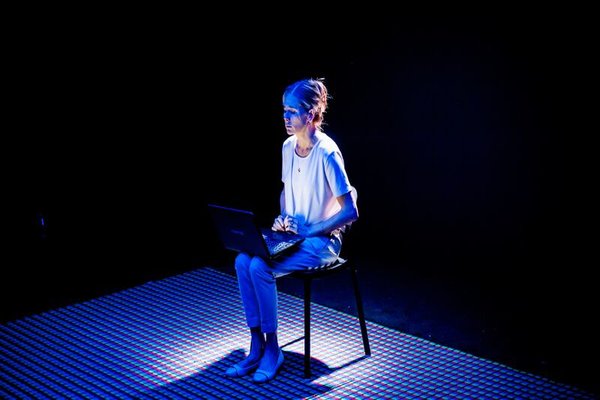
 Frankly, this is a crucial piece of theatre that all young people growing up in our cyber-obsessed culture should see. With simple design elements that draw attention to the dialogue and story, it would be easy to tour this powerful production.
 Nearly everyday we see news of refugees fleeing war torn lands in search of safety abroad. No matter how the press spins objective facts to suit their own agenda and their readers’ opinions, the perspective of these events unfailingly separates “them” from “us”. These people running for their lives are The Other that we must either keep out or allow in. It’s all very black and white, heavily doused with an air of superiority; we either look down on them as vermin that need controlling or as victims that need handling with kid gloves. We never really hear from these refugees, though. It’s all, “me, me, me” and a flamboyant display of either virtue or condemnation.
 Romeo and Juliet gets a modern, interspecies remix by Rita Kalnejais in the south London-set First Love is the Revolution. Awkward, lonely Basti (James Tarpey) is trying to make the best of his teen years in a broken home when he meets Rdeca (Emily Burnett), a sassy fox cub hunting on her own for the first time. With Rdeca’s family not the most functional either, the two black sheep find solace in each other when they discover they understand each other’s speech. Using a bold metaphor for the deliberate choice to alienate or accept of The Other, this urban adventure through back gardens and fox dens is simultaneously funny, brave and disturbing, whilst excellently performed and with writing that keeps the audience on its toes.
 “Netflix and chill” takes on new meaning in Five Guys Chillin’. Well, the “chill” part does, and is also substituted with “chill out”. Rather than awkward hetero teenagers using the word to arrange a sexual encounter, in this context it’s multiplied by whatever factor the host fancies to make a drug fuelled sex party, usually in someone’s home. The verbatim play, carved out of more than 50 hours of interview transcript, graphically details typical chill out behaviour as well as frank discussion of issues within the gay community. Despite many funny moments, some great staging, and the raising of important points, there is precious little plot; this makes the production more of a live interview with the questions omitted rather than a play that tells a story.