Edinburgh Festival Fringe, 13 August: Part Two

Camilla Whitehill’s Where Do Little Birds Go? tells the true story of Lisa Prescott, an 18-year-old nightclub hostess kidnapped by the Kray twins in 1966. Re-named Lucy Fuller, Jessica Butcher tells Prescott’s story through this harrowing solo performance. Humour and music are used to break up the horror of Fuller’s imprisonment with an escaped murderer who rapes her for hours on end, but some of the music transitions feel forced. Lucy loves singing; Butcher shares this love with gusto. She also wonderfully and ever so slowly transitions from the bright eyed, bushy tailed girl from Hastings who moved to London with hopes, dreams and £5 in her pocket, to a quietly streetwise, mature young woman.

Whitehill’s script contains some witty one-liners but doesn’t shy away from graphic incidents, like Lucy adventures as a nightclub hostess who offers “afters” to her best clients, and her experiences at the hands of the Krays. Justin Nardella’s set is Winston’s, the Mayfair club where Lucy worked before her capture and after her release. It cleverly uses sturdy levels to break up Fuller’s movements, but some of director Sarah Meadows’ blocking feels arbitrary. Meadows does have a good sense of storytelling, but struggles with the script’s abrupt ending. The audience never learns the how Lucy regained her freedom, though Butcher’s excellent performance draws attention away from this issue. Overall, this is a good offering from Duckdown Theatre and Heavy Weather Theatre that with further script development could be an excellent play.

https://i0.wp.com/lovelettershome.org/wp-content/uploads/2015/08/Love-Letters-Summerhall.jpgMy last production of the day is Katharine Rose Williams Radojičić’s Love Letters to the Home Office, which receives a one-off table reading at Summerhall. This is one of the most important plays of contemporary British theatre. Not because of innovation or style, but content: it exposes the consequences of the 2012 Home Office legislation that breaches the human rights of an estimated 50,000 families in the UK.

This new ruling states that in order for a UK citizen to bring their non-European spouse into the country, the UK partner must earn a minimum of £18,600 a year or have £62,500 in savings. With travel and technology connecting people unlike that in past generations, couples forming from all corners of the globe are becoming more and more common. The income requirement discriminates against the working poor, though. It means that if the UK partner earns the minimum wage, they must work 60 hours a week. People who work in many jobs vital to UK societal function would not be able to living in the UK with their non-EEA partners. Such roles include teaching assistants, cleaners, caretakers, administrators, technicians, support workers, receptionists, and so on. The non-EEA partner’s income and savings are not considered in the application. Basically, if you are poor, you better fall in love with someone that is a European citizen or you will not be able to live together as a married couple unless you leave the UK.

Love Letters to the Home Office uses verbatim theatre from real-life people affected by this ruling. It is a politically charged play with a clear agenda: to spread the word about this home-wrecking Tory ruling. The stories are heart rending. A little boy stranded with his mum in America calls his Samsung tablet Dada. A single mum who can’t earn the required income because she is caring for her daughter must wait until her daughter’s old enough to go to school before increasing her working hours. A woman from the Philippines is unable to attend her husband’s funeral in the UK because her visa application had been rejected. These stories go on and on. There’s also a lot of factual information in the script that quotes from government legislation and academic studies amongst the actual stories. I struggle to imagine a dynamic staging and want to hear more first-hand accounts, but the script content is still hugely powerful and a motivational call to action.

The programme contains advice on how to engage politically if you are moved to act. It also has links to the project’s website, with many more accounts from people affected by this law. The website also allows for contributions, which opens the play to potential of constant change. The script could alter with every performance in order to provide a voice for these oppressed people who did nothing more than fall in love with a non-European whilst earning less than £18,600 a year.


The Play’s The Thing UK is an independent theatre criticism website maintained voluntarily. Whilst donations are never expected, they are hugely appreciated and will enable more time to be spent reviewing theatre productions of all sizes. Click here to make a donation with PalPal.
Edinburgh Festival Fringe, 13 August: Part One

It’s fair to say that I’m not generally drawn to comedy or light subject matter. My favourite theatre is intense, serious and powerful, often with a heavy dose of suffering and/or death. I might need a break from all the despair after today, though. From mental health to forced prostitution to the government breaking up families, I’ve been put through the emotional wringer. These four productions are radically different in style and execution, catering to diverse audiences, but all are excellent offerings at this year’s fringe.

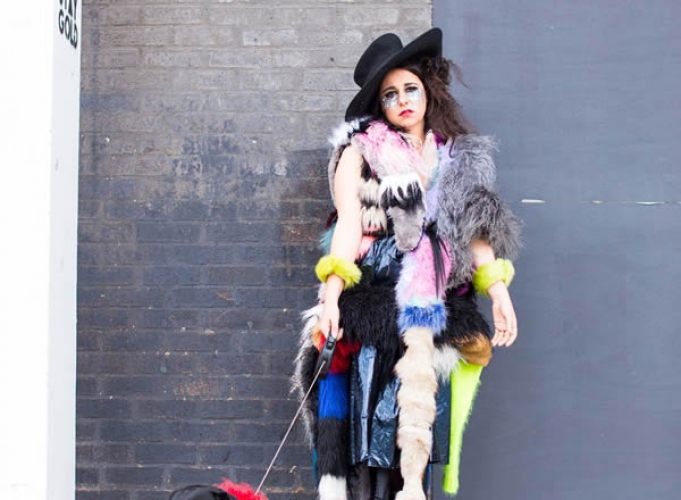
my-beautiful-black-dog_681x500My Beautiful Black Dog at Udderbelly Cowgate is a rock musical/gig/spoken word/live art show created and performed by southeast Londoner Brigitte Aphrodite. It celebrates her depression, or as she calls it in attempt to accept it as part of who she is, Creshendorious. There is glitter and sequins everywhere, emphasizing her party girl highs and contrasting her lows. Aphrodite is honest, frank and a highly skilled wordsmith in her songs and spoken text. Her songs manage to be both dry and celebratory; they create a party-like atmosphere that has the audience dancing and laughing along. It is rough and ready, and intimate, like a secret basement gig by your favourite band. The projected images and song titles added an element of set, but weren’t particularly needed and sometimes hard to see on the theatre’s brick back wall. On stage with her is Quiet Boy, who provides backing vocals, guitar accompaniment and a character who tries to coax her out of the road case she sometimes hides in, but it is very much Aphrodite’s show.

The party vibe abruptly drops when Aphrodite reads a (glittery) letter that explains exactly how she feels when she is fighting her black dog. Her honesty is brutal, but necessary. My Beautiful Black Dog takes a (sequined) tyre iron to the stigma and silence surrounding mental health issues. In these moments, the shine is a shallow sticking plaster, trite and useless. Rather than ending on a somber note, she ends on a song – not a happy ending, but a hopeful one. Aphrodite knows her depression will return, but next time may it be with understanding and acceptance from those around her. This production is difficult to experience, particularly if mental health issues affect you. It forces open a dialogue about mental health issues and even though it a (sparkly) genre mash-up, it is a vital show that could be scaled up to a big show, complete with lights, confetti and the sparkle it deserves.

Blind_Mans_Song,_Edinburgh_Fringe_2015,_courtesy_Francois_Verbeek_1_751x500Blind Man’s Song in Pleasance Dome is Theatre Re’s non-verbal dance theatre offering this year. As blind man Alex Judd plays keyboard and electric violin, a masked Guillaume Pigé and Selma Roth personify the images and emotions in his head. There is love, violence, travel, and a host of other encounters between the characters. There are moments of narrative, but this piece is very much open to individual interpretation. A simple, black set paired with smoke, side lighting and timeless costumes evokes the silent film era or a painting coming to life. The soaring emotion in the blind man’s music could imply that these are his memories or dreams. The mood and music varied enough throughout to maintain audience attention, and the performers’ skills in dance and mime were evident. It’s a captivating watch, if a little long. Sadly, some of the audience members were less appreciative. An older couple noisily left part way through and an American voice a few rows back at one point proclaimed, “This is stupid.” Abhorrent behaviour.

The music is richly augmented by a recorded track, but deliberately repetitive and grating at times. I found my mind wandering occasionally, but this was due to a moment triggering my own imagination. The young boy sitting in front of me had some lovely responses to the piece that drew my eye away from the stage: at times he conducted the music, at others he swayed mirroring the performers on stage, or wiggling abstractly in a dance of his own. Blind Man’s Song certainly triggers strong reactions from its audience though strangely, not all positive. It is a meditative, evocative performance if an individual permits it to be, but perhaps a challenging offering to our short attention spans.


The Play’s The Thing UK is an independent theatre criticism website maintained voluntarily. Whilst donations are never expected, they are hugely appreciated and will enable more time to be spent reviewing theatre productions of all sizes. Click here to make a donation with PalPal.

Goodstock, Edinburgh Fringe

4619333323_702x449If you’re a woman with the BRCA1 gene, you have a 40% chance of developing ovarian cancer, and an 80% chance of developing breast cancer. Olivia Hirst is a playwright and actor. She has the BRCA1 gene and a family tree peppered with ancestors and family members who died from these cancers. Among those are her aunt, and her grandmother Elizabeth who survived a cancer diagnosis. Being a performing artist, Olivia wrote an autobiographical play about having BRCA1. Lost Watch’s Goodstock affectionately presents the major, real-life decisions she must make with humour, frankness and music.

An episodic structure frames the stories of numerous characters, with a particular focus on Olivia and her family. Illona Linthwaite plays her spunky and caring grandmother, Rianna Dearden plays Olivia’s parents, several doctors and Olivia’s aunt, as well as a host of musical instruments during scene transitions. Olivia plays herself. The cast of three clearly demonstrates great conviction in their story, endowing each character with charm and honesty. They often employ direct address, creating a relaxed, conversational environment. Olivia’s script cleverly utilizes levity, storytelling and meta-theatre to contrast quite a lot of science and grief, creating a well-balanced production. It could easily tend towards sentimentality, indulgence or preaching, but instead manages to be both informative and heartwarming.

One of Olivia’s decisions is what kind of preventative surgery to have. Medicine recommends breast removal by age 30, and the ovaries by age 35. Olivia is 26. She’s also recently single and faces the consequential decision of how to deal with becoming infertile. But, does she risk passing down this gene to her children if she can’t afford embryonic screening? It’s a lot for a 20-something to deal with, and her inner conflicts move the audience to tears.

There’s a lot packed into this gem of an hour-long play, but the only unclear aspect is what Hirst and the company want the audience to take away. It is a celebration of life, and raises awareness of what life is like for young women who know they have the BRCA1 gene, but this microcosmic biography doesn’t convey one particular message. Regardless of this, it is a wonderful piece of theatre with skilled performances and a distinctive writing style that is a vital contribution to this year’s Fringe.


The Play’s The Thing UK is an independent theatre criticism website maintained voluntarily. Whilst donations are never expected, they are hugely appreciated and will enable more time to be spent reviewing theatre productions of all sizes. Click here to make a donation with PalPal.
Heresy of Love, Shakespeare’s Globe

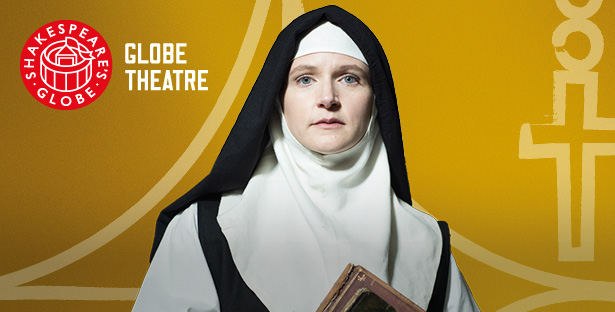
web.phpSor Juana is a great writer of plays and poetry known throughout Mexico, or ‘New Spain’ as it’s called in the 1600s. She is a scholar with progressive views on women’s rights and unafraid of expressing them. Juana has also committed herself to the prayerful life of a convent nun. Newly appointed Bishop Santa Cruz seems supportive of her unconventional activities, but the older, more conservative Archbishop Aguiar y Sejas from Spain adamantly opposes her. Her father confessor, Fray Antonio, balances precariously between the two men’s views as Juana faces the risk of a heresy charge and the Inquisition. Outside the convent walls, there is conflict between the church and the secular court and within the convent and the plague is coming. Heresy of Love is a play that operates on many levels both microcosmic and globally. It is blatantly feminist but also looks at how horribly women can treat each other, male conflicting attitudes towards women, and confronts issues within the Catholic church. The script captures the style of Spanish Golden Age plays: deception, politics, religion, danger, love and downfall are present in this intimate and moving play by Helen Edmundson.

An austere, black, metal structure partitions the length of The Globe’s stage between its dominating columns, hinting at the demure, ever-present convent walls. Against the richly detailed paintwork of The Globe and giant canvas prints of a religious painting I probably ought to know, it creates an ominous clash. It also blocks off the back of the stage and access around one of the pillars, but director John Dove and designer Michael Taylor have extended the thrust well into the audience to compensate. Though the set looked lovely and delicate despite its size, there is no need to cover and block off the back of the stage; it is a set in and of itself. Modifying the stage space, while able to give directors more freedom, alters the unique features of this playing space. In this case, the figure-of-eight path around the columns that supports conflict and tension is lost and the actors are placed deep into the round space. The actors are often stationary and so far forward that energy occasionally dips.

Nevertheless, all performances are excellent and, typical of Globe casts, the ensemble is close and completely in tune to each other. Naomi Frederick is a bold, confident Juana with the grounded calm of unwavering faith. Her reduction to a broken victim is heart rending. Her slave Juanita (Sophia Nomvete) provides wonderful comic relief though deliciously funny one-liners. The priests (Patrick Driver as Antonio, Anthony Howell as Bishop and Phil Whitchurch’s Archbishop) complement each other well, embodying distinct characters that capture the humanity behind the robes and inspire hatred from their treatment of Juana. Howell’s duplicity is unpredicted, creating a deeply conflicted character you love to hate. The only casting issue is a blatant lack of diversity. In a play set in Mexico with characters both native and Spanish, there is a glaring lack of Hispanic actors.

Heresy of Love premiered in 2012 at the RSC, but this is its first production in London. It is an accessible, relevant, gem of a play paying homage to Sor Juana, a genuine historical figure. These characters from the past with contemporary relevance are at home at The Globe and remind us that despite the progress we have made in women’s rights, there is still work to be done and we would do well to treat each other nicely along the way, despite any inner demons we battle.

Note: the performance reviewed was a preview.


The Play’s The Thing UK is an independent theatre criticism website maintained voluntarily. Whilst donations are never expected, they are hugely appreciated and will enable more time to be spent reviewing theatre productions of all sizes. Click here to make a donation with PalPal.
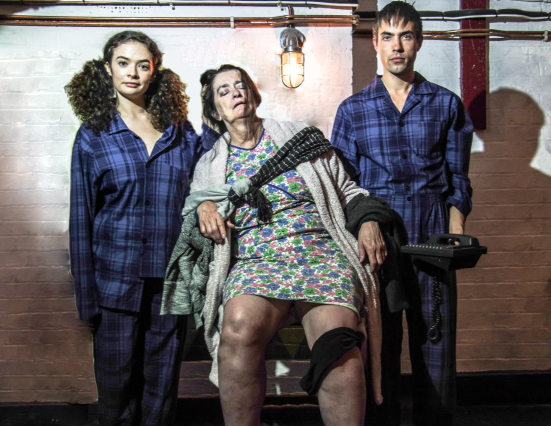
 

Greywing House, everything theatre

“One-person shows are extremely hard to create and perform effectively. It’s easy for them to be too long, too boring, too bizarre, too indulgent or too lots of other things. Greywing House uses poetic writing and language, puppetry and movement to craft a narrative that gradually exposes the otherworldly realities of coastal Greywing House and its proprietor, Miss Amelia…

“Miss Amelia is the epitome of polite restraint, akin to a 1950’s housewife…Mary Beth Morossa, the creator of the show, plays her with detail and sensitivity.

“The play mostly consists of lengthy monologues where we learn about Miss Amelia’s unfortunate family history…Most captivating are two tales told through puppetry…These are the most visual aspects of the show and excellent examples of storytelling…

“Morossa has an obvious gift for writing. She uses vivid imagery and poetry to draw in the audience. She tells the story clearly and with an effective narrative structure. There are moments of surprise and ambiguity that leave the audience questioning what is real and what is the product of madness. However, it is slow to develop…

“This is a one-person show that is not without potential but still needs development. Having debuted at the London Horror Festival last year, its creepiness works any time of year…”

Read the entire everything theatre review here.

Clap Hands, Hackney Showroom

CLAP HANDS - Promo Image colourThere are always multiple perspectives on an individual’s actions within an event. At Hackney Showroom, one of the newest London fringe venues that oozes industrial hipster chic, Pluck. Productions drives this home with a dense, character-driven one act. In a tiny studio space that only seats 20 people, Clap Hands by Aaron Hubbard poses questions about human behaviour and cause and effect. Can children be inherently disturbed? Should they be locked away for endangering others? Does over-reactionary imprisonment for childish behaviour cause derangement? Or, are we all just pure evil?

Ana (EJ Martin) and Gogol (Philip Honeywell) are brother and sister, kept in a basement bedroom by their mother. Martin convincingly plays young Ana without generalising or playing at being a child. She imbeds the innocence, spontaneity and obsessions in her characterisation, which is an excellent contrast to Honeywell’s creepy, calculating teenaged Gogol. Gogol has an obvious agenda that Ana doesn’t see, so she is easily manipulated into carrying out his insidious plans for freedom. The adult Detective Olyphant (Jeremy Drakes) is the sole representative of the wider community who hints at past offenses that led to Ana and Gogol’s confinement for the last 15 years. As he slowly questions the children, the audience begins to wonder what is real and what is the product of manipulation. Are the adults tyrannical, or are the children? The length of imprisonment also brings Ana’s age into question. Was she born into it recently, or has isolation from a young age kept her in a childish state? A horrifying ending effectively places blame with all parties, showing that juvenile crime, justice and society’s treatment of “The Other” are all complex issues with many sides to each individual case.

Even though the play only runs at an hour and a quarter, it packs numerous interrelated themes. Despite this, it isn’t over-saturated. The excellent performances and energy keep the first half of the play building nicely until the climactic middle when Ana carries out a crime Gogol planned without understanding what she’s doing or the consequences. From this point, the second half is slower. Olyphant’s investigations gradually reveal more of the characters’ history, but the slowing pace causes attention to waver, determining the first half as the stronger. A couple of Neil LaBute-style shocks enhance the thread of human depravity that runs through the piece, but the ending removes it from any contemporary British reality. It feels firmly 1970’s – 1980’s until the final scene, then becomes something not quite dystopian. The disorientation it causes could be a deliberate choice by the writer, but it does eliminate cultural context. The shock is effective, but removing the specific setting weakens the message about societal decay.

Despite the additional questions the play raises at the end, it is otherwise an excellent piece of writing with a stellar cast. Pluck. Productions are a prime example of the just how good theatre can be when experienced practitioners decide to make the work they want to do rather than relying on others to create work for them.


The Play’s The Thing UK is an independent theatre criticism website maintained voluntarily. Whilst donations are never expected, they are hugely appreciated and will enable more time to be spent reviewing theatre productions of all sizes. Click here to make a donation with PalPal.

Pieces, Rosemary Branch Theatre

web.phpI’ve seen theatre that seeks to raise awareness about all sorts of issues. Racism, classism, social justice, particular moments in history, individuals, you name it. I hadn’t seen a play about organ transplants and donation until Spare Parts Theatre Company’s one-person Pieces. Founded by actor and transplant patient Steven Mortimer, Spare Parts both raises awareness about issues surrounding organ transplants and fundraises for several related charities. Pieces tells the stories of six different people affected by organ failure and the need for a transplant. Mortimer performs six separate, extended monologues demonstrating that organ failure can hit any age, class or body type, causing life to stand still until that organ is found. Mortimer effectively plays a range of characters in scripts by a few different writers that vary in quality, but maintains audience focus for the 50-minute show and succeeds in reminding audiences about the importance of organ donation.

Piece 1: a Cockney ex-taxi driver sits in the back of a black cab on his way to hospital for a double cornea transplant, chatting incessantly to the unseen driver. His fear of death is evident in his regular conversation diversions to what it must have been like processing towards your hanging at Tyburn. Some of the topic transitions are rather jerky, but Mortimer smooths them over as best as he can. The ending also terminates abruptly and quickly; some time for the character’s reflection would have also given the audience additional processing time.

Piece 2: This is the weakest of the six pieces. The monologue is framed around a man watching his twin brother Jono run a 5k in preparation for the marathon. A year ago, this was unthinkable. Periodically, we hear a group of runners go past, but Jono isn’t there. The sections where he is waiting tend to ramble, but the ending is lovely even though a bit sentimental.

Piece 3: Johnny is a character similar to the visually impaired taxi driver in piece one; Mortimer struggles to differentiate the two. To add more space between them, this piece could have come later in the production, providing stronger contrast. He’s in an AA meeting sharing his life story. This piece becomes much more dynamic by focusing on Johnny’s drinking and homelessness and less on him needing a liver transplant. His emotional reunion with his parents after fifteen years also helps broaden the story; these wide themes indicate this monologue could develop into a play with additional characters and plot. This is one of the better plays because it provides us with a much broader picture of the character’s life.

Piece 4: Radically different in style. This fragmented fever dream from a scared child under anaesthetic is excellent. Obsessed with Doctor Who, the child’s thoughts flick back and forth through time, showing his fears and hopes for a life beyond dialysis. Mortimer could have played him even younger to have a stronger effect on the audience, though the language showed that John was quite young, no more than eight or nine years old. The sound design is particularly detailed, with a tardis motif.

Piece 5: Another child, this one is older and stroppy. He is struggling with his younger sister’s need for a heart transplant. The childishness is interrupted by profoundly adult moments as he debates whether he should kill himself so she can have his heart. He also endearingly compares her upcoming transplant with gardening. This piece shows how organ failure causes those involved to grow up quickly, often too fast. This is another excellent piece; Mortimer found it easier to embody this child. Perhaps the frustration and helplessness are emotions he can access particularly well.

Piece 6: Five-year-old Liz is in a hospital bed attached to a ventilator. She’s five, has Cystic Fibrosis and is waiting for a double lung transplant. Mortimer plays her father, dreaming of a healthy child that can run and play like all the other children. He also considers the family of the child that will donate his/her lungs to Liz and how their parents must feel. Mature and complex, this is the second piece that has a character detailed enough to turn into a longer play, with additional roles acted out. This piece has a sombre and moving tone very different to the previous pieces and a good choice for an ending.

Pieces is certainly a unique production, and one that will develop further with additional variation to style and character development. The sound design by Justin Teasdale was atmospheric but not dominating and could enhance the addition of design elements including costume and set. This production relies on verbal communication; the set was a single folding chair and Mortimer’s costume never changed. Though it enhanced the storytelling aspect of the production and allowed its messages to sink in, some visual variation would also be welcome. Despite its shortcomings, this remains a unique production with important messages.


The Play’s The Thing UK is an independent theatre criticism website maintained voluntarily. Whilst donations are never expected, they are hugely appreciated and will enable more time to be spent reviewing theatre productions of all sizes. Click here to make a donation with PalPal.
The Quentin Dentin Show, ACT Theatre at Kingston College

IYAF 1Disclaimer: due to TfL journey planner buggery I arrived at the theatre, the ACT at Kingston College in deepest, darkest zone 6, about ten minutes into the show. Fortunately, I only missed exposition that was covered as the story continued.

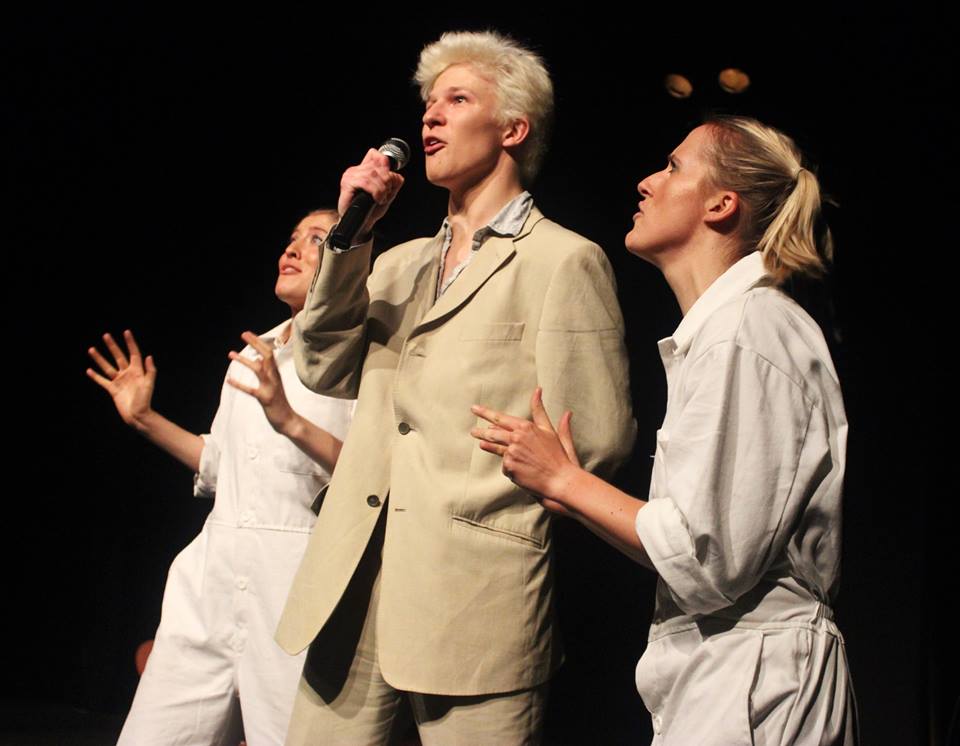
Keith (Jack Welch) and Nat (Shauna Riley) have been together for a while now. Their relationship has stagnated, as has Keith’s writing career. Nat’s had enough. They’re both chronically unhappy. The final straw as Keith’s radio breaking, but out of the static arrives weird and wonderful singing therapist Quentin Dentin (Henry Carpenter), and his two Friends (Caldy Walton and Ella Donaldson). Cloaked in white with matching hair, Quentin is a Christ-like figure there to save Nat and Keith’s relationship and to make them happy again.

Of course, this is all rather creepy and surreal. The story takes a turn to a darker side as the couple’s treatments prove ineffective. Production company Slick Rat state that one of the primary influences on the show is The Rocky Horror Picture Show; Quentin has similar qualities to Frank N. Furter, and the couple are a rather more street-wise, contemporary Brad and Janet who go along with the strange man that appeared out of their radio with little question. Musically, the songs have a 1970’s glam rock vibe and Quentin also looks a bit like David Bowie. In summary, the title role is a Frank N. Furter/Jesus/David Bowie hybrid in a new rock musical. What’s not to like?

Not much, actually. Though this is a new musical by a young company, a long development period and support from places such as Rich Mix and The National Theatre Studio have helped Slick Rat shape their idea into a quirky little show with potential.

There are still some issues that should be looked at, such as clichéd lyrics (“Swim with the fishes/all that glitters is gold”) and an abrupt ending. Not that it necessarily needs to be positive, but it’s quite vague in its current form. The transitions into the songs are similarly abrupt, but all that is needed to correct this would be more lead-in music and/or dialogue that echoes the coming lyrics. Even though I missed to beginning exposition, is ten minutes of a one-hour show too much of an introduction?

The performances are good, particularly from Donaldson, Walton and Riley (Friends and Nat). Quentin could use an injection of charisma to avoid him becoming too creepy, but this could also be addressed in the writing. Similarly, Keith could do with more external artistic angst, frustration and clear isolation from the rest of the world. The music is fun and the premise both entertaining and thought-provoking: are we allowing society to dictate that we must be happy all the time? Are we too enamoured of miracle cures? What role does religion play in this?

This one-act could nicely develop into a more complex story with the addition of more characters and songs without losing its message. It has a distinctive musical style that manages to not muddy from all its influences. It would certainly benefit from the addition of a bigger budget, good design and a whole band rather than the sole onstage guitarist. In its current state, it captures the innovation and spirit of fringe theatre and admirably contributes to new British musicals, an area sorely underdeveloped in favour of revivals and American imports. It’s worth catching at Edinburgh Fringe, particularly for those interested in new musical theatre.


The Play’s The Thing UK is an independent theatre criticism website maintained voluntarily. Whilst donations are never expected, they are hugely appreciated and will enable more time to be spent reviewing theatre productions of all sizes. Click here to make a donation with PalPal.

Bare Essentials, Amersham Arms

Encompass Productions produce theatre, film and a regular night of new writing, Bare Essentials. Rather than a scratch night, they aim to approach each micro-play with the same dedication as a full production, but with no budget. With plays accepted from all over the world, the current Bare Essentials has seven short plays ranging in style from naturalism to absurdity. The evening is a mixed bag with some scripts significantly better than others, but the performances are quite good. What made the whole evening hard to take had nothing to do with the production: the chosen venue, Amersham Arms in New Cross, isn’t fit for purpose and on the hottest day of the year in a tiny room with no air conditioning, it was a hugely uncomfortable experience that interfered with the enjoyment of the evening. I couldn’t wait to leave, and spent a large part of the evening trying not to be sick (I’m not good in the heat. At all.), which is a real shame because there were some inventive pieces of writing.

  1. CTL, ALT DELETE

This play is a frenetically paced, dystopian depiction of the film industry after the incorporation of robot writers. The robots aren’t pissed off though, because they’re robots. It’s the writers who are angry, and the cold, corporate producers just don’t get it until they have to face the consequences. Rachael Owens and Marcella Carelli are the money-grubbing producers unwilling to listen to writer Alex (David England); all three capture the desperate situation through rapid-fire dialogue and excellent timing. This play is only about five minutes long, but comfortably conveys the story. The idea could be developed into a longer piece, but this micro-play is a perfectly formed, self-contained piece by Dan Page.

  1. THE LEAVING OF THINGS

One of the best and my personal favourite, this play looks at internet suicide pacts, loneliness and hope. Though the dialogue is sometimes forced, performances by James Barbour and Alice Corrigan are some of the best I’ve seen on the fringe. This play could easily develop into a longer character driven one-act about the need for genuine human connection in our digital world. An excellent piece by Dean Moynihan.

  1. PANTHER

A West Country lad fails to understand his father’s affair and goes searching for a big cat in the darkness every night. This is an extended monologue with some character development, but relies on the regional stereotype of West Country equalling stupid or mentally deficient. Structurally, writer R. J. Thomson has a good piece, but doesn’t fully explore the character’s need to find the cat that killed his neighbour’s lamb, perpetuating the family feud that started with his father “tasting the neighbour’s chutney” on a nightly basis. The myths of big cats roaming free are touched on, but this is another area that deserves more time and could add a richer overlay of meaning onto what is currently quite a superficial script. There is room for development however, and this character piece could expand to a full cast and script.

  1. FEEDING TIME AT THE HUMAN HOUSE

Liz McMullen and Pip Barclay play zoo baboons puzzling over human nature and relationships. The physical depiction of their characters is excellent and wholly embodied, drawing attention to the more human traits of our ape cousins. Elements of comedy and poignancy make this view of mating rituals and pair bonding integrated and light-hearted, though if any longer, the idea would be excessively exhausted. As is, this is just the right length to explore writer David Wiener’s idea.

  1. THE NEWS

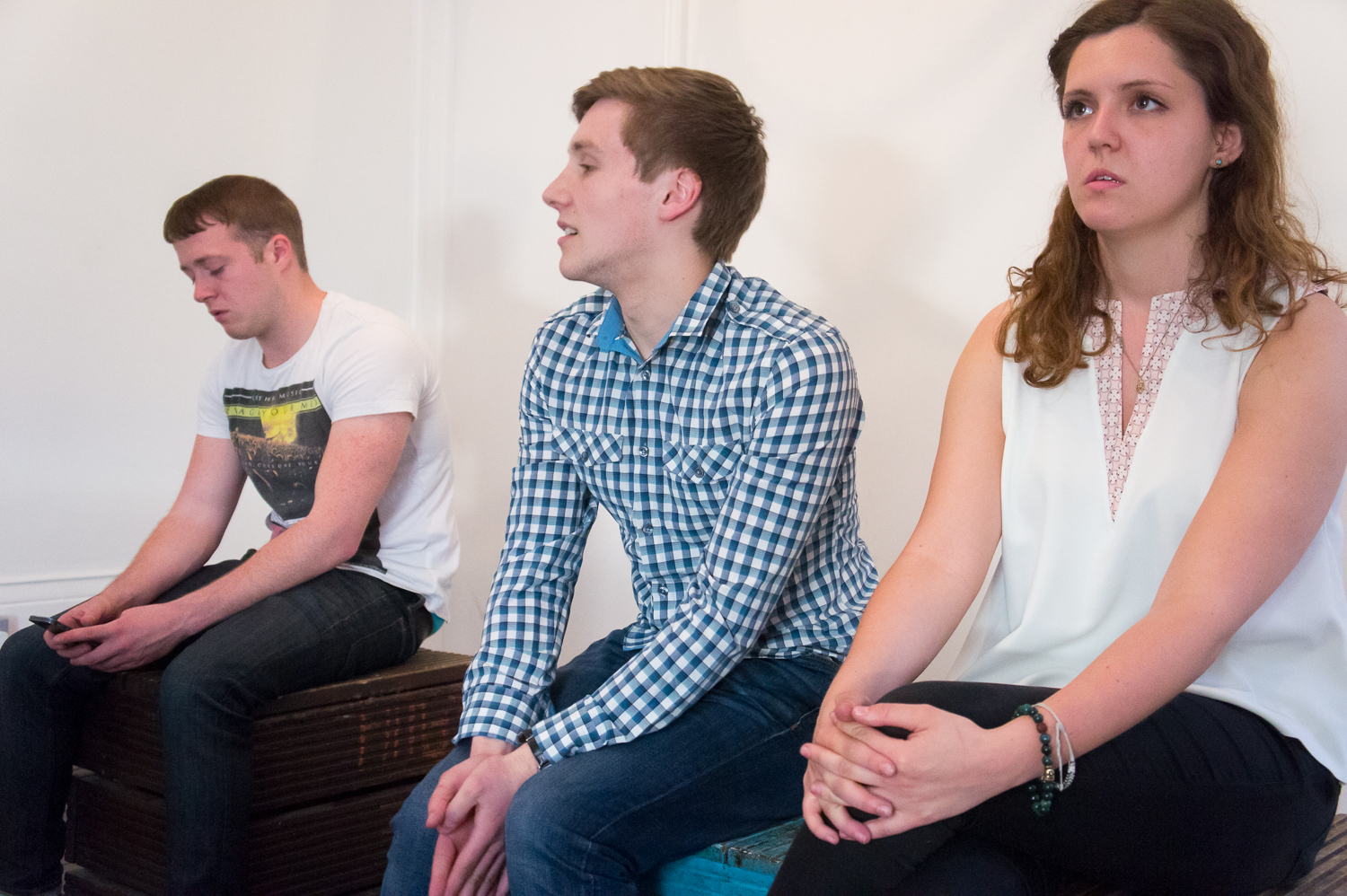
Lucy Foster’s script looks at three characters (Hannah Lawrence, Joe Bence and Jack Bence) coming to terms with a mutual friend Sarah’s drunken accident that she may not survive. The three dramatically different personalities pass the blame around as they struggle to cope with Sarah’s fall down the stairs and their own directionless lives. This microcosm presents the inner fear of giving up a creative career for a secure job only to find life has no meaning. Foster relies on contrasting stereotypes that are an unlikely group of friends and could do with more development, but if this were a longer play, it would be easy to address. The performances could also use more detail, but what was presented effectively communicated the play’s message.

  1. CONFESSIONS A DEUX

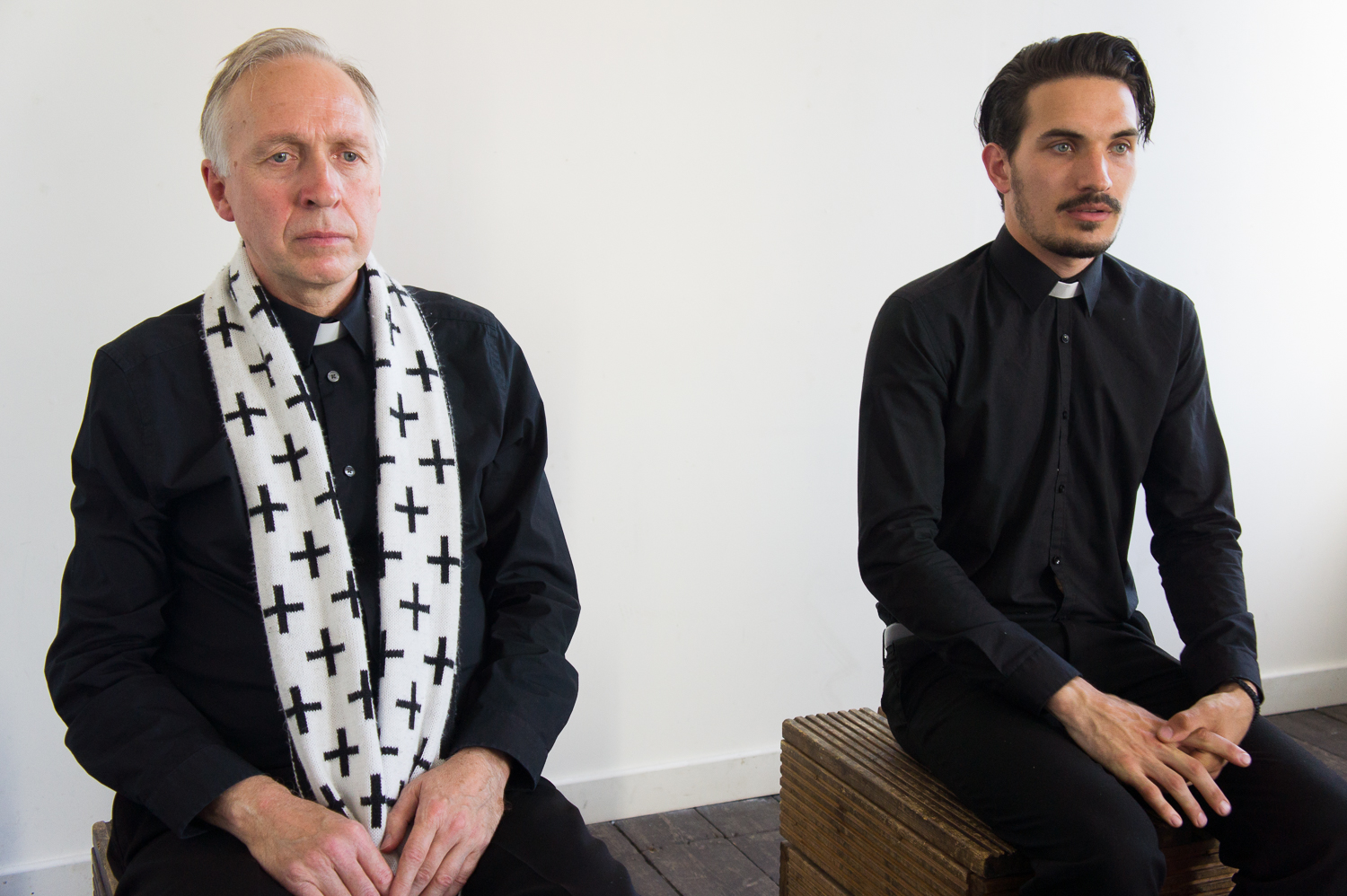
By Stephen Cooper, this one goes beyond the absurd to bizarre and the meaning of the piece isn’t clear on a wider level. Two priests (Graham Christopher and Josh Morter) have encountered a lonely parishioner with a fetish for priests and both have caved into their carnal desires. There is some good situation comedy and cleverly simple staging, but other than a specific comment on the sex lives of priests and their reciprocal confessions, this play has limited appeal and scope for development. This is the weakest one of the evening.

  1. NOTHING COULD SURPRISE ME NOW

Another example of absurdity, this is one of the better productions in Bare Essentials by Alain G. Cloarec. Turning narration and metatheatricality on its head, it is brief but wonderfully funny. Characters enter the room one by one having awoken this morning only able to speak in the third person, rather like Gregor Samsa but less traumatic. The “finale” then transcends the play, leading into a curtain call for the entire company. This is an excellent programming choice and some inventive directing by Michaela Frances Neal.

Overall, this is a varied evening of new writing, though even though the company claims it differs from a scratch night, it appears to have little difference. Scratch nights also approach their work with commitment, and are done on a shoestring in order to trial new writing. Though these pieces were quite polished, most need development. A more suitable space would improve the audience experience and establish a more professional, less scratch-night feel. As is, the room was small with no theatrical lights, white walls, and windows that are not blacked out. It was a room rather than a theatre and it is unclear why Encompass didn’t use the actual theatre downstairs, unless the reason is financial.

Scratch nights and short play showcases remain a good showcase for actors and writers, without the time commitment of a larger production (usually for no money) and the ability to present audiences with a range of styles and topics. Those with short attention spans and a wide range of interests will find this format particularly appealing. This one is has some quite good scripts and excellent performances but if the production company wants it to not feel like a scratch night, a more suitable venue must be chosen, and not just for air conditioning.


The Play’s The Thing UK is an independent theatre criticism website maintained voluntarily. Whilst donations are never expected, they are hugely appreciated and will enable more time to be spent reviewing theatre productions of all sizes. Click here to make a donation with PalPal.
Britannia Fury, Hen & Chickens Theatre

2015-05-07 20.33.52 (2)“Never meet your heroes.”

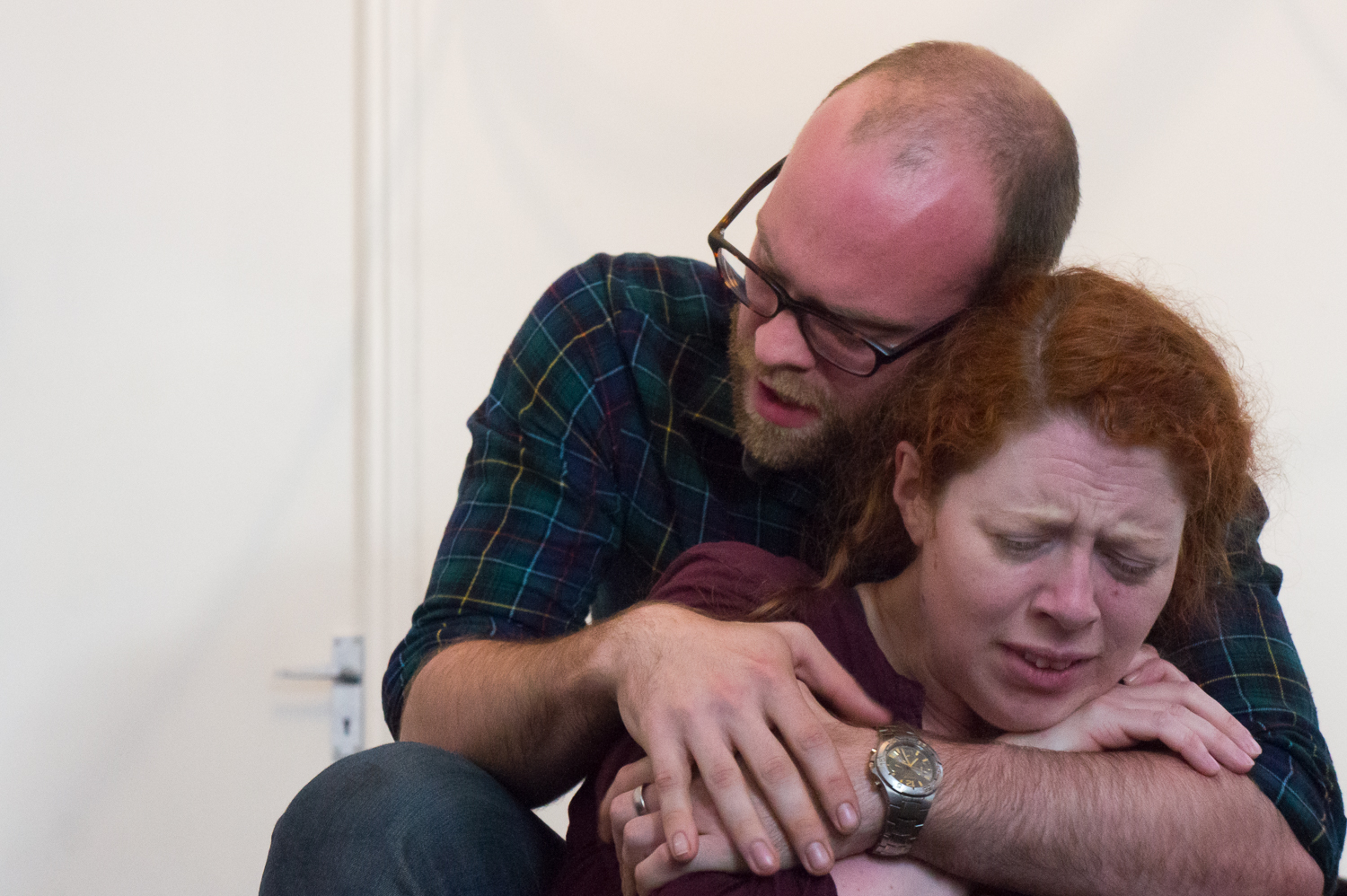
This stark warning from one character to another foreshadows the absurd, disappointing story about to unfold. Part satire, part pantomime, part superhero spin off, Britannia Fury introduces us to Britain’s only real superhero. He is now an elderly alcoholic living in a council flat after his epic rise and consequential fall into obscurity, but a young reporter has located his address and is determined to share his forgotten story with the world. A mix of performance styles and a story that can’t quite seem to determine what it wants to say prevents the concept from developing into a strong script.

Mr Jameson (Kit Smith) is the exaggerated stereotype of an editor of The Daily London Leader. Loud and abrasive, he provides complete contrast to the nervous Charlie (Ethan Loftus), a young reporter not even on Jameson’s radar. Charlie has the scoop of the year and negotiates with Jameson to let him interview 70s and 80s superhero Britannia Fury, who saved the nation from villainy only to mysteriously retire and disappear. Charlie wants to share the story of this forgotten hero with the nation. Loftus plays Charlie naturalistically, with a quiet, geeky passion for Fury. Whilst both Smith and Loftus embody their characters respective styles well, they clash and cause the production concept to look like it lacks direction. The other characters add to the soupy style mash up rather than siding with one of the earlier, established performance styles. Fury (Geoffrey Kirkness) is a mix of stereotype and naturalism, which adds depth but only further confuses the production’s identity. This is an issue with the script and direction rather than the performers, but one that can be solved by the playwright choosing one approach and sticking with it across all the characters.

The storyline, with its clear premise, becomes convoluted as Charlie and Fury meet and delve into his past. There are some predictable plot twists that lead to a tragic end; again, the initial idea has good potential to explore the human condition through Fury’s story but this is glossed over and made light of with comedy and exaggeration. Charlie’s initial shock of meeting his fallen hero is underplayed, then forgotten, but his emotional journey hits some good points. Their interview occasionally drags, as if the play is trying to buy time rather than following the natural narrative arc and getting to the point. As Charlie delves deeper into Fury’s twisted Tory past, it becomes clear that Jameson’s initial warning rings true.

The idea of the fallen hero in modern times certainly has mileage and Hillcrest Artists begin to solidify interpretations of the theme but they don’t quite come to fruition. Is the play about politics? Is it about society’s short attention span? Or, is it smaller and about the relationship between two people? Is it making fun of superheroes? Is it about Fury’s humanity? Really, it is all of these things and more, but for a play not much longer than an hour, this is too much to try to address. There are some touching moments and witty dialogue but underlying substance doesn’t quite materialise in Britannia Fury.


The Play’s The Thing UK is an independent theatre criticism website maintained voluntarily. Whilst donations are never expected, they are hugely appreciated and will enable more time to be spent reviewing theatre productions of all sizes. Click here to make a donation with PalPal.