
 Schnitzler’s La Ronde has been remade dozens of times and might be coming back into fashion again, what with the recent Hope Theatre production of Hello Again. Joe DiPietro’s Fucking Men follows Schnitzler’s format but sets the 2008 story in gay New York. The show also has the distinction of being the longest running show on the London fringe beginning with it’s 2008 Finborough run and followed by several transfers and extensions. After a brief break, it’s back at The King’s Head. At an hour long, three actors play all ten characters in ten brief scenes, too brief for much character development (with a few exceptions), but an effective snapshot of the ability sex has to cut across social groups.
Performances vary with the character, but the actors’ energy and commitment is consistent. Richard De Lisle excels as the other married guy and the journalist, the latter particularly moving. Harper James entertains as the enthusiastic “straight” soldier who likes to fuck guys and has a satisfying character journey that we see though the adorably sweet Hayden Whiteside as the escort. The short scenes lend themselves to stereotypical performances that are tough to fight against; this is a play that could definitely do with lengthening.
The small stage and Jamie Simmons’ universal set pieces are used well but some of the transitions take too long. His costumes give good character identification, important in scenes that aren’t long enough to have much exposition. Mark Barford’s direction is conservatively sexy: there’s a changing room scene with full frontal, but that’s it. Otherwise, all bits are covered at least with pants, with a bit of bum here and there. A bit more nudity wouldn’t be gratuitous, but neither is it necessary, either.
Despite the sex, this play is about the immediacy of relationships formed in passing encounters and the loneliness they can embody. The LGBT vehicle brings up issues more common in the gay scene (like monogamy and HIV), the overriding desperation for human contact transcends gender and sexuality.
This is a tender, fun production that deserves development and a good counterpoint to the camp Mirror Mirror: A Snow White Pantomime on earlier in the evening. Though not explicitly seasonal, Fucking Men is an important reminder that even during the holidays, some people are still lonely and desperate for even the most fleeting of human contact regardless of how comfortable their lives may be otherwise.
The Play’s the Thing UK is committed to covering fringe and progressive theatre in London and beyond. It is run entirely voluntarily and needs regular support to ensure its survival. For more information and to help The Play’s the Thing UK provide coverage of the theatre that needs reviews the most, visit its patreon.
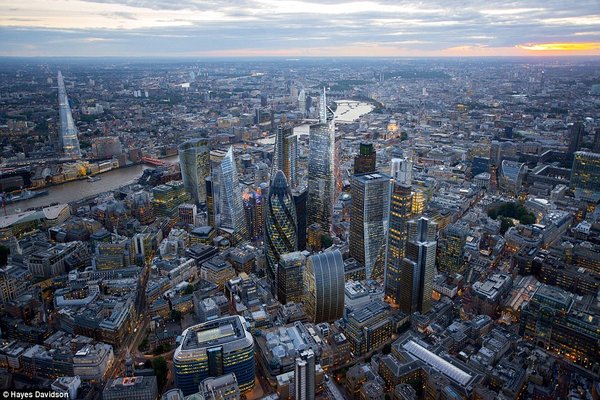 It’s panto season, and our stages are filled with villains, heroes and dames. Playwright David Bottomley’s new work-in-progress has some passing resemblance to the characters in Britain’s traditional seasonal offerings, but his new play on the London housing crisis is darker, angering fare. Capturing its victims’ lack of power and its perpetuators’ greed, Skyline doesn’t offer a solution but still states a clear opinion on the issue. With a cast of five playing seven characters, the audience sees a microcosmic cross section of social classes who, with poetic and pointed language, are a powerful reminder of the importance of secure housing. There is still some work to be done on the script, but the staged reading in conjunction with a pre-show talk and an exhibition by
 We’ve seen “Mad Men,” or at least heard the clichés about cutthroat ad agency types. Competition for clients, drug and drink fueled late nights, ruthless bidding for commissions regardless of morals. Steve Thompson’s Spin Cycle uses all these ingredients, but the writing style doesn’t match director Stephen Oswald’s delivery. It’s either a farce that was delivered as naturalism, or a naturalistic piece (albeit with a liberal use of humour) that attempts a farcical production. All of the characters are pretty stereotypical with at least some degree of reinforcement from the script, causing the two hours of day-to-day office life to feel repetitive and lacking in depth. There are clear individual storylines, but everything that goes wrong is treated as a crisis that’s conveniently and speedily resolved. The performances are generally quite good in this strong ensemble, but the actors are unable to show much range or development due to a lack of character journey.
 There’s a mountain of inflatable sex dolls on the stage. Shiny, blank faces with gaping, toothless mouths, spherical tits and gargantuan cocks everywhere. The pile is so big that the actors have to wade through the dolls, a metaphor for the seedy Viennese streets where Shakespeare sets his Measure for Measure. Director Joe Hill-Gibbins wrenches this world into the present with a symbolism-laden, visually orgasmic production designed by Miriam Buether, and a great performance by Romola Garai as Isabella. Live video feeds, projection and pulsing beats marry a space that has ghosts of Elizabethan theatre structures, but some choices don’t sit well. Though the visuals are relevant and bold, there’s a disappointing tendency towards shouting, and a dubious (to the point of discomfort) characterization choice for infamous pimp Pompey. As the characters physically and emotionally wrestle through the heavily edited, relentless two hours of sex and religion, there is still a strong feeling that this production values style over substance.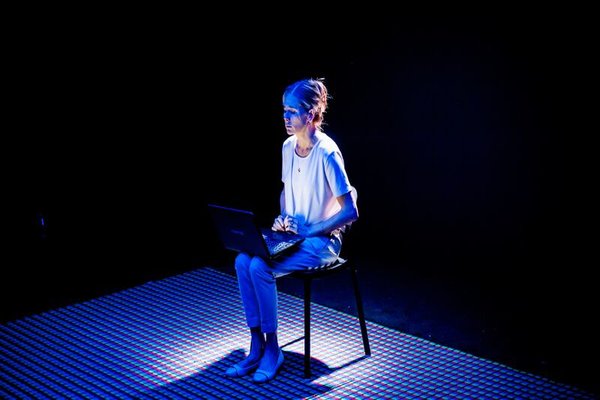
 Frankly, this is a crucial piece of theatre that all young people growing up in our cyber-obsessed culture should see. With simple design elements that draw attention to the dialogue and story, it would be easy to tour this powerful production.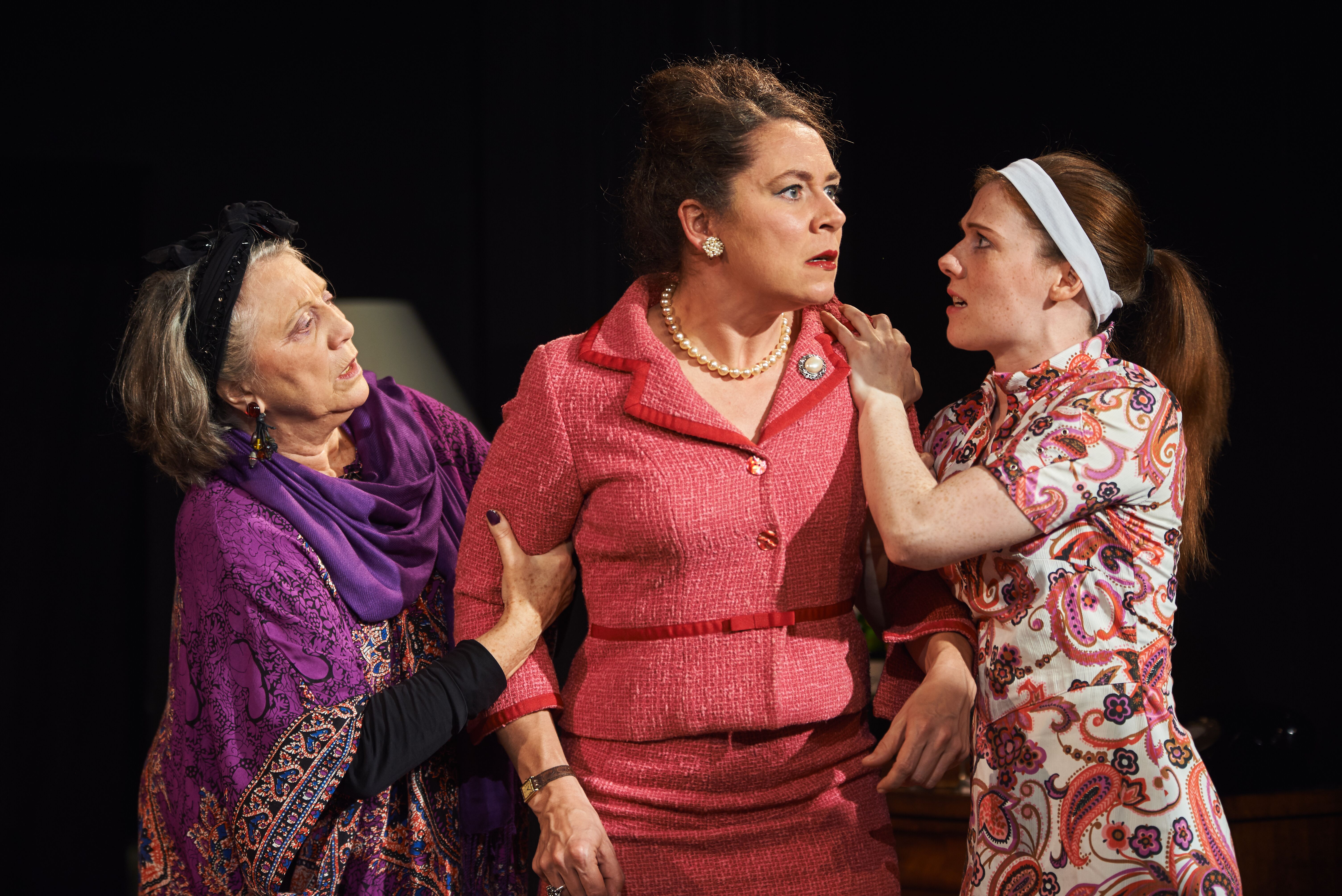
 “Netflix and chill” takes on new meaning in Five Guys Chillin’. Well, the “chill” part does, and is also substituted with “chill out”. Rather than awkward hetero teenagers using the word to arrange a sexual encounter, in this context it’s multiplied by whatever factor the host fancies to make a drug fuelled sex party, usually in someone’s home. The verbatim play, carved out of more than 50 hours of interview transcript, graphically details typical chill out behaviour as well as frank discussion of issues within the gay community. Despite many funny moments, some great staging, and the raising of important points, there is precious little plot; this makes the production more of a live interview with the questions omitted rather than a play that tells a story.
 Punks Paul, Jan and Louis are working class lads living in south London. School didn’t do much for them and unemployment is high, so they hang around and smoke, nick cars and try to pull girls. They’re bored, angry and frustrated at the lack of opportunities available to poor kids like them. They want to improve their quality of life and feel like they belong in society, but society’s too busy fighting terrorism and racism to pay them any attention so they do their best to get by, or not. It sounds like the present, right? Nope. Barrie Keeffe’s Barbarians premiered in 1977. As London battles the National Front, striking unions and IRA bombs to a soundtrack of The Clash and The Sex Pistols, audiences can’t help but draw parallels between life then and now. It’s unsurprising this Tooting Arts Club/Soho Theatre production will soon be followed by the Young Vic’s, a completely different production of the same play, what with its contemporary social relevance and three fantastic roles for young actors to get stuck into. Though close to three hours long and composed of three self-contained plays at different points in the boys’ lives, the excellent performances, atmospheric venue and socio-political comment make the time well spent.
 The Play's The Thing UK