The Beggar’s Opera, Brockley Jack

tbo-006

By guest critic Michaela Clement-Hayes, @_mickychaela

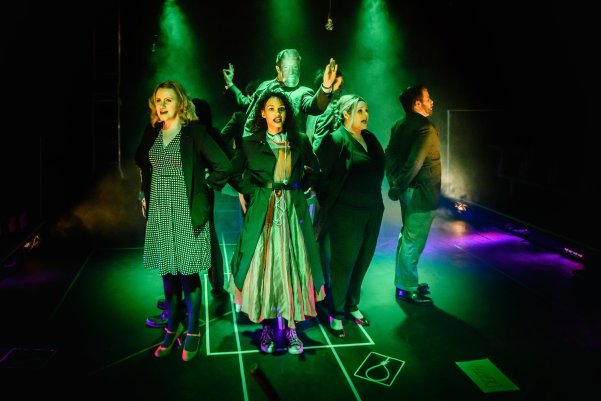
London in 1728 was a dark and dangerous place. Highwaymen, hangmen and harlots roamed the streets and life was hard. John Gay’s satirical musical The Beggar’s Opera steps away from the traditional romanticised stories of heroes and villains, unrequited love, choosing instead to tell a tale of rogues and murderers. And a little bit of love, for good measure.

Polly Peachum (Michaela Bennison) has defied her parents and married the notorious highwayman Macheath (Sherwood Alexander) However, he has most certainly not forsaken all others. Wanted for his crimes, he leaves Polly with a promise to return.

Lazarus Theatre have taken David Gay’s story and brought it into the 21st century with a bang. Literally – there are party poppers. It’s a whirlwind of a tale – quirky and fun, transcending the centuries and combining modern day with the past.

Performances are strong from everyone, with the cast acknowledging the audience with intense stares throughout, involving them discreetly yet hardly breaking the fourth wall. The staging is simple yet effective, with ladders, coloured masking tape and a few pieces of furniture whisked on and off, and the cast adopting masks and a few props as they switch from key character to chorus.

Singing is good, but feels a little strained in places. However, this does not detract from the story (adapted and directed by Ricky Dukes), and the new lyrics (penned by Bobby Locke) are both clever and amusing.

It’s fun, fast-paced and funny – a very enjoyable show.

The Play’s the Thing UK is committed to covering fringe and progressive theatre in London and beyond. It is run entirely voluntarily and needs regular support to ensure its survival. For more information and to help The Play’s the Thing UK provide coverage of the theatre that needs reviews the most, visit its patreon.
Acorn, Courtyard Theatre

acorn-c-hannah-ellis-1

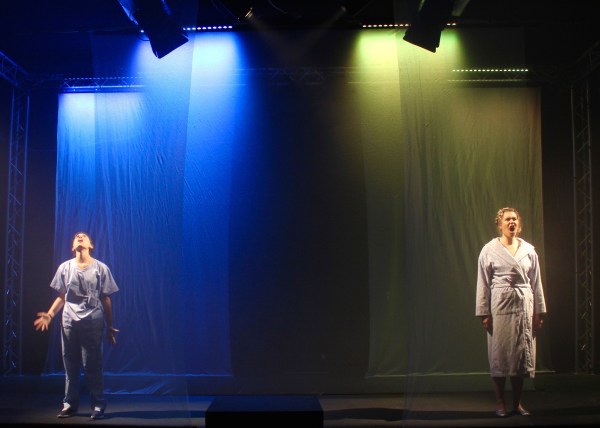
Persephone and Eurydice’s myths are defined by men. What happens when these men are removed and the characters plunged into a modern dreamscape? Maud Dromgoole’s Acorn brings these women and their fates together in a world of fragmented narratives and moments of biting wit, but the worlds that Dromgoole weaves together are so disconnected from each other in this cerebral play that it interferes with its immediacy.

Rather than nurturing plants, this Persephone looks after people – she is a doctor, but one that struggles to connect with her patients. Her opening monologue justifying her disdain for patients’ personal lives is equally hilarious and disturbing, the best scene in the play. Deli Segal brings a simple humanity to this cold character, making her quirky and likeable despite an autistic-like inability to understand others. Lucy Pickles’ Eurydice is a sweet contrast, alternating between a blushing bride and mental health hospital patient. Pickles is no less of a performer, but Persephone has the more dynamic and well-written character.

Dromgoole employs a range of styles, arguably too many for an hour long script. Though this strengthens the ability to relate to the story within individual scenes, the overall effect is one of indecision. An unrelated, recorded dialogue between two men fills transitions unnecessarily and doesn’t link to the women’s stories, then overlapping speech cause dialogue to be missed.

Phil Lindley’s design is simple and precise, allowing for detail and layers to emerge through Jai Morjaria’s lighting and Tom Pearson’s underused projections. The design concepts are most excellently married and add polish to a script that feels under-developed.

Acorn certainly deserves to extending and refining – the characters are excellent, as are the foundations of the stories seen here. Dromgoole uses language well and is clearly confident experimenting with form, style and classical influence, but reinvention with the goal of creating a modern myth doesn’t quite reach the enduring scale of the original material.

Acorn runs through 29 October.

The Play’s the Thing UK is committed to covering fringe and progressive theatre in London and beyond. It is run entirely voluntarily and needs regular support to ensure its survival. For more information and to help The Play’s the Thing UK provide coverage of the theatre that needs reviews the most, visit its patreon.
Undead Bard, Theatre N16

robert-crighton-in-metal-harvest

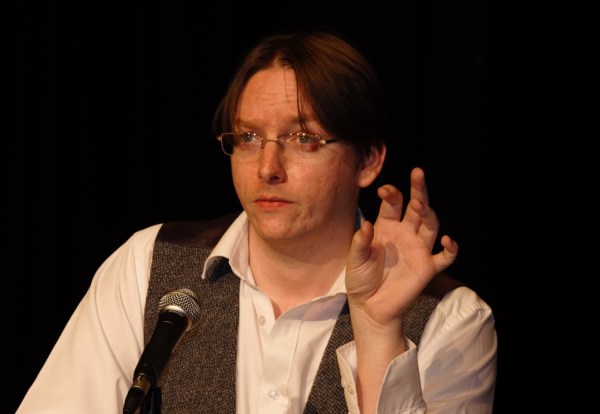
Professor Ashborn is on a mission to disprove Shakespeare’s existence, but the academics with leather patches on their elbows are trying to stop him. Following Ashborn’s lecture and an interval, Undead Bard creator Robert Crighton summons Shakespeare to talk to him about his life, work and death in an unrelated second half. This two-part show on Shakespeare in the modern world, bardolatry and the authorship debate certainly has some very funny moments of satire, but others are utterly bizarre and the poor execution of an idea. A significantly stronger first act sets up a reasonably enjoyable event, but the second is self-indulgent and anti-climactic in this overly long solo performance.

The paranoid Professor Ashborn’s lecture rips the piss out of Shakespeare academics, those that believe Shakespeare wrote Shakespeare’s works, those that believe someone else did under Shakespeare’s name and anyone with a love for Shakespeare’s plays. Crighton as Ashborn talks the audience through his various ridiculous authorship theories with energy and eccentric humour, evoking plenty of laughs. The script follows a natural rhythm of discovery, disappointment and eventual confession; it’s a story carefully crafted with intuition and skill.

Considering the second act, the first would be better served as a stand-alone piece. After what is quite a good piece of character storytelling, this random, rambling seance on the mundanity of Shakespeare’s life and afterlife is, well, mundane. The inclusion of toilet humour and sexual innuendo do not improve the piece. Shakespeare’s confusion at his legacy is cute, but it absolutely doesn’t warrant nearly an hour of discourse and disconnected pop culture references.

Crighton clearly has an aptitude for crafting a story, as evidenced in the first part of the show. Unfortunately, the rest of it is a muddled letdown that needs to be sent back to the drawing board or discarded completely.

Undead Bard runs through 13 October.

The Play’s the Thing UK is committed to covering fringe and progressive theatre in London and beyond. It is run entirely voluntarily and needs regular support to ensure its survival. For more information and to help The Play’s the Thing UK provide coverage of the theatre that needs reviews the most, visit its patreon.

William Shakespeare’s Long Lost First Play (abridged), Edinburgh Festival Fringe

https://i0.wp.com/bloximages.newyork1.vip.townnews.com/southbendtribune.com/content/tncms/assets/v3/editorial/0/fe/0fe0f435-1c5f-5858-af5e-9114b0616351/55c5004c8b770.image.jpg

When I was a teenager, I discovered the Reduced Shakespeare Company’s The Complete Works of William Shakespeare (abridged). My love for Shakespeare had already started to grow, and I thought the script was brilliantly funny and clever. I never saw a professional production of it, or any of the Reduced Shakespeare Company’s subsequent plays, until their newest, William Shakespeare’s Long Lost First Play (Abridged).

I found it hugely disappointing. The humour I found so witty and topical in the mid-90s, though updated, is bound in hackneyed and punny dialogue. The lack of fourth wall is great, but the panto-esque delivery feels cheesy, dated and over long. The script is fine in concept, but its execution is muddy. My tastes have clearly changed over the last twenty years and the Reduced Shakespeare Company’s work is no longer has the impact it once did.

However, the packed house laugh plenty so their style and concept are clearly still popular. Reed Martin and Austin Tichenor’s play is a mashup of most, if not all, of Shakespeare’s plays in one. Found in a Leicester carpark with a pile of bones, this is the never before seen script where Shakespeare tries to fit all his ideas in one in a totally nonsensical story.

Martin, Tichenor and Teddy Spencer are the three performers who play all roles. Their quick changes and timing are most impressive, though they rely on stale stereotypes and basic jokes to generate characters. Ariel from The Tempest becomes the mermaid, a handful of characters are inexplicably gay, and there’s even a joke about Viagra. (Are Viagra jokes even funny anymore?)

The show and the company are still popular after all these years, in spite of shallow, unsophisticated humour. Though the format clearly has staying power and wide appeal, it’s distinctive style in one for those with a penchant for comedy.

William Shakespeare’s Long Lost First Play (abridged) runs through 29th August, then tours.

The Play’s the Thing UK is committed to covering fringe and progressive theatre in London and beyond. It is run entirely voluntarily and needs regular support to ensure its survival. For more information and to help The Play’s the Thing UK provide coverage of the theatre that needs reviews the most, visit its patreon.

Queen Lear, Edinburgh Festival Fringe

https://www.thestage.co.uk/wp-content/uploads/2016/08/Queen-Lear-700x455.jpg

What happened to King Lear’s wife? The woman who birthed the three daughters that he loves so dearly is never mentioned in his title play. Back in the ’80s, the Women’s Theatre Group and Elaine Feinstein created Lear’s Daughters, a flawed, feminist play attempting to reason why Goneril and Regan do what they do by depicting the girls’ upbringing. Their mother is present, but ill and rarely thought upon until her death at the hands of a sex-crazed maniac. Lear and his obsession with having a son cost her her life.

Ronnie Dorsey, perhaps inspired by this version that focused on the daughters rather than their mother, puts the young queen centre stage in Queen Lear. Also a feminist perspective, this script is reflective and revealing, but slow to develop and incorporates a disconnected subplot that results in an unlikely end.

Alice Allemano is the young queen, heavily pregnant with her second child. Goneril and Regan are the daughters of his first wife, a good device that explains the sisters’ disconnect in Shakespeare’s play. Lear’s need for a son translates to her conviction that the child is a boy, but the pregnancy has not gone well. She is overdue, in constant pain, and begs her nurse and the Father overseeing her care to cut the baby from her body. Through her medicated delirium, she reveals her transition from blushing, wide-eyed bride at 16 to an abused incubator. Jane Goddard plays the nurse and Mary McCusker the priest; the trio of women have a warm, maternal chemistry and all are excellent performers.

Dorsey’s script, whilst an interesting premise, has some issues. The dialogue is overwritten and obstructions any natural tension that would arise from the situation. It also slows down narrative progression and often feels clumsy. The secondary plotline, though it has potential to develop into its own story, feels out of place and not fully integrated. The big reveal is barely acknowledged by the other characters, briefly discussed, then forgotten about in light of the queen’s health.

A thorough trimming would do the text a world of good and free up space for more action. The performances are strong and the examination of this forgotten character compelling, but one that could be executed more smoothly.

Queen Lear runs through 29th August.

The Play’s the Thing UK is committed to covering fringe and progressive theatre in London and beyond. It is run entirely voluntarily and needs regular support to ensure its survival. For more information and to help The Play’s the Thing UK provide coverage of the theatre that needs reviews the most, visit its patreon.
Troilus and Cressida, Edinburgh Festival Fringe

(c) National Trust, Petworth House; Supplied by The Public Catalogue Foundation

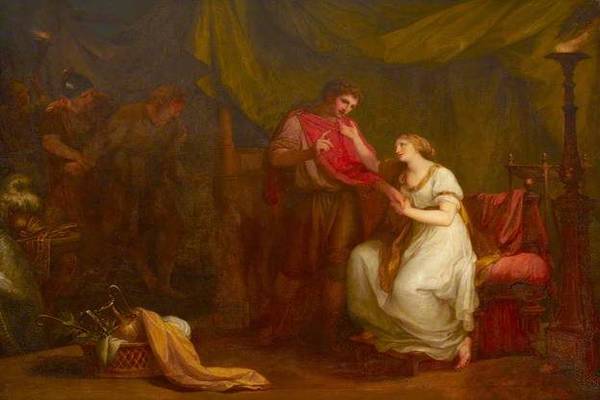
There is hardly any Shakespeare at the fringe that isn’t dramatically altered in some way or another. Re-contextualisations abound, as does new work that’s derivative from a story or character. West Country-based Shakespeare on the Level’s Troilus and Cressida is neither of these. It has no gimmicks and no determinedly modern concepts. It is merely the text staged in a clear fashion that serves Shakespeare’s stories, with few divergences. This is not an innovative production and has a few faults, but is remarkably refreshing in its lack of fringe-ness.

Some cross-gendered casting is a welcome choice to improve balance between men and women. There are only three women in the cast of twelve so parity is hardly achieved, but the women in the cast also have the chance to play male roles. Director Kate Littlewood also makes Achilles openly gay, choosing to wile away the days in his tent with his lover, Patroclus. This is a lovely choice that aligns the play with its Greek and Roman roots and doesn’t disrupt the story.

The performances are mixed, with Susie Kimnell’s Helen and Louis Bowen’s Troilus standing out as particularly strong. There are some weak verse speakers who break up the rhythm, others aren’t fully connected to the text and either shout it or approach it too casually.

Littlewood takes a flowing, eastern approach to her costume design, though the Romans and the Greeks are very similar in style. With the multi-rolling necessary to cover the twenty-three characters and varied acting ability, a stronger visual indication of which camp is which would be welcome. She sets Troy in the round, and skilfully uses the diagonals so the audience can always see, and fight director Tom Jordan’s choreography also suits the space.

The story is cut down to a manageable length, maintains clarity and has a clear design concept. Though not a particularly fringe approach to Shakespeare, this is a well-staged production with a cast of emerging talent.

Troilus and Cressida runs through 27th August.

The Play’s the Thing UK is committed to covering fringe and progressive theatre in London and beyond. It is run entirely voluntarily and needs regular support to ensure its survival. For more information and to help The Play’s the Thing UK provide coverage of the theatre that needs reviews the most, visit its patreon.
Macbeth: without words, Edinburgh Festival Fringe

https://i0.wp.com/edinburghfestivalguide.co.uk/wp-content/uploads/2015/11/Macbeth-Without-Words-Ludens-Ensemble-Photo-by-Chrysa-Karagianni.jpg

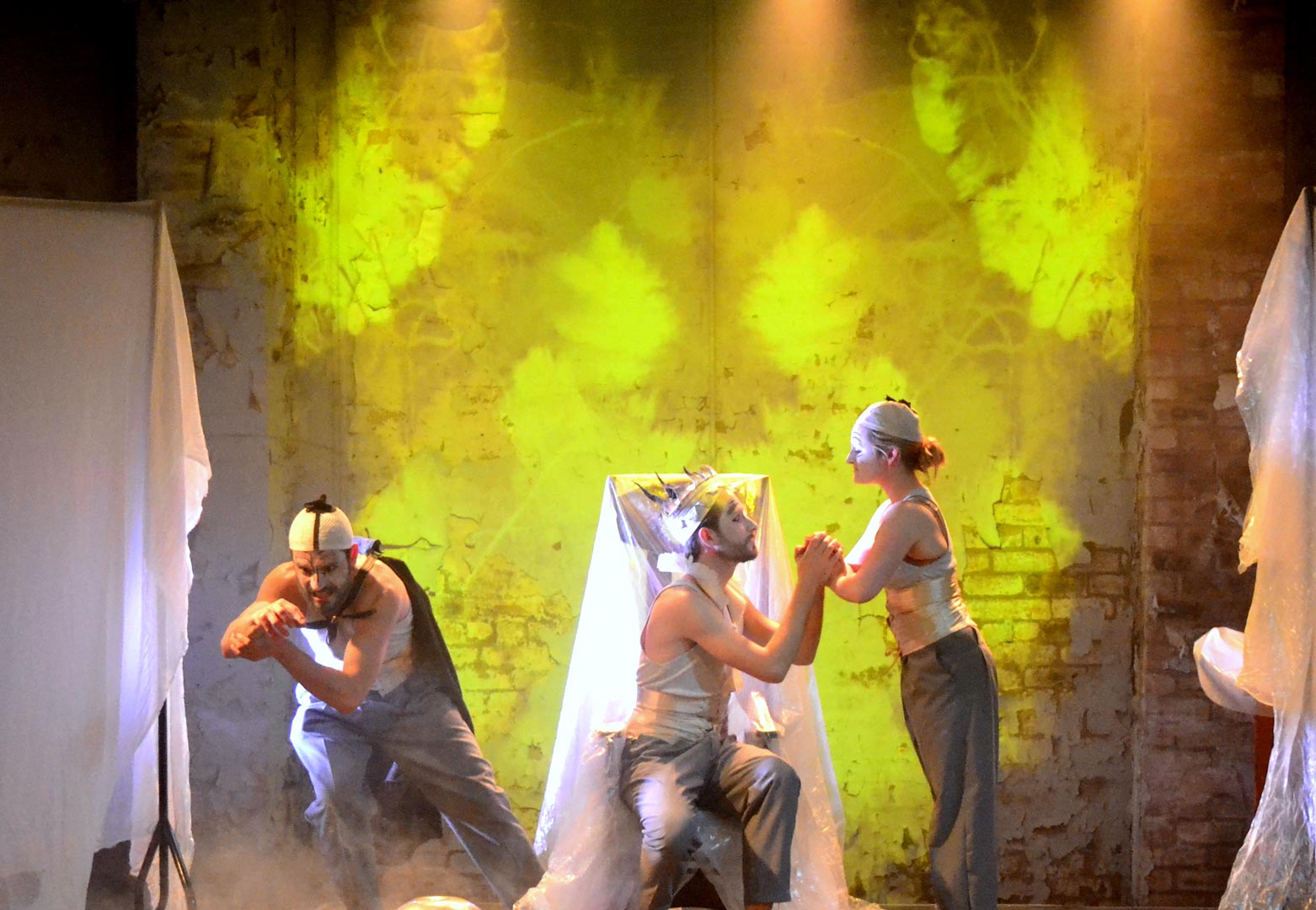
Shakespeare without words. What’s left? In Ludens Ensemble’s Macbeth: without words, plenty. Drawing on the aesthetic of silent films and Victorian gothic with the near-constant use of live sound mixing, a trio of performers playing all roles conveys the story effectively through movement and subtitles. This spooky adaption taps into the heavy darkness and supernatural elements of the story in an easy to follow and visually compelling production.

The design is the most striking element of the show. Greyscale, sexless costumes are the base for elements of victoriana – waspies, a skeletal skirt, capes and papery crowns. Large screens and dust sheets host an array of productions, from silent movie captions to abstract splodges of colour. Haze is used liberally, but it actually feels appropriate to this production to create fog over the heath. The dust sheets are also cleverly used to create ghostly apparitions and shadows, though these could be used more often as a design motif. Two microphones and prerecorded sounds are mixed live to create rich soundscape of suspense and violence, though silence is used to highlight powerful moments of suspense.

The two men and one women are strong physical performers evidently influenced by theatrical clowning and animal work. Their focus and intensity are unwavering, especially as Macbeth’s torment grows. Expressed outwardly, this becomes the centre of the story.

Though there are a few extracts of text, stage directions and summaries projected, Macbeth: without words would be hard to follow without knowing the story already. A freesheet with a plot summary would go a long way to ensure all audience members are catered for. Some of the scenes could use lengthening to reflect their importance to the story, particularly the banquet scene.

This is a visually stunning adaptation of Shakespeare’s play that in no way underserves the original by stripping away the text. Ludens Ensemble create a vocabulary of movement, images and sound that feels just as rich as Shakespeare’s.

Macbeth: without words runs through 29th August.

The Play’s the Thing UK is committed to covering fringe and progressive theatre in London and beyond. It is run entirely voluntarily and needs regular support to ensure its survival. For more information and to help The Play’s the Thing UK provide coverage of the theatre that needs reviews the most, visit its patreon.

Fire Burn: The Tragedy of Macbeth, Edinburgh Festival Fringe

https://i0.wp.com/cdn3.historyextra.com/sites/default/files/imagecache/623px_wide/Macbeth%202.jpg

It must be rather dull hanging out on a Scottish Heath with your sisters, waiting for some poor soul to come along to manipulate to the point of ruin. Fire Burn: The Tragedy of Macbeth tries to show the three witches re-enacting the tragedy they catalysed, or perhaps they act it out for the first time and the story Shakespeare depicts is all in their imagination. In either case, the concept of their playacting isn’t clear through their intentions or performance styles.

The three women who play all of the parts are good enough performers, differentiating characters well and endowing the text with energy and purpose. The Macbeth is occasionally a touch flat, but the young trio otherwise make good sense of the story. The witches’ spidery, angular movement and distorted voices contrasts the naturalism of the rest of the characters, and the application and removal of face paint also indicates character changes. This good choice plays up the ritual of the ancient story and adds a dressing-up element to the witches acting out the story.

If the witches are indeed portraying the characters, it is doubtful they would have the interest or ability to employ a contemporary conventional performance style. There is no hint of the witches’ personality or character when taking on the others, and there are no off-text moments to remind the audience that this is the concept. There should be a ruthless brutality and also a sense of play coming through to some extent, either in outbursts or as an undertone to the other roles.

Though not a bad production per se, the intended concept doesn’t read at all. As the show gets underway, there is little to indicate that this is anything more than a three-person version of the play. A three-person Macbeth, whilst a fine incarnation, is less inventive and insightful than the witches’ views on the people’s lives that they toy with.

Fire Burn: The Tragedy of Macbeth runs through 27th August.

The Play’s the Thing UK is committed to covering fringe and progressive theatre in London and beyond. It is run entirely voluntarily and needs regular support to ensure its survival. For more information and to help The Play’s the Thing UK provide coverage of the theatre that needs reviews the most, visit its patreon.

Hamlet in Bed, Edinburgh Festival Fringe

https://i0.wp.com/www.rattlestick.org/wp-content/uploads/2015/09/hib-2.jpg

Michael, a typical New York City lost soul, is obsessed with Hamlet. He knows the play inside out and pours over every bit of scholarship he can find on it. His neighbourhood secondhand bookseller puts anything aside that he might be interested in and this time, he’s struck gold. A diary from forgotten ex-actor Anna May Miller details her rehearsals for Hamlet, a failed relationship and a child she put up for adoption on the day Michael was born. The orphaned man, desperate for a mother and to enact his perfect version of Hamlet, creates an elaborate scheme to cover both bases in Hamlet in Bed.

What is more of a treatise on Shakespeare’s play than a journey of personal discovery is also a creepy, misogynistic story of stalking and entitlement. The two interweaving storylines are given equal measure by writer Michael Laurence, resulting in neither reaching full potential, though Annette O’Toole gives an electric performance as Anna May.

The imagery-laden beginning of the script is a feast for the ears. Though the start makes for a great aural experience, the best scene is an extended rehearsal for Michael’s Hamlet where a debate on the characters’ intentions becomes a thinly veiled filter for their own issues and insecurities. Also, the scholarship on display in this scene is in-depth and spot-on. An anti-climactic end is a lost opportunity for Anna May to condemn his self-centred exploitation of her weaknesses, which creates an uneasy feeling that his actions are deemed acceptable. There are also entirely too many coincidences to make the story believable, and a few occasions where choices aren’t fully explained or justified.

Though the story revolves around Michael, played by Laurence, O’Toole’s performance completely dominates his. It’s not at all to do with any shortcomings on his part, but a total mastery of craft on hers. The privilege of seeing a stage and screen legend in an intimate venue at least partially alleviates the problems in the script.

With questionable themes and a script that can’t decide what it wants to be about, Hamlet in Bed has several glaring flaws that a re-write would be able to solve. Despite these, O’Toole’s performance is fantastic, and great to watch.

Hamlet in Bed runs through 29th August.

The Play’s the Thing UK is committed to covering fringe and progressive theatre in London and beyond. It is run entirely voluntarily and needs regular support to ensure its survival. For more information and to help The Play’s the Thing UK provide coverage of the theatre that needs reviews the most, visit its patreon.

Hamlet, Ophelia – Part One, Edinburgh Festival Fringe

rsz_121

What would Hamlet have been like as a child? Ophelia? Were they close? Did they squabble or were they the best of friends? Shakespearian Lovers, a new female-led company from Italy, attempt to answer these questions in Hamlet, Ophelia – Part One. In this version Hamlet is played by a woman, bringing a quiet, feminine sensitivity to the role considered one of Shakespeare’s greatest. Despite performing in their second language, the two women have a sound connection with the contemporary English text that shows the two grow from playful children to adults at Gertrude’s wedding to her second husband. There are some major issues with staging and the ending needs work, but this gentle, little play stays true to Hamlet’s personality as reflected in Shakespeare’s text and has the strong foundations of a good script.

Of the two performers, the perky Ophelia is the stronger. She has a natural curiosity and handles the English script comfortably. Hamlet is much more reserved and often too quiet to easily hear, but she has an intellectual intensity that suits the character. Though Hamlet’s femininity is not disguised, masculine pronouns are used throughout – the relationship in this piece wouldn’t differ from one gender to the other, Ophelia is clearly female but Hamlet’s ambiguity interferes with any potential statement about his gender.

The script has a sensible progression through childhood and into adulthood. They play as equals but as they grow, the difference between the son of a king and the daughter of a minister informs their interactions. The affection they have for each other is genuine and heartwarming, though the circumstances life deals them requires formal restraint, even through teenage hormones. The ending needs development and resolution in order to emphasise why the it is where it is, and the reason why this story is being told needs clarification, but the characterisation is sound.

The staging is the primary issue with this production. The venue is too small to allow space to be clearly differentiated through either distance or lighting and there is no backstage. Private moments lose their intimacy and physical expression is restricted, particularly when they are playing, and Hamlet tries to express his grief for his father’s death.

This is some promising work from a new international company. Even though a native English speaker’s advice would be useful to sort out a few minor mispronunciations, the confidence and ability both actors display in performing in a foreign language is impressive. With additional work on the script and fully realised staging, this has potential to be a great two-hander.

Hamlet, Ophelia – Part One runs through 28th August.

The Play’s the Thing UK is committed to covering fringe and progressive theatre in London and beyond. It is run entirely voluntarily and needs regular support to ensure its survival. For more information and to help The Play’s the Thing UK provide coverage of the theatre that needs reviews the most, visit its patreon.