Monorogue: Seven Deadly Sins, Old Red Lion Theatre

The Salon: Collective are a grassroots group of artists that offer classes, workshops and produce work. United by American practitioner Sanford Meisner’s post-Stanislavskian technique, they have amassed a network of actors, teachers, directors and writers dedicated to supporting each other’s creative development. Monorogue is one of their latest endeavours, an evening of new writing linked by a prominent central theme. This month’s is Seven Deadly Sins, chaired by a judge and voted ‘guilty’ or ‘not guilty’ by the audience jury. It’s a simple, effective format that allows actors to showcase characterisation skills and develop their writing, with a clear through line that makes it feel like more of a production than a showcase. Potential for variation in style and tone make this new writing night worth catching again.

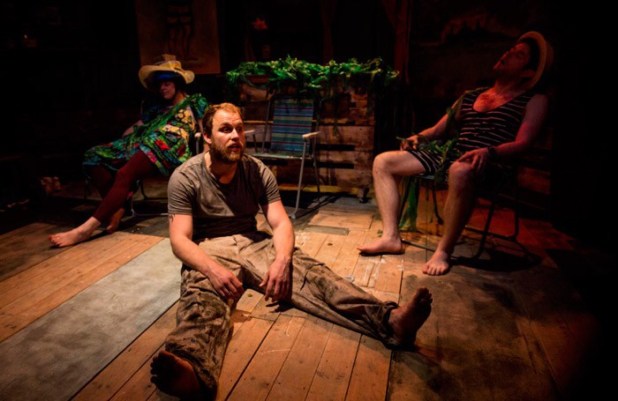
John Jesper has created Judge Frank Goody, an east London geezer who blagged his way to the top of the courts. Whether or not it’s intentional, the character is a powerful comment on contemporary judicial corruption as he orders a trio of prostitutes between acts, drinks and falls asleep. He is supported in court by religious fundamentalist PD Callie Carter (written and performed by Rachel Stoneley) who killed her husband for committing sins against God and marriage. These two characters provide much needed levity in between more serious characters, though some of the people we encounter are more amusingly bizarre than encountered in real life.

Of the seven sinners on trial, the most interesting stories belong to Angela Harvey’s Mel, a business woman obsessed with the homeless man who camps out near her work, and the reverend who tirelessly fundraisers not for her church, but for local poor people. Helen Rose-Hampton’s character is easily forgiven by the audience even though she lost her job. These two feel like they could be central characters of bigger stories. The others are mostly fine, but only one of the seven didn’t work particularly well. Wrath is embodied by a Sun reader cracking formulaic jokes akin to a stand-up set culminating in a display of aggression that isn’t worthy of the sinful qualification.

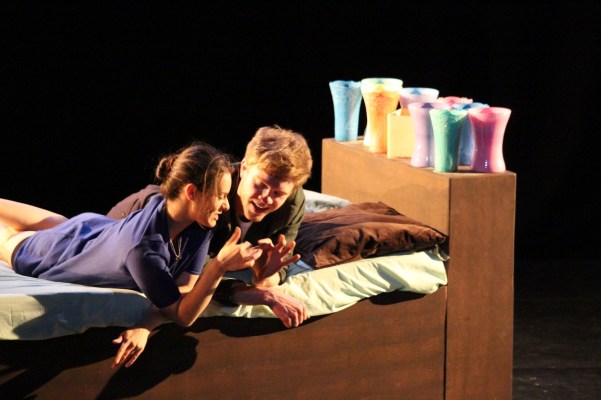
The full theatre has a strong moral compass but one that is easily swayed by the grotesque. Almost unanimously condemning Edmund (Kim Hardy) for being in a consensual feeder relationship with Tammy and making a living through amateur porn, they then decide the young wife disappointed with her post-mastectomy boob job is free of pride. Neither is breaking any law, but the socially taboo is condemned in this arena. It makes for a social experiment that’s as interesting as it is a piece of theatre.

This new writing showcase and scratch night is certainly a unique one in its polish and format. Though each one so far has had a distinct theme and some will be more effective than others, it makes for a fun, interactive night out and a great showcase of emerging talent.

Monorogue: Seven Deadly Sins ran for 1 night only.

The Play’s the Thing UK is committed to covering fringe and progressive theatre in London and beyond. It is run entirely voluntarily and needs regular support to ensure its survival. For more information and to help The Play’s the Thing UK provide coverage of the theatre that needs reviews the most, visit its patreon.

Expectations, Theatre N16

Tate and Max live in Tate’s nan’s flat above The Bedford pub in Balham. They’re awkward, posh boys with little life experience, though they’d like to believe otherwise. When Tate brings Billie, a woman twice their age who falls in the pub, upstairs to get cleaned up, her carefree spirit captivates the two lads. Billie rents their spare room, resulting in learning experiences for the three and their travelling housemate who returns unannounced. In Matilda Curtis’ first full-length play, there’s an interesting premise but the follow through is weak. With underdeveloped and underplayed characters, the full potential for both comedy and conflict is present, but Curtis sticks too close to the mundanity of real life, preventing the idea from developing into a truly compelling story.

Of the cast of four, Dan Furlonger as socially inept to the point of autistic Tate is excellent. Furlonger captures Tate’s emotional turmoil and various levels of discomfort with empathy and ease, and he has a more pronounced journey than the others. Curtis has invested more depth and internal conflict in the character. In contrast, Billie has the potential to be a disruptive, life changing force for better or worse, but this power is denied her. Denise Stephenson does her best to inject the character with life, but the noncommittal, conversational dialogue lacks punch. Laddish Max is a dull stereotype with little emotional depth, and Evie (sensitively played by Adele James) is also not provided with the opportunity for profound change. The lack of character development and mostly flat narrative arc is incredibly frustrating, but easily changed with a script overhaul.

Director Grace Joseph uses the irregularly-shaped room well, and her set has some lovely details that accurately reflect a posh nan’s flat that hasn’t changed in decades. She has a good instinct for pace and timing in naturalistic work, but the final sequence feels forced – though this could be a script issue as well.

Expectations shows good potential; Joseph is a competent early-career director with a good instinct for space and casting. Curtis clearly has good ideas, but her execution needs refining. It’s a good attempt from emerging artists, but not a great one.

Expectations runs through 28th July.

The Play’s the Thing UK is committed to covering fringe and progressive theatre in London and beyond. It is run entirely voluntarily and needs regular support to ensure its survival. For more information and to help The Play’s the Thing UK provide coverage of the theatre that needs reviews the most, visit its patreon.
Valiant, So & So Arts Club

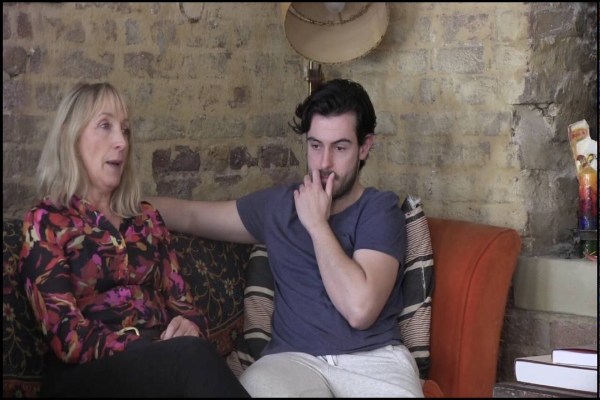
“War has changed, but it’s effect on generations of women hasn’t,” writes Sarah Berger, founder and artistic director of So & So Arts Club. Military history is mostly dominated by men, but Sally Hayton-Keeva gives voice to disregarded but valid female experiences of conflict. Valiant Women in War and Exile is her collection of stories spanning the generations of global conflict from El Salvador to Germany to the Philippines. Adapted for the stage by Lanna Joffrey, Valiant interweaves verbatim monologues that director Alexandra Rensetti places on a bare stage with intermittent textual projections. It’s so simple, but fantastic performances by four multi-rolling actors and a script that’s equally riveting and horrifying serves to educate, advocate and protest. This production is a vital contribution to women’s history, giving voice to those ignored in favour of patriarchal experiences of human suffering in times of war.

Lanna Joffrey, Diana Bermudes, Catherine Fowles and Gemma Clough each play several characters, at least three or four each. As impressive as their work is, much credit is due to their accent coaches, Joy Lanceta and Nicola Redman. There were hardly any lapses in accent and the actors integrated them in their performance rather than be inhibited by them. 

All text is delivered to the audience in a first-person narrative. Sometimes this is a lengthy section by one person, other parts are fragmented and shared to emphasise shared experience. These women are wholly uncensored and overflowing with emotion, whether that is violence towards the Nazis by the youngest ever Russian sniper, passion from a radical Afghani teacher teaching her students revolutionary poetry, or the numb devastation of a Northern Irish wife who watched her husband and daughter die in a car bomb. There are so many more, each as powerful and moving as the next. The pain and torture these women have endured is incomprehensible to most people, as is their strength. The actors’ ability to evoke empathy through complete commitment to these women and their stories gives this production its power.

Renzetti’s direction is simple and uses large text blocks of projection to add visual variation, but the actors acknowledgement of it before speaking unnecessarily breaks character. Joffrey’s script is a relentless barrage, but It should be – it drives the message home again and again. These stories are not isolated across space and time, they are everywhere. The amount of women introduced in the short space of time reinforces that women and children are often neglected in the wake of stories of wartime male heroism and that history’s narrative must change.

There is little to fault in this production and its message is loud and clear. If only Valiant were required viewing for politicians the world over who grunt and preen in luxurious, remote palaces like overweight performing monkeys, perhaps they may learn that war has an unimaginable but very real impact on the 99 percent. Soldier casualties are clear, mostly male numbers thrown about in political rhetoric but the often unseen consequences on women and girls must be acknowledged.

 Valiant runs through 31 July.

The Play’s the Thing UK is committed to covering fringe and progressive theatre in London and beyond. It is run entirely voluntarily and needs regular support to ensure its survival. For more information and to help The Play’s the Thing UK provide coverage of the theatre that needs reviews the most, visit its patreon.
A Midsummer Night’s Dream, Jack Studio Theatre

Shakespeare often seems to come in cycles, with several productions of the same play on at once in different venues. At the moment, it’s A Midsummer Night’s Dream though it’s a common summer favourite anyway. With so much competition, individual productions need to distinguish themselves from the rest as well as have a distinctive concept, even if that concept is to stick to tradition. New company Wildcard takes a modern approach to the play and adds quite a bit of music, but a range of performance abilities, homogenous delivery and few unique elements make this production feel like a student or recent graduate production. There is a lack of confidence in the direction and the concept is not new or exciting, apart from the use of music. Though it has some good performances, this production isn’t awful, but is largely forgettable.

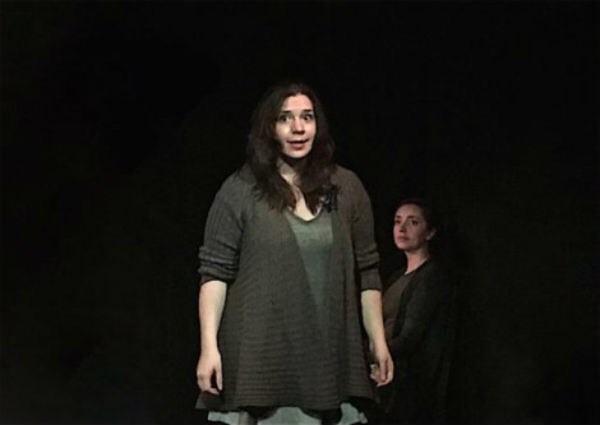
Amongst the thirteen actors, a few distinguish themselves from the rest of the company. Natasha Killam is a fantastic Hermia, in love, expressive and fully committed to the role. The hipster has an emo best friend in Helena, who plays the character with a dull indifference. Whilst this makes sense to the character stereotype, it’s boring to watch – though this is likely to be a directorial choice. Peter Dewhurst as a townie Demetrius is also very good, eventually matched by Joshua Leese’s hippie Lysander after Puck drugs him in the forest. As representatives from four distinct social tribes, the likelihood of them being in love in real life, let alone friends, is rather implausible, though. A sulking Helena dressed all in black in love with a polo shirted, jumper round the shoulders, Demetrius? Really? This is another of director James Meteyard’s inexperienced and unjustified decisions. 

The most inspired casting is Theseus and Oberon as a woman (both played by Abi McLoughlin), a nice touch but still shows the power imbalance between them and Titania and Hippolyta (Rhiannon Sommers). There are a few female mechanicals (Elly Lowney as Starveling, Christie Peto as Snug and Harriet Ruffer as Quince), which is also great to see. With seven of the thirteen actors women, it goes some way in adding diversity in the entirely white cast of whom nearly all have identical, Home Counties accents and all look to be about the same age. The character types represented are also generally associated with white, middle class people, further showing a blatant lack of diversity in race or social class. Whilst this isn’t an issue in and of itself, it is most definitely a sign of the lack of diversity in theatre.

Some of the lighting design is pretty to look at, though some of the changes are so dramatic that attention is drawn to the lights rather than the performance. There are some pretty strings of fairy lights, but these add to the studenty feel of the piece. There are a couple of retro easy chairs that initially look out of place, but are used well to comedic effect later in the play.

Meteyard tries to further update by adding off-text dialogue and heaps of verbal pauses, Most of which cause the energy and pace to drop. There’s also a lot of slow, even delivery, particularly in the first half, across most of the characters. Fortunately, it picks up up in the lovers’ best scene, which is played well and gets plenty of laughs. He seems to have little experience directing Shakespeare, though he excels with the music. Puck sings most of his monologues, which is really lovely (though why is he in leather trousers, topless and covered in glitter?) and the mechanicals accompany both onstage and off, creating a rich soundscape.

With the music the strongest element of the production, particularly at the end with a delightfully surprising jig, it’s not all pedestrian. But this young company is still very much finding their feet with classical work.

A Midsummer Night’s Dream runs through 23 July.

The Play’s the Thing UK is committed to covering fringe and progressive theatre in London and beyond. It is run entirely voluntarily and needs regular support to ensure its survival. For more information and to help The Play’s the Thing UK provide coverage of the theatre that needs reviews the most, visit its patreon.

CUT, The Vaults

We don’t often see Antipodean theatre on the London fringe, but when we do, it’s certainly a bit different from British progressive performance. CUT, a cinematic, fragmented solo performance with elements of interactive theatre and immersive installation, effectively evokes a constant sense of unease but the range of styles and influences create a convoluted message. Technology is used effectively to maintain audience tension, with light and sound breaking up the narrative creating an extreme environment. But despite CUT‘s slickness and a fractured story that holds viewers’ focus, there is no clear reason why the story of an anonymous female flight attendant pursued by a male stranger is told. There is no predominant theme or message, just a story that, though it is told well, isn’t particularly dynamic or interesting.

Hannah Norris, an Australian actor based in London, is the only performer but the audience is a vital contributor to the piece so it’s easy to forget this is a solo performance. We are boarded onto a plane and accompany her throughout her shift and her subsequent journey home, with regular interruptions of nightmarish flashbacks, surreal characters, blackouts and loud noises. Norris’ character constantly narrates the journey, but it is never made clear what this episode from her life is meant to say. They man following her perhaps comments on male objectification of women, but it’s not particularly clear if this is an actual message of the piece – if that is the piece’s intention, it lacks conviction. The focus could just as easily be the possibilities of contemporary narrative structure influenced by pop culture and technology. The programme notes by writer/director Duncan Graham fail to elucidate despite an explanation of influences.

Regardless of the lack of clarity behind the piece, Norris is an excellent performer. She morphs and changes within the blackouts, always surprising and maintaining attention. Her timing and characterisation are impeccable within the often third-person text. Sam Hopkins and Russell Goldsmith’s design almost becomes characters within their prominence, but they do not overwhelm. The nerve wracking harmony between Norris, sound and light is exquisite.

With production elements that are much more impressive than the piece as a whole, CUT still has plenty of positives, but the story behind the suspense it creates is unsatisfying and anticlimactic. The narration and tech creates emotional distance, but perhaps the favouring of style over substance is too blunt for a British audience.

CUT runs through 31 July.

The Play’s the Thing UK is committed to covering fringe and progressive theatre in London and beyond. It is run entirely voluntarily and needs regular support to ensure its survival. For more information and to help The Play’s the Thing UK provide coverage of the theatre that needs reviews the most, visit its patreon.
Screwed, Theatre503

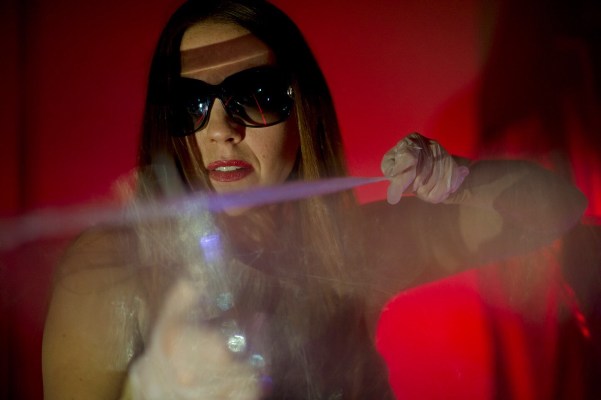
Char and Luce are free spirits who live their lives totally in the moment, but not in a happy, hippie sort of way. These inseparable 30-somethings work in a factory in Little England and spend their spare time clubbing, drinking and fucking. They have no life plans, just the immediate goals of getting pissed and getting off with blokes in toilets. Their line manager Paulo and Luce’s transgender mum Doris try their best to save them, but the self-absorbed duo don’t want to know. Kathryn O’Reilly’s debut play Screwed admirably endows women with stereotypically laddish behaviours, but there’s an uncomfortably judgemental tone taken on the lack of goodness within these women. The wonderfully biting dialogue and excellent performances from the cast of four easily seduce the audience, but the script’s message evokes troubling questions.

The two women are verbally abusive, physically violent and without a care for anyone else. Instant gratification is all that matters and they stop at nothing to get it. Their behaviour predictably catches up with them, but there’s little reform after disaster strikes. In contrast, the men in the story are as virtuous as the women are abhorrent. Why? What is this juxtaposition meant to say? Is it to prove that women can be just as bad a men? That male sensitivity is real and should be respected? That women should behave like this in order to feel empowered? Their working class background is obvious, though so is Paulo’s – but his ambition contrasts their lack of it. Is this a comment on social class as well as gender? There is clear reference to the  cycle of poverty, but it’s certainly not viewed with sympathy. All of these themes are raised, but none are particularly positive by the limited emotional range endowed on the duo. The harsh spotlight may be brutal and honest representation of working class, small town Britain but its sweeping generalisations about women and social class are unclear at best, and worrying at the worst.

Samantha Robinson and Eloise Joseph are Char and Luce. Their attack on the roles is positively electric, as is their chemistry and threat to anyone that crosses their path. Stephen Myott-Meadows  as Paulo is a quiet romantic with a biblical capacity for forgiveness. He’s the Nice Guy that always gets friendzoned, taken advantage of, and keeps coming back for more in the hope that things have changed. They never do, and his hurt is inevitable. In this case, it’s horrific. Derek Elroy is Luce’s saintly mother, unappreciated by her daughter, who still lives with her despite being in her third decade, on a daily basis. Elroy’s calm is a fantastic foil to Luce’s viciousness. 

Catherine Morgan’s simple set is a remarkable continuous line that forms the landscape Char and Luce barrel through on a day-to-day basis. As soothing to look at as Elroy’s voice is to hear, it’s metallic smoothness is a reminder of the connection between all things in the world. The girls’ behaviour might seem trivial on a small scale, but it deeply effects those closest to them.

Screwed is a difficult play to pin down. On the surface, it’s fantastic. But upon pondering what O’Reilly wants to communicate, it becomes more troubling, a judgment of male and female behaviour within working class suburbia. There is clear moralising, but the moral of this story is not a comfortable one to take in.

Screwed runs through 23 July.

The Play’s the Thing UK is committed to covering fringe and progressive theatre in London and beyond. It is run entirely voluntarily and needs regular support to ensure its survival. For more information and to help The Play’s the Thing UK provide coverage of the theatre that needs reviews the most, visit its patreon.
Gertrude – The Cry, Theatre N16

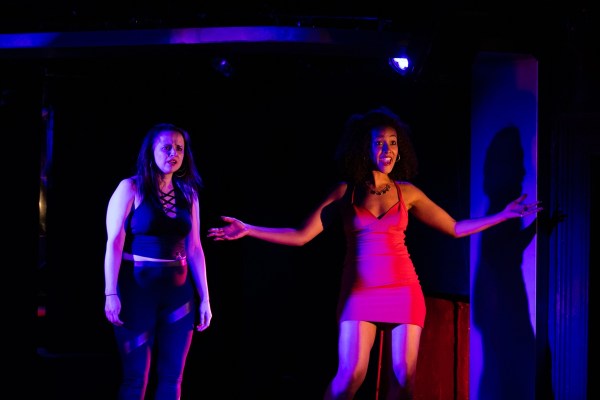
Shakespeare’s women never get the attention they deserve, even the more interesting ones. The deranged, damaged and dynamic are often maligned and infrequently on stage. Margaret, Lady Percy, La Pucelle, and so on have moments of brilliance, but are then hushed, relegated in favour of men. Howard Barker rescues Hamlet’s Gertrude from Shakespeare’s sidelining in his 2002 play, Gertrude – The Cry, but his depiction is hardly a favourable one. Though he places Hamlet’s mother at the forefront of his narrative, he paints her as an unfeeling, sex-crazed creature in a fetid nest of similarly awful people. Overt sexual acts and poetic, obscure language are plentiful, but this actually a rather dull and overly long script is hard to digest.

Director Chris Hislop utilises the irregularly-shaped Theatre N16 incredibly well with a small traverse stage, placing the action in the laps of the front row and evocative projections at one end. Felicity Reid’s set is white, with a minimalistic plinth functioning as various pieces of furniture and locations. Clean and stark, it suits the characters’ emotional detachment from everything other than their own ambition.

Liza Keast as Isola, Queen Mother to the dead King Hamlet and his brother Claudius (Alexander Hulme), and servant Cascan (Stephen Oswald) are supporting characters but give leading performances. Oswald in particular finds an honesty and depth not present in the desperation of the others. Isabella Urbanowicz as the titular Gertrude has a magnetic presence, but lacks chemistry with Hulme’s Claudius – though this is due to Barker’s script, not a lack of ability on the actors’ part.

The text is the production’s week point. At least half an hour too long, the dense, awkward language says little. Self-absorbed, maniacally driven characters who lack empathy and dimension rant and fuck, wash, rinse, repeat. Little actually happens, as if Barker didn’t really have a concrete idea on how to go about paralleling Shakespeare’s Hamlet from Gertrude’s perspective. Though Hislop’s choice to withhold an interval is the right one in terms of pace and energy, two hours with little linguistic variation and plot progression is an endurance test for both actors and audience.

Whilst Barker’s attempt to reconfigure Gertrude is admirable, this female-led play is hardly feminist. Her sexuality is her downfall rather than her freedom, and the men in her life entrap as much as they do in Shakespeare’s original story. Ragusa (LJ Reeves), the parallel to Ophelia, is essentially a sex slave purchased for Hamlet who is eventually driven mad by his infantile whinging and the abundance of malfunction in the household. Rather than presenting an alternative, progressive view on female sexuality, it comes across as crass and misunderstood.

This is a good production of a rarely-staged play, but it’s clear why it’s so obscure. Most interesting from an academic perspective, Barker’s Gertrude – The Cry isn’t a particularly good text.

Gertrude – The Cry runs through 30 June.

The Play’s the Thing UK is committed to covering fringe and progressive theatre in London and beyond. It is run entirely voluntarily and needs regular support to ensure its survival. For more information and to help The Play’s the Thing UK provide coverage of the theatre that needs reviews the most, visit its patreon.
Spill, Pleasance Theatre

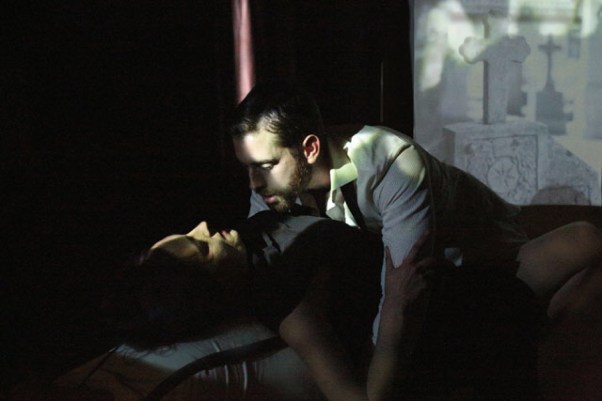
Discovering sex is probably one of the most definitive moments of a young life. Good, bad or indifferent, everyone remembers their sexual awakening. Masturbation, losing your virginity, rape, fantasies, dating, sexual identity and a handful of other topics come up in Propolis Theatre’s Spill, with a cast of eleven young theatre makers from Bristol. This verbatim piece is sweetly naive, but wittily blends music, song and a bit of delightful puppetry into the edited interview text, effectively breaking up the interweaving monologues. Though the material isn’t cutting edge or particularly interesting to more “experienced”, older audience members, Spill is well executed and full of heart.

Verbatim theatre created from the answers to interview questions can be tedious to sit through due to the first-person narratives and lack of dialogue between characters. Even chopped up and interspersed, engagement between performers often feels forced, if it’s there at all. Actors can stand there actively listening to each other as much as they like, but there’s still no getting away from the perceived self-involvement that comes from talking extensively about one’s own experiences. 

Propolis uses this format as the base, but they effectively utilise music, spoken word and song to emphasise particularly poignant moments and counter any potential monotony. Abstract movement sequences give the eye something engaging to take in, particularly when they’re as well executed as they are here. These devices make the piece much more interesting and able to hold audience attention for its duration. This fluid, changing form they have created is by far the most dynamic aspect of the production.

The eleven-strong ensemble never looks crowded; their choreography and staging is pleasingly slick. A simple set is colourful and striking, finding the balance between overly simple and excessive.

There is nothing innovative about the script though, particularly for an audience past their early twenties. Spill feels like it could be a TIE piece for 6th formers or freshers who are more likely to immediately relate to the stories of self-discovery. They otherwise come across as adorably nostalgic, even played by the young cast. There’s a good amount of humour and reflection in the language, and it’s admirably diverse and inclusive. 

Spill is certainly a polished piece of theatre that employs a some great devices, but the form and structure is more exciting than the content. It has clear potential as a touring show, though it will resonate much more with young people.

Spill runs at Edinburgh Fringe through August.

The Play’s the Thing UK is committed to covering fringe and progressive theatre in London and beyond. It is run entirely voluntarily and needs regular support to ensure its survival. For more information and to help The Play’s the Thing UK provide coverage of the theatre that needs reviews the most, visit its patreon.
Sea Life, Hope Theatre

I always think life in a British seaside town must be idyllic. Quaint and friendly, with the smell of chips, ice cream and salt in the air, the sun always shines and people share a friendly smile as they pass families playing in the sand and surf.

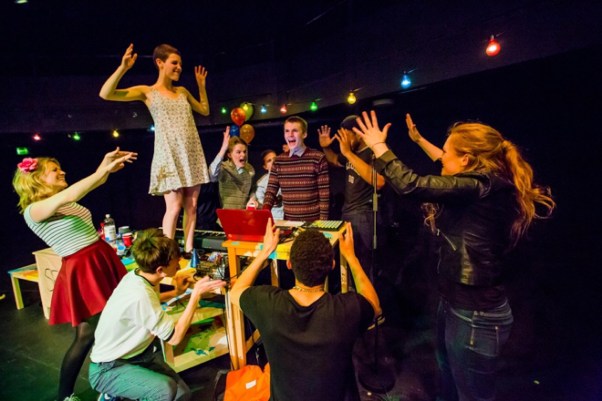
I know the reality is completely different. Broken economies are driving young people away, there are instances of racism and small mindedness, as there are everywhere else inland. Lucy Catherine’s Sea Life, set near Dover, captures this stark reality with three disfunctional, adult siblings in a town that’s literally and figuratively falling into the sea. Roberta is the agoraphobic fantasist who runs the family’s bar that never has customers. Her inappropriately clingy twin Bob builds coffins to inter the local cemetery’s residents that must be cremated before the cliffside where they rest crumbles into the channel. Their lone wolf brother Eddie, a failed artist, is one of a team tasked with digging up the dead. Their long-dead mother’s looming reappearance, constant rain and an anonymous American company that’s taken over the town’s economy has pushed these three to a breaking point that results in poetic, disturbing tragedy of classical proportions that’s also really rather funny. 

Catherine’s script is full of punchy, ferocious dialogue, constantly pulled taut by Matthew Parker’s direction. The three characters have radically different ways of coping (or not coping) with their dead-end lives, causing a natural undercurrent of tension that regularly erupts. The storyline is wonderfully unpredictable and increasingly macabre, though never implausible. Catherine’s gift here is showing a scenario that both feels like a work of fiction, and something that could totally happen under the perfect combination of circumstances and personalities. A couple of false endings detract from what could otherwise be a brilliant script, but the cathartic ending keeps things from being excessively dark.

The trio of actors have good chemistry, particularly twins Roberta and Bob (Vicky Gaskin and Chris Levens) who are uncomfortably close. Jack Harding as Eddie is an extraordinary pressure cooker who’s explosion is satisfyingly horrific to take in. 

Laura Harling’s set design is a fantastically detailed example of the possibilities able to be achieved in a tiny performance space. There is some slightly cheesy movement work that could otherwise be communicated with sound and lighting, but this is brief and the overall visual effect certainly adds to the play’s truthfulness.

Sea Life is a polished little gem of a play, and an excellent showcase for actors and designers alike. It’s not perfect, but Catherine’s script and Parker’s direction are a near-perfect example of contemporary naturalism.

Sea Life runs through 11 June.

The Play’s the Thing UK is committed to covering fringe and progressive theatre in London and beyond. It is run entirely voluntarily and needs regular support to ensure its survival. For more information and to help The Play’s the Thing UK provide coverage of the theatre that needs reviews the most, visit its patreon.

Leftovers, Theatre N16

What would you do if the country was as war and under attack? Would you join up and fight? Or would you run? If you left, where would you go? 

Protagonist Elizabeth lives in London with her husband Harry, who she met whilst feeding the residents of her local duck pond. Their romance is a proper fairytale, until the war starts. Writer Gabrielle Sheppard goes on to reveal the impact of the war on Elizabeth and Harry, and simultaneously shows Elizabeth’s ideal life that could have unfolded without the looming threat of attack. It’s a clever, Sliding Doors-esque device from Sheppard, though the understandable inclusion of Elizabeth’s mental trauma muddies the narrative – what is real? What are her delusions? These parallel worlds often overlap and blur, adding to the confusion. But maybe that’s the point. The refugee experience is hardly one of calm and clarity, and the disorientation of the narrative and dialogue has potential to foster empathy and understanding. It could also alienate, with the production being written off as unclear and poorly written, but hopefully this is a less likely interpretation. Leftovers is an intuitive, short piece of theatre with the ability to pluck at the heartstrings and present refugees as human beings who feel love, pain and want safety for those they love the most.

Sheppard also plays Elizabeth, showing her journey from a young woman in love to a damaged vessel who has lost everything, with great nuance and pathos. She has lovely chemistry with Christopher Adams (Harry) and Ella Cook, who plays her dog and her grown daughter. 

Director Dimitris Chimonas incorporates movement sequences mainly composed of running on the spot. There’s some nice abstract, gestural work to add variation but the running is the focus. The metaphor is clear, and effectively transitions between the episodic scenes. The set, mountains of clothing, are physically obstructive but a nice representation of everything refugees have to abandon in favour of safety.

At under an hour, Leftovers feels like it has a lot more to say, with the potential of becoming a fully formed, epic love/war story. The concept is a sound one, but further clarity and lengthening wouldn’t go amiss.  The two producing companies, Hounded and Ugly Collective, are certainly worth keeping an eye on. 

Leftovers is now closed at Theatre N16.

The Play’s the Thing UK is committed to covering fringe and progressive theatre in London and beyond. It is run entirely voluntarily and needs regular support to ensure its survival. For more information and to help The Play’s the Thing UK provide coverage of the theatre that needs reviews the most, visit its patreon.