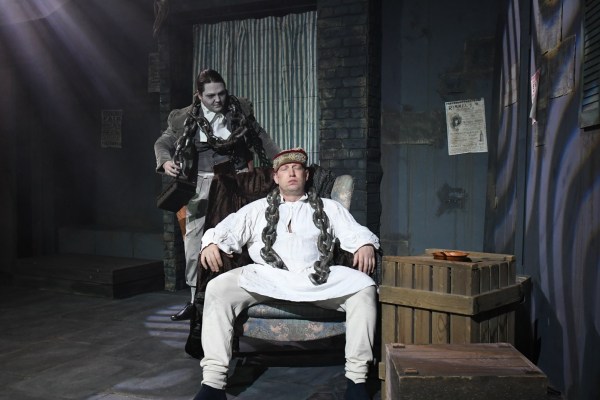
Dirty Great Love Story, Arts Theatre

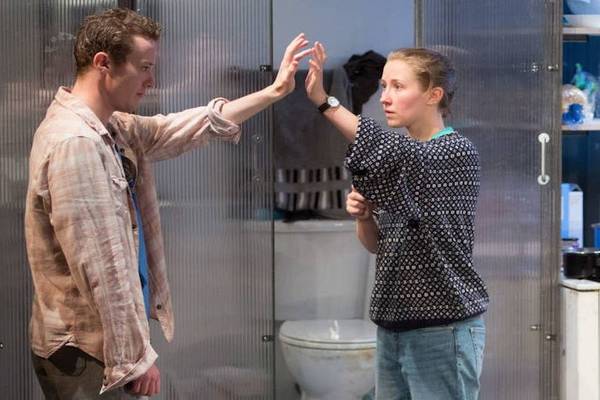
Richard Marsh and Katie Bonna have the sort of falling-in-love story you see in movies. The two years that it took them to get together are a ridiculous mashup of drunken disorder, absurd coincidence and goofy comedy. So they wrote a show about it. Character comedy Dirty Great Love Story uses rhyming poetry (the language of love) and narration to reveal the exquisitely human and often cringy landscape of modern dating. Though the supporting characters are underdeveloped and there’s an overall lack of depth, the show has undeniable charm that can warm the coldest of hearts.

Continue reading

What Shall We Do With the Cello?, VAULT Festival

https://i0.wp.com/i1.trekearth.com/photos/107187/cello_man_f_te.jpg

by guest critic Jo Trainor

It’s pouring rain and three strangers are waiting. An endless wait that is made unbearable by the constant cellist in the corner of the room. Matei Visniec’s surreal comedy utilises the simplest scenario and creates a storm in a teacup.

Continue reading

A Hundred Different Words for Love, VAULT Festival

rsz_james-rowland-received_10154855101933447

by guest critic Michael Davis

“The Sun is just a star…”

Language. Love. Since time immemorial, human beings have been trying to capture in words the essence of this most nuanced of emotions. Fresh from his success with Team Viking at last summer’s Edinburgh Fringe Festival, James Rowland premieres his latest show, A Hundred Different Words For Love at The Vaults. Set within the same universe as Team Viking, Rowland, through anecdotes and music, offers a personal take on the oldest of stories.

Continue reading

Holding the Man, Brockley Jack Studio Theatre

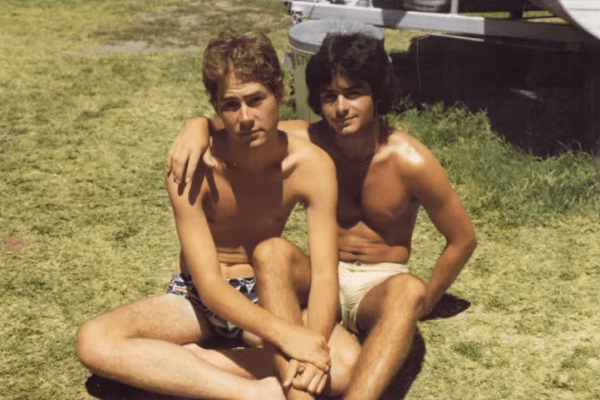
Tim Conigrave and John Caleo’s decade-spanning relationship was undoubtedly a gorgeous thing to behold. Meeting as school boys in 1970s Melbourne and staying together into the 1990s, their relationship was first documented in Conigrave’s memoirs and later adapted by Tommy Murphy for the stage. 

The coming-of-age story, though one that follows a predictable path once Conigrave decides they should sleep with other people, is potentially quite moving. But Murphy’s script is clumsy, with erratic pacing and hackneyed dialogue that lacks nuance. The cast consequently struggle to connect with their characters, making for a stumbling two and a half hours that feels more like the 15 years that Tim and John were together.

Continue reading

The Doppel Gang, Tristan Bates Theatre

doppel-gang

By an anonymous guest critic

If you’re a Marx Brothers fan like myself, you might go to this production by the company JUST SOME THEATRE with some trepidation. Are these four performers going to do justice to the Brother’s brilliant form of slapstick comedy? It’s nice to report that the answer is yes. The company’s attempt to create new Marx Brothers material is actually the strongest part of this show.

Continue reading

Wish List, Royal Court

rsz_wist-list-image-1000x574

Nineteen-year-old Tamsin wants to be a normal teenager. She wants to go to college, flirt with cute boys and go down the pub. She doesn’t want to be stuck in a cycle of poverty that dictates she’s either doing manual labour at a “fulfilment centre”, or caring for her younger brother with OCD so severe he can’t leave the house. Everyday is a struggle to keep herself together since her mum died and British society has turned against them. To the wider world, she and her brother are tiny, invisible cogs in a brutal machine out to destroy the most vulnerable.

Continue reading

Familie Flӧz, Peacock Theatre

https://i0.wp.com/www.festivalcomic.cat/2015/style/images/hotel_paradiso.jpg
by guest reviewer Rebecca Nice

German physical theatre company Teatro Delusio perform a silent comedy accompanied by an array of canonical scores from ballet to opera to a bit of pop. The international show that crosses language barriers through visual tableaus and expressive physicality of character is formed by a series of vignettes starring stock characters. Three performers play stage technicians and alternate to appear as stereotypical theatricals who they encounter backstage. There’s the one who always wants to sit and eat, the one who doesn’t want to be there and the one who’s always flexing his muscles can always be found in a technical team and this trio run the show, set entirely backstage, with haphazard efficiency and human agenda.

Continue reading

Feature: Top Ten of 2016

rsz_top-10-films

Though 2016 has been far from kind, seeing roughly 250 productions mostly in fringe and off-West End venues has made for a fruitful year in theatre. Choosing ten hasn’t been easy, but these productions had an impact that sets them apart from the rest.

10. Hamlet Peckham

A totally race, age and gender-blind production in found space The Bussey Building, this Hamlet focuses on storytelling and was executed with energy, undeniable passion and exceptional skill that puts it leagues ahead of most small-scale Shakespeare.

9. A Girl and A Gun

Louise Orwin’s unapologetic live art piece looks at sexualised female violence, gaze and control. The sophisticated work incorporates live technology and a different male actor each night who hasn’t seen the script until he sets foot onstage.

8. Lucy McCormick: Triple Threat

Lewd, rude and in your face, live artist Lucy McCormick takes on celebrities and their causes, the Bible and its women, and female sexuality. Be prepared to be shocked and amazed when she brings the show to the Soho theatre in 2017.

7. Extravaganza Macabre

Little Bulb’s Victorian music hall inauguration of the outdoor courtyard space at Battersea Arts Centre is filled with heart. The talented trio expertly use the space in the family show that approaches form and style with dedication and invention.

6. in/out (a feeling)

Isley Lynn was my new writing discovery of 2015; this year brought Andrew Maddock. The actor/writer/facilitator writes modern stories of everyday heroes, but in exquisite verse. in/out (a feeling) tells the story of sex worker Blue and one of her customers with poignancy and pathos.

5. Us/Them

Belgian company Bronks brought this unconventional telling of the Beslan school massacre to Edinburgh, and returns to the UK in 2017 at the National. This devastating two-hander replays the story from the perspective of two children taken hostage.

4. People, Places and Things

I missed this at the National, but the West End transfer captured the intricacies of depression with Denise Gough’s inimitable performance. It’s astonishing work that gets into the bones.

3. Counting Sheep

The immersive gypsy punk opera by Lemon Bucket Orkestra was one of the highlights of this year’s Edinburgh Fringe. Recreating the Maidan revolution in the Ukraine, the audience join in to recreate the people’s demand for change.

2. Bucket List

The extraordinary Theatre Ad Infinitum make my yearly list again, this time with their all-famle show attacking the US-made maquiladoras in Mexico’s border towns. Their distinctive physical theatre technique is showcased alongside an aggressive, unapologetic political agenda

  1. Imogen

Matthew Dunster’s extraordinary reimagining of Cymbeline under Emma Rice’s Globe leadership appealed to young urbanites and anyone who likes their Shakespeare fresh and alive. Dunster’s approach was thoroughly embedded into the text and story and tapped into the energy of Early Modern theatregoing.

Honourable Mentions: Skin a Cat, Tomorrow I Was Always a Lion, Wendy Hoose

These three narrowly missed out of making it into the top ten, but all are powerful pieces of theatre that are no less deserving of the accolade. All are driven by important socio-political issues and tell incredible human stories.

The Play’s the Thing UK is committed to covering fringe and progressive theatre in London and beyond. It is run entirely voluntarily and needs regular support to ensure its survival. For more information and to help The Play’s the Thing UK provide coverage of the theatre that needs reviews the most, visit its patreon.

Why the Whales Came, Ovalhouse

In 1914 on one of the Scilly Isles, young Gracie and Daniel defy their parents’ rules and local rumours by befriending the Birdman. He’s an ancient fellow known for carving sea birds and cursing the people he encounters. Though he lives alone on nearby Samson, their chance encounter with him that begins in fear evolves into friendship. 

There’s more to Why the Whales Came than this, though. Coming of age, grief, overcoming prejudice and the creation of myth are dominant themes in Danyah Miller’s solo adaptation of Michael Morpurgo’s novel for young people. Though geared towards children, the complexity of the story and Miller’s engagement with the audience is infectious and appeals to all ages.

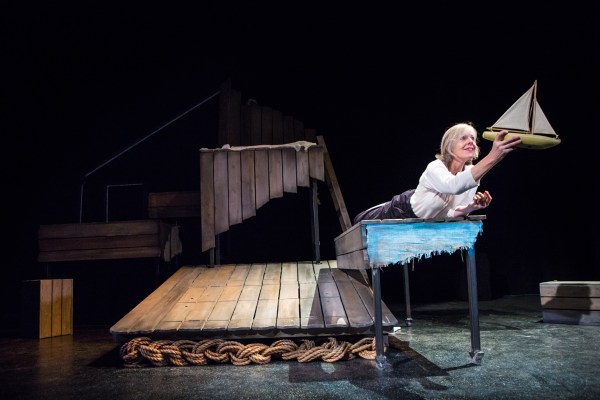
Miller begins her story with Gracie and Daniel, who love building model boats on their island home. It’s the search for a quiet place away from the bigger fishing vessels and Daniel’s nasty older brother Big Tim that leads them to bigger adventures. Their time with the Birdman teaches them lessons about both the kindness of strangers and doing good in the face of mob rule – inspiring messages for children and young people, even if not easy ones to execute in real life.

Miller’s grandmotherly warmth is engaging, and she’s an excellent storyteller. Her delivery is slick and confident; the children in the audience are focused throughout. Combined with Kate Bunce’s multi-level set packed with surprising doors and reveals, Why the Whales Came is far from quiet, sedate storytelling, though neither does it rely on energy alone to hold audience attention. The script is easy to follow but has enough threads to be interesting, but not so many that it becomes a mess.

Theatrical storytelling can be a difficult form to get right, especially with children who are now used to endless supplies of content across numerous devices. Michael Morpurgo’s stories are fantastic sources of material, and Miller truly makes this one her own.

Why the Whales Came runs through 31 December.

The Play’s the Thing UK is committed to covering fringe and progressive theatre in London and beyond. It is run entirely voluntarily and needs regular support to ensure its survival. For more information and to help The Play’s the Thing UK provide coverage of the theatre that needs reviews the most, visit its patreon.

A Christmas Carol – The Musical, LOST Theatre

Providing opportunities for aspiring and emerging actors is no doubt a wonderful thing. LOST Theatre has been doing exactly this since its founding in 1979 through its stage school and regular in-house productions. Their current production of A Christmas Carol – The Musical captures LOST’s ethos and the spirt of Christmas in all of its joyful, communal and tacky glory with a cast composed of both amateurs and pros, including children. Though the finished product is more like a child’s finger painting than the Mona Lisa, their joy in performing is undeniable.

Alan Menken’s 1994 musical is typical of its era – a big cast, barnstorming numbers and a commitment to musicalise the most non-musical of stories. There are some great ensemble numbers, though the mixed ability cast and unreliable sound levels diminish their power. Songs with fewer characters have more emotional reach, even though the sound still isn’t great. Choreography is inconsistent, with some songs tightly choreographed whilst others look like aimless wandering about. Co-directors Martin John Bristol and Mark Magill otherwise use the space well, though there is a fair bit of lengthy filler movement.

Though there is a blatant lack of racial diversity, the cast of 22 has 13 women and girls. The ghosts of Christmas Past (Katrina Winters), Present (Rebecca Westberry) and Future (Jessica Finn) are all women, and strong performers at that. Though Scrooge is the weak link out of the leads, he has a good voice in spite of a lack of emotion. Of the child actors, Kyrana Shea’s West End experience sets her apart from the rest of the kids, even though the tiny, Tiny Tim (Arthur Tidbury) is absolutely adorable. Richard Lounds and Toby Joyce are also excellent as Marley and Bob Cratchett.

The lighting and costume are the most glaring signposts of the semi-professionalism of the production. There’s an Edwardian dress here, a modern sleeveless top there, and a ruffled polyester blouse straight out of the 1980’s amongst the otherwise Victorian-ish garb. All the colours of the rainbow and smart-lighting gobos are used pretty much constantly, like a kids’ school disco from the 90s. It distracts from the performances and clashes with the undertone of the story.

Though A Christmas Carol – A Musical lacks polish and professionalism, it compensates with love for the work. This is great to watch, even if the final product isn’t notable in and of itself.

 A Christmas Carol – A Musical runs through 31 December.

The Play’s the Thing UK is committed to covering fringe and progressive theatre in London and beyond. It is run entirely voluntarily and needs regular support to ensure its survival. For more information and to help The Play’s the Thing UK provide coverage of the theatre that needs reviews the most, visit its patreon.