Margaret Thatcher Queen of Soho, for remotegoat

With a stage covered in tinsel and large neon pink script of ‘Maggie’, it is immediately clear that the audience is in for an evening of fabulously camp cabaret. The hour-long show tells us the fictitious story taking place on the eve of the Section 28 vote. Maggie has been contemplating the morality of this vote for some time, and goes for a walk to clear her head. She was not paying attention and got lost in deepest, darkest Soho where, being mistaken for a drag queen, she is invited into a club. After emerging the next morning as a new woman, she resigns and embarks on a new career in show business.

Matt Tedford, with immaculate vocals and gesture, drives the show as Margaret Thatcher. Robert Cawsey and Ed Yelland multi-role in a costume base of cut-off denim shorts and moustaches. There are some show tunes and gay standards, but the show is predominately spoken. All three performers possess a high level of physical performance and the difference between the various characters effectively uses stereotype for comedic effect. Tedford’s banter with the audience and comic timing is impeccable, creating numerous moments of raucous laughter.

The writing is tight, polished and riddled with political references and jokes. Despite the format and pretence of being a light-hearted cabaret show, it looks at Thatcher’s controversial policies, particularly the state of the country leading up to the Section 28 vote. This production ends happily for the main character, (even though the majority of audiences are the sort that despise her) and lends itself to empathising with someone that, despite her mistakes, is very much a human rather than a monster. If only this production depicted real life! Writers Jon Brittain and Matt Tedford are a great team who deliver a brilliant piece of writing that manages to be hilarious and highly political at the same time.

Whilst the show was excellent, there is little scope for development. If it were any longer, the concept would stale. As an intimate show, larger venues would also present a challenge. Despite this, it is a vital contribution to fringe theatre and caters to a wide range of audiences.

Intention: ☆☆☆☆☆

Outcome: ☆☆☆☆

Star Rating: ☆☆☆☆ 1/2

Click for original review on remotegoat.com.
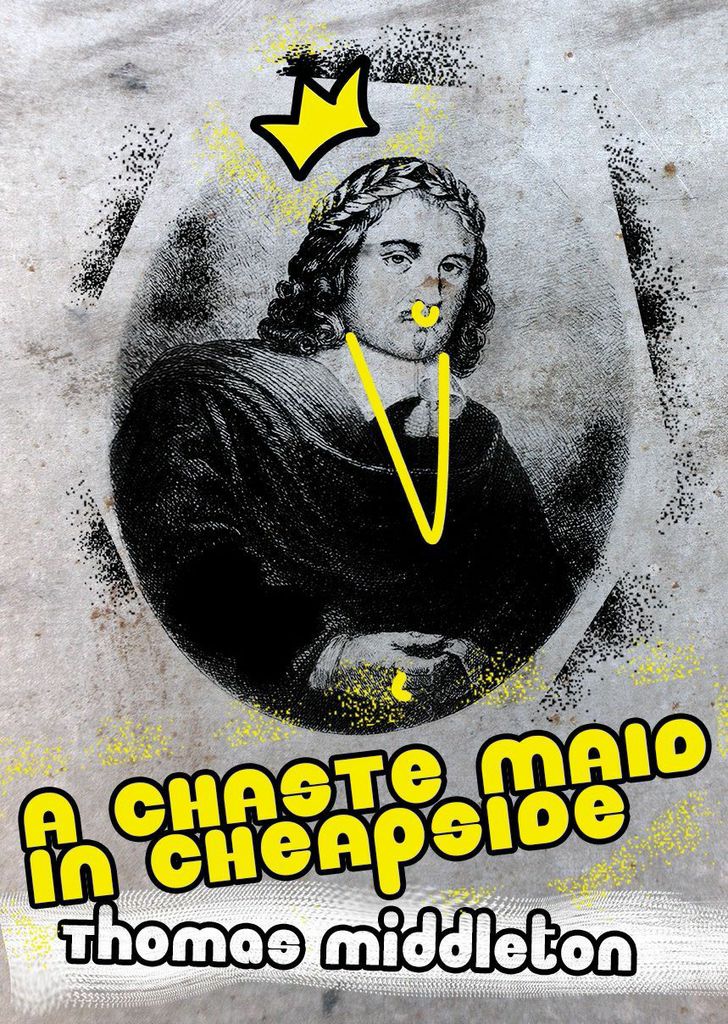
A Chaste Maid in Cheapside, The Rose Playhouse

A CHASTE MAID OF CHEAPSIDE March 2015Compared to the number of Shakespeare productions that must be staged in London every year, his Jacobean and Elizabethan contemporaries are rarely produced. The opportunity to see Middleton’s A Chaste Maid in Cheapside in the ruins of The Rose Theatre, built in 1587, is a most rare one indeed.

The Rose is an archeological treasure with a small performance space overlooking to excavated remains. It is not the most comfortable of spaces – there is no heating or toilets, but the volunteer staff members provide the audience with blankets and Shakespeare’s Globe allows Rose audiences to use their facilities. Despite the potential for discomfort, it remains one of the most unique performance venues in London. It has the potential to dramatically emphasize a play and its production values, but directors do not always fully exploit the venue’s potential.

Set in the 1950’s, this version of A Chaste Maid in Cheapside aims to draw attention to post-war sexual frivolity and a rising middle class. Running at just over an hour, this edit focuses on the sex and relationship politics of the characters. The 1950’s aspect is conveyed solely through costume and music. Red is a dominant colour, matching the rope lights that outline the theatre’s excavated foundations, the set’s archways, and the themes of love, lust and anger. The goal of portraying a more powerful middle class does not particularly come across, but that is due to a middle class not existing at the time the play was written even though some of the characters are driven by money. The era’s post-war positivity and rebellious youth does suit this script very well, however.

Overall, the performances are very good. In particular, Alana Ross and Fergus Leathem are fantastically funny as Sir and Lady Kix. Richard Reed and Harry Russell, who play the brothers Touchwood, compliment each other well. Reed plays a cockney wide boy marketing his virility to barren couples and Russell is a wide-eyed young lover. Both play their parts with energy, enthusiasm and commitment. Commendably, casting was age-appropriate to the role. The pace of line delivery takes some time to pick up, but the second half of the play is delightfully quick.

This script has been heavily edited. Even though the story has been pared down to focus on the sexual dynamics, it did not leave much scope for character development. Quite a lot of exposition has been lost, which makes the action feel artificial and rushed. Even an extra half an hour would have given this production more substance.

The opportunities to see this play are rare and there are certainly some very good production elements in this adaptation, but the editing lets it down. The concept can feel tacked on at points, particularly with large chunks of text missing. Fortunately the second half and the performances help compensate, as does the novelty of the Rose itself.

Intention: ☆☆☆☆

Outcome: ☆☆

Star Rating: ☆☆☆


The Play’s The Thing UK is an independent theatre criticism website maintained voluntarily. Whilst donations are never expected, they are hugely appreciated and will enable more time to be spent reviewing theatre productions of all sizes. Click here to make a donation with PalPal.

Kate, Greenwich Theatre, for remotegoat

They say all girls love a man in uniform. The young women in 1940 Reykjavik are no different. They certainly enjoy the company of the young British lads occupying the city to protect them from the Germans. The rest of the city exploits the financial benefits of a 25,000-strong population increase with money to spend and no fear of imminent attack. The war is particularly prosperous for husband and wife Julia and David, their daughter Selma and niece Kate. David runs a kiosk selling cigarettes to the boys, Julia mends their uniforms, Kate helps with the kiosk and Selma…well, she has sex with soldiers for money.

This production uses Brechtian staging, a capella singing, and two languages to share the wartime ups and downs of ingénue Kate (Rianna Dearden) after her move to the big city. She begins bright eyed and bushy tailed, full of countryside innocence. After becoming embroiled in her cynical cousin Selma’s (Olivia Hirst) secretive exploits, experiencing love, loss and sexual assault, Kate quietly, but sadly, matures. The girlish enthusiasm and wonder is gone. Selma does not have such an extreme emotional journey, but must face the consequences of her actions and discover they affect her family as well as her. Life starts out swimmingly, full of good intentions, but eventually collapses under the pressures of wartime.

Dearden’s and Hirst’s performances strikingly contrast each other, exploring the complexities of a close familial relationship similar to that of siblings. Mother Julia (Anna Nicholson), envious of the girls’ youth, encourages them to take up with the soldiers. Father David (Chris Woodley) tries to keep the family together and make a good living from his business endeavors. Fifth performer Alex Dowding plays several soldier characters, including Kate’s boyfriend, Rob. Despite the serious subject matter, Dowding skillfully uses comedy multirolling akin to that in the West End’s “39 Steps.” Woodley also multiroles as neighbour Benni, who is in love with Selma and ruthlessly tries to claim her.

Using bare-bones set and lighting emphasizes the performances and the characters’ relationships. Props are used sparingly, but effectively. Bits of paper are snow, a wooden crate is the kiosk and a sofa, and a leaf blower comically captures the constant wind in wintertime Reykjavik. The actors never leave the stage; they hand each other costume pieces, props and operate the leaf blower whenever a door opens or the characters are outside.

The play’s energy is excited, anticipatory and high-paced. This could be slowed down more in moments of high emotion in order to have a stronger effect, but it is a minor issue. The performance runs for an hour but certainly has scope for development into a full-length piece of theatre.The performances are excellent and energetic, but the parental characters would have benefited being played by older actors.

Lost Watch certainly is certainly a company to follow. “Kate” is an excellent example of new writing in fringe theatre using confident performances, a clever use of space and imaginative storytelling of unique subject matter.

Intention: ☆☆☆☆

Outcome: ☆☆☆

Star Rating: ☆☆☆1/2

Reposted from remotegoat.com: http://www.remotegoat.com/uk/review_view.php?uid=11793

Rove, Battersea Arts Centre, for everything theatre

“As the audience enters, a young man with a magnificent beard is asking the violinist on stage with him if she knows “the one about…” several times. She always says yes, and then plays a brief tune. I realized after I settled that all the requests feature a man called Rover Joe involved in numerous exploits or unlikely situations…

“The structure of the performance is relaxed and loose. The subject of the story is a man called Rover Joe, Evans’ grandfather who emigrated from Ireland to Chicago. His tale is told in four sections, in between music, and talking to the audience about the importance of stories, their families, and so on…

“Armstrong’s music is excellent, as is Evans’ storytelling; though opening his eyes whilst giving us the tales would create more of a connection with the audience…

“This is certainly a unique performance: sentimental, quaint and emotionally honest. It raises some thought-provoking points on the nature of families and the tales they harbour. This is certainly a production to see for those interested in storytelling, folk music and folk tales, and quirky performances that don’t easily fit into a genre.”

Intention: ☆☆☆☆☆

Outcome: ☆☆

Star Rating: ☆☆☆ 1/2

Read the entire review on everything theatre here.

Shipwrecked! An Entertainment, for everything theatre

“Based on the true story of Henri Louis Grien, otherwise known as Louis de Rougemont, this is a tale of Victorian high adventure and a lying man’s downfall. It is the Jack Studio Theatre’s Christmas production, and one delightfully unlike other seasonal offerings…

“As a sickly child Louis yearned to experience life outside his bedroom walls, and at the tender age of 16 he decided that it was time to find his way in the world. After arriving in London, he meets a sea captain who invites him to work on an upcoming pearling expedition in the Coral Sea. A storm leads to shipwreck and a new life in Aboriginal Australia until he decides to venture home to London thirty years later. On his return to an unrecognisable city of smoke and industry Louis’ story has turns him into a celebrity, and the audience are surprised by a revelation that something was not what it seemed…

“Written by American playwright Donald Margulies, this is the UK premiere of this wonderful play. With a solid concept by Artistic Director Kate Bannister this is a delightful holiday theatre offering. Tony Taylor convincingly portrays Louis at all ages. Rose and Durbin skilfully employ physical performance to show us characters such as the captain, Louis’ mother, his Aborigine wife and Bruno the dog (the audience’s clear favourite). Performances are excellent throughout…

“The only flaws in the production are minor…The ending critiqued the press and society’s treatment of celebrities, but glorified creativity and imagination at the same time. This left me pondering how to view the principal character, and reminded me that life is not always black and white by any stretch.”

Intention: ☆☆☆☆☆

Outcome: ☆☆☆☆

Star Rating: ☆☆☆☆ 1/2

Read the entire review on everything theatre: http://everything-theatre.co.uk/2014/12/shipwrecked-an-entertainment-brockley-jack-studio-theatre-review.html

Ivy & Joan, for everything theatre

“Ivy sits in the staff canteen at the hotel where she lived and ran a cocktail bar for 40 years. She whiles away the time before a bus will take her to a new life in her friend Inky’s spare room after losing her job, pontificating to Vic, who is there to ensure she boards that bus and leaves for good.

“Joan sits at her kitchen table with husband Eric, reminiscing over their recent holiday to Venice. Eric is annoyed at her constant mispronunciations whilst Joan romanticises their experiences. They are both waiting for taxis. Eric’s will take him to a new job near his mother’s and Joan’s will take her back to a psychiatric facility where she is receiving treatment for an unstated mental illness.

The production consists of two separate one acts featuring the same performers, Lynne Miller and Jack Klaff. Both are seasoned performers and excellent to watch…Both plays certainly address important issues but could have been investigated more in-depth if they were full-length and featured more of the male perspective…

“Both Ivy and Joan are victims of their age and gender…

“There is little action in either play. The writing style is akin to Chekhov or Bennett. There are some lovely moments of witty bantering, but these are few. Despite outstanding performances, the playlets feel underdeveloped.”

Intention: ☆☆☆

Outcome: ☆

Star Rating: ☆☆

Read the entire review on everything theatre: http://everything-theatre.co.uk/2015/01/ivy-joan-jermyn-street-theatre-review.html

Light, for everything theatre

“…At the start of the show, an announcement warns us that the ushers will be watching us at all times should we have any trouble with flashing lights. This announcement, whilst concerned with health and safety on the surface, suitably forecasts the world of the play where the government monitors the thoughts of every citizen.

…Light is inspired by Edward Snowden’s revelations of government spying. It gives us a world where technology is king and the government supposedly keeps us safe from terrorism. The story follows Agent Dearden in a world where speech is redundant, as every human being has an implant that allows him or her to transmit thoughts directly to the receiver’s brain…

“Whilst the story itself is typical example dystopian Big Brother fare, it balances a wider worldview with an intimate portrayal of one family. What makes this production truly compelling and unlike anything I have ever seen is its use of light and sound…The actors use precise and detailed movements to indicate character, and location, often appearing to manipulate the beams of light…Surtitles, rather than speech, contribute to the lighting element and add character and plot information, though this is used only when absolutely necessary.

“This production is part of the London International Mime Festival for a short time and then goes on tour nationwide. To experience innovative theatre that takes the art form to new heights, see this show.”

Intention: ☆☆☆☆☆

Outcome: ☆☆☆☆☆

Star Rating: ☆☆☆☆☆

Read the entire review on everything theatre: http://everything-theatre.co.uk/2015/01/light-the-pit-at-the-barbican-review.html

Greywing House, for everything theatre

“One-person shows are extremely hard to create and perform effectively. It’s easy for them to be too long, too boring, too bizarre, too indulgent or too lots of other things. Greywing House uses poetic writing and language, puppetry and movement to craft a narrative that gradually exposes the otherworldly realities of coastal Greywing House and its proprietor, Miss Amelia. The audience are the guests staying at this B&B (which doesn’t offer breakfast because it’s too hard for Miss Amelia to keep track of the time) in the fictional coastal village of Cradlehead. There isn’t much to do in Cradlehead, but the local residents and ghostly legends make it unlike any other seaside destination…

“Miss Amelia is the epitome of polite restraint, akin to a 1950’s housewife. She seems quite innocent, but with a hint a melancholic nostalgia. She is warm and friendly, though this gradually deteriorates into desperation and madness. Mary Beth Morossa, the creator of the show, plays her with detail and sensitivity…

“This is a one-person show that is not without potential but still needs development. Having debuted at the London Horror Festival last year, its creepiness works any time of year and I could imagine it in the programme of numerous fringe festivals.”

Intention: ☆☆☆☆

Outcome: ☆☆

Star Rating: ☆☆☆

Read the entire review on everything theatre: http://everything-theatre.co.uk/2015/01/greywing-house-etcetera-theatre-review.html

Elephant Man, for everything theatre

“Joseph Merrick, also known as the Elephant Man or John Merrick, is a hot topic in the theatre, what with Bradley Cooper’s imminent transfer to the West End in this title role. Despite this news, the current, smaller scale production at the Jack Studio Theatre in South London is certainly worth seeing… In his original adaptation, writer and director Steve Green confronts audiences with the uncomfortable social history of ownership, entrapment and public appearance in the Victorian era.

“Actor Daniel Christostomou plays Merrick as a sensitive, articulate young man caged by his physical deformities and Victorian attitudes. Rather than prosthetics or make up, costume designer Anastasia Sarajeva has created an evocative, confrontational structure of wire, chain link and mesh for Chrisostomou. Naked underneath, we see both the actor’s and Merrick’s silhouette…

“Despite Chrisostomou’s incredible performance and the unique approach to Merrick’s experience, the script falls short. The writing is choppy, with large gaps in time and no explanation of what events were excluded. Individual scenes are well-crafted, but not pieced together to form a particularly effective whole, and I found myself needing to read up on Merrick after the fact to clarify plot holes. There are two projected sequences, but they seem arbitrary and would not have been missed if excluded.

“Regardless of the confusing and unpolished script, the characters and the performances still make this a production worth catching…”

Intention: ☆☆☆☆

Outcome: ☆☆☆

Star Rating: ☆☆☆ 1/2

Read the entire review on everything theatre: http://everything-theatre.co.uk/2015/02/elephant-man-jack-studio-theatre-review.html

Beautiful Damned, for remotegoat.com

Anthony Patch, a debonair young man, begins building a house of cards on a table in a shabby bar. On the verge of collapsing, Anthony gives up on the cards almost immediately. He takes no risks, stopping before he has really begun, or grew bored. Both possibilities reflect the tumultuous years spent with his wife, Gloria. Anthony and Gloria’s relationship mirrors their Gatsbian world of excess: they are self –absorbed, often indifferent towards each other, either passionately in love or in hate. The play chronicles the highs, lows and love affairs of their 10-year relationship with energy, commitment, versatile performances in a dingy, speakeasy atmosphere.

Nadia Cavelle and James Hyde skillfully portray the journey of the couple’s relationship as they meet for a drink to relive their past. Even with pianist and barman Fitz (Guy Hughes) to support the plot, the production is essentially a two-hander. Their first date is tea at The Plaza; Anthony clearly loves Gloria at this point, but she only loves herself. As their relationship develops, so does Gloria’s empathy but we see that Anthony is equally self-absorbed and lazy. They want to drink and dance, but cannot be bothered to put the work in to pay for their indulgences. Other friends and acquaintances from their past join them, played by Hyde and Cavelle using costume pieces to signify the character change. Altering their voices and movement style, the actors show the character transitions clearly and demonstrate their characters’ absurd behaviour extends to their social circle. They fight and make up constantly. Everything is high drama in Anthony and Gloria’s world as the action flips back and forth between past and present.

Whilst the actors make the transitions well, the lights are slow to keep up. Obvious changes in the lighting state support these episodic time leaps, but are ill timed and not actually needed. The stage space is used effectively by director Ben Weaver-Hincks, but the audience has little breathing space. £3.50 mint juleps help ease the discomfort and the theatre will want to maximize audience capacity, but the seats could have used a bit more space around them. Direct address is used occasionally to include the audience, but could have been employed more. Having not read Fitzgerald’s novel, I cannot comment on the adaptation quality. The piano accompaniment certainly aids in creating atmosphere, but the highlight of this show is the performances.

The story must come to an end, however. Anthony reveals a certain indiscretion whilst stationed down south during the war. They are older, jaded and really quite damaged. There is a strong element of faded glamour, obviously reflected in the set design and decoration. The world they knew and relished so fully has collapsed and been rebuilt unrecognizably to them, a house of cards pushed to its limits again and again. Do they genuinely love each other? Perhaps. Like two playing cards able to stand because they lean on each other, these two childlike individuals cannot navigate reality on their own.

Intention: ☆☆☆☆

Outcome: ☆☆☆

Star Rating: ☆☆☆ 1/2

Originally posted on remotegoat: http://www.remotegoat.com/uk/review_view.php?uid=11680