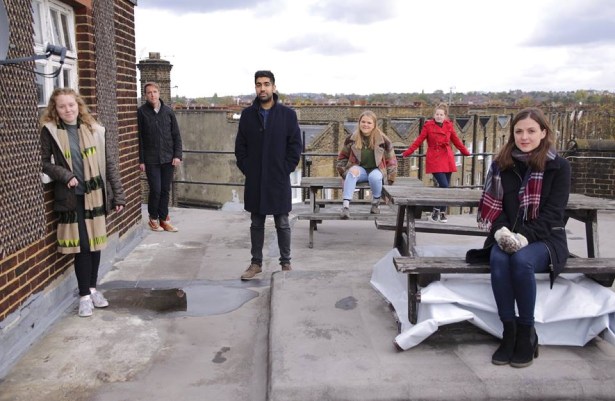
Monorogue: Elf Off, Old Red Lion Theatre

https://i0.wp.com/northpoleexperience.com/wp-content/uploads/2014/09/slide-1.jpg

The Salon:Collective’s Monorogue is back again, this time with a Christmas edition. The monologue showcase is now in Santa’s workshop, where perky elf Gingersparkles is interviewing human candidates for a vacancy in the Lapland workshop. Seven lacklustre individuals who can’t otherwise find seasonal employment are created and performed by Salon:Collective actors in this spunky, lighthearted show where the audience gets to vote for the best performer/character. Distinctive characters and good performances are the trademark of this regular event, and the framework around the monologues makes for more palatable viewing.

The set is a simple construction of heaps of brightly wrapped presents, Christmas decorations and toys. It’s easy, cheap and hugely effective in the intimate blackbox theatre. Though perhaps unintended, it is also a lovely juxtaposition to some of the more down-at-heel characters.

The performances are generally good, though some of the characters tend towards stereotypical and miss opportunities for nuance. The standouts are Lucy Gallagher and Louise Devlin’s intense Scottish tomboy Mae, and Angela Harvey’s struggling mum of five Hayley. Rachel Stoneley’s confused but sweet stripper, Jade, is a great way to wrap up the candidates. Laurie Stevens is the adorable Gingersparkles, but she surprises with a ferocious climax that wraps up the evening well.

The scripts have a strong lean towards comedy, which suits the time of year, but some of them lack depth and choose to mock personality traits rather than empathise. Whilst there is nothing overtly offensive and the stereotypes created are identifiable and relatable, there is room for more variation.

Monorogue proves again that they offer an entertaining event that allows actors and playwrights to showcase their talents without taking the more common, in your face approach to self-marketing usually found in showcases. The theme sets the actor/writers a challenge and gives the audiences a needed framing device, and the performances are usually good.

Monorogue: Elf Off is now closed.

The Play’s the Thing UK is committed to covering fringe and progressive theatre in London and beyond. It is run entirely voluntarily and needs regular support to ensure its survival. For more information and to help The Play’s the Thing UK provide coverage of the theatre that needs reviews the most, visit its patreon.

The People Show 124: Fallout, Toynbee Studios

https://i0.wp.com/cdn.paper4pc.com/images/desert-landscape-pictures-wallpaper-2.jpg
Making devised work for the past 50 years, People Show are nothing less than prolific. Their multidisciplinary works are numbered as part of the title; the company’s works now number 132. To celebrate their anniversary, the company’s taken over Toynbee Studios for three days, filling the venue with performances, films and an exhibition celebrating their half a century of work.

People Show 124: Fallout, first performed in 2013, is resurrected here. The piece deconstructs speeches by public figures and adds light, sound and film; the overall effect is one of provocative absurdity – isolated soundbites lose all meaning, even in a world that’s said to be falling apart. This short piece drives its point home quickly and efficiently and stimulates the senses, but with its message emphasising meaninglessness, it soon becomes repetitive.

Everything in the room is white, even the padded floor is powdered with talc to add an additional layer of frost. Pillows attached to the walls evoke a soothing dreamscape. But soon, pulsing colours disturb the peace as the cast of four fiercely deliver snippets of text. The lights are often so bright they are uncomfortable, even though the colours are childlike and fun. The juxtaposition is clever and sharp, and the switch from austere to saturated is an effective one.

The actors’ tone ranges from gentle to antagonistic, with a decidedly post-apocalyptic bent to the text. Projections of sweeping desert landscapes back up the promises of nuclear fallout, though the dreamy atmosphere from the beginning still lingers – what is real, and what is the product of our subconscious? The disconnect from reality diminishes any potential meaning, making the outcome decidedly absurd, even though the intention seems to want to carry more weight.

This colourful world enhanced with gorgeous projections, bright lights and music is integrated  with the text, though there is a lack of development in the core idea of the piece. If real life is has no purpose and we’re better off in a dream because the world is hellbent on destroying us, that’s fine – but a performance telling us that is not an easy thing to execute and in this case, not done fully effectively.

People Show 124: Fallout is now closed.

The Play’s the Thing UK is committed to covering fringe and progressive theatre in London and beyond. It is run entirely voluntarily and needs regular support to ensure its survival. For more information and to help The Play’s the Thing UK provide coverage of the theatre that needs reviews the most, visit its patreon.

Bianco, Southbank Centre

https://i0.wp.com/caramellattekiss.com/wp-content/uploads/2014/06/6T9T8237e1.jpg

By guest critic Rebecca Nice @rebeccajsnice

NoFit State Circus takes London by storm with a big show in a big top with grand ideas and huge audiences. A must-see on the London tourist and art scene, the slightly ominous looking grey tent is nestled into a winter wonderland of overpriced bars with a ticket price to match but the raucous, everyone-welcome, ‘roll up roll up’ nature of circus emanates from the tent in boundless quantities. Programmed by the Southbank Centre in a key Christmas location, Bianco will undoubtedly reach new audiences – which brings a certain responsibility to the oeuvre. The show not only introduces circus to new and well-seasoned theatregoers, but it sits within a concentration of productions in Southbank’s multiple venues that all want to be the cream of the crop. Based on a series of short acts that each display a specific circus skill, Bianco is accessibly fast paced but disappointingly repetitive in its lack of dramaturgy.

The main attraction of Bianco is a set made of scaffold ladders and truss that are separated, wheeled about and reset between acts. Audiences can move at their will, see things close up, from behind or directly underneath. The crew happily holler ‘mind ya backs’ as they restage and point you in new directions. This makes for constantly changing viewpoints; you always have the best seat in the house as you watch from wherever you want to be. Four towers form a central square area where truss cross bars support trapeze acts and tightrope walkers accompanied by live music. The greater sense of agency makes for a work that is almost promenade and immersive in terms of the sensory landscape. This culminates in a final snow scene where glowing white (foam) snowflakes descend upon our shoulders.

The original music ranges from folk to lyrical, acapella to rock and pop, as singer-musicians Andy Moore, Annette Loose, Doug Kemp and Matt Collins swap microphone for guitars, saxophone to accordion and double bass to drums. The strong musical score sets the tone and atmosphere for each piece and holds the work together during down moments where scenery is being set.

No Fit State travels and lives together, erecting and dismantling the big top and their lives to pack them away for the next place. This traditional circus lifestyle is evident in the precision, communication and identity of the cast and this connection feeds through into performance both in terms of the mechanics of the show and the performative camaraderie between characters.

Artistic Director Tom Rack and Director Firenza Guidi work here with a cast of seventeen, each with their own act, and it is the stringing of these together like a never-ending list of circus skills that is a downfall for the work. Bianco is long and relentless with one person after another selling their wares. Any loose plot or theme to mesh these phrases together are lost and the sheer volume of content begins to hinder the success of the piece as each new act blurs into another and recalling previous ones becomes impossible.

Out of a whopping number of acts (over eighteen), from solos to full ensembles, few stand out in either creating striking visual compositions or containing themes and characters that allow the circus skills to be fully shown off. The female juggling solo may not throw the highest club or make the most complex siteswaps but the throws and catches between the legs, behind the body and into the audience make a vivacious, flirty and clumsy character fully realised and incredibly funny, firmly rooted in her choreography and clowning. The sheer volume of this company in numbers of performers and size of the performance space provides tableaus not seen before. Five ropes in line, each with an individual aerial performer who turn and ascend in unison are a feast for the eyes. The entire cast emerging from the dark, lit by flaming torches or a man spinning inside his cyr wheel flanked by four figures dangling from aerial hoops make for striking compositions. A solo female performer hangs upside down from a rope with her legs bent and toes facing the ceiling. As the loose end of the rope drapes on top of her feet in a perfect curve, she lets herself slowly down as if magically walking upside down along this arc. Gems like this unexpected delicacy in a fresh take on an old trick appear sporadically in Bianco, but are in danger of being lost with the acts being so short and so many. Hula hoops are spun and aerial hoops rotate, performers swing from swags of loose hanging rope or shimmy along a tightrope. Jugglers swing on a trapeze, two aerial silks support solo and duet. A trampoline is rolled out, there is a handstand act and a contortionist with a wine glass balancing act. Box frames spin on high with strings of beads creating sparkling halos and another trapeze act appears, this time with a dress embellished with fluorescent lights. Many acts like these are cut short before they reach their true potential.

I delight in the seaside swim scene with up to nine performers diving from the heights of the big top onto a central trampoline. Dressed in old fashioned striped bathing suits with arm bands or goggles, this scene is visually wonderful but could be stronger if the choreography and swimming motifs were tighter and crisper. Compositions of performers diving one after the other can be more tightly woven into mini sketches. What if someone wearing a shark fin dived in, or someone belly-flopped and bounced everyone out of the sea? What if someone was scared of the water and got stuck on the high hanging rubber ring? Scenes like these don’t quite reach a climax in humour and pacing of skills.

After two hours and twenty minutes of high energy, constant tricks and emotive portraits of people laughing, shouting, twisting and turning on high, both audience and cast are exhausted and elated. A sinuous male aerial act returns to close the show on a rope as his curly locks and chiaroscuro muscles form a Christ-like visage. The lyrical piece is an unapologetic show of human beauty as the Vitruvian man soars in circular flight as artificial snow falls from the darkness. It is this image that leaves an imprint in my mind, of hundreds of tiny people looking up to the dark depths of the tent top, dancing in the snow.

Bianco runs through 22 January.

Tickets arranged by Theatre Bloggers.

The Play’s the Thing UK is committed to covering fringe and progressive theatre in London and beyond. It is run entirely voluntarily and needs regular support to ensure its survival. For more information and to help The Play’s the Thing UK provide coverage of the theatre that needs reviews the most, visit its patreon.

Her Aching Heart, Hope Theatre

Pantos are great –  but it’s easy to overdose and they can feel rather samey if you see more than two or three a season. The trend for adult and alternative pantos is great for adding variety, but they tend to follow similar storylines and narrative formulas. Bryony Lavery’s victorian send-up Her Aching Heart has all the OTT melodrama and silliness of a pantomime, but this two-character, lesbian love story is decidedly not a panto. Full of innuendo and comedy, the play-within-a-play is a well executed, richly designed and utterly delightful affair.

As two contemporary, nameless women fall in love over gothic novel Her Aching Heart, the book unfolds around them in reams of velvet, riding crops and bloomers. With heaving bosoms and heightened emotions, Lady Harriet Hellstone of Hellstone Hall (Colette Eaton) encounters bewitching blond peasant Molly (Naomi Todd) whilst hunting in the wilds of Cornwall. Though their initial meeting has a violent end, it’s the birth of an all-consuming obsession spanning personal tragedies and multiple nations. 

Lavery’s early script is a bit clunky and takes some time to settle into its own rhythms, and the ending is a bit abrupt. The second half is generally stronger as the structure has been clarified by the interval. Matthew Parker’s detailed direction attacks the story with enthusiasm, visual gags and lots of hilarious gimmicks. Eaton is a posh, plummy Harriet and Todd an earthy, animal loving Molly; they are excellent character foils, strong singers and full of energy and charisma. Their snogging is a bit awkward and there’s a surprising lack of sex, but the story is a joy to behold despite its softly sanitised portrayal of pretty femme lesbianism.

Rachel Ryan’s design is fantastic. Blood red velvet curtains, riding coats and ribbons, waspies and lace-up boots transform this intimate venue into a fully formed and richly tactile world. The design and direction are in perfect partnership here, but are occasionally let down by this fairly inexperienced script.

Even though the script isn’t particularly strong, it certainly isn’t weak and Parker’s direction effectively distracts from this by focusing on the character-driven story. A sprinkling of songs (the Act I finale is particularly cracking) and meta theatre adds even more joy to this already wonderfully funny production that’s a fantastic, feminist alternative to a Christmas pantomime. 

Her Aching Heart runs through 23 December.

The Play’s the Thing UK is committed to covering fringe and progressive theatre in London and beyond. It is run entirely voluntarily and needs regular support to ensure its survival. For more information and to help The Play’s the Thing UK provide coverage of the theatre that needs reviews the most, visit its patreon.

POST, Ovalhouse

Being an immigrant is hard. Sure, it gets easier but it’s never easy. You are always an outsider, the Other, or that loaded word – FOREIGN. Even though the homesickness may fade and the debilitating attacks of nostalgia become less and less frequent, a niggling feeling of not really being part of the adopted country is ever present. In the current political climate, it’s even harder to fit in.

Xavier de Sousa is a theatre maker, producer and an immigrant from Portugal who knows this struggle too well. In a world that’s both more globalised and polarised than ever, his new work POST quietly contemplates what it means to be a migrant. The interactive, extra-live piece, though anti-theatrical, has a lot of love and a lot of heart, leaving you feeling wanted and valued regardless of where you are from and has power to foster crucial, cultural dialogue.

Much of the performance is about de Sousa and his experiences growing up in a Portuguese village, framed by the wider narrative of historical migration and colonisation. Read from a large book, these sections of the performance are informative and contextual, but less interesting to take in. Though there are extensive monologues, he breaks them up with conversations with audience members. He immediately rallies the audience to him, and exudes a genuinely caring charisma that is undeniably charming.

Food, drink, nicknames and dancing are strong threads used to unite an audience from all corners of the globe. As he talks us through his country’s customs, it provokes contemplation of our own rituals. Though there are idiosyncrasies from family to family, we all bear the cultural stamp of where we are from. It’s so easy to use these differences to alienate, but fundamentally, we all want the same things – to be with our loved ones around a table, sharing a meal and entertainment together. The reminder of these basics is powerful and comforting.

Structurally, there are clear transitions but a bit of clunkiness as de Sousa moves from one them to the next. There will be variation from one audience to the next, though unlikely big differences. This isn’t an issue, but there’s a safeness inherent to the piece in a theatre audience. Considering how societal devision is mirrored in schools due to children likely having their parents’ views, this would be a fascinating work to adapt for an audience of children, or to take into community centres, church halls and the like. 

There’s a cosiness to POST that is reassuring in these dark days of the rising alt-right/fascist movement in Europe and the US. Being an immigrant is frightening right now, and it’s easy to feel alienated and unwanted in the face of Brexit and Trump. The show also has the power to unite and provoke conversation, though typically liberal theatre and live art audiences aren’t the people de Souza needs to reach. As much as we may love the work it’s one not especially suited to us – but to those won the right with whom we don’t share our ideals. 

POST runs through 3 December.

The Play’s the Thing UK is committed to covering fringe and progressive theatre in London and beyond. It is run entirely voluntarily and needs regular support to ensure its survival. For more information and to help The Play’s the Thing UK provide coverage of the theatre that needs reviews the most, visit its patreon.

The Children, Royal Court

Millennials blame baby boomers for a lot. As a millennial, albeit one born in the boundary year (if I were 6 months older I would not fall in this much-maligned generation), I very much align with my over educated, low paid, debt-laden and non-home owning peers. We largely view baby boomers as a group of privileged people who made a secure life for themselves whilst instituting policies and structures that eventually caused financial and environmental devastation, and they are too blinkered to see the impact on those younger than them. Of course, this is a sweeping generalisation – not all boomers are aloof and selfish, and not all millennials are moaning victims. But this generalisation hugely influences the lens through which one views Lucy Kirkwood’s The Children – a kitchen sink drama of three 60-somethings in a cottage overlooking the sea, each with very different views on their generation’s responsibilities to the wider world.

Kirkwood’s script takes its time getting around to the dramatic reveal of just why Rose (Francesca Annis) turns up at the door of her friends and former colleagues, married couple Hazel (Deborah Findlay) and Robin (Ron Cook) after nearly 40 years. The three were nuclear engineers at a power station 10 miles away that’s now damaged from an earthquake. The current staff charged with the plant’s cleanup and decommission, all in their 20s and 30s, are getting sick. What is the moral responsibility of these retired engineers? Hazel and Robin have grown children and grandchildren, and comfortable lives they earned after years of hard work. They’re busy enjoying retirement and their family, with little notice of the world around them. Rose’s life followed a very different trajectory and as such, has a world view totally different from Hazel and Robin’s. It’s in this discrepancy that conflict is born and polarise the audience. Though Kirkwood takes way too long to introduce it, it is quite the surprise when it eventually arrives. 

Though the dramatic arc needs adjusting, the female-led story has an excellent premise. It’s controversial, divisive and thought provoking. Though it comes across as pro-millennial, Kirkwood gives equal time to both side of the argument she presents. She narrowly avoids this becoming a propaganda piece by providing the opportunity for both perspectives to get pissed off at the other and not feel too oppressed – though a baby boomer might feel quite different.

Lighting designer Peter Mumford’s daylight streams through the windows of Miriam Buether’s country cottage kitchen. As time passes, glorious afternoon sunshine wanes to an orange sunset, then blue dusk. The transition is imperceptible, but wholly mirrors the plot’s trajectory – it’s a powerful, subtle influence on mood and tone, and a great use of colour.

Annis, Findlay and Cook are as excellent as expected, and even though the script has some issues, it also packs a huge impact. The cultural divide is presented with balance and whilst it won’t necessarily get the two sides to come to an agreement, maybe there will be some empathy fostered in the largely older, middle/upper-middle class core audience. Even if it doesn’t, Kirkwood’s gift for dialogue and topical theatre shines through in this new play with ideas that will linger long after its run.

The Children runs through 14 January.

The Play’s the Thing UK is committed to covering fringe and progressive theatre in London and beyond. It is run entirely voluntarily and needs regular support to ensure its survival. For more information and to help The Play’s the Thing UK provide coverage of the theatre that needs reviews the most, visit its patreon.

A Girl and A Gun, Pleasance Theatre

Girls with guns are everywhere in pop culture – films, video games, porn, telly – and they’re always highly sexualised and conventionally stunning. What is it about a fit girl armed with a big gun that’s sexy? Is it power and control? Her aggression? Her demand for attention? The gun’s representation of a cock? In any or all of these cases, there is something deeply troubling about this fetish. After live artist Louise Orwin noticed the disturbing proliferation of the girl and gun pairing, she made a show about this cultural phenomenon. 

A Girl and A Gun unpacks the layers of the archetype, as well as addressing voyeurism and female control in a violent world careening between the present and the anti-feminist dark days of the American wild west. The two-hander is performed by Orwin, and a male actor who has never performed the show before and knows nothing about it. An autocue, live feeds and projected text places the two performers inside a Western-influenced film script that dictates their actions and emotions as well as the audience’s. A Girl and A Gun is a brilliantly clever and deeply provocative work, sophisticated in its message and equally disturbing and engaging. Powerful, relevant and crafted with thought, passion and skill, Orwin’s latest is an exceptionally strong piece of live art. 

Taking on stereotypical representations of a cowboy, and a cross between a Southern belle and femme fatale, the uncredited man is placed in control of Orwin’s naive seductress. The power dynamic in their relationship is complex – Orwin as creator knows exactly what is going to happen, but her character is a victim of the male actor/character. The performers are sometimes in costume/character, sometimes not. For the unwitting man, he is forced to be both actor and character simultaneously, making the violence he inflicts on Orwin all the more disturbing to watch. Even the audience has the occasional stage direction that dictates emotional response and further extends Orwin’s control. Surrendering to Orwin’s commands is unsettling, but simultaneously invigorating in the knowledge that she is the most powerful person in the room. Even the cameraman follows her around the stage like a loyal dog, though this displays her in minute detail for public consumption. This dichotomy cannily mirrors the lose-lose situation of women in western society: either a woman doesn’t have control, or she does and is objectified for it.

Metatheatricality and objectification are intrinsic parts of the piece, and crucial in creating audience discomfort. Though the abuse Orwin’s character faces is horrendous, we are complicit in it as active voyeurs. Even though there are moments where the audience audibly responds to the abuse she experiences, we do nothing to stop it even though we are inside the piece, with no fourth wall in place. Orwin’s character is immensely sexy, and sexually provocative – she wants us to objectify and desire her. It would be a fascinating experiment to permit the audience to engage further in the performance – it already feels immersive, what would happen if it became interactive?

A Girl and A Gun confronts passive response to abusive situations as well as the sexualisation of women with weapons and examining female control on a microscopic level. These ideas are seamlessly integrated, and the use of technology is crucial in highlighting them. Orwin’s work is enhanced with live art conventions, but it is not remote or obtuse – this is a piece that confronts society’s objectification of women and the manifestation of female control with a compelling narrative approach and format. It’s subtly aggressive and disturbing, leaving lingering experiences and images – a fantastic piece of work that cannot be improved upon.

A Girl and A Gun is touring through December.

The Play’s the Thing UK is committed to covering fringe and progressive theatre in London and beyond. It is run entirely voluntarily and needs regular support to ensure its survival. For more information and to help The Play’s the Thing UK provide coverage of the theatre that needs reviews the most, visit its patreon.

Boys, LOST Theatre

By guest critic Martin Pettitt

Boys, Ella Hickson’s play, alludes to a teenage girl patronisingly rolling her eyes at the clumsy and emotionally immature endeavours of her male school mates. It is a title that belies the complexity of the play while at the same time signalling its rather linear representation of gender roles.

The show takes place during a sanitation strike in an Edinburgh flat share which is slowly piling up with detritus and rubbish bags. The inhabitants of the flat, several students days away from leaving for home and a waiter on the verge of his 30s, are trapped inside the walls as the tensions between them slowly rise and reveal themselves. It is a simple concept but one done well and rich with symbolism.

The set is a whole kitchen inside a flat, as if it had been picked up and dropped wholesale from a student abode in the Victorian house around the corner. It is so well observed that one is tempted to get onstage and make a cup of tea or join in with the shenanigans. The staging is that authentic the only thing missing is the smell which one imagines would be somewhere between stale water and rotting vegetables.

The mise en scene, being so scarily familiar, gives an oddly voyeuristic verve to proceedings, it almost feels too real. On many occasions there is the danger of projectiles hitting audience members, reinforcing this closeness. This is what theatre should be; we are not in the cinema here, this danger is what makes theatre unique.

The dialogue and pacing is punchy and slick and, as with the set, very keenly observed. There are plenty of the normal tropes – student cleanliness, wonderment at the future, poor diet, the bawdy stories involving naive freshers – but there is more going on here. Each character is a human first and foremost and this is the strength of the script. The characterisation, as well as the acting, is so good that it makes the absence at the centre of the play, a dead friend/brother who committed suicide, seem erroneous. It doesn’t seem needed, but merely an addition by the playwright to make things more dramatic – as if she is afraid her characters can’t do the job. They totally can, and with gusto. 

As much as this play brings to the slightly wonky and stained table, there is a naïveté to the script. One particular example is Benny’s revelation (to the audience) of his brother’s suicide – shouted hysterically, and then cuts to black – it feels very amateurish. The roles of the men and women in the piece are also sadly trite. Despite the amazing characterisation, the women are left to look on, doe-eyed, as the foolish men cheat on them and hide their ‘true’ sensitive natures behind bolshie facades. The women are forced to stoically endure the drama, awaiting their fate like the women from Troy. This seemed quite conspicuous in a contemporary world of plurality and fluidity.

Boys is now closed. 
 
The Play’s the Thing UK is committed to covering fringe and progressive theatre in London and beyond. It is run entirely voluntarily and needs regular support to ensure its survival. For more information and to help The Play’s the Thing UK provide coverage of the theatre that needs reviews the most, visit its patreon.

The Unmarried, Camden People’s Theatre

Luna is a proper East London geezer. Busy with one-night stands, spitting rhymes and doing shots, she’s also a mum in a long term relationship on the prowl for fleeting moments that remind her she’s still young and alive. Backed up by Kate Donnachie and Nate Forderstaple from Battersea Arts Centre’s Beatbox Academy, actor/writer Lauren Gauge’s spoken word piece celebrates rebellion against society’s expectations of young women with old school tunes, comedy and uncensored attitude. The Unmarried, though there’s plenty of room for development, is rough, raw, sassy and full of fight.

Beat boxing and 90s tunes underscore Gauge’s spoken word text, the soundtrack to Luna’s monologue on motherhood, mortgages and not marrying her fella. She longs to unleash herself from obligation and routine with moving rhymes and in-yer-face aggression that occasionally gives way to vulnerability. These moments are wonderfully poignant; they give the character depth and humanity.

The script tos and fros a bit, and Gauge’s pace is pretty relentless. It certainly works for the character, but a long day and a late start time leaves me a bit slow on the uptake. The climactic end comes suddenly with little build up, though it’s a satisfying rallying cry of independence. The Unmarried would work well in a club or non-traditional theatre space where the audience can dance and move, and the energy would feed the performers’ energy – this is certainly a piece that would work in the communal, night club atmosphere.

Gauge’s fiery presence and versatility make this a hugely watchable performance. Though also the writer, she wisely brings in director Niall Phillips to shape the piece. Phillips’ work with verse playwright Andrew Maddock is quickly establishing him as a director specialising in spoken word. His skill with staging and extracting the nuance from linguistically dense work is evident and, along with Gauge, is a talent to watch. 

The Unmarried is now closed.

The Play’s the Thing UK is committed to covering fringe and progressive theatre in London and beyond. It is run entirely voluntarily and needs regular support to ensure its survival. For more information and to help The Play’s the Thing UK provide coverage of the theatre that needs reviews the most, visit its patreon.
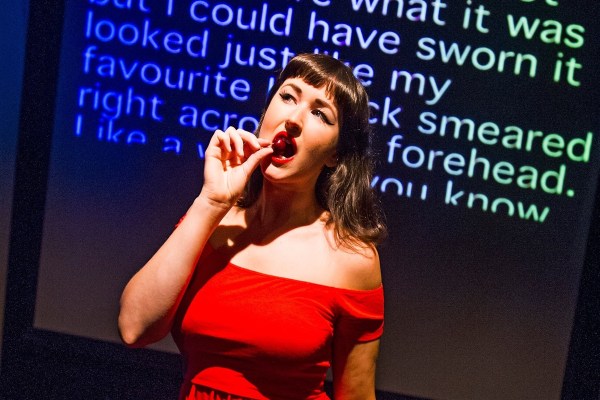
 

Swing By Around 8, Theatre N16

Nailing that first job after drama school can be daunting. You are no longer competing for roles with a small collection of peers, you are bidding for work in an environment where literally everyone has more experience than you. There are unwritten rules, cultural differences and a lack of support to learn to deal with. It’s hard going, especially when most of these early-career jobs are unpaid. No wonder so many emerging artists give up within their first few years out of training.

Theatre N16 wants to combat that. They recently launched its First Credit scheme where four actors and two directors are provided the opportunity to gain their first professional credit after completing their training. Jess Bray’s sexual sitcom of a play Swing By Around 8 is brought to life by actors Paul Boichat, Rebecca Drake, Maanuv Thiara and Maisie Black, with direction by Amy Hendry and Ellie Gauge.

Bray’s script verges on farce, with clear television influences. The two-couple character comedy is reminiscent of The ‘Big Bang Theory’ and ‘Friends’, but much less PG. There’s plenty of good one-liners and gags about group sex, though the characters lack depth. It’s great for young actors looking to develop their comic timing, but a shame they don’t have the chance to get stuck into something meatier.

The four actors are pretty evenly matched, though Paul Boichat as Elliot is marginally stronger with a charismatic presence and more nuance. Hendry and Gauge share the directing well; there is a unified style and approach to the characterisation. Some moments of high tension tend towards hammy, but the comedy is well delivered.

This is a solid effort all around from these young creatives, and N16’s commitment to grant them exposure is highly commendable. The First Credit programme is certainly one to follow for new talent, and the selection process is no doubt rigorous – though a more substantial script would certainly serve them better.

Swing By Around 8 runs through 1 December.

The Play’s the Thing UK is committed to covering fringe and progressive theatre in London and beyond. It is run entirely voluntarily and needs regular support to ensure its survival. For more information and to help The Play’s the Thing UK provide coverage of the theatre that needs reviews the most, visit its patreon.