The Tempest, Steiner House Theatre

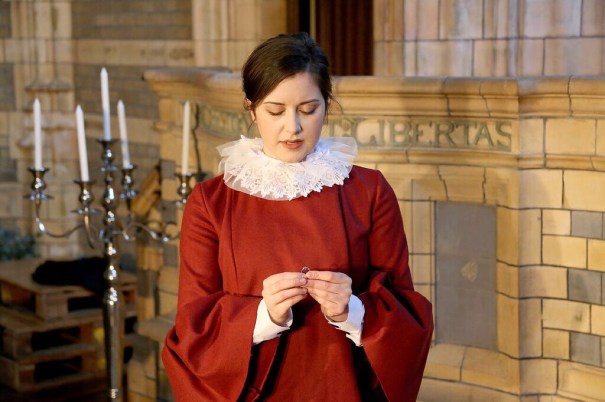
Shakespeare 400 has understandably inspired a glut of Shakespeare productions this month. Whilst it’s brilliant to see people celebrating the Bard at all performance levels and abilities, the quality of productions out there hugely varies. The Steiner House’s Shakespeare Festival production of The Tempest, with it’s Asian-inspired music and costume, cuts a lovely aesthetic but the majority of performances are painfully sub-par. At nearly three hours long with the interval, it’s also entirely too long, made so by some of the cast’s laconic pace, slow transitions and no noticeable cutting. Though commendably diverse in race and nationality and lovely to look at, the performances make this production more like a dull, drizzly day than an otherworldly storm. 

Hedi Pinkerfield’s music is subtle and atmospheric, with more personality than most of the characters portrayed on stage. It never overpowers, and provides a dynamic, nearly-constant soundtrack for the story. Indian and Japanese influences don’t try to be edgy or interesting, but appropriately populate this island that’s full of more noises than people. It’s lovely and soothing, and helps alleviate the tedium of the poor delivery on stage.

Emma Caller’s costumes are similarly rich, drawing on Indian influences of rich coloured tunics and flowing dresses. The set incorporates the same “slightly brighter than pastel but not garish” colour scheme. It’s as soothing as the music, with a giant full moon watching the action on a gauzy backdrop. Initially seeming solid, Prospero hides behind it, illuminated, at one moment. It’s a great choice, but one sadly avoided in the numerous other instances where he invisibly observes other characters.

Of the sixteen-strong cast, a few are quite good. Alexander Yousri and Machael Claff are energetic double-act Trinculo and Stephano, as are Robert Land (Sebastian) and Eshy Moyo (Antonio). Samuel Mattioli is a sweetly wistful Ferdinand, but let down by a Miranda who doesn’t articulate her consonants, making her difficult to understand. Director Geoff Norris casts three Ariels for indecipherable reasons; Bowy Goudkamp is the strongest, resisting the instinct to constantly writhe around or pull constipated faces at the audience.

The rest struggle with maintaining Shakespeare’s rhythm and variation of tone at the same time, some chew the words rather than easily speak them. Still others mumble or don’t articulate consonants, creating a white noise rather than a comprehensive story. There’s a general lack or pace and genuine characters, making this a highly frustrating experience. Director Geoff Norris seems to lack experience directing inexperienced performers and handling Shakespeare’s text, particularly this more linguistically complex final play.

Norris’ misguided casting and lack of structural instinct are the primary shortcomings in Perform International’s The Tempest. Fortunately his choice of composer and designer provides some relief, but not enough to alleviate this particular island’s drudgery.

The Tempest runs through 30th April.

The Play’s the Thing UK is committed to covering fringe and progressive theatre in London and beyond. It is run entirely voluntarily and needs regular support to ensure its survival. For more information and to help The Play’s the Thing UK provide coverage of the theatre that needs reviews the most, visit its patreon.

My Mother Said I Never Should, St. James Theatre

Doris, Margaret, Jackie and Rosie are four generations of the same family. They often fight, but they’re always there for each other. Though they each grew up in a distinct era and often misunderstand the others’ world views, there’s a lot of love in the baggage they carry. These women that playwright Charlotte Keatley created are passionate, feisty and reflect society’s views of women from the 1930s through the 1980s. Though there’s been inevitable progress in women’s rights, Keatley’s script shows how agonisingly slow it’s been. Excellent performances by the ensemble cast of four and a decade-spanning politically commentary make My Mother Said I Never Should a relevant, fun and poignant production that, even though written in the 1980s, still holds important messages about womanhood.

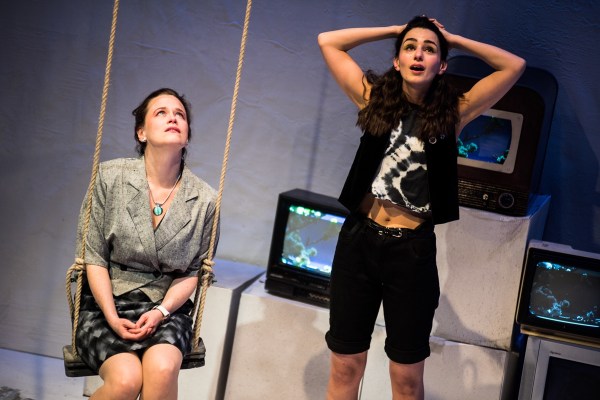
Doris (Maureen Lipman) is the formidable matriarch of the family who always says exactly what she thinks and has little patience for frivolity. Lipman’s dry comedy is impeccably timed with delightful results. Her uptight daughter Margaret (Caroline Faber) is a great foil, ferociously protective of her punky, energetic granddaughter Rosie (Serena Manteghi), who she’s raising as her own so her scatty daughter Jackie (Katie Brayben) doesn’t have to give up her gallery-owning dreams. As time passes and each woman navigates love and heartbreak, we see a wonderful array of strength, vulnerability and commitment from the cast to these women. This tight knit family are wholly believable as they power through the trials and tribulations of growing up as the second sex.

Keatley’s script, though structurally groundbreaking at the time it was written, has less shock value now but the non-linear, disconnected scenes of female children playing have as much of an impact as the realistic family’s story. Girls playing at casting “spells” to kill their mummies and regarding motherhood as an inevitable part of life is still powerful social commentary today. Though these scenes decrease in frequency as the family’s story takes shape, they are more directly powerful and disturbing. That’s not to say the majority of the script isn’t good – it’s great, with well-defined characters and clear linguistic distinction between the four.

Signe Beckmann’s wintry set of white, blues and greys is a cold but striking backdrop to the story. Old fashioned TV sets display dates and locations as well as historical footage to create a greater context around the play’s microcosm. It’s rather clinical, but doesn’t distract from the action. It gives director Paul Robinson plenty of freedom to use the space as he sees fit and effortlessly transition between Keatley’s eras.

This powerfully moving play showcases stellar performances and writing that’s surprising relevant today. It’s a potent reminder that whilst there has been progress in women’s rights over the past 80 years, there is still so much to do about how society views women, and how women view themselves and their relationships.

My Mother Said I Never Should runs through 21 May.

The Play’s the Thing UK is committed to covering fringe and progressive theatre in London and beyond. It is run entirely voluntarily and needs regular support to ensure its survival. For more information and to help The Play’s the Thing UK provide coverage of the theatre that needs reviews the most, visit its patreon.
Wendy Hoose, Soho Theatre

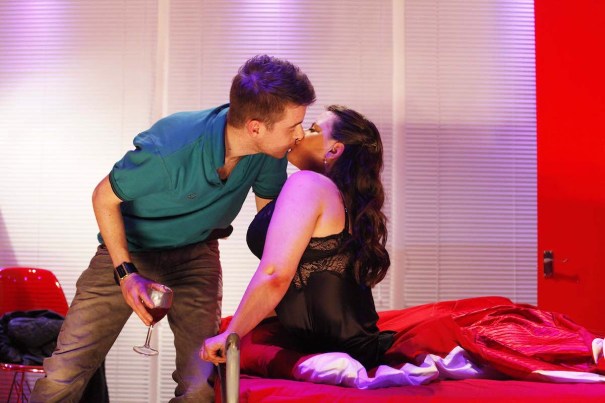
Laura is a single mum who just wants a shag. Jake is also a fan of no strings attached sex. When the two match on Tinder and he cabs it over to her east Glasgow neighbourhood, things start out swimmingly, if a bit awkward. When Jake discovers that Laura doesn’t have legs, his open minded intentions go out the window and both end up surprised by the evening’s evolution. A production that champions inclusive theatre, Birds of Paradise’s Wendy Hoose uses surtitles, audio description and signing as well as Johnny McKnight’s humour-laden script to remind us that different body types still very much want the same things and are just as lost as each other in both real and online worlds. McKnight’s sharp, witty dialogue and performances that evoke plenty of belly laughs make this an excellent, if a bit sentimental, example of integrated, inclusive theatre that goes below the surface of a body to discover what makes us modern human beings.

James Young is the nervous, self-conscious Jake desperately wanting to impress self-assured Laura (Amy Conachan). Personified by a bulging erection in colourful pants, he’s a great contrast to Laura’s black neglige and red satin bedding. Jake’s struggle to be PC when put off by the lack of thighs below her torso fantastically convinces, and is a pointed manifestation of a society that refuses to consider disabled people as sexual beings. Laura’s sarcastic, biting responses are excellently timed and show she’s no stranger to such treatment. Young and Conachan showcase their consistently great chemistry and presence through spiky tension and believable affection. 

Jake’s ensuing education due to a late taxi, whilst sweet and following a smooth progression, feels rushed and unrealistic, though. An hour isn’t long enough to change deep seated, unconscious prejudice and sexual attraction. This is a small issue dwarfed by plenty of other positives. What is most effective are the themes that extend beyond disability issues. Female objectification, societal standards of attractiveness and disparity between online and real life are just as prominent as Laura’s lack of legs and generate self-reflection on casual sex behaviour and what an individual finds sexy. The humour softens the initial impact of these topics, but they’re the lingering memories and provocations from the play.

Projection design and the audio describer’s snarky personality add additional levels of comedy, becoming semi-characters in their own right and breaking up this text-based script. McKnight’s banter and Conachan and Young’s work are the immediate appeal, but the weight behind the dialogue lasts well beyond Wendy Hoose’s curtain call. 

Wendy Hoose runs through 7 May.

The Play’s the Thing UK is committed to covering fringe and progressive theatre in London and beyond. It is run entirely voluntarily and needs regular support to ensure its survival. For more information and to help The Play’s the Thing UK provide coverage of the theatre that needs reviews the most, visit its patreon.
X, Royal Court

Alistair McDowall’s Pomona was one of the best things I saw last year, after it transferred to the National. Like many others I eagerly awaited his latest work, X, at the Royal Court. Set on a research station on Pluto some time in the future after all the trees and birds have died on earth, The team of four (or is it five?) have been forgotten. Or maybe there’s been an apocalypse on Earth. Or they’ve been deliberately left. We never find out. When the clock they live their life by breaks, everything else around and within them collapses. The longer they’re out there, the less real things become. 

Like in Pomona, McDowall explores time, the nature of reality, and the impact these factors have on relationships and individual characters’ mental stability. Whilst lacking the immediately visceral impact of Pomona, X is a more austere, mature play in content, but is structured in a way that is open to individual interpretation – what is objective reality what is inside the characters’ heads? The ideas are much more interesting than this particular execution, though. The characters are a bit boring and underdeveloped, victims to their surroundings and their own minds. Without the excellent tech and design brought in by director Vicky Featherstone, X would struggle to hold some people’s attention. With two acts radically different in style and questioning the other’s veracity, individual audience members will prefer one over the other and draw their own conclusions about what the “real” story is. Though a highly commendable thing for fostering dialogue, it can also confuse and alienate the more casual theatregoer, leaving broader themes and ideas ignored. Together though, the two halves make a splendid, provocative whole if the ideas are able to be seen past any immediate frustrations with plot or characterisation.

There seem to be theoretical physics and pop culture references at work that I’m missing due to having no interest in physics or science fiction, but the question of how much strain the human brain can endure under extreme circumstances has relevance beyond McDowall’s remote world. These characters could be anywhere: a brothel in the middle of London, a refugee camp, or a war prison. With months turning into years, infrastructures breaking down and no means of communicating with the outside world or anywhere to go, the disempowerment and inner collapse is palpable. Their inability to act feels like a sci-fi Beckett and Chekhov as McDowall rips, folds and turns linear time.

Though the characters are understandably powerless, it’s their perpetual victimhood that makes them hard to stomach. Gilda’s anxious crying quickly becomes tedious, as does Clark’s standoffishness. Ray and Cole are more complex, but seen less often. More of Mattie’s humour would help alleviate the near-constant intensity. There are some lovely moments of tenderness in the second half; Jessica Raine (Gilda) and James Harkness (Clark) scene of intimacy is particularly lovely, as is Raine’s transformation towards both young and older Mattie. 

Merle Hensel’s design simply sets up the prospect of skewed perception that develops into full-on chaos the longer the characters wait. It’s a fantastic development full of surprises, tightly mirroring McDowall’s unraveling of time, sanity and language. I don’t know if it was a deliberate choice by lighting designer Lee Curran or a happy accident of light reflections, but the spot of blue in the sole window looking out on nothing served as a constant reminder of the blue planet they left behind.

Alistair McDowall’s gifts for surprising the audience and questioning our perception of reality is running full tilt in X, but it takes awhile to build up speed. Though the first half provides necessary context, there’s a slowness to the character’s waiting for rescue that is a bit dull. But once the clock breaks and the lack of time ushers in a new existence, we see bigger forces are at work behind our tiny lives. 

X runs at The Royal Court until 7 May.

The Play’s the Thing UK is committed to covering fringe and progressive theatre in London and beyond. It is run entirely voluntarily and needs regular support to ensure its survival. For more information and to help The Play’s the Thing UK provide coverage of the theatre that needs reviews the most, visit its patreon.
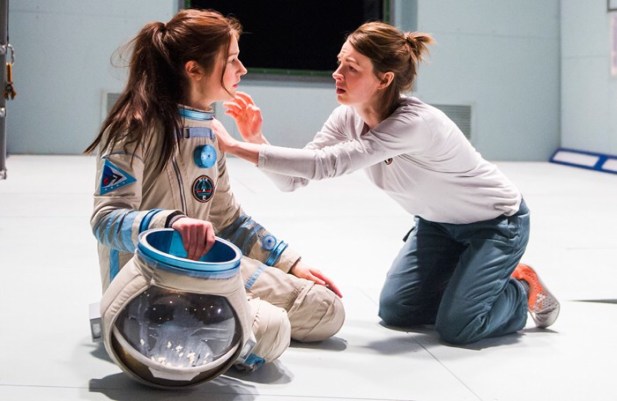
Hamlet our brother, Brockley Jack Studio Theatre

It’s purely anecdotal, but it feels like one-person shows have become vastly more popular over the past few years. It makes sense: they’re cheaper to produce, easy to tour, give theatre makers autonomy, often experimental in form and a great way to hone performance skills. They’ve quickly become much more sophisticated, are moving away from their performance art roots and can be about anything. It’s a form that’s extremely hard to execute well, and most solo shows I’ve seen have been ok. Some have been brilliant, some have been terrible. I hoped that Hamlet our brother, considering it’s a Shakespeare-based one-person show, would be the former but the unclearly conveyed concept pushes it away from that end of the quality scale.

This isn’t an awful production by any means, but making a one-person show using Hamlet was never going to be easy. It’s Shakespeare’s longest play and arguably, his character most open to interpretation. Julia Stubbs Hughes seeks to tell the story from Horatio’s perspective but limits herself to only using Shakespeare’s text. There’s plenty to work with at 4,042 lines (and she adds a bit of the Bad Quarto as well), but Hamlet our brother bears more resemblance to a “Best Of” Hamlet than a particular perspective on the story’s events. Clarity isn’t improved by the use of a lot of content that Horatio isn’t present for and it would be easy to mistake the performer (Jeffrey Mundell) for the title role. Whilst the idea of deconstructing Shakespeare into other performance structures is a fascinating one that should be explored, in this case Stubbs Hughes stuck too close to the original source material, interfering with her concept of Horatio recalling the play’s unfolding. If Hamlet our brother is set in a world outside the original, new dialogue to add even the most basic exposition would have huge benefit.

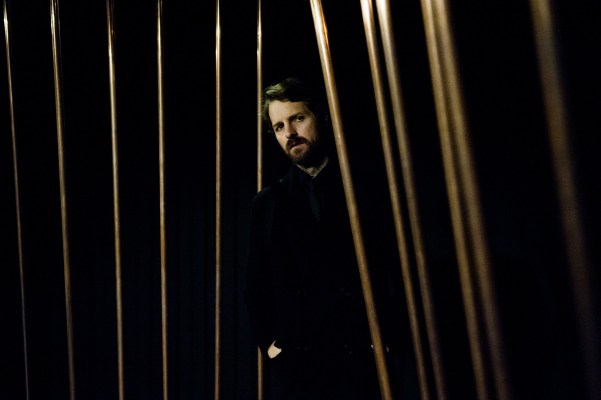
Though the concept and script don’t work, they are the only weak points in this production. Mundell’s intense, physical performance is fantastic, as are the design components. Karl Swinyard’s set, two rows of copper pipes forming a cell-like corner, is simple but creates striking shadows with Katie Nicolls’ lighting. Their surprising fluidity and balletic potential is underused by director Timothy Stubbs Hughes. Philip Matejtschuk’s composition and sound design are also neglected by Stubbs Hughes; it’s presence adds atmosphere and precision to the story that could have more variety to the moods with the addition of a full score.

Hamlet our brother needs clarity in the execution of the concept and a concise point of view: what makes Horatio’s perspective unique? What happened next that makes him doomed to relive this tragic tale over and over? Though these questions remain unanswered by the script, Mundell’s interpretation of the tortured Dane and the visual and aural landscape built by the designers helps detract from the confusion.

The Play’s the Thing UK is committed to covering fringe and progressive theatre in London and beyond. It is run entirely voluntarily and needs regular support to ensure its survival. For more information and to help The Play’s the Thing UK provide coverage of the theatre that needs reviews the most, visit its patreon.
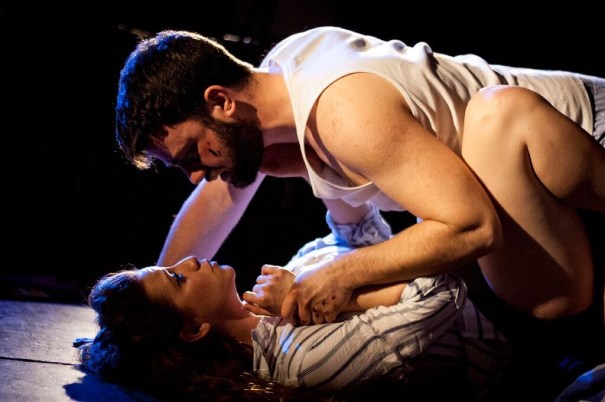
Danny and the Deep Blue Sea, Theatre N16

John Patrick Shanley isn’t particularly well-known this side of the pond, but back in the States, this Irish-American playwright from a rough part of the Bronx is regularly produced. Probably most well-known for his Pulitzer Prize-winning play Doubt: A Parable, he is still writing plays and films. Currently exceeding 23 in number, he’s as prolific as Shakespeare and much more so than many playwrights of his generation. Though his early works lack the trappings of modern technology, the focus on relationship and family dynamics transcend any dated aspects of the setting. Danny and the Deep Blue Sea is Shanley’s second play, a two-handler set in a dingy Bronx bar where Danny and Roberta, two strangers running out of steam to continue in their own skin, find solace in a night of intimacy. Theatrum Veritatus resurrect this Shanley play from the ’80s with a solid production grounded in good performances and direction that seeks to tell this story of two lonely, angry people looking for someone to help them escape their dismal realities. 

Gareth O’Connor and Megan Lloyd-Jones are Danny and Roberta. Both are coldly aggressive, defensive against the world that has dragged them through the muck. Both have their secrets and recognise a kindred spirit across an empty bar. O’Connor nails Danny’s aggression but convincingly softens in his intimate moments with Roberta. Lloyd-Jones does the same with a character that is arguably more horrific and manipulative, but her capacity for vulnerability within such a character is admirable. The two have great chemistry and ability to capture nuance within broader characterisation choices.

Director Courtney Larkin takes advantage of the small bar in TheatreN16 and doubles up the technician as an unspeaking barman. It’s a clever device; luckily she found a willing board operator. The staging didn’t always cater to audience sight lines, though. With the bar perpendicular to one side of the audience, she followed that line rather than a diagonal that would make it easier to see both characters when they are sitting at the same table. The bedroom scenes avoided this, but with the bed as a mattress on the floor and no audience rake, this also challenged audience members beyond the first row. Otherwise there are no issues with Larkin’s work – she allows the text to breathe and grow at its own pace. 

Shanley’s script is understandably dated and has some implausible transitions, especially considering New Yorkers aren’t prone to striking up conversations with random strangers. These are soon forgotten in favour of the performances and actors’ sensitivity to the other’s character. It’s a touching story about the human condition and need to connect with others, no matter how damaged we might be, and the character-driven plot in a well-suited venue make this a good production of a little-known modern American classic.

The Play’s the Thing UK is committed to covering fringe and progressive theatre in London and beyond. It is run entirely voluntarily and needs regular support to ensure its survival. For more information and to help The Play’s the Thing UK provide coverage of the theatre that needs reviews the most, visit its patreon.
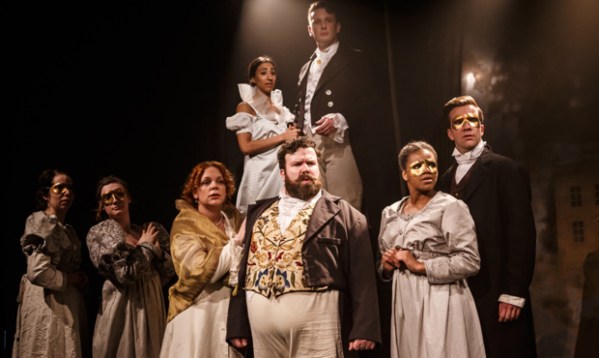
Princess Caraboo, Finborough Theatre

In the 1820s, a wealthy English couple who recently lost their daughter take in young girl arrested for begging. Convinced by her companion that she is a princess from a Pacific island who doesn’t speak any English, they are determined to look after her as their own, bringing her up in aristocratic society. The princess turns out to be no more than a lying servant girl from Devon, so Sir Charles Worrall and Lady Worrall rally their servants to perform the story of Princess Caraboo to a curious Victorian audience. Phil Willmott’s latest musical, inspired by true events, looks at how desperate times call for desperate measures and the “golden age” of the British Empire’s propensity for exploration and collecting exotic specimens. It’s a polished, well-made and potentially commercial work that, whilst not progressive in form or style, is crafted with detail and well performed.

The cast of ten have a commendable 50/50 gender split, though the male characters are generally more developed and distinct from each other. Eddie (Cristian James) is the charmingly meek orphaned nephew of Lord and Lady Worrall (the jolly Phil Sealey and warm, maternal Sarah Lawn), recently returned from adventures at sea. His budding relationship with the princess (Nikita Johal) is seriously sweet but not saccharine, and he’s a great foil to the laddish, bullying Lord Marlborough (Oliver Stanley, who has the makings of a fantastic villain). Johal as Princess Caraboo is physically expressive when in roles as the mostly non-speaking, smily princess, but is ferociously bold as Mary who does everything she can to escape her past. The ensemble work well together in the already small space, made smaller by a trio of on-stage musicians. Occasionally the space feels too crowded and the choreography consequently is a bit clumsy and restrained.

Willmott and Mark Collins’ music takes some time to build up to the most memorable numbers, but it finally smashes it with ‘My Own Person,’ Mary’s empowering anthem that carries through the rest of the two and half hour show as a reoccurring theme. The lyrics are a bit basic, but fit the modern, pop-musical style with some great large numbers. Willmott also wrote the book, which uses meta theatre to frame the story and address the theme of lying through both the Caraboo plot line and Lord Worrall’s lecture-like narrative evoking Greek philosopher Aracticus. Incorporating the Victorian search for enlightenment through knowledge adds an additional level to the historical context without making the main through-line too dense with exposition. 

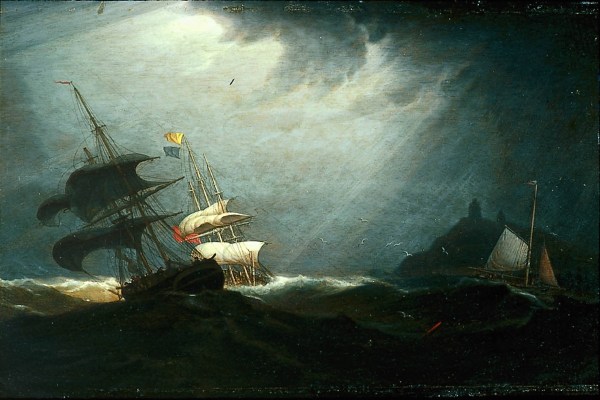
The set here is sparse, but it’s easy to picture something much more grand with a larger cast in the West End. Working well with the intimate playing space to create mood and setting is Jack Weir’s lighting design, often playing off the large piece of glass that is sometimes a mirror and sometimes transparent. The multiple storm scenes use LEDs to good effect, as well as contrasts in brightness and colour. The wonderful, happy aristocratic England and the workhouse where Mary lived are worlds apart thanks to Weir’s work.

Phil Willmott’s musical could easily be at home in a large, commercial venue but rather than wait for a big money backer, he puts it on the fringe. Though it lacks progressiveness in form, Princess Caraboo is polished and ready to go onto bigger and brighter things.

The Play’s the Thing UK is committed to covering fringe and progressive theatre in London and beyond. It is run entirely voluntarily and needs regular support to ensure its survival. For more information and to help The Play’s the Thing UK provide coverage of the theatre that needs reviews the most, visit its patreon.
People, Places and Things, Wyndham’s Theatre

I’m massively late to the People, Places and Things party and had read the most interesting responses in anticipation of not seeing it, but then one of my pro-active, up for everything mates suggested she queue for day tickets for us whilst I was at work. I’m rarely organised enough to actually book commercial and large-scale things I want to see, and is this instance, my friend was a complete fucking saviour because fuck. Me. This play. Her work. I could live inside Denise Gough’s performance forever, in a completely non-sexual sort of way. It’s not just her exquisite embodiment of Nina/Emma/Sarah/Lucy though, Duncan Macmillan’s issue-driven script touches -no, beats the shit out of- so many nerves: drug addiction, life as an actor, dysfunctional families, mental health and that living in the world is so unbearable that it can break you. The script is powerful, understated, hilarious and dark. Is rips your chest open, finds all of those hidden tender spots we soothe with medication, busyness, booze or whatever your addictions are, gives them a good poke, then dashes off to find another. Sure, it’s a sanitised view of drug addiction, but it’s not really about that. It’s about reaching rock bottom and not knowing who the fuck you are anymore and barely keeping it together from moment to moment. The depiction of that emotional state of hanging from a cliff by a frayed rope over an abyss of global misery and despair is so goddamn accurate that it feels like Macmillan is living inside my guts, or my guts of only a few years ago. I know Nina/Emma/Sarah/Lucy’s pain so acutely that People, Places and Things was the therapy I refused for so long, a catharsis and a reassurance that I am/you are strong and living is worth the fight.

I’ve been in a really good place for the last year or so, and OK for the last couple of years. Before that? Late 2010 was the start of a downward spiral that lead to, reflectively, what was probably a breakdown in spring 2012. Factors completely out of my control forced me to me to give up acting (the career of the play’s protagonist), the thing that had been the focus of my life since I was ten years old, that I had spent years of my life training for and then actually doing and loving, that my entire identity revolved around. It wasn’t a conscious decision initially, but the realisation of what I was doing/what I had to do broke me. I lost all sense of self, like Gough’s character who clings to the roles she plays because she has no idea who she actually is. I fantasised about killing myself or running away, I cried when I woke up in the morning because I was awake, in my life. I hurt people around me but was so blinded by my own pain that I couldn’t see it. I refused help on the grounds that factors outside of my control were causing these feelings. I didn’t turn to drugs (couldn’t afford to), but looking back, I’m amazed I’m alive. Macmillan gets it; whether or not he actually experienced it himself is irrelevant, but his understanding of this drowning despair and Gough’s embodiment of it resonate with my memories of living it.

I suppose I ought to talk about all the other excellent production values and creative choices of People, Places and Things but it’s probably been covered by every other critic that saw the show, either at the National or in the West End. Gough’s character journey, Barbara Marten’s subtle contrasting work as the doctor/therapist/mum, the ensemble work in the therapy scenes, the devastating interaction between Nina/Emma/Sarah/Lucy and her parents in her childhood bedroom, the hopeful ending are all great. This could easily be a totally bleak story, but Macmillan uses humour liberally and on concluding, we realise this is a story of hope.

Though it is Nina/Emma/Sarah/Lucy’s story, there are only hints of detail from the other characters. From the audience’s perspective, it would have been great to see more complexity from them but from the lead’s point of view, she’s so self-absorbed that she can’t see more than broad brushstrokes for other people. Her detox and withdrawal was handled well with stylised lighting, sound and multiplying selves grotesquely slithering out from her bed and the walls, but there’s a cleanliness and functionality to these patients (like the rest of the play) that doesn’t accurately reflect the reality of rehab facilities.

These issues are minor though, and dwarfed by the overwhelming brilliance of the rest of the production. Though Duncan Macmillan’s previous work has established him as a powerful voice in contemporary theatre, People, Places and Things indicates his greatness and Denise Gough’s Olivier Award-winning performance introduces her to the ranks of the modern greats. An unmissable production.

The Play’s the Thing UK is committed to covering fringe and progressive theatre in London and beyond. It is run entirely voluntarily and needs regular support to ensure its survival. For more information and to help The Play’s the Thing UK provide coverage of the theatre that needs reviews the most, visit its patreon.
Comeback Special, Shoreditch Town Hall

In 1968, Elvis Presley was an ageing, faded icon, largely disregarded by the free love/anti-war youth of the 60s. Towards the end of a particularly rough year, he filmed the ’68 Comeback Special, an intimate studio gig that was later broadcast on television. Pioneering in form, it was filmed in the style of a live event but edited for TV out of several shorter sessions, each with a different live audience. 

Decades later, Texan live artist Greg Wohead watches this show on his laptop in a hotel room. A connection was made in that room that lead to the making of Comeback Special, and re-watching the broadcast recording hundreds of times. Wohead’s consequent intimacy with this programme creates an homage to The King at a crossroads. Through the simple use of repetition, narration and audience interaction, he creates a part-documentary, part-role play tribute act saturated with nostalgia for an event he never experienced.

Beginning as a monologue of the set up of the ’68 Comeback Special, Wohead narrates a detailed description of the artists, audience and staging. This telling is emotionless and clinical, but the anti-theatricality is compelling in its specificity. It’s easy to picture the scene he describes, especially considering the square stage he stands on with audience on all four sides mirrors his description. Timothy X Atack’s ambient sound bath quietly soothes with its timelessness, aiding the collective time travel to that moment in history. Wohead’s story zeros in on a singular sequence, repeating it again and again. The trivial becomes epic, the improvised becomes choreographed. 

The audience is both a witness and a participator in Wohead’s devotion. As he gradually transforms into Elvis, he assigns simple, repetitive actions in time with the dialogue we can hear, but not see. This is participatory arts at its best – Wohead needs the audience to create this piece, but doesn’t condescend. We are all equal, he just has a bit more practice than the rest of us. The final performance of this moment, though lasting about fifteen seconds, unites and warms the room. It’s a grand feeling.

In a world of reality television and constant documentation, Comeback Special is a reminder of the artifice in seemingly live, unscripted events, the importance of the insignificant moments and the need to bond with fellow human beings over the extraordinary act of performance making. Marvellously effective and simple, Greg Wohead turns a standard tribute show on its head. There is no cheese, no ill-fitting white jumpsuits or cheap wigs – just a man exploring a moment in the past with a bunch of strangers.

Comeback Special is touring various venues through 15th May.

The Play’s the Thing UK is committed to covering fringe and progressive theatre in London and beyond. It is run entirely voluntarily and needs regular support to ensure its survival. For more information and to help The Play’s the Thing UK provide coverage of the theatre that needs reviews the most, visit its patreon.

Twelfth Night, The French Protestant Church

Shakespeare productions in churches are similar to those at the Globe: the ornateness of the environment is a set in itself that gives the show grandeur and importance. Scena Mundi’s Twelfth Night attempts to emphasise these aspects by drawing on the fashion world, Elizabethan beauty and pagentry with rich costumes and self-indulgence, performed in a small Soho church. With some good performances and a gorgeous setting, this production has some great things going for it. On the other hand, some mediocre performances, a set element that clashes with the world of the court and at two and a half hours long with varying pace in uncomfortable pews, it also has some issues. 

Harriet Hare excels as Viola, focuses on the gentleness and wit of the vulnerable young woman disguised as a boy. Her love for Orsino (Pip Brignall) is sweetly believable, as is her fear of fighting and being found out. The attempts to genuinely disguise her as a man were minimal, though – trousers and a ponytail does not a man make, especially without any alterations to voice or posture. Martin Prest’s Malvolio matches Hare in ability, and is the only character to induce regular laughter. His dour expressions and posing in yellow stockings contrast well, as do his strops – a wonderfully versatile performance. The rest of the cast vary in energy, ranging from competent to disinterested – a choice by director Cecilia Dorland in line with her high fashion concept, but one that doesn’t translate to interesting or dynamic performances.

On that note, the incorporation of the haute couture world is otherwise unclear and minimal. A bright blue, vinyl catwalk runs from the stage down the centre aisle of the church, clashing with the colours in the building and costumes, which were generally period style. Narcissism and vanity are given in the script anyway, and adding stereotypical vocal affectation to some of the characters isn’t much of an influence. The costumes are simple with some sumptuous colours, but not high fashion or a particularly dominant feature of the production. Dorland largely focuses on the text and uses lighting to highlight dramatic moments, though the number of lighting cues is excessive and some fail to match the action. At The length it is, she cuts little – too little for the uncomfortable church pews.

With the lack of textual edits, the story is easy to follow and the grand backdrop of the church makes for striking stage pictures, but this is otherwise a run-of-the-mill fringe Shakespeare production. The chosen concept not really coming across and a mix of performance abilities isn’t much much of an issue in a 90-minute version, but at full length, these shortcomings are long to endure. 

The Play’s the Thing UK is committed to covering fringe and progressive theatre in London and beyond. It is run entirely voluntarily and needs regular support to ensure its survival. For more information and to help The Play’s the Thing UK provide coverage of the theatre that needs reviews the most, visit its patreon.