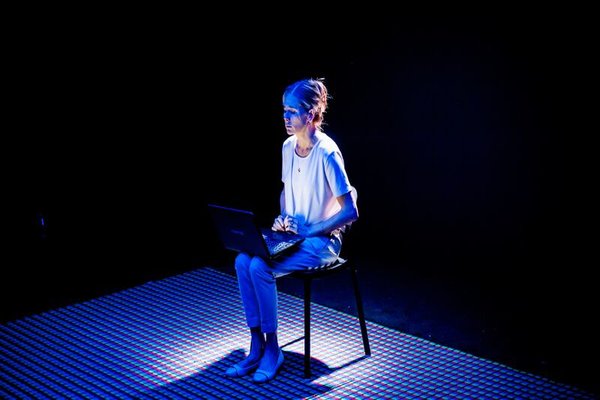
The Last Five Years, St James Theatre

https://www.thestage.co.uk/wp-content/uploads/2016/11/Samantha-Barks-as-Cathy-in-THE-LAST-FIVE-YEARS-at-St-James-Theatre.jpg

The most moving performances are often largely removed from our day-to-day lives. But every so often you come across a piece of theatre that, whilst it may not be the objective best thing you’ve seen, encapsulates your life so well that you can’t not fall in love with it.

The Last Five Years is good though, even if it’s been a favourite of mine since I discovered it as a student back in 2002. The Jason Robert Brown musical, now 15 years old, is a wonderfully simple (albeit heteronormative) tale of boy and girl meeting, falling in love and falling apart. Framed by the late 90s NYC arts world (that I watched as a teenager in the suburbs and later joined as a drama school student), his story is told in chronological order and hers in reverse. There are two performers; the only time they interact directly is at their wedding, making the songs function more like reflective monologues. Though there is hardly any book, Brown’s lyrics tell the story clearly and sensitively. Dynamic staging and committed performances, like those in this anniversary production that Brown directs, are necessary to keep this quirky little musical from falling flat. It’s a powerful, disarming show when executed effectively, and this production may well be its new definitive.

Jamie is a writer and Cathy is an actor. They are 23 when they meet; neither has had any success yet but both are wide-eyed, bushy tailed, and ready to fall in love. Jamie quickly becomes a bestselling novelist whilst Cathy is left in his wake, waitressing and doing summer theatre in the depths of the Midwest. It’s within this career disparity that their relationship deteriorates, and I find Cathy painfully echoes my own life as a failed actor. The isolation and jealousy that Brown fosters in his songs is wholly believable and all too familiar.

Both characters are flawed but generally likeable and despite reservoirs of love, it’s not enough to save their marriage. Though both characters can be irritating in their own way, their good intentions and fundamental incompatibility also ring true to anyone that’s endured the heartbreak of an ended relationship or marriage. Here is yet another parallel to my past, but this time I’m more like Jamie – I married young and naive and was divorced by 30 as a result of my own mistakes.

Samantha Barks and Jonathan Bailey are Cathy and Jamie. Barks is a stronger singer, but Bailey’s full of charisma and confidently flirts with the audience – it’s a lovely touch. Both have great emotional range and their chemistry is undeniable. Their performances, layered with Brown’s storytelling, reduces many to tears. Sniffling and eye wiping is plentiful in this intimate house.

The small scale of the show is fleshed out with some delightful video design by Jeff Sugg and Derek McLane’s set. These provide the context that’s missing from the script and grounds their story in a real time and place, though its Gabriella Slade’s costumes that indicate the 1990s setting. The videos are simple and cartoon-like, a sweet and charming addition that Brown underuses.

Though more of a song cycle with hardly any spoken dialogue (if you were to listen to the soundtrack you would hear almost the entire show) and arguably rather insubstantial, this one-act show has the ability to burrow into the depths of your guts. It’s a heartfelt love letter to the countless New York City artists doing their best to get by and find meaning in each other, and to everyone that’s every fallen in and out of love. The poignant, timeless story of youthful love and loss has the sorts of songs that you play on loop whilst crying in bed with a heart broken by your own failures (I’ve done this more than I care to admit), and those you can dance to after a brilliant first date or a career win. With the excellent performances and slick design of this production, it’s not one to miss – even if you cry through it.

The Last Five Years runs through 3 December.

The Play’s the Thing UK is committed to covering fringe and progressive theatre in London and beyond. It is run entirely voluntarily and needs regular support to ensure its survival. For more information and to help The Play’s the Thing UK provide coverage of the theatre that needs reviews the most, visit its patreon.

Human Animals, Royal Court

https://i0.wp.com/www.officiallondontheatre.co.uk/servlet/file/store5/item365300/version1/fileservice770/365300_770_preview.jpg

I adore animals, certainly more than I like humans, and I think I missed my calling to be a zookeeper or conservationist. I can’t bear any depiction of animals being harmed on stage or film; even mentions of animal abuse is hugely upsetting. So, I found Stef Smith’s Human Animals a pretty horrible ordeal. Smith’s frantic, apocalyptic story captures society’s instinctive, “Must. Destroy. Everything.” response to the natural world threatening contemporary human sovereignty. As the government wreaks havoc on the natural world in the name of security, half a dozen civilians have a range of reactions to the animal population’s invasion of their homes. This visceral, destabilising drama blasts the audience with 75 minutes of shocking, reactive action as the infection spreads across species, but with the fast pace and constant suspense, it’s difficult to relate to any of the characters. Canny design avoids much mess and graphic depictions of the described carnage, but the narrated horror is all too easy enough to imagine from most modern nations, and his highly disturbing on several levels.

Lisa (Lisa McGrills) and Jamie (Ashley Zhangazha) are a young couple supposedly very much in love, though lacking chemistry. Lisa doesn’t like animals much, so isn’t fazed when the government starts killing off the wild ones who are trying to invade people’s homes. She’s had enough of birds smashing into her windows and either dying or injuring themselves. Jamie can’t handle the ruthless killing; his collapse is well written and convincingly performed. Lisa’s boss Si (Sargon Yelda) is one of “them”, a vile, slimy little man profiting from the disaster. Young activist Alex (Natalie Dew) has just returned from travelling abroad, but mum Nancy (Stella Gonet) still tries to treat her as a child. There’s a lot of gorgeous intimacy and tension between them, often diffused by their genial family friend John (Ian Gelder), who clashes with Si regularly in the local boozer. Otherwise, there is little contact between these conflicting personalities, but the reactions from each character to the growing destruction are heartfelt and saddening.

Smith’s best writing is her conflict scenes between the characters. The rest certainly isn’t bad at all, but the storyline requires either depicting the violent extermination of animals or copious narration. Her choice is understandable and, though well incorporated into natural dialogue, there’s a lot of describing. The design team (Camilla Clarke, Lizzie Powell and Mark Melville) work with director Hamish Pirie to break up the text effectively, with sound, lighting, projection and jets of paint constantly interrupting and surprising/startling the audience. Being constantly kept on edge for over an hour is exhausting, with the story causing additional trauma. As horrible as it is, the whole effect is intricately constructed and totes a powerful message.

Also of note is the set design. The cast and audience are inside a zoo-style animal enclosure, disempowering the characters and trivialising their problems because the outside world is dominant and ever watching. Though the set does not literally indicate the characters’ world and gives no hints of the government-ordered extermination and arson that they describe, its tranquillity is calmly sinister.

The production elements and dialogue are excellent, through the relentlessness of Human Animals can alienate – but that’s the point. It’s terrible, clever commentary on contemporary environmentalism, fear of social disorder and individuals’ reactions to what is effectively a civil war and its strong effect will be long remembered by this animal lover.

Human Animals runs through 18 June.

The Play’s the Thing UK is committed to covering fringe and progressive theatre in London and beyond. It is run entirely voluntarily and needs regular support to ensure its survival. For more information and to help The Play’s the Thing UK provide coverage of the theatre that needs reviews the most, visit its patreon.
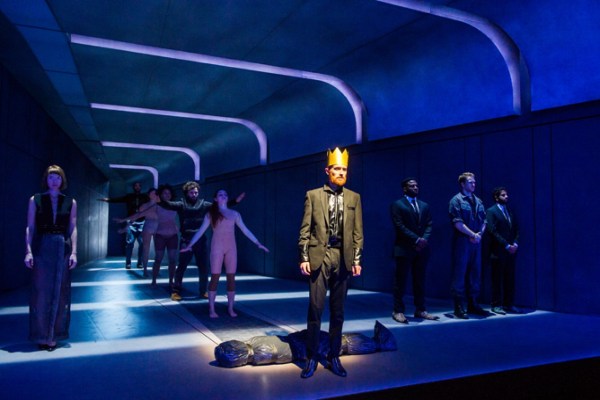
 

Macbeth, Young Vic Theatre

Though drastic re-imaginings of Shakespeare’s plays can show the contemporary relevance of his workgroups the use of a clear, justifiable concept, randomly slapping on cool ideas has the opposite effect. Alienating and confusing, the audience can go away with no more understanding of the story than they came in with, and the director’s decisions look masturbatory and self-indulgent. If a new perspective or insight isn’t provided on a play that the audience is likely to already know or have seen, then there is absolutely no point to adding a concept at all. Such is the case with Carrie Cracknell and Lucy Guerin’s Macbeth. With a text cut to ribbons, lengthy contemporary dance sequences inserted, generically quirky witches and inexplicable doubling, this production is a fine example of how contemporary Shakespeare concepts for the sake of edginess fails to communicate anything to the audience.

An optical illusion of a set by Lizzie Clachan and Neil Austin’s lighting ensures every moment could make a stunning photograph with stark shadows and forced perspective. This isn’t an art exhibition, though. The cold, industrial feel supports the mood of the play but lacks the sumptuousness that the Macbeths kill for. The rarely changing set doesn’t delineate space or place well, merging this world with the next. In some scenes this works, but it’s hard to follow where the characters are, particularly with the liberal cuts to the text. A home or a Heath? Scotland or England? Bedroom or banquet? It’s easy to lose track, even knowing the play well.

The witches, wearing beige dance wear, twitch and spasm around the space, sometimes with other characters joining in to create a repetitive, robotic movement machine. Why? I genuinely don’t know. There’s a hint of a lack of self-control but the repetition counters that effect. They also double for the child characters, which causes them to lose their power and inhuman-ness. Their movement sequences are entirely too long and lack any support for the narrative, though they are distinct from the other characters.

Fortunately, some of the performances are quite good. John Heffernan as Macbeth is a flawed man we see unravel, though this process is forced due to the cuts in the first half of the play. Anna Maxwell Martin on the other hand is rushed and deadpan, completely disregarding the verse and therefore flattening it. Prasanna Puwanarajah is a good Banquo, though the choice to have his ghost narrate the “out, damn spot” monologue was completely ineffective and nonsensical. Despite a disempowerment of the smaller roles due to the textual edits, the rest of the cast perform with energy and commitment.

There is a litany of further poor choices that show a value of style over substance in this production, and despite the directors’ need for weirdness, the whole thing comes across as generic and pointless. The stylised, lengthy movement sequences make no comment on the world of the play or its inhabitants, and with so much of the text removed, this Macbeth is very much “a tale…full of sound a fury, signifying nothing”.

The Play’s the Thing UK is committed to covering fringe and progressive theatre in London and beyond. It is run entirely voluntarily and needs regular support to ensure its survival. For more information and to help The Play’s the Thing UK provide coverage of the theatre that needs reviews the most, visit its patreon.

Four Minutes Twelve Seconds, Trafalgar Studios

rsz_four_minutes_twelve_seconds_-_kate_maravan_2_-_photo_ikin_yumWhat do you do if your teenaged son’s ex-girlfriend accuses him of sexual assault? What if her family refuses to go to the police and takes justice into their own hands instead? Di (Kate Maravan) and David (Jonathan McGuinness) don’t know either, and they’re living this nightmare every moment of Four Minutes Twelve Seconds. They have huge aspirations for their bright boy, hoping he makes it out of the Croydon that they themselves never managed to leave. But those dreams are teetering precariously on top of vicious rumours…or are they facts? Seventeen-year-old Jack who the audience never sees, may or may not have uploaded a film, that may or may not show him forcing himself on his girlfriend Cara (Ria Zmitrowicz) in the run-up to his A-level exams. As his parents try to discover the objective truth of the situation, some awful discoveries come to light. In short, fast scenes spanning several months, social class, parental aspiration and sexism influence the four characters’ choices in this riveting, dialogue-driven one-act.

This energetic first play by James Fritz, writer of the acclaimed Ross & Rachel at this year’s Edinburgh Fringe, doesn’t shy away from honest, infuriating material confronting ingrained attitudes that interfere with rape convictions (at the end of the play I was so angry I was shaking with the knowledge that these sorts of things probably happen all the time). A ferocious Maravan leads with an intense, focused performance and a satisfying character journey. To see a mother cope with drastically altering perceptions of her own child is heart rending, particularly as her husband’s views often clash with her own.

This is definitely an “issue” play, albeit a sophisticated one, that looks at the role of social media and the selfie culture in the lives of young people who don’t fully understand the implications of putting every detail of their life on the internet. It also looks at consent, sexist definitions of rape and how police view rape accusations. There’s also the question of how to treat crimes committed within one’s own family, vigilante justice and taking responsibility for mistakes. It’s a packed script, but manages to not overwhelm with ideas. Fritz’s dialogue is advanced for a first play, if formulaic in its gradual revealing of information. He liberally uses humour and nuanced humanity to counter the dark subject matter; these characters could easily be portrayed as stereotypes, like the sort in a bad TIE play.

On that note, this would be an excellent production to tour to secondary schools, colleges and unis, particularly since this attitude is so prevalent: https://metrouk2.files.wordpress.com/2015/10/12165535_470783216459605_1739814260_o.jpg?w=748&h=561&crop=1Frankly, this is a crucial piece of theatre that all young people growing up in our cyber-obsessed culture should see. With simple design elements that draw attention to the dialogue and story, it would be easy to tour this powerful production.

Four Minutes Twelve Seconds is hip as well as topical and provocative. Witholding Jack’s appearance draws attention to the wider impact of his actions rather than wallowing in his emotional state, a wise choice by Fritz. Excellent performances by the company and snappy dialogue keep our attention as well as enrage, but what would we do if we were in Di and David’s shoes? Though we all strive for justice for rape victims, we are but judgemental, selfish humans after all, and that is the real flaw in the system.


The Play’s The Thing UK is an independent theatre criticism website maintained voluntarily. Whilst donations are never expected, they are hugely appreciated and will enable more time to be spent reviewing theatre productions of all sizes. Click here to make a donation with PayPal.

First Love is the Revolution, Soho Theatre

https://i0.wp.com/exeuntmagazine.com/wp-content/uploads/love5.jpgRomeo and Juliet gets a modern, interspecies remix by Rita Kalnejais in the south London-set First Love is the Revolution. Awkward, lonely Basti (James Tarpey) is trying to make the best of his teen years in a broken home when he meets Rdeca (Emily Burnett), a sassy fox cub hunting on her own for the first time. With Rdeca’s family not the most functional either, the two black sheep find solace in each other when they discover they understand each other’s speech. Using a bold metaphor for the deliberate choice to alienate or accept of The Other, this urban adventure through back gardens and fox dens is simultaneously funny, brave and disturbing, whilst excellently performed and with writing that keeps the audience on its toes.
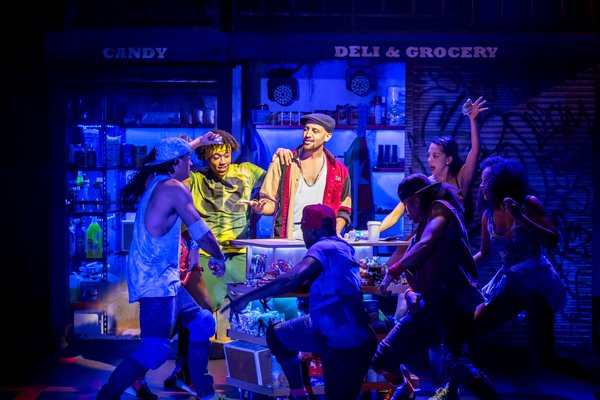
The cast of six with a 50/50 gender split is also commendably diverse in age and ethnicity. Hayley Carmichael leads the pack as the fox family’s fierce matriarch. Tarpey and Burnett are the only cast members who do not play multiple roles, though the skill in these young actors is evident in their charming chemistry. Lucy McCormack of performance art acclaim plays a wide array of roles from Rdeca’s hyper but affectionate sister, to the neighbourhood cat that taunts thuggish guard dog Rovis (Samson Kayo) and the prozzie who lives upstairs from Basti. Basti’s dad (Simon Kunz) who wants his meek son to uphold the fighting, womanizing “ideal man” is also Gregor mole and a delightfully gossipy old hen in a cardigan, tweed skirt and wellies on a never ending search for grass seed. Director Steve Marmion’s choice to use animalistic physicalities is just enough of a reminder that not everyone in this play is human, but the movement is not so overpowering that it interferes with the characters’ relationships.

Anthony Lamble’s set design is almost post-apocalyptic; it is certainly grim enough to reinforce the lack of comfort in all of the characters’ lives, human or animal. Human domesticity precariously sits on rolling black slopes that the actors nimbly climb over and tunnels they scurry through. Philip Gladwell’s lighting smoothly morphs through sunsets and sunrises that dictate the wild rhythm of Rdeca and Basti’s all-night adventures.

Kalnejais’ use of the animal/human relationship is a lovely idea, with Basti paralleling the open minds of those willing to see The Other as themselves; he is a citizen opening his home to a refugee rather than labeling her as a pest. The concept harks back to ancient fables and folktales, connecting our often-disconnected present from the rich heritage of our storytelling past. However, whilst I certainly don’t believe she is advocating bestiality, it is the first thing that springs to mind when Basti and Rdeca are caught in a compromising position. It’s not revolutionary, just gross. Maybe it makes me a prude, but I find fox and human sex damages the metaphor rather than reinforces it.

Regardless of acts that would have the RSPCA up in arms, this is a stunning production in Soho Theatre’s main house that brings the emotional scale of Shakespeare to modern day London, with a visceral fervor that celebrates the magic of young love and accepting those that are different from us.


The Play’s The Thing UK is an independent theatre criticism website maintained voluntarily. Whilst donations are never expected, they are hugely appreciated and will enable more time to be spent reviewing theatre productions of all sizes. Click here to make a donation with PayPal.

In the Heights, Kings Cross Theatre

rsz_sam_mackay_as_usnavi_and_the_cast_of_in_the_heights_photo_credit_johan_persson

Way up in Manhattan, so far north that it’s nearly the Bronx, is Washington Heights. You take the A or the 1 train to 181 Street to find this primarily Hispanic neighbourhood that’s not on any tourist radar. In the Heights shows the day-to-day struggles and celebrations of a group of residents on one block far removed from downtown prosperity with a soundtrack of salsa, hip-hop and poppy musical theatre.

The songs are the most innovative aspect of this mostly-sung musical with a stellar cast, but the book is rather sparse and the large cast of characters means it’s a cracking ensemble performance with frustratingly little development for any one character. The book and lyrics rely on stereotypes of Latino immigrants in New York City, though it both fulfills and destroys them within the diverse array of characters. The story feels rather tenuously squeezed around the songs with the dialogue serving as a plot point connector; most, of the scenes aren’t substantial enough to stand on their own. But, going back to the music, the songs make up the bulk of this musical and create a fabulous atmosphere complimented by excellent design. The Latin and hip-hop tunes are the best and most original, resulting in a fun evening and a memorable soundtrack.

This production is the same one that received numerous accolades and award nominations last year at Southwark Playhouse, and deservedly so. The Kings Cross Theatre suits this show well, with a wide traverse stage and audiences on either side, creating intimacy and suiting Drew McOnie’s circular, street party choreography. There are still design relics from The Railway Children, but Takis’ urban set and Gabriella Slade’s bright, revealing costumes pull the focus onto this completely contrasting world. With the performances practically in the laps of the front rows, it’s hard not to get up and dance. Some people do during the curtain call.

It’s not all a party, though. Nina (Lily Frazer), the first of the neighbourhood to go to university, has dropped out after her first year. Her father Kevin (David Bedella) hates her boyfriend Benny (Joe Aaron Reid) and is furious about Nina’s deceitful behaviour. Corner shop (or “bodega” in NYC lingo) owner Usnavi (Sam Mackay) and salon owner Daniela (Victoria Hamilton-Barritt) are getting priced out due to rising rents. Others came here for a better life only to find themselves cleaning houses and pigeonholed by poverty. The joy in this show comes in the characters’ ability to party and find solace in each other in the face of adversity – a powerful message for modern times.

I wanted to know more about these characters, though. This is a “slice of life” show that tries to fit in a lot of big personalities and backstories in a short amount of time, so the main characters and their tales have little space to grow. The storyline feels rushed and the ending, though a happy resolution, is a bit too “musical theatre twee” for a world that’s poor and gritty, albeit one soaked with colour and excellent music. It’s still possible to be pulled into this little stretch of Washington Heights in the height of summer and to want to dance the night away to this extraordinary blend of Latino, rap and musical theatre.


The Play’s The Thing UK is an independent theatre criticism website maintained voluntarily. Whilst donations are never expected, they are hugely appreciated and will enable more time to be spent reviewing theatre productions of all sizes. Click here to make a donation with PayPal.