
by Laura Kressly
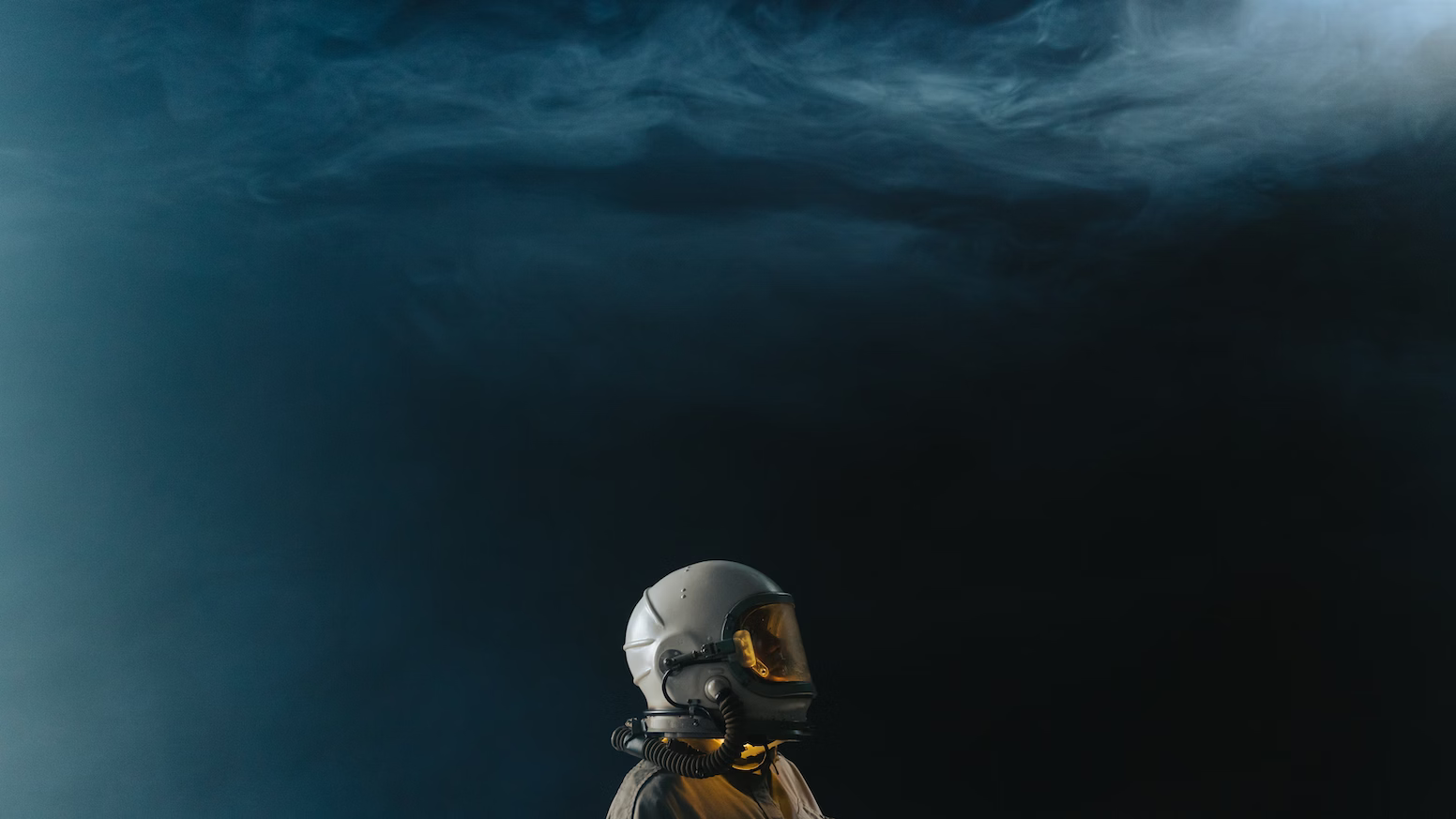
In 1992, Nasa’s shuttle launch Endeavour STS-47 had two firsts in its crew: an African American woman, and a married couple. Though the first is a major achievement in terms of racial equality and representation, the media was far more interested in whether or not the married couple had sex in space. A cast of five women use this remarkable, real-life history to consider racism and misogyny at NASA and more widely in this highly visual show.
The story splits its attention on two women. Dr Mae Jemison loved science since she was small, and overcame race and gender barriers to become a successful doctor. She always wanted to be an astronaut. Jan Davis, an aerospace engineer who was already working for Nasa before this mission, has long wanted to actually go into space. Both are deeply intelligent, determined and ambitious women who are clearly treated as inferior to men. Their stoicism is admirable, as is their persistence, but it’s infuriating they have to deal with this misogyny at all. Though it would be reassuring to see more obvious solidarity between these characters, their alone-ness – particularly after the mission – is emblematic of the white supremacist patriarchy’s divide-and-conquer tactic.
Though the cast of five act out the story, handheld cameras capture details of each moment and stream them to a small screen. This provides multiple perspectives and insight into the characters’ emotional lives through the use of close-up shots, but in many instances, the cameras block views and require the audience to shift between the live action and the video streams, which can be disorienting and occasionally overwhelming. The cameras could be used far more sparingly and still communicate key information.
The ensemble – who work brilliantly together – and the camera work is essentially choreographed, which gives the piece a heightened quality. There is a framework of this being a film set, which adds another layer of theatricality, but also isn’t needed. The story of these women and the feminist messaging are the highlights of this piece, and whilst the rest of it is nice to look at, it isn’t essential to the storytelling.
Glass Ceiling Beneath the Stars runs through 27 August.
The Play’s the Thing UK is committed to covering fringe and progressive theatre in London and beyond. It is run entirely voluntarily and needs regular support to ensure its survival. For more information and to help The Play’s the Thing UK provide coverage of the theatre that needs reviews the most, visit its patreon.
 The Play's The Thing UK