The Ghost Sonata, Rose Playhouse

A mysterious old man manipulates a poor student, then a wealthy colonel. A woman – or is she a parrot? – lives in a wardrobe. A beautiful, sick daughter always stays indoors. Servants control their masters. There is discussion of past love affairs, betrayal, and deceit. Strindberg’s The Ghost Sonata is inhabited by a cast of damaged, dysfunctional characters drawn to a house that rots them all from the inside. Director Charlotte Ive has adapted the original to suit a small cast and stage at The Rose on Bankside with good intuition for creating mystery without losing momentum. Though I am unfamiliar with Strindberg’s script, Ive seems to have made some edits but keeps the crux of the story, all which is made clear at the end. There are some issues, but this is a lovely intimate piece of theatre with strong directorial choices that mostly support the performance, and an able, predominantly female, cast.

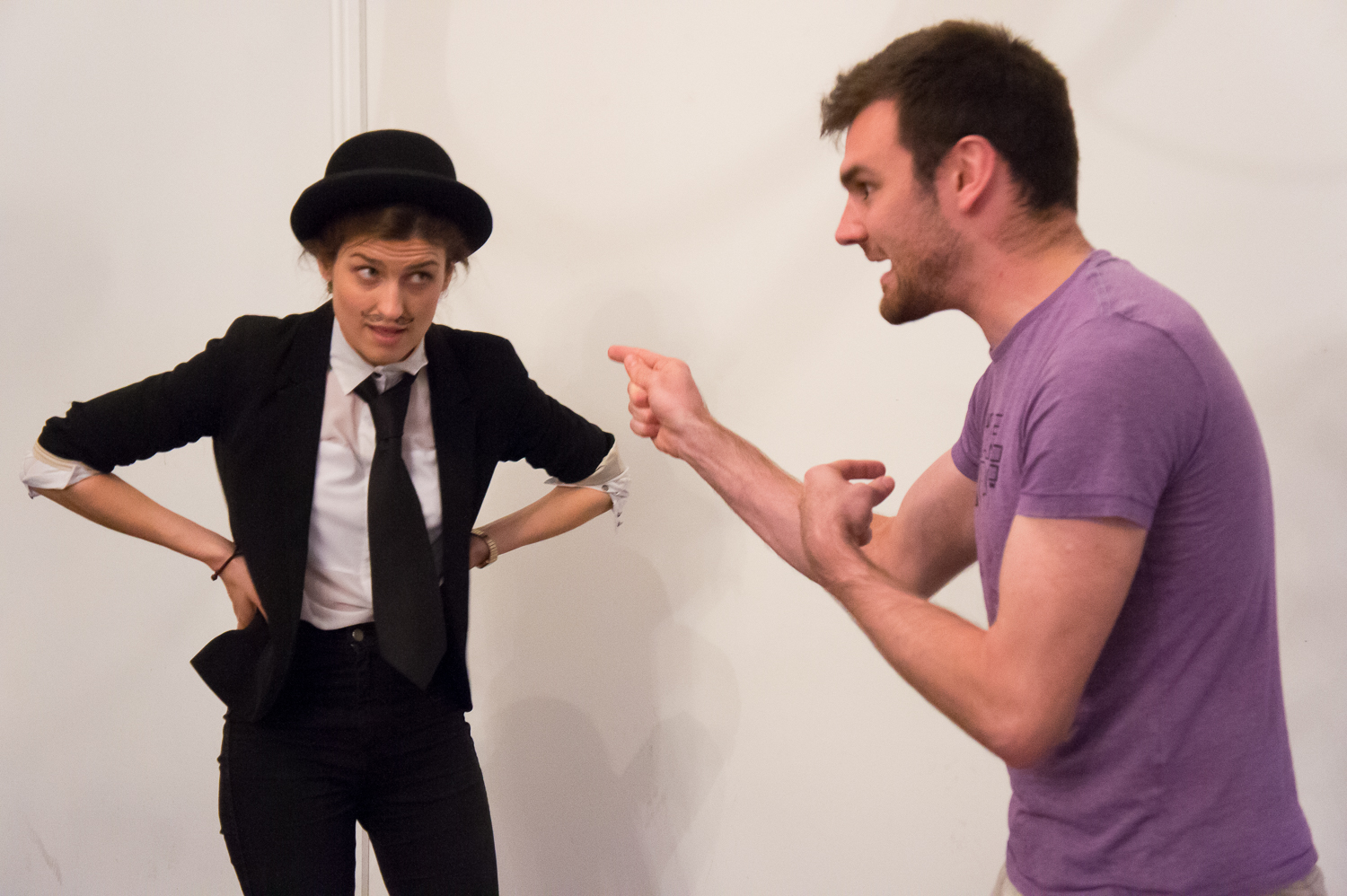
They story is slow to develop, but does so with deliberating measure, managing to escape stagnation. The start is somewhat unclear: the initial location is vague, as is why two characters meeting for the first time are in what is an obviously engineered situation. These factors enhance the mysterious aspect of the story, but do not foster understanding. Foss Shepherd is Jacob Hummel, an 80-year-old, chatting to female Charley Willow who plays young male student Arkenholtz. Willow’s gender is not particularly well disguised, and a less convincing boy than she is as the old colonel. Hummel clearly wants something from Arkenholtz, but what and why is only revealed later. Shepherd and Willow’s performances have enough tension and energy to keep the story moving; lesser talent would cause the action to stall.

Making up the rest of the cast are Sophie Lakely and Olivia Meguer, who play the rest of the roles. Meguer as the revolting chef who stuffs the family full of food drained of nutrients is particularly fun to watch. Lakely as the supposedly ill daughter never quite connects with Willow’s student, though her conviction is genuine. They also play disembodied ghosts voiced from the audience or the edge of the stage. Shepherd bends and twists his way through his performance as Hummel, though I wonder why Ive did not cast an older man. Though with this run starting the same time as Edinburgh Fringe and Camden Fringe, perhaps the older male fringe actors were otherwise engaged.

The design is provincial and pretty with flower garlands canopied over the stage, drawing attention away from the heavy gray concrete that forms the theatre’s walls and ceiling. A small table, jug and basin and other items add period signposts without taking up too much space. The costumes are simple, but in keeping with the time period. Ive chose not to use the entire site, with the exception of an unlit dancing couple at the far side of the pool that preserves the old Rose’s foundations. For a production that is adapted to The Rose, neglecting this part of the venue raises a question: what then makes the Rose so vital to this production?

This is a production that requires patience and acceptance from its audience. The performances are worthy of attention as the plot gently and almost imperceptibly unfolds. The characters switch between expressionism and naturalism without fanfare; very little information is actually revealed until the end. The language is evocative of broken people in a time long ago who don’t quite manage to cope with life as they should and is a wonderful, odd production despite its shortcomings.

NOTE: The performance reviewed was a preview performance.


The Play’s The Thing UK is an independent theatre criticism website maintained voluntarily. Whilst donations are never expected, they are hugely appreciated and will enable more time to be spent reviewing theatre productions of all sizes. Click here to make a donation with PalPal.
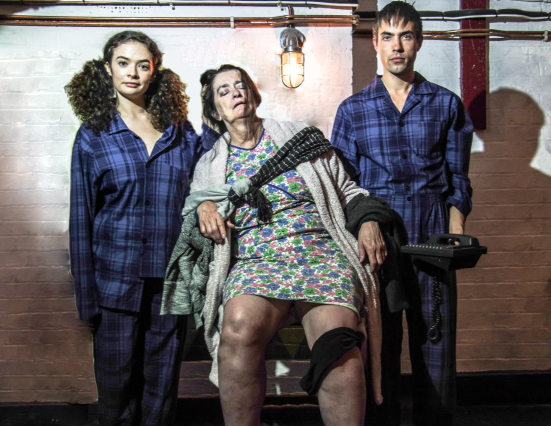

 

Elephant Man, everything theatre

“…In his original adaptation, writer and director Steve Green confronts audiences with the uncomfortable social history of ownership, entrapment and public appearance in the Victorian era.

“Actor Daniel Christostomou plays Merrick as a sensitive, articulate young man caged by his physical deformities and Victorian attitudes. Rather than prosthetics or make up, costume designer Anastasia Sarajeva has created an evocative, confrontational structure of wire, chain link and mesh for Chrisostomou…

“Steve McGarrick’s portrayal of Frederick Treves is warm but scientific…He genuinely cares for Merrick, but also has a sense of ownership for the man and wants to “keep him” in hospital for the sake of medical research. This is thinly veiled as concern for Merricks’ wellbeing.

“Adam Trussell’s Tom Norman keeps Merrick in a caged bed…as a freak show specimen in a Whitechapel shop front. Trussell also portrays Dr Reginald Tuckett, a deeply disturbed colleague of Treves. Trussell’s characters are very similar to each other, which unfortunately doesn’t allow him to show much range as an actor.

“Amy Sayers and Katie Turner also play a range of characters in Merrick’s life. Many of these characters are also caged, but by prejudices and attitudes that prohibit them from seeing Merrick as fully human.

“Despite Chrisostomou’s incredible performance and the unique approach to Merrick’s experience, the script falls short…

“Regardless of the confusing and unpolished script, the characters and the performances still make this a production worth catching…”

Read the entire review on everything theatre here.

Shakespeare & The Alchemy of Gender, Rose Playhouse

At 19 years old, Lisa Wolpe fell in love with Shakespeare. She’s now performed more of Shakespeare’s male roles than any woman in history after founding Los Angeles Women’s Shakespeare Company twenty years ago. She is currently touring the world with her solo show, Shakespeare & The Alchemy of Gender. Although it sounds like an academic lecture, it contains some of the best Shakespeare performances I have seen. The play pays homage to her father, telling the man’s story and how he affected her life. The man who killed himself when Wolpe was four is brought to life in a deceptively simple show that finds hope in a history of suicide, abuse and war.

Though to say the show is about her father’s life oversimplifies the content. Yes, a large portion is about him, but it also covers her life after he had gone, her relationship to specific Shakespeare characters, gender, performance, religion, Elizabethan society, family and alchemy – the transformation of a base material into something precious. These themes intertwine, with no moment unrelated or superfluous and the 55-minute show amazingly manages to not feel overloaded with messages. As she works through her life and her father’s, she relates Shakespeare’s characters to individual moments in time. As she reflects on her relationship with him now, she becomes Hamlet remembering his father’s ghost, in the best performance of the role I’ve encountered. Her father’s WWII escape and joining up with the Canadian forces as a double agent lead into Henry V. We also meet Richard III, Hermione, Shylock and others in relation to herself and her family’s history. Wolpe is not only adept as any man at embodying the male roles, she excels. She also effortlessly switches between men, women and herself, functioning in an androgynous state when addressing us out of character.

Wolpe is comfortable addressing us with an open honesty about difficult episodes in her life without coming across as confessional or masturbatory, as one-person shows run the risk of being when used to come to terms with the performer’s or writer’s issues, whatever they may be. The show is relaxed and conversational with the audience nodding, laughing, even verbally agreeing. The intimate venue helps, but she certainly has the energy to fill a huge theatre. She had a profound effect on the audience, particularly when sharing moments about her relationship with her family and dressing in boys’ clothes to defend herself against her predatory stepfather.

Her interpretation of the characters she performs seems rooted in physical and vocal distinctions, with her General American accent capturing the visceral-ness of the language that the more recently created RP/Standard English. These characters come from her gut, and she explains how she is able to relate to each one and perform them with truth. This is evidence of Shakespeare’s continuing relevance to modern life. Not only is Shakespeare: An Alchemy of Gender an excellent piece of solo theatre, it is also a lesson in performing the great Shakespearean roles of both genders and an encouragement for all to defy gender boundaries dictated by society.

Because this is a woman that must be experienced, here is an extract from her Iago. Enjoy.


The Play’s The Thing UK is an independent theatre criticism website maintained voluntarily. Whilst donations are never expected, they are hugely appreciated and will enable more time to be spent reviewing theatre productions of all sizes. Click here to make a donation with PalPal.
Clap Hands, Hackney Showroom

CLAP HANDS - Promo Image colourThere are always multiple perspectives on an individual’s actions within an event. At Hackney Showroom, one of the newest London fringe venues that oozes industrial hipster chic, Pluck. Productions drives this home with a dense, character-driven one act. In a tiny studio space that only seats 20 people, Clap Hands by Aaron Hubbard poses questions about human behaviour and cause and effect. Can children be inherently disturbed? Should they be locked away for endangering others? Does over-reactionary imprisonment for childish behaviour cause derangement? Or, are we all just pure evil?

Ana (EJ Martin) and Gogol (Philip Honeywell) are brother and sister, kept in a basement bedroom by their mother. Martin convincingly plays young Ana without generalising or playing at being a child. She imbeds the innocence, spontaneity and obsessions in her characterisation, which is an excellent contrast to Honeywell’s creepy, calculating teenaged Gogol. Gogol has an obvious agenda that Ana doesn’t see, so she is easily manipulated into carrying out his insidious plans for freedom. The adult Detective Olyphant (Jeremy Drakes) is the sole representative of the wider community who hints at past offenses that led to Ana and Gogol’s confinement for the last 15 years. As he slowly questions the children, the audience begins to wonder what is real and what is the product of manipulation. Are the adults tyrannical, or are the children? The length of imprisonment also brings Ana’s age into question. Was she born into it recently, or has isolation from a young age kept her in a childish state? A horrifying ending effectively places blame with all parties, showing that juvenile crime, justice and society’s treatment of “The Other” are all complex issues with many sides to each individual case.

Even though the play only runs at an hour and a quarter, it packs numerous interrelated themes. Despite this, it isn’t over-saturated. The excellent performances and energy keep the first half of the play building nicely until the climactic middle when Ana carries out a crime Gogol planned without understanding what she’s doing or the consequences. From this point, the second half is slower. Olyphant’s investigations gradually reveal more of the characters’ history, but the slowing pace causes attention to waver, determining the first half as the stronger. A couple of Neil LaBute-style shocks enhance the thread of human depravity that runs through the piece, but the ending removes it from any contemporary British reality. It feels firmly 1970’s – 1980’s until the final scene, then becomes something not quite dystopian. The disorientation it causes could be a deliberate choice by the writer, but it does eliminate cultural context. The shock is effective, but removing the specific setting weakens the message about societal decay.

Despite the additional questions the play raises at the end, it is otherwise an excellent piece of writing with a stellar cast. Pluck. Productions are a prime example of the just how good theatre can be when experienced practitioners decide to make the work they want to do rather than relying on others to create work for them.


The Play’s The Thing UK is an independent theatre criticism website maintained voluntarily. Whilst donations are never expected, they are hugely appreciated and will enable more time to be spent reviewing theatre productions of all sizes. Click here to make a donation with PalPal.
Pieces, Rosemary Branch Theatre

web.phpI’ve seen theatre that seeks to raise awareness about all sorts of issues. Racism, classism, social justice, particular moments in history, individuals, you name it. I hadn’t seen a play about organ transplants and donation until Spare Parts Theatre Company’s one-person Pieces. Founded by actor and transplant patient Steven Mortimer, Spare Parts both raises awareness about issues surrounding organ transplants and fundraises for several related charities. Pieces tells the stories of six different people affected by organ failure and the need for a transplant. Mortimer performs six separate, extended monologues demonstrating that organ failure can hit any age, class or body type, causing life to stand still until that organ is found. Mortimer effectively plays a range of characters in scripts by a few different writers that vary in quality, but maintains audience focus for the 50-minute show and succeeds in reminding audiences about the importance of organ donation.

Piece 1: a Cockney ex-taxi driver sits in the back of a black cab on his way to hospital for a double cornea transplant, chatting incessantly to the unseen driver. His fear of death is evident in his regular conversation diversions to what it must have been like processing towards your hanging at Tyburn. Some of the topic transitions are rather jerky, but Mortimer smooths them over as best as he can. The ending also terminates abruptly and quickly; some time for the character’s reflection would have also given the audience additional processing time.

Piece 2: This is the weakest of the six pieces. The monologue is framed around a man watching his twin brother Jono run a 5k in preparation for the marathon. A year ago, this was unthinkable. Periodically, we hear a group of runners go past, but Jono isn’t there. The sections where he is waiting tend to ramble, but the ending is lovely even though a bit sentimental.

Piece 3: Johnny is a character similar to the visually impaired taxi driver in piece one; Mortimer struggles to differentiate the two. To add more space between them, this piece could have come later in the production, providing stronger contrast. He’s in an AA meeting sharing his life story. This piece becomes much more dynamic by focusing on Johnny’s drinking and homelessness and less on him needing a liver transplant. His emotional reunion with his parents after fifteen years also helps broaden the story; these wide themes indicate this monologue could develop into a play with additional characters and plot. This is one of the better plays because it provides us with a much broader picture of the character’s life.

Piece 4: Radically different in style. This fragmented fever dream from a scared child under anaesthetic is excellent. Obsessed with Doctor Who, the child’s thoughts flick back and forth through time, showing his fears and hopes for a life beyond dialysis. Mortimer could have played him even younger to have a stronger effect on the audience, though the language showed that John was quite young, no more than eight or nine years old. The sound design is particularly detailed, with a tardis motif.

Piece 5: Another child, this one is older and stroppy. He is struggling with his younger sister’s need for a heart transplant. The childishness is interrupted by profoundly adult moments as he debates whether he should kill himself so she can have his heart. He also endearingly compares her upcoming transplant with gardening. This piece shows how organ failure causes those involved to grow up quickly, often too fast. This is another excellent piece; Mortimer found it easier to embody this child. Perhaps the frustration and helplessness are emotions he can access particularly well.

Piece 6: Five-year-old Liz is in a hospital bed attached to a ventilator. She’s five, has Cystic Fibrosis and is waiting for a double lung transplant. Mortimer plays her father, dreaming of a healthy child that can run and play like all the other children. He also considers the family of the child that will donate his/her lungs to Liz and how their parents must feel. Mature and complex, this is the second piece that has a character detailed enough to turn into a longer play, with additional roles acted out. This piece has a sombre and moving tone very different to the previous pieces and a good choice for an ending.

Pieces is certainly a unique production, and one that will develop further with additional variation to style and character development. The sound design by Justin Teasdale was atmospheric but not dominating and could enhance the addition of design elements including costume and set. This production relies on verbal communication; the set was a single folding chair and Mortimer’s costume never changed. Though it enhanced the storytelling aspect of the production and allowed its messages to sink in, some visual variation would also be welcome. Despite its shortcomings, this remains a unique production with important messages.


The Play’s The Thing UK is an independent theatre criticism website maintained voluntarily. Whilst donations are never expected, they are hugely appreciated and will enable more time to be spent reviewing theatre productions of all sizes. Click here to make a donation with PalPal.

The Quentin Dentin Show, ACT Theatre at Kingston College

IYAF 1Disclaimer: due to TfL journey planner buggery I arrived at the theatre, the ACT at Kingston College in deepest, darkest zone 6, about ten minutes into the show. Fortunately, I only missed exposition that was covered as the story continued.

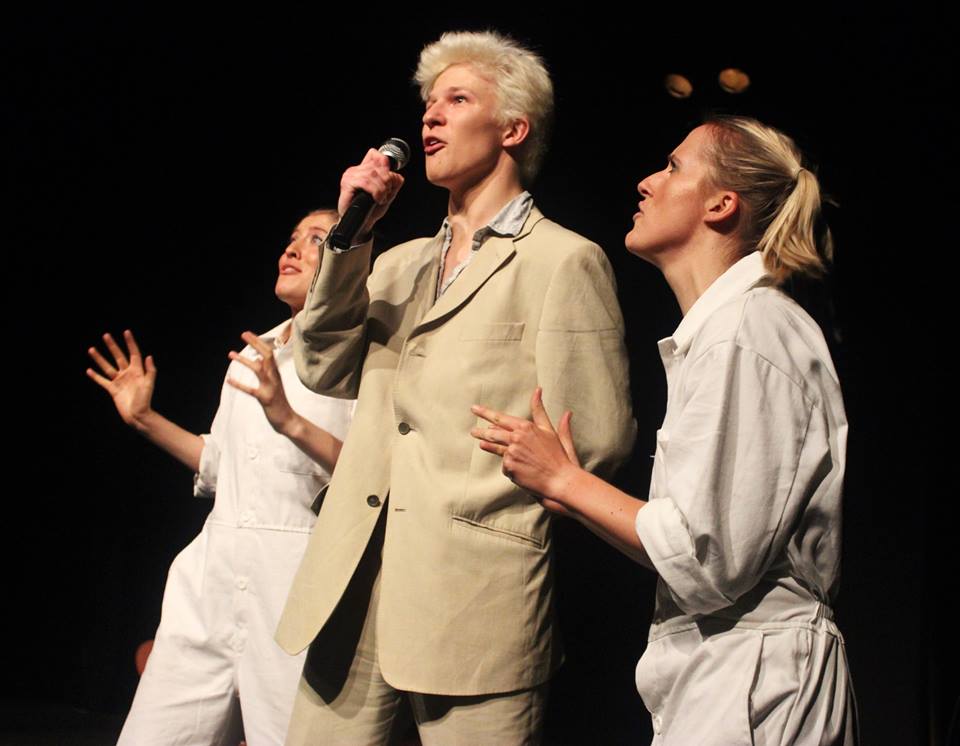
Keith (Jack Welch) and Nat (Shauna Riley) have been together for a while now. Their relationship has stagnated, as has Keith’s writing career. Nat’s had enough. They’re both chronically unhappy. The final straw as Keith’s radio breaking, but out of the static arrives weird and wonderful singing therapist Quentin Dentin (Henry Carpenter), and his two Friends (Caldy Walton and Ella Donaldson). Cloaked in white with matching hair, Quentin is a Christ-like figure there to save Nat and Keith’s relationship and to make them happy again.

Of course, this is all rather creepy and surreal. The story takes a turn to a darker side as the couple’s treatments prove ineffective. Production company Slick Rat state that one of the primary influences on the show is The Rocky Horror Picture Show; Quentin has similar qualities to Frank N. Furter, and the couple are a rather more street-wise, contemporary Brad and Janet who go along with the strange man that appeared out of their radio with little question. Musically, the songs have a 1970’s glam rock vibe and Quentin also looks a bit like David Bowie. In summary, the title role is a Frank N. Furter/Jesus/David Bowie hybrid in a new rock musical. What’s not to like?

Not much, actually. Though this is a new musical by a young company, a long development period and support from places such as Rich Mix and The National Theatre Studio have helped Slick Rat shape their idea into a quirky little show with potential.

There are still some issues that should be looked at, such as clichéd lyrics (“Swim with the fishes/all that glitters is gold”) and an abrupt ending. Not that it necessarily needs to be positive, but it’s quite vague in its current form. The transitions into the songs are similarly abrupt, but all that is needed to correct this would be more lead-in music and/or dialogue that echoes the coming lyrics. Even though I missed to beginning exposition, is ten minutes of a one-hour show too much of an introduction?

The performances are good, particularly from Donaldson, Walton and Riley (Friends and Nat). Quentin could use an injection of charisma to avoid him becoming too creepy, but this could also be addressed in the writing. Similarly, Keith could do with more external artistic angst, frustration and clear isolation from the rest of the world. The music is fun and the premise both entertaining and thought-provoking: are we allowing society to dictate that we must be happy all the time? Are we too enamoured of miracle cures? What role does religion play in this?

This one-act could nicely develop into a more complex story with the addition of more characters and songs without losing its message. It has a distinctive musical style that manages to not muddy from all its influences. It would certainly benefit from the addition of a bigger budget, good design and a whole band rather than the sole onstage guitarist. In its current state, it captures the innovation and spirit of fringe theatre and admirably contributes to new British musicals, an area sorely underdeveloped in favour of revivals and American imports. It’s worth catching at Edinburgh Fringe, particularly for those interested in new musical theatre.


The Play’s The Thing UK is an independent theatre criticism website maintained voluntarily. Whilst donations are never expected, they are hugely appreciated and will enable more time to be spent reviewing theatre productions of all sizes. Click here to make a donation with PalPal.
Henry V, Union Theatre

I’ve known Lazarus THTP-037-4heatre Company and artistic director Ricky Dukes’ work for a long time. We first met back in 2010 sharing a venue at Camden Fringe when I was a fledgling producer. Since then, I’ve seen several of their shows and reviewed others, including The Spanish Tragedy (my first review for everything theatre) and last summer’s Troilus & Cressida. Dukes is visually inventive, with a solid grasp on the challenges of classical theatre. He boldly reconceptualises plays, honouring the language but ensuring productions are energetic and a feast for the eyes and ears. I expect Lazarus shows to provide a creative, unique perspective on the play, with high quality performances. Until this Henry V at The Union Theatre, they have always fulfilled these expectations.

The all-female, barefoot cast is rendered androgynous by identical navy blue boiler suits, emphasising Lazarus’ dedicated ensemble approach. Whilst this easily allows for multi-rolling, there is no visual distinction between characters. This hinders understanding of the story, particularly with the sweeping cuts to the text. The dark colour is a striking contrast to the dominating white table in the middle of the thrust stage, covered in religiously symbolic items, all white or light coloured: candles, an ornate bible, an alter cloth, a bowl of water for ritualistic washing, and Henry’s crown. These objects justify Henry’s contentious claim to France. A stack of self-referential Arden scripts is tucked under the table. There is no other set, save for black metal chairs ringing the playing space for actors to sit when not performing. The cast are on stage the entire time, a Brechtian technique used to emphasise the narrative aspect of theatre. Additional visuals include a creepily masked French herald, bright pink gift bags filled with the Dauphin’s luminous green tennis balls and a single pink helium balloon. These remain on stage for the duration, as well as the balls, which are thrown about the space upon delivery, causing the actors to tread warily. The overall look of the production harks back to the 1960’s.

The colour combinations and excellent lighting design looks fantastic. Dukes and the actors use the stage effectively, playing to all sides of the audience. Any individual moment could be photographed and it would make a striking image. The issue is that none of these visual choices supports the production concept. Dukes wants the audience to question whether Henry really has the right to invade France. Clutching at straws, I connected the boiler suits to mechanics, or builders – perhaps these characters are tearing down England and rebuilding it to be bigger, faster and stronger? This is tenuous, at best.

I really want this production to be as good as Lazarus’ past productions I’ve seen. Adaptations of Shakespeare should give the audience new insight into the play and provide a clear level of understanding, but this time Lazarus did not succeed in doing so. Other than it looking great, the reason behind the design choices remains unclear and they do not support the production concept.

The ensemble has some excellent performances. Colette O’Rourke is a feisty Northern Henry that holds attention throughout her lengthy trademark speeches. She is grounded, but with a volatile, pent up aggression. Her performance is reminiscent of Clare Dunn’s Hal in Phyllida Lloyd’s Henry IV at the Donmar last year. Just as watchable is RJ Seeley as Fluellen, who has some great scenes with Emily Owens’ Pistol. Nuala McGowan is vibrant and dynamic as the disturbing French herald and Captain MacMorris. The rest of the cast struggle to distinguish themselves from each other, delivering the text with nearly identical rhythm and pace.

Other devices that add distinctive features but no further clarification to the production concept include a loud hailer through which Henry rallies his troops, but it flattens delivery. Some speeches are delivered in prayer, emphasising the driving force of religion in Henry’s mission. Direct address is used copiously as it should be, but not excessively so. The St. Crispin’s speech is a wonderfully intimate interpretation. Pistol adds in some “fuck you’s”, which although gratuitous, suit the character. The diverse female cast, whilst laudable for diversity reasons, also provides no unique insight into the play, as their costume and performance style does not pander to any particular gender identity.

This Henry V is certainly not a bad production, but it is not up to Lazarus’ usual standard of excellence. A great performance from the title role and striking visuals help hold audience interest to some extent, but the lack of concept and design unity prevent total audience engagement.


The Play’s The Thing UK is an independent theatre criticism website maintained voluntarily. Whilst donations are never expected, they are hugely appreciated and will enable more time to be spent reviewing theatre productions of all sizes. Click here to make a donation with PalPal.
Bare Essentials, Amersham Arms

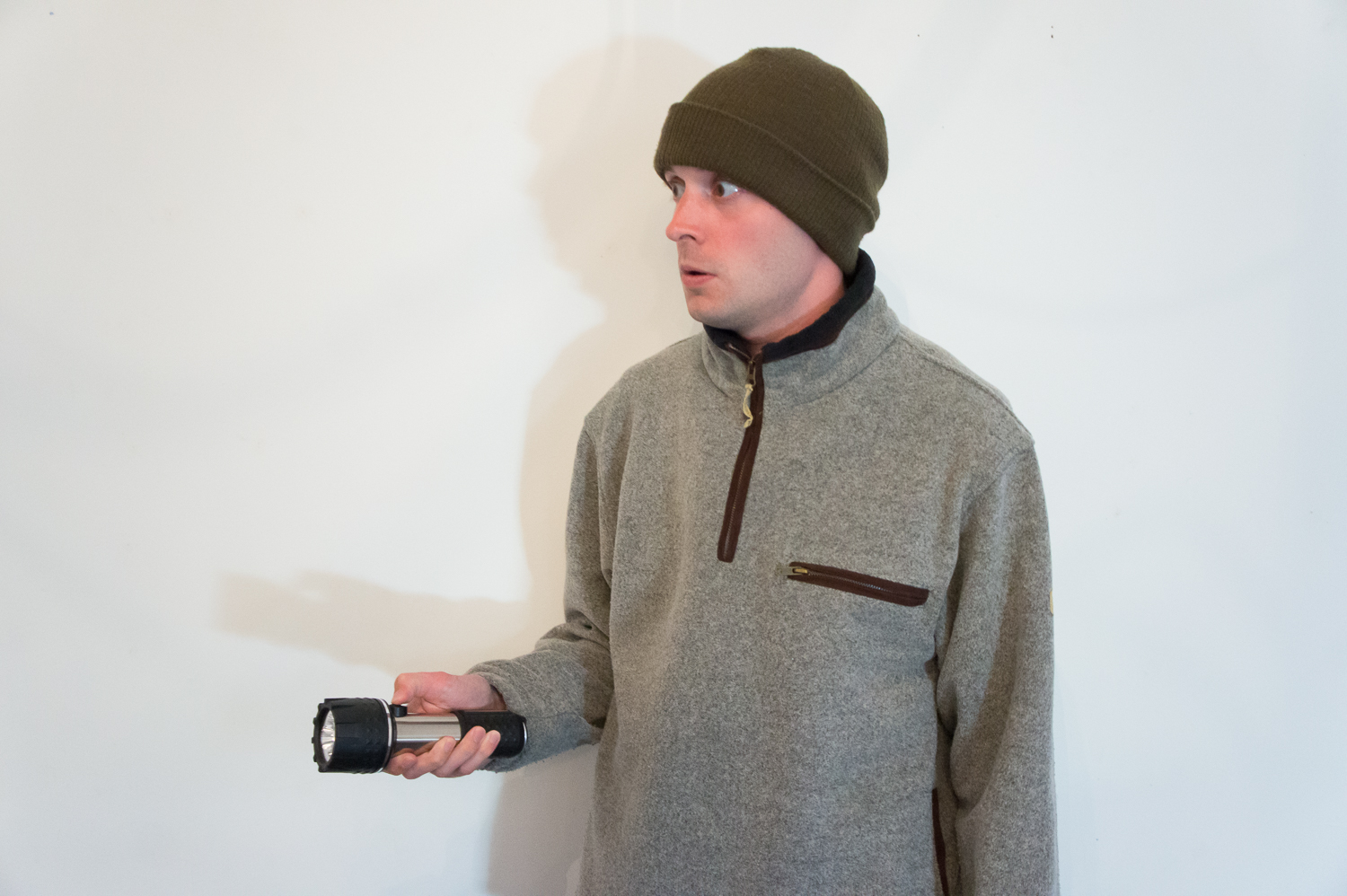
Encompass Productions produce theatre, film and a regular night of new writing, Bare Essentials. Rather than a scratch night, they aim to approach each micro-play with the same dedication as a full production, but with no budget. With plays accepted from all over the world, the current Bare Essentials has seven short plays ranging in style from naturalism to absurdity. The evening is a mixed bag with some scripts significantly better than others, but the performances are quite good. What made the whole evening hard to take had nothing to do with the production: the chosen venue, Amersham Arms in New Cross, isn’t fit for purpose and on the hottest day of the year in a tiny room with no air conditioning, it was a hugely uncomfortable experience that interfered with the enjoyment of the evening. I couldn’t wait to leave, and spent a large part of the evening trying not to be sick (I’m not good in the heat. At all.), which is a real shame because there were some inventive pieces of writing.

  1. CTL, ALT DELETE

This play is a frenetically paced, dystopian depiction of the film industry after the incorporation of robot writers. The robots aren’t pissed off though, because they’re robots. It’s the writers who are angry, and the cold, corporate producers just don’t get it until they have to face the consequences. Rachael Owens and Marcella Carelli are the money-grubbing producers unwilling to listen to writer Alex (David England); all three capture the desperate situation through rapid-fire dialogue and excellent timing. This play is only about five minutes long, but comfortably conveys the story. The idea could be developed into a longer piece, but this micro-play is a perfectly formed, self-contained piece by Dan Page.

  1. THE LEAVING OF THINGS

One of the best and my personal favourite, this play looks at internet suicide pacts, loneliness and hope. Though the dialogue is sometimes forced, performances by James Barbour and Alice Corrigan are some of the best I’ve seen on the fringe. This play could easily develop into a longer character driven one-act about the need for genuine human connection in our digital world. An excellent piece by Dean Moynihan.

  1. PANTHER

A West Country lad fails to understand his father’s affair and goes searching for a big cat in the darkness every night. This is an extended monologue with some character development, but relies on the regional stereotype of West Country equalling stupid or mentally deficient. Structurally, writer R. J. Thomson has a good piece, but doesn’t fully explore the character’s need to find the cat that killed his neighbour’s lamb, perpetuating the family feud that started with his father “tasting the neighbour’s chutney” on a nightly basis. The myths of big cats roaming free are touched on, but this is another area that deserves more time and could add a richer overlay of meaning onto what is currently quite a superficial script. There is room for development however, and this character piece could expand to a full cast and script.

  1. FEEDING TIME AT THE HUMAN HOUSE

Liz McMullen and Pip Barclay play zoo baboons puzzling over human nature and relationships. The physical depiction of their characters is excellent and wholly embodied, drawing attention to the more human traits of our ape cousins. Elements of comedy and poignancy make this view of mating rituals and pair bonding integrated and light-hearted, though if any longer, the idea would be excessively exhausted. As is, this is just the right length to explore writer David Wiener’s idea.

  1. THE NEWS

Lucy Foster’s script looks at three characters (Hannah Lawrence, Joe Bence and Jack Bence) coming to terms with a mutual friend Sarah’s drunken accident that she may not survive. The three dramatically different personalities pass the blame around as they struggle to cope with Sarah’s fall down the stairs and their own directionless lives. This microcosm presents the inner fear of giving up a creative career for a secure job only to find life has no meaning. Foster relies on contrasting stereotypes that are an unlikely group of friends and could do with more development, but if this were a longer play, it would be easy to address. The performances could also use more detail, but what was presented effectively communicated the play’s message.

  1. CONFESSIONS A DEUX

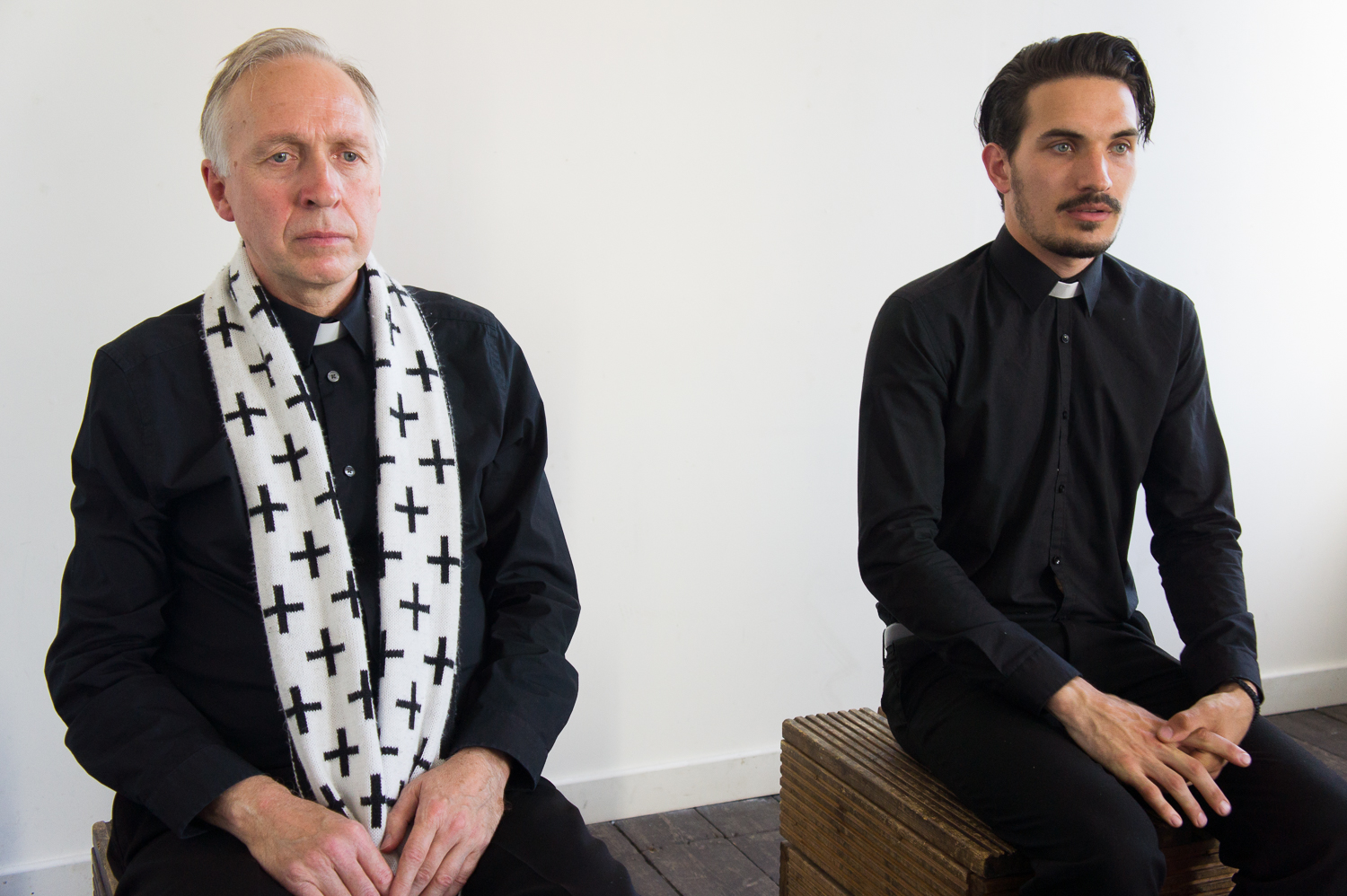
By Stephen Cooper, this one goes beyond the absurd to bizarre and the meaning of the piece isn’t clear on a wider level. Two priests (Graham Christopher and Josh Morter) have encountered a lonely parishioner with a fetish for priests and both have caved into their carnal desires. There is some good situation comedy and cleverly simple staging, but other than a specific comment on the sex lives of priests and their reciprocal confessions, this play has limited appeal and scope for development. This is the weakest one of the evening.

  1. NOTHING COULD SURPRISE ME NOW

Another example of absurdity, this is one of the better productions in Bare Essentials by Alain G. Cloarec. Turning narration and metatheatricality on its head, it is brief but wonderfully funny. Characters enter the room one by one having awoken this morning only able to speak in the third person, rather like Gregor Samsa but less traumatic. The “finale” then transcends the play, leading into a curtain call for the entire company. This is an excellent programming choice and some inventive directing by Michaela Frances Neal.

Overall, this is a varied evening of new writing, though even though the company claims it differs from a scratch night, it appears to have little difference. Scratch nights also approach their work with commitment, and are done on a shoestring in order to trial new writing. Though these pieces were quite polished, most need development. A more suitable space would improve the audience experience and establish a more professional, less scratch-night feel. As is, the room was small with no theatrical lights, white walls, and windows that are not blacked out. It was a room rather than a theatre and it is unclear why Encompass didn’t use the actual theatre downstairs, unless the reason is financial.

Scratch nights and short play showcases remain a good showcase for actors and writers, without the time commitment of a larger production (usually for no money) and the ability to present audiences with a range of styles and topics. Those with short attention spans and a wide range of interests will find this format particularly appealing. This one is has some quite good scripts and excellent performances but if the production company wants it to not feel like a scratch night, a more suitable venue must be chosen, and not just for air conditioning.


The Play’s The Thing UK is an independent theatre criticism website maintained voluntarily. Whilst donations are never expected, they are hugely appreciated and will enable more time to be spent reviewing theatre productions of all sizes. Click here to make a donation with PalPal.
Britannia Fury, Hen & Chickens Theatre

2015-05-07 20.33.52 (2)“Never meet your heroes.”

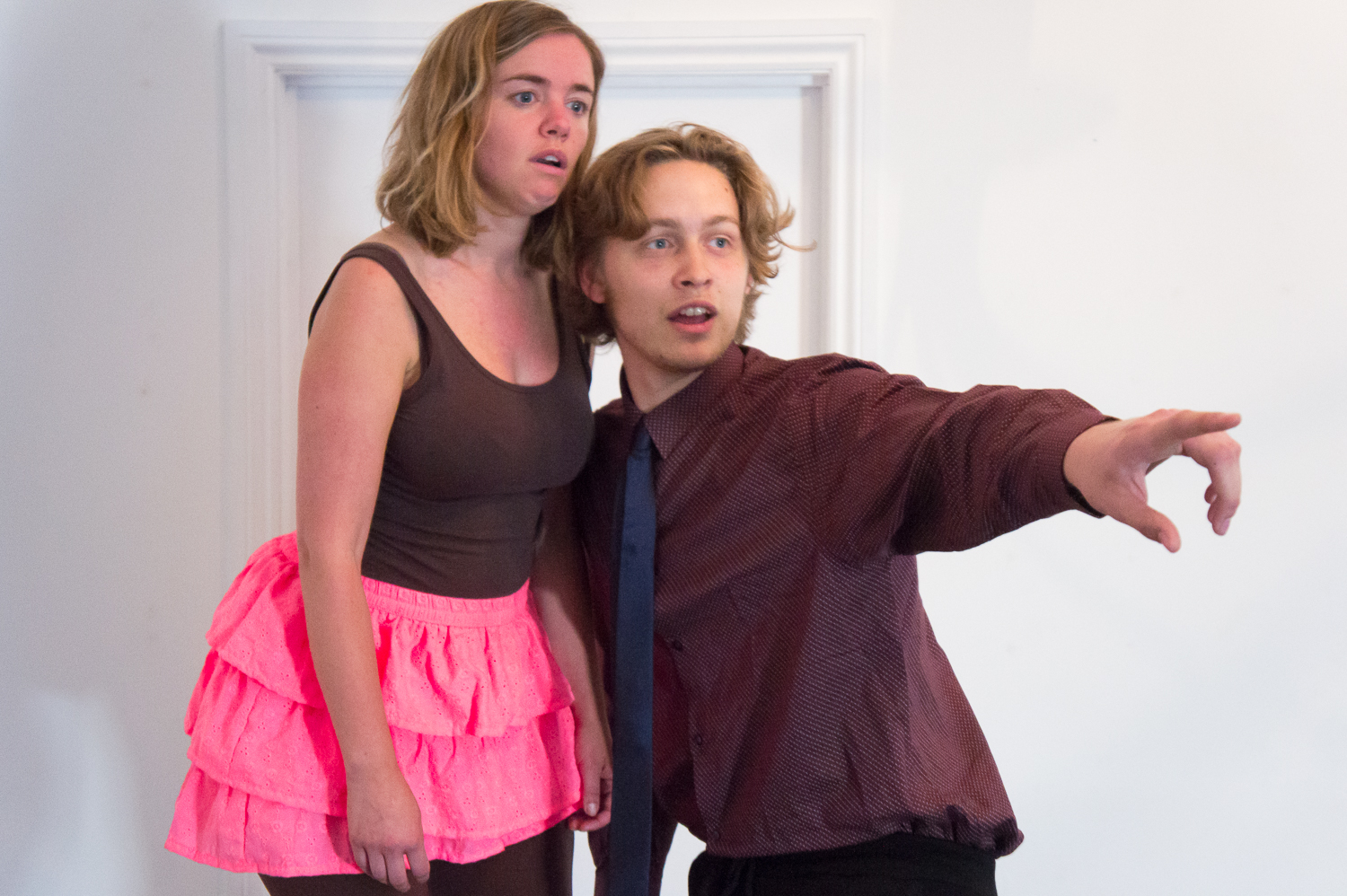
This stark warning from one character to another foreshadows the absurd, disappointing story about to unfold. Part satire, part pantomime, part superhero spin off, Britannia Fury introduces us to Britain’s only real superhero. He is now an elderly alcoholic living in a council flat after his epic rise and consequential fall into obscurity, but a young reporter has located his address and is determined to share his forgotten story with the world. A mix of performance styles and a story that can’t quite seem to determine what it wants to say prevents the concept from developing into a strong script.

Mr Jameson (Kit Smith) is the exaggerated stereotype of an editor of The Daily London Leader. Loud and abrasive, he provides complete contrast to the nervous Charlie (Ethan Loftus), a young reporter not even on Jameson’s radar. Charlie has the scoop of the year and negotiates with Jameson to let him interview 70s and 80s superhero Britannia Fury, who saved the nation from villainy only to mysteriously retire and disappear. Charlie wants to share the story of this forgotten hero with the nation. Loftus plays Charlie naturalistically, with a quiet, geeky passion for Fury. Whilst both Smith and Loftus embody their characters respective styles well, they clash and cause the production concept to look like it lacks direction. The other characters add to the soupy style mash up rather than siding with one of the earlier, established performance styles. Fury (Geoffrey Kirkness) is a mix of stereotype and naturalism, which adds depth but only further confuses the production’s identity. This is an issue with the script and direction rather than the performers, but one that can be solved by the playwright choosing one approach and sticking with it across all the characters.

The storyline, with its clear premise, becomes convoluted as Charlie and Fury meet and delve into his past. There are some predictable plot twists that lead to a tragic end; again, the initial idea has good potential to explore the human condition through Fury’s story but this is glossed over and made light of with comedy and exaggeration. Charlie’s initial shock of meeting his fallen hero is underplayed, then forgotten, but his emotional journey hits some good points. Their interview occasionally drags, as if the play is trying to buy time rather than following the natural narrative arc and getting to the point. As Charlie delves deeper into Fury’s twisted Tory past, it becomes clear that Jameson’s initial warning rings true.

The idea of the fallen hero in modern times certainly has mileage and Hillcrest Artists begin to solidify interpretations of the theme but they don’t quite come to fruition. Is the play about politics? Is it about society’s short attention span? Or, is it smaller and about the relationship between two people? Is it making fun of superheroes? Is it about Fury’s humanity? Really, it is all of these things and more, but for a play not much longer than an hour, this is too much to try to address. There are some touching moments and witty dialogue but underlying substance doesn’t quite materialise in Britannia Fury.


The Play’s The Thing UK is an independent theatre criticism website maintained voluntarily. Whilst donations are never expected, they are hugely appreciated and will enable more time to be spent reviewing theatre productions of all sizes. Click here to make a donation with PalPal.
Perfect Lovers, Theatro Technis

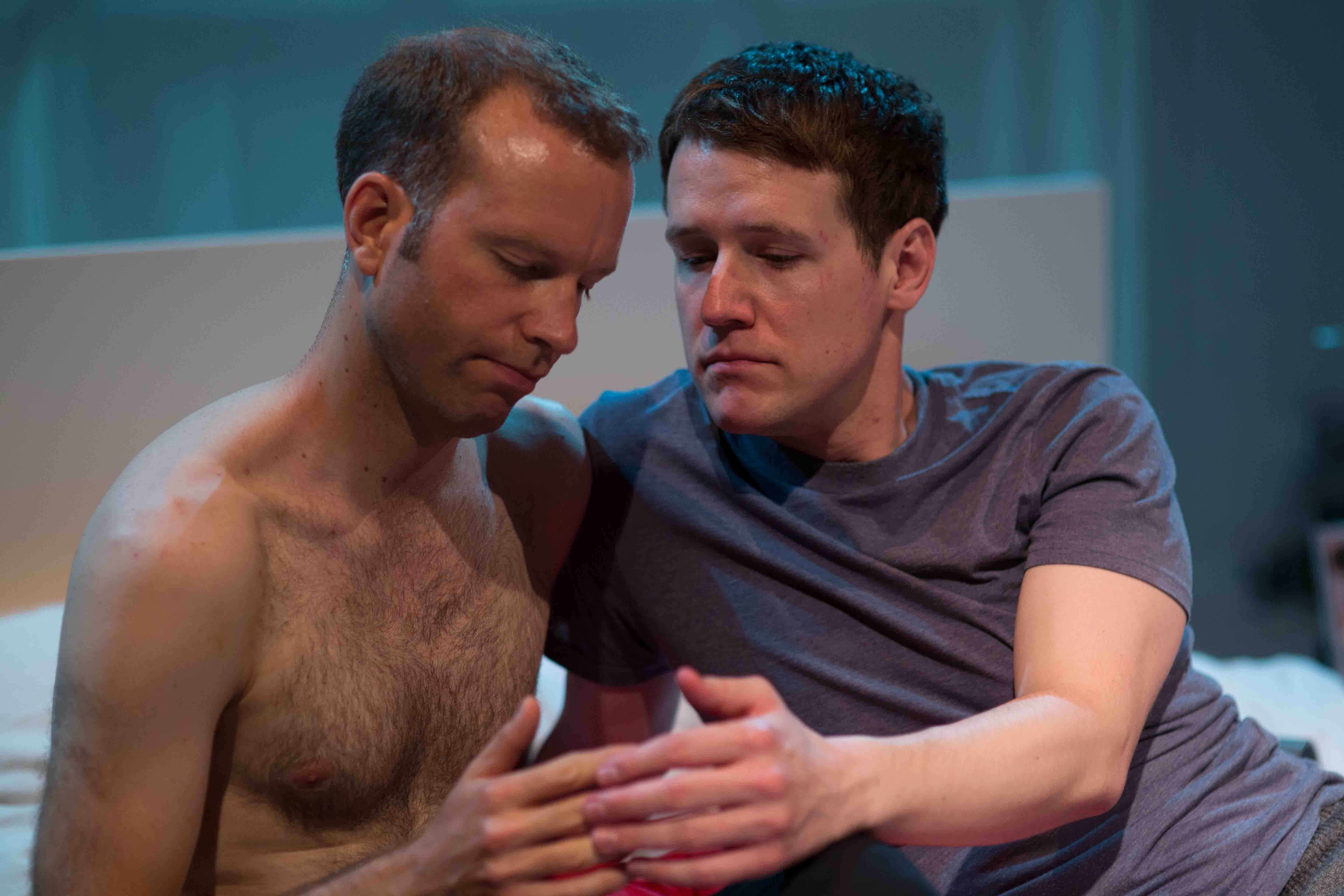
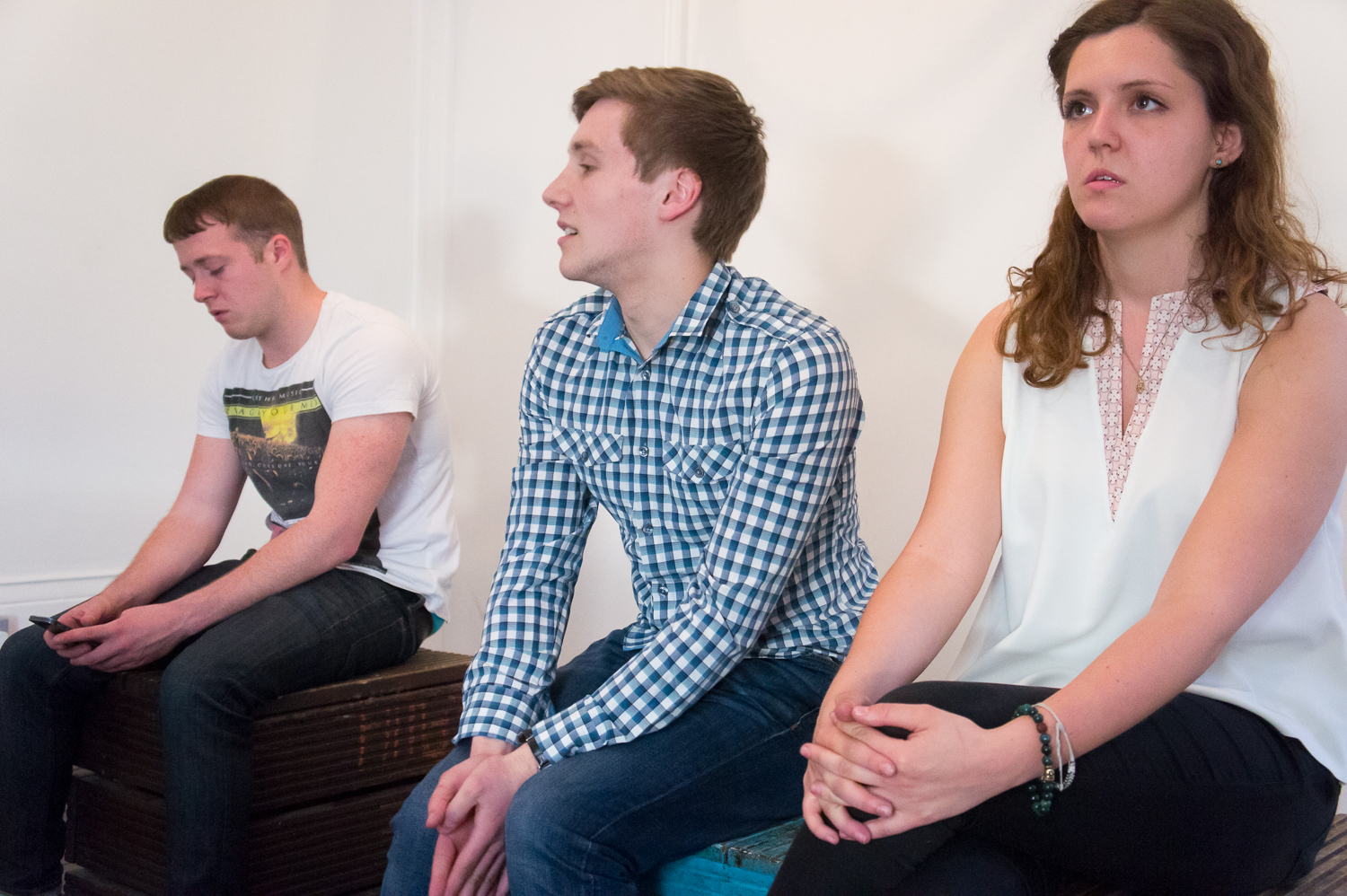
Four men, two clocks and all po_N2A6465ssible relationship dynamics meet within different moments, in one bed. Scenes bounce back and forth across time supported by symbolic projections and lighting, each one intimately presenting a different couple combination. Individuals meet and connect for a brief moment in time, then inevitably move on. La Montanya’s Perfect Lovers is a new play that explores the ups, downs and transience of gay relationships, proving they are no different than straight ones. We all seek that perfect relationship even though no such thing exists.

This is the second play by Jazz Martinez-Gamboa. It episodically documents the dysfunctional but well-intentioned connections of four characters at different points in their lives. There was some detailed writing with good instinct for both comedy and pathos. After the first couple of scenes the rhythm settled into a consistency that needed more variation, but the director and actors could solve this easily through delivery. The script is a one act, but its current structure lends itself to easy expansion. It would need more of a plot arc to add variation of pace, and the characters are robust enough to withstand closer examination of their lives.

The performances are generally good, though energy and pace dipped at points. There were too many pauses, though it isn’t clear whether this is due to the script or the direction. Actors Chris Hoskins, Oliver Hewett, Joe Leather and Craig Deucher are a tight ensemble with seemingly natural chemistry. They contrast each other without playing to any particular gay stereotypes; instead they focused on individual loneliness and their characters’ need for meaningful connection.

The design is excellent. Richard Hillier’s lighting design blends seamlessly with Alex Wells’ projections. Two adjacent, synchronised clocks racing through time are a motif influenced by artist Felix Gonzalez Torres, emphasising our own transience as well as the temporary nature of our bonds with others. Characters cling to digital photo albums of their past lovers, friends and families as they continue to search for that perfect man who will change their lives forever. The set is a never-changing bed. An adjacent nightstand becomes more and more cluttered with the characters’ detritus ranging from tea lights ,to cups of tea, to lines of cocaine. The amount of action the room sees results in a set resembling Tracy Emin’s My Bed.

Even though this production can be categorised as LGBT theatre, that is far from its end message, merely a vehicle of communication. These characters could have been straight couples; in fact, it has strong parallels with Patrick Marber’s Closer though without a linear narrative. We are all people: broken, malfunctioning people, who reach for meaning in one another. It rarely works. But that’s what makes us gloriously human, which Martinez-Gamboa presents to audiences as if he stands before us and holds up a mirror.


The Play’s The Thing UK is an independent theatre criticism website maintained voluntarily. Whilst donations are never expected, they are hugely appreciated and will enable more time to be spent reviewing theatre productions of all sizes. Click here to make a donation with PalPal.