Her Aching Heart, Hope Theatre

Pantos are great –  but it’s easy to overdose and they can feel rather samey if you see more than two or three a season. The trend for adult and alternative pantos is great for adding variety, but they tend to follow similar storylines and narrative formulas. Bryony Lavery’s victorian send-up Her Aching Heart has all the OTT melodrama and silliness of a pantomime, but this two-character, lesbian love story is decidedly not a panto. Full of innuendo and comedy, the play-within-a-play is a well executed, richly designed and utterly delightful affair.

As two contemporary, nameless women fall in love over gothic novel Her Aching Heart, the book unfolds around them in reams of velvet, riding crops and bloomers. With heaving bosoms and heightened emotions, Lady Harriet Hellstone of Hellstone Hall (Colette Eaton) encounters bewitching blond peasant Molly (Naomi Todd) whilst hunting in the wilds of Cornwall. Though their initial meeting has a violent end, it’s the birth of an all-consuming obsession spanning personal tragedies and multiple nations. 

Lavery’s early script is a bit clunky and takes some time to settle into its own rhythms, and the ending is a bit abrupt. The second half is generally stronger as the structure has been clarified by the interval. Matthew Parker’s detailed direction attacks the story with enthusiasm, visual gags and lots of hilarious gimmicks. Eaton is a posh, plummy Harriet and Todd an earthy, animal loving Molly; they are excellent character foils, strong singers and full of energy and charisma. Their snogging is a bit awkward and there’s a surprising lack of sex, but the story is a joy to behold despite its softly sanitised portrayal of pretty femme lesbianism.

Rachel Ryan’s design is fantastic. Blood red velvet curtains, riding coats and ribbons, waspies and lace-up boots transform this intimate venue into a fully formed and richly tactile world. The design and direction are in perfect partnership here, but are occasionally let down by this fairly inexperienced script.

Even though the script isn’t particularly strong, it certainly isn’t weak and Parker’s direction effectively distracts from this by focusing on the character-driven story. A sprinkling of songs (the Act I finale is particularly cracking) and meta theatre adds even more joy to this already wonderfully funny production that’s a fantastic, feminist alternative to a Christmas pantomime. 

Her Aching Heart runs through 23 December.

The Play’s the Thing UK is committed to covering fringe and progressive theatre in London and beyond. It is run entirely voluntarily and needs regular support to ensure its survival. For more information and to help The Play’s the Thing UK provide coverage of the theatre that needs reviews the most, visit its patreon.

POST, Ovalhouse

Being an immigrant is hard. Sure, it gets easier but it’s never easy. You are always an outsider, the Other, or that loaded word – FOREIGN. Even though the homesickness may fade and the debilitating attacks of nostalgia become less and less frequent, a niggling feeling of not really being part of the adopted country is ever present. In the current political climate, it’s even harder to fit in.

Xavier de Sousa is a theatre maker, producer and an immigrant from Portugal who knows this struggle too well. In a world that’s both more globalised and polarised than ever, his new work POST quietly contemplates what it means to be a migrant. The interactive, extra-live piece, though anti-theatrical, has a lot of love and a lot of heart, leaving you feeling wanted and valued regardless of where you are from and has power to foster crucial, cultural dialogue.

Much of the performance is about de Sousa and his experiences growing up in a Portuguese village, framed by the wider narrative of historical migration and colonisation. Read from a large book, these sections of the performance are informative and contextual, but less interesting to take in. Though there are extensive monologues, he breaks them up with conversations with audience members. He immediately rallies the audience to him, and exudes a genuinely caring charisma that is undeniably charming.

Food, drink, nicknames and dancing are strong threads used to unite an audience from all corners of the globe. As he talks us through his country’s customs, it provokes contemplation of our own rituals. Though there are idiosyncrasies from family to family, we all bear the cultural stamp of where we are from. It’s so easy to use these differences to alienate, but fundamentally, we all want the same things – to be with our loved ones around a table, sharing a meal and entertainment together. The reminder of these basics is powerful and comforting.

Structurally, there are clear transitions but a bit of clunkiness as de Sousa moves from one them to the next. There will be variation from one audience to the next, though unlikely big differences. This isn’t an issue, but there’s a safeness inherent to the piece in a theatre audience. Considering how societal devision is mirrored in schools due to children likely having their parents’ views, this would be a fascinating work to adapt for an audience of children, or to take into community centres, church halls and the like. 

There’s a cosiness to POST that is reassuring in these dark days of the rising alt-right/fascist movement in Europe and the US. Being an immigrant is frightening right now, and it’s easy to feel alienated and unwanted in the face of Brexit and Trump. The show also has the power to unite and provoke conversation, though typically liberal theatre and live art audiences aren’t the people de Souza needs to reach. As much as we may love the work it’s one not especially suited to us – but to those won the right with whom we don’t share our ideals. 

POST runs through 3 December.

The Play’s the Thing UK is committed to covering fringe and progressive theatre in London and beyond. It is run entirely voluntarily and needs regular support to ensure its survival. For more information and to help The Play’s the Thing UK provide coverage of the theatre that needs reviews the most, visit its patreon.

The Children, Royal Court

Millennials blame baby boomers for a lot. As a millennial, albeit one born in the boundary year (if I were 6 months older I would not fall in this much-maligned generation), I very much align with my over educated, low paid, debt-laden and non-home owning peers. We largely view baby boomers as a group of privileged people who made a secure life for themselves whilst instituting policies and structures that eventually caused financial and environmental devastation, and they are too blinkered to see the impact on those younger than them. Of course, this is a sweeping generalisation – not all boomers are aloof and selfish, and not all millennials are moaning victims. But this generalisation hugely influences the lens through which one views Lucy Kirkwood’s The Children – a kitchen sink drama of three 60-somethings in a cottage overlooking the sea, each with very different views on their generation’s responsibilities to the wider world.

Kirkwood’s script takes its time getting around to the dramatic reveal of just why Rose (Francesca Annis) turns up at the door of her friends and former colleagues, married couple Hazel (Deborah Findlay) and Robin (Ron Cook) after nearly 40 years. The three were nuclear engineers at a power station 10 miles away that’s now damaged from an earthquake. The current staff charged with the plant’s cleanup and decommission, all in their 20s and 30s, are getting sick. What is the moral responsibility of these retired engineers? Hazel and Robin have grown children and grandchildren, and comfortable lives they earned after years of hard work. They’re busy enjoying retirement and their family, with little notice of the world around them. Rose’s life followed a very different trajectory and as such, has a world view totally different from Hazel and Robin’s. It’s in this discrepancy that conflict is born and polarise the audience. Though Kirkwood takes way too long to introduce it, it is quite the surprise when it eventually arrives. 

Though the dramatic arc needs adjusting, the female-led story has an excellent premise. It’s controversial, divisive and thought provoking. Though it comes across as pro-millennial, Kirkwood gives equal time to both side of the argument she presents. She narrowly avoids this becoming a propaganda piece by providing the opportunity for both perspectives to get pissed off at the other and not feel too oppressed – though a baby boomer might feel quite different.

Lighting designer Peter Mumford’s daylight streams through the windows of Miriam Buether’s country cottage kitchen. As time passes, glorious afternoon sunshine wanes to an orange sunset, then blue dusk. The transition is imperceptible, but wholly mirrors the plot’s trajectory – it’s a powerful, subtle influence on mood and tone, and a great use of colour.

Annis, Findlay and Cook are as excellent as expected, and even though the script has some issues, it also packs a huge impact. The cultural divide is presented with balance and whilst it won’t necessarily get the two sides to come to an agreement, maybe there will be some empathy fostered in the largely older, middle/upper-middle class core audience. Even if it doesn’t, Kirkwood’s gift for dialogue and topical theatre shines through in this new play with ideas that will linger long after its run.

The Children runs through 14 January.

The Play’s the Thing UK is committed to covering fringe and progressive theatre in London and beyond. It is run entirely voluntarily and needs regular support to ensure its survival. For more information and to help The Play’s the Thing UK provide coverage of the theatre that needs reviews the most, visit its patreon.

A Girl and A Gun, Pleasance Theatre

Girls with guns are everywhere in pop culture – films, video games, porn, telly – and they’re always highly sexualised and conventionally stunning. What is it about a fit girl armed with a big gun that’s sexy? Is it power and control? Her aggression? Her demand for attention? The gun’s representation of a cock? In any or all of these cases, there is something deeply troubling about this fetish. After live artist Louise Orwin noticed the disturbing proliferation of the girl and gun pairing, she made a show about this cultural phenomenon. 

A Girl and A Gun unpacks the layers of the archetype, as well as addressing voyeurism and female control in a violent world careening between the present and the anti-feminist dark days of the American wild west. The two-hander is performed by Orwin, and a male actor who has never performed the show before and knows nothing about it. An autocue, live feeds and projected text places the two performers inside a Western-influenced film script that dictates their actions and emotions as well as the audience’s. A Girl and A Gun is a brilliantly clever and deeply provocative work, sophisticated in its message and equally disturbing and engaging. Powerful, relevant and crafted with thought, passion and skill, Orwin’s latest is an exceptionally strong piece of live art. 

Taking on stereotypical representations of a cowboy, and a cross between a Southern belle and femme fatale, the uncredited man is placed in control of Orwin’s naive seductress. The power dynamic in their relationship is complex – Orwin as creator knows exactly what is going to happen, but her character is a victim of the male actor/character. The performers are sometimes in costume/character, sometimes not. For the unwitting man, he is forced to be both actor and character simultaneously, making the violence he inflicts on Orwin all the more disturbing to watch. Even the audience has the occasional stage direction that dictates emotional response and further extends Orwin’s control. Surrendering to Orwin’s commands is unsettling, but simultaneously invigorating in the knowledge that she is the most powerful person in the room. Even the cameraman follows her around the stage like a loyal dog, though this displays her in minute detail for public consumption. This dichotomy cannily mirrors the lose-lose situation of women in western society: either a woman doesn’t have control, or she does and is objectified for it.

Metatheatricality and objectification are intrinsic parts of the piece, and crucial in creating audience discomfort. Though the abuse Orwin’s character faces is horrendous, we are complicit in it as active voyeurs. Even though there are moments where the audience audibly responds to the abuse she experiences, we do nothing to stop it even though we are inside the piece, with no fourth wall in place. Orwin’s character is immensely sexy, and sexually provocative – she wants us to objectify and desire her. It would be a fascinating experiment to permit the audience to engage further in the performance – it already feels immersive, what would happen if it became interactive?

A Girl and A Gun confronts passive response to abusive situations as well as the sexualisation of women with weapons and examining female control on a microscopic level. These ideas are seamlessly integrated, and the use of technology is crucial in highlighting them. Orwin’s work is enhanced with live art conventions, but it is not remote or obtuse – this is a piece that confronts society’s objectification of women and the manifestation of female control with a compelling narrative approach and format. It’s subtly aggressive and disturbing, leaving lingering experiences and images – a fantastic piece of work that cannot be improved upon.

A Girl and A Gun is touring through December.

The Play’s the Thing UK is committed to covering fringe and progressive theatre in London and beyond. It is run entirely voluntarily and needs regular support to ensure its survival. For more information and to help The Play’s the Thing UK provide coverage of the theatre that needs reviews the most, visit its patreon.
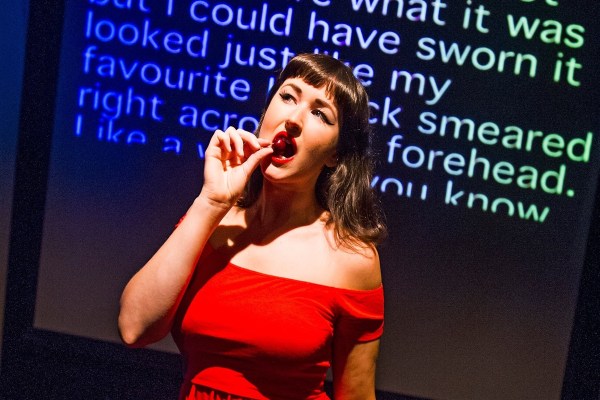
Boys, LOST Theatre

By guest critic Martin Pettitt

Boys, Ella Hickson’s play, alludes to a teenage girl patronisingly rolling her eyes at the clumsy and emotionally immature endeavours of her male school mates. It is a title that belies the complexity of the play while at the same time signalling its rather linear representation of gender roles.

The show takes place during a sanitation strike in an Edinburgh flat share which is slowly piling up with detritus and rubbish bags. The inhabitants of the flat, several students days away from leaving for home and a waiter on the verge of his 30s, are trapped inside the walls as the tensions between them slowly rise and reveal themselves. It is a simple concept but one done well and rich with symbolism.

The set is a whole kitchen inside a flat, as if it had been picked up and dropped wholesale from a student abode in the Victorian house around the corner. It is so well observed that one is tempted to get onstage and make a cup of tea or join in with the shenanigans. The staging is that authentic the only thing missing is the smell which one imagines would be somewhere between stale water and rotting vegetables.

The mise en scene, being so scarily familiar, gives an oddly voyeuristic verve to proceedings, it almost feels too real. On many occasions there is the danger of projectiles hitting audience members, reinforcing this closeness. This is what theatre should be; we are not in the cinema here, this danger is what makes theatre unique.

The dialogue and pacing is punchy and slick and, as with the set, very keenly observed. There are plenty of the normal tropes – student cleanliness, wonderment at the future, poor diet, the bawdy stories involving naive freshers – but there is more going on here. Each character is a human first and foremost and this is the strength of the script. The characterisation, as well as the acting, is so good that it makes the absence at the centre of the play, a dead friend/brother who committed suicide, seem erroneous. It doesn’t seem needed, but merely an addition by the playwright to make things more dramatic – as if she is afraid her characters can’t do the job. They totally can, and with gusto. 

As much as this play brings to the slightly wonky and stained table, there is a naïveté to the script. One particular example is Benny’s revelation (to the audience) of his brother’s suicide – shouted hysterically, and then cuts to black – it feels very amateurish. The roles of the men and women in the piece are also sadly trite. Despite the amazing characterisation, the women are left to look on, doe-eyed, as the foolish men cheat on them and hide their ‘true’ sensitive natures behind bolshie facades. The women are forced to stoically endure the drama, awaiting their fate like the women from Troy. This seemed quite conspicuous in a contemporary world of plurality and fluidity.

Boys is now closed. 
 
The Play’s the Thing UK is committed to covering fringe and progressive theatre in London and beyond. It is run entirely voluntarily and needs regular support to ensure its survival. For more information and to help The Play’s the Thing UK provide coverage of the theatre that needs reviews the most, visit its patreon.

The Unmarried, Camden People’s Theatre

Luna is a proper East London geezer. Busy with one-night stands, spitting rhymes and doing shots, she’s also a mum in a long term relationship on the prowl for fleeting moments that remind her she’s still young and alive. Backed up by Kate Donnachie and Nate Forderstaple from Battersea Arts Centre’s Beatbox Academy, actor/writer Lauren Gauge’s spoken word piece celebrates rebellion against society’s expectations of young women with old school tunes, comedy and uncensored attitude. The Unmarried, though there’s plenty of room for development, is rough, raw, sassy and full of fight.

Beat boxing and 90s tunes underscore Gauge’s spoken word text, the soundtrack to Luna’s monologue on motherhood, mortgages and not marrying her fella. She longs to unleash herself from obligation and routine with moving rhymes and in-yer-face aggression that occasionally gives way to vulnerability. These moments are wonderfully poignant; they give the character depth and humanity.

The script tos and fros a bit, and Gauge’s pace is pretty relentless. It certainly works for the character, but a long day and a late start time leaves me a bit slow on the uptake. The climactic end comes suddenly with little build up, though it’s a satisfying rallying cry of independence. The Unmarried would work well in a club or non-traditional theatre space where the audience can dance and move, and the energy would feed the performers’ energy – this is certainly a piece that would work in the communal, night club atmosphere.

Gauge’s fiery presence and versatility make this a hugely watchable performance. Though also the writer, she wisely brings in director Niall Phillips to shape the piece. Phillips’ work with verse playwright Andrew Maddock is quickly establishing him as a director specialising in spoken word. His skill with staging and extracting the nuance from linguistically dense work is evident and, along with Gauge, is a talent to watch. 

The Unmarried is now closed.

The Play’s the Thing UK is committed to covering fringe and progressive theatre in London and beyond. It is run entirely voluntarily and needs regular support to ensure its survival. For more information and to help The Play’s the Thing UK provide coverage of the theatre that needs reviews the most, visit its patreon.


Swing By Around 8, Theatre N16

Nailing that first job after drama school can be daunting. You are no longer competing for roles with a small collection of peers, you are bidding for work in an environment where literally everyone has more experience than you. There are unwritten rules, cultural differences and a lack of support to learn to deal with. It’s hard going, especially when most of these early-career jobs are unpaid. No wonder so many emerging artists give up within their first few years out of training.

Theatre N16 wants to combat that. They recently launched its First Credit scheme where four actors and two directors are provided the opportunity to gain their first professional credit after completing their training. Jess Bray’s sexual sitcom of a play Swing By Around 8 is brought to life by actors Paul Boichat, Rebecca Drake, Maanuv Thiara and Maisie Black, with direction by Amy Hendry and Ellie Gauge.

Bray’s script verges on farce, with clear television influences. The two-couple character comedy is reminiscent of The ‘Big Bang Theory’ and ‘Friends’, but much less PG. There’s plenty of good one-liners and gags about group sex, though the characters lack depth. It’s great for young actors looking to develop their comic timing, but a shame they don’t have the chance to get stuck into something meatier.

The four actors are pretty evenly matched, though Paul Boichat as Elliot is marginally stronger with a charismatic presence and more nuance. Hendry and Gauge share the directing well; there is a unified style and approach to the characterisation. Some moments of high tension tend towards hammy, but the comedy is well delivered.

This is a solid effort all around from these young creatives, and N16’s commitment to grant them exposure is highly commendable. The First Credit programme is certainly one to follow for new talent, and the selection process is no doubt rigorous – though a more substantial script would certainly serve them better.

Swing By Around 8 runs through 1 December.

The Play’s the Thing UK is committed to covering fringe and progressive theatre in London and beyond. It is run entirely voluntarily and needs regular support to ensure its survival. For more information and to help The Play’s the Thing UK provide coverage of the theatre that needs reviews the most, visit its patreon.
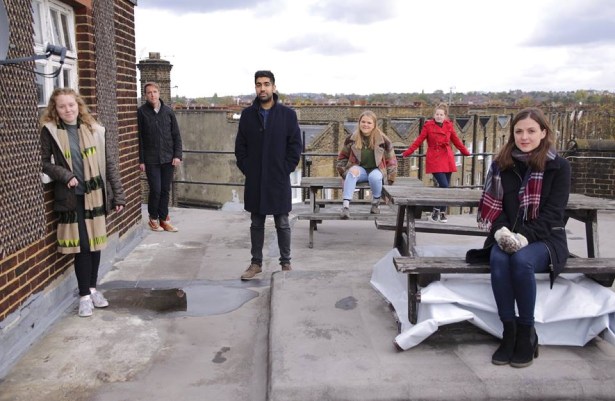
Wild at Heart, Pentameters Theatre

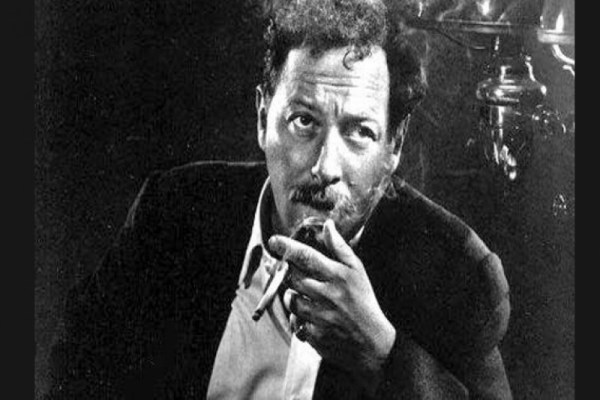
Pentameters Theatre, tucked above a Hampstead gastropub, feels more like a community theatre than a professional fringe theatre. Many of the audience know each other, and the theatre staff feel like they are an intrinsic part of the building. AD Leonie Scott-Matthews introduces the show; she states to the mostly local audience that Tennessee Williams’ plays are the first to sell out when she announces a new season. Williams wrote over 70 short plays as well as the full-length scripts that established him as a writer, so if he’s so popular with her audiences these are a fantastic resource to tap. Rarely staged, many of them offer his trademark poetic language and characters that capture the seedy underbelly of their time and place. 

Wild at Heart is a collection of four of them spanning states and decades, but they all tap into similar moments of despair. The performances are mixed as are the directorial choices, but its a great opportunity to see some lesser-known works.

The four scripts are on similar quality, through Mr Paradise and Hello From Bertha have the more interesting storylines. Even so, not a lot happens in these playlets. All of the characters are barely on the fringes of society, isolated and lost. Hopelessness hangs over the dingy set and misery permeates every nook and cranny. It’s a shame that the performances aren’t better – inconsistent accents and generic heightened realism lack emotional truth and feel hollow. 

Director Seamus Newham uses the wide but shallow space effectively, though there is some dubiously mimed door and window opening on the fourth wall. The pace across the four plays is largely unvarying, but he has a decent sense for Williams’ rhythm.

Williams provides a little window into his world through these short plays, and even though there isn’t the opportunity for depth of character or thematic exploration, they are an insightful barometer of those on the margins of American society in the 30s, 40s and 50s. Even though they could be handled better, it’s a lovely opportunity to experience his lesser-known work.

Wild at Heart is now closed.

The Play’s the Thing UK is committed to covering fringe and progressive theatre in London and beyond. It is run entirely voluntarily and needs regular support to ensure its survival. For more information and to help The Play’s the Thing UK provide coverage of the theatre that needs reviews the most, visit its patreon.
Romeo and Juliet, Rose Playhouse

It’s so easy to brush aside a production of Romeo and Juliet – it’s overdone, every one knows it, it’s not innovative. But when it’s staged with energy, passion and commitment, the story shines through and you’re reminded that it’s actually a wonderful play. Wolf-Sister Productions’ version does have some issues, but the vivacity with which they approach the text is truly captivating. A good edit and some phenomenal performances hovering on the edge of the Elizabethan remains of the Rose Playhouse make this Romeo and Juliet quite a special one.

Eight actors take on all of the roles, and four of them are women – a quiet middle finger to traditionalists – but the star performer is James G Nunn as Romeo. Nunn’s emotional and expressive range is phenomenal, and well beyond that normally gifted to the character. He soon renders the audience helpless at his feet as he barrels his way through the story. His Juliet doesn’t quite match him, unfortunately. Her love isn’t fully believable and, discarding the naivety of the character in favour of anger, she comes across as untenably mature. Niall Ransome is a hearty, grounded Mercutio and Esther Shanson’s direct address is quite good, as is her multi-rolling – though her Lady Capulet is the strongest of her four parts. The whole cast run, leap and wrestle constantly, keeping the energy and stakes high.

Director Alex Pearson insists on an explosive energy that cannily suits the impulsive, teen love affair within two duelling families. She sets the play within a refugee camp which, whilst the tents ringing the pool of water preserving the theatre’s remains are a pleasing aesthetic, doesn’t otherwise indicate it’s not a festival or a campground. Had the programme notes not stated it’s set in a refugee camp, I may not have guessed. There’s a mix of British accents, all but one actor is white, and the text is as written barring unnecessary concessions for gender swaps, so the only signpost of the specific location is the set.

Pearson does make some great choices, though. Mecutio’s undiluted venom towards Romeo as he dies is surprising, but grounded in believability. The sexual tension between Mercutio and Romeo is titilating and fun, and her female-led, often cross gendered casting is certainly commendable and provides another perspective on the characters, particularly the parental Friar Laurence. Pearson faces the challenges of the space head on, using the whole site as his stage with confidence.

Also executed well are the fights, choreographed by Dan Burman. The nastiness of knives adds to the visceral, impetuous energy that keeps the actors pelting around the space. It’s great to see a fringe theatre production use a proper fight director rather than the director try to fudge the choreography themselves.

Even though this recontextualisation doesn’t come across, the strong performances, unrelenting energy and intimacy provided by the venue make this a really rather good version. It’s accessible, easy to follow, and frames the eternal story of the star-crossed lovers and all of their tragic flaws excellently.

Romeo and Juliet runs through 10 December.

The Play’s the Thing UK is committed to covering fringe and progressive theatre in London and beyond. It is run entirely voluntarily and needs regular support to ensure its survival. For more information and to help The Play’s the Thing UK provide coverage of the theatre that needs reviews the most, visit its patreon.
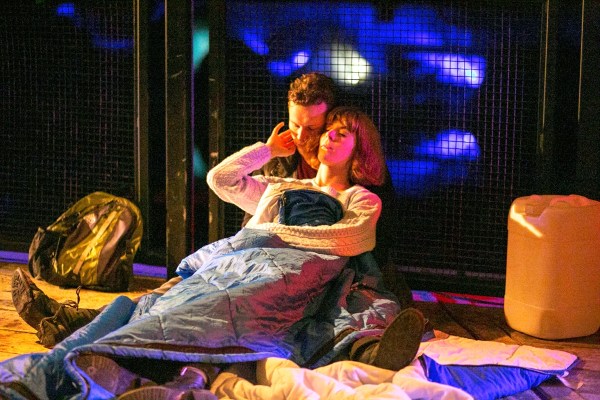
London Stories: Made By Migrants, Battersea Arts Centre

For time immemorial we have sat in cosy circles sharing tales of gods, monsters and everyday heroes with those we love and those we have just met. Everyone has stories in their hearts – extraordinary and familiar – and we love to share in them. Storytelling is theatre in its most elemental form, one that unites and shares rather separates and distances. In a world so fragmented and polarised, this art form is a sorely needed leveller. 

Battersea Arts Centre’s London Stories: Made By Migrants gives a voice to those that howling Brexiteers long to expel, in a format that naturally brings people together. With 24 performers who share their stories, small groups of audience members commune with them and each other in a work that, whilst quietly direct, is a potent piece of peaceful direct action with stories that awaken the heart in these dark days.

There are no more than five or six per group, including a guide. Coloured wristbands labelled with the name of a London borough determine the six stories stories heard, each a solo effort in a room or corner of the vast building. The stories are a straightforward structure, simply told, with no theatrics. The tellers come from all walks of life and all over the world, though there are more than a few theatremakers in the collection. Their stories are as varied as they are: a young artist from New York who arrived on a spousal visa days after Brexit, a Jamaican man that has struggled with homelessness, a Syrian refugee, a Kuwaiti adoptee raised in the UK and her quest to find her birth parents. Some have more impact than others, but all are immensely personal and it a privilege to hear them.

Some of the lighting is too dark, which frustratingly prevents eye contact with the storytellers even in such intimate settings. Most of the stories are told live, though there is at least one filmed story by a holocaust survivor. It’s a nice variation, though the liveness is missed. The stories are stylistically similar which isn’t an issue, though it would be interesting to explore different forms and structures across the stories offered. There are also some lengthy waiting times in between – though it is lovely to chat and connect with others in the group, it would be great to see another couple of stories instead.

This storytelling installation is much needed medicine in this post-referendum/Trump time. It reminds us of the importance of being still and listening, and the vast amounts of empathy such a simple task fosters. London Stories: Made By Migrants is necessary, vital and accessible work. Don’t miss it.

London Stories: Made By Migrants runs through 26 November.

The Play’s the Thing UK is committed to covering fringe and progressive theatre in London and beyond. It is run entirely voluntarily and needs regular support to ensure its survival. For more information and to help The Play’s the Thing UK provide coverage of the theatre that needs reviews the most, visit its patreon.